- English
- French
- German
- Portuguese
- Spanish
- Russian
- Japanese
- Korean
- Arabic
- Greek
- German
- Turkish
- Italian
- Danish
- Romanian
- Indonesian
- Czech
- Afrikaans
- Swedish
- Polish
- Basque
- Catalan
- Esperanto
- Hindi
- Lao
- Albanian
- Amharic
- Armenian
- Azerbaijani
- Belarusian
- Bengali
- Bosnian
- Bulgarian
- Cebuano
- Chichewa
- Corsican
- Croatian
- Dutch
- Estonian
- Filipino
- Finnish
- Frisian
- Galician
- Georgian
- Gujarati
- Haitian
- Hausa
- Hawaiian
- Hebrew
- Hmong
- Hungarian
- Icelandic
- Igbo
- Javanese
- Kannada
- Kazakh
- Khmer
- Kurdish
- Kyrgyz
- Latin
- Latvian
- Lithuanian
- Luxembou..
- Macedonian
- Malagasy
- Malay
- Malayalam
- Maltese
- Maori
- Marathi
- Mongolian
- Burmese
- Nepali
- Norwegian
- Pashto
- Persian
- Punjabi
- Serbian
- Sesotho
- Sinhala
- Slovak
- Slovenian
- Somali
- Samoan
- Scots Gaelic
- Shona
- Sindhi
- Sundanese
- Swahili
- Tajik
- Tamil
- Telugu
- Thai
- Ukrainian
- Urdu
- Uzbek
- Vietnamese
- Welsh
- Xhosa
- Yiddish
- Yoruba
- Zulu
Build Fiber Laser Cutter for Metal Sheets: A Complete Guide
To run a good metal forging business today, you need to pick cutting tools that are the right mix of accurate, fast, and cheap. The S Model Plate Fiber Laser Cutting Machine is one of the most game-changing options out there. It is a cost-effective fiber laser cutter that was specifically designed for working with metal sheets. You will learn everything you need to know about fiber laser cutting technology in this full guide. It includes how to choose the best machine for your needs and why these systems are so important for modern metalworking companies.
If you know the basics of fiber laser cutters, you can make better purchasing decisions that will have a direct effect on your bottom line, whether you're a distributor looking at suppliers, a sheet metal fabrication shop upgrading from plasma cutting, or an OEM buyer looking for customizable solutions.
Understanding Fiber Laser Cutting Technology for Metal Sheets
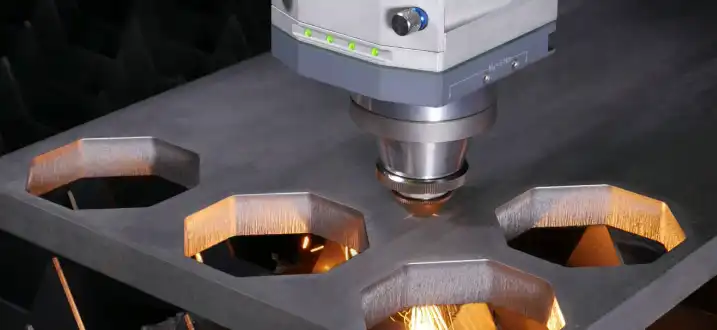
The S Model Plate Fiber Laser Cutting Machine uses a solid-state laser source that sends a focused beam through optical fibers. This gives them the best accuracy for working with metal sheets. Fiber laser technology focuses energy more efficiently than older CO₂ laser systems or standard mechanical cutting methods. This makes cuts that are cleaner, kerf widths that are shorter, and heat-affected zones that are much smaller.
How Fiber Laser Cutters Work
The laser source is the most important part of any fiber laser cutting job. A high-power diode sends electricity through a fiber optic line that has rare-earth elements, usually ytterbium, added to it. This makes a laser beam with a wavelength of about 1070 nm. The beam is then focused on the metal sheet surface by a set of mirrors and lenses. A CNC control system plans the movement of the cutting head across the work area so that it follows pre-programmed routes with accuracy down to the micron level.
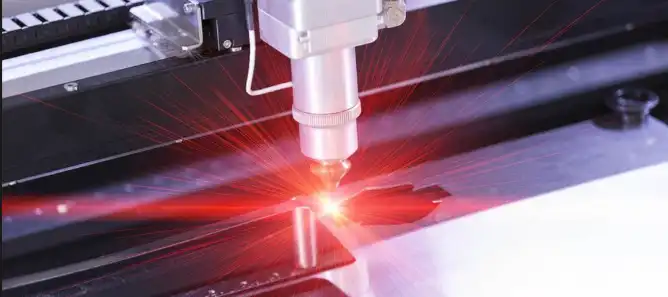
During the cutting process, the metal is vaporized or melted along the predetermined path, and a high-pressure gas, usually oxygen or nitrogen, blows the liquid material away. This makes sides that are smooth and free of burrs, and they usually don't need much extra finishing. Modern fiber laser cutters are perfect for workshops with limited floor space because they are small and take up little room. They are also easy for new users to learn how to use, which cuts down on training time.
Key Components That Deliver Precision
Several important parts work together to make sure that the system works reliably. The laser source controls the cutting speed and the thickness of the material that can be cut. For metal sheet uses, the power output usually ranges from 1500W to 6000W. The CNC control system is in charge of motion accuracy, speeding up, and integrating stacking software. The cutting head has focused lenses, like the THF4 military-grade lens found in high-end systems, that focus the beam on a very small area for the most energy density.
The structural stability of the machine bed is also very important. The bed stays stable and doesn't shift even after decades of continuous use thanks to high-strength rectangular tube frames with 6mm wall thickness and total body weights of more than 3,000 kg. This structural stability means that the cutting is accurate across the whole working area, whether it's a small 1300x1300mm size or a large 6000x2000mm plate capacity.
Comparing Fiber Laser vs. CO₂ Technology for Metal Sheets
When looking at laser-cutting technologies, the choice between fiber and CO₂ systems often affects how much they cost to run and how much they can make. Both technologies have their uses, but fiber lasers are better for processing metal sheets in a way that meets the needs of makers and wholesalers who want to save money.
Performance Metrics That Matter
Fiber lasers work at a range that metals can easily absorb. This means that they can cut reflective materials like copper, brass, and aluminum with little chance of damage from back reflection. With a wavelength of 10,600 nm, CO₂ lasers have a hard time with these materials and need extra care. Another important difference is cutting speed. Fiber systems can cut thin-gauge materials at up to 60 m/min, which is almost twice as fast as similar CO₂ machines.
Edge sharpness is also different for each technology. Fiber lasers make kerf lengths that are smaller and less trashy, which means that there is less time and material wasted after the cutting process. The small area of heat that fiber lasers affect keeps the material's qualities and stops it from warping when working with sheets of stainless steel or carbon steel. This is especially important for making precise parts for cars or tools.
Energy Efficiency and Total Cost of Ownership
In any metal production setting, energy use makes up a big part of the costs of doing business. Because they are more efficient at plugging into the wall, fiber laser systems usually use 30 to 50 percent less electricity than CO₂ lasers with the same cutting power. This increase in speed builds up over time, especially when a lot of things are being made.
Fiber lasers are also better because they are easier to maintain. CO₂ systems depend on gas mixes, mirrors that need to be aligned on a regular basis, and complicated beam path upkeep. Fiber lasers get rid of these pain points because their light sources are sealed and don't need to be maintained. They can work for 100,000 hours or more without breaking down. This means less downtime, lower costs for consumables, and more stable production plans, all of which are important when you're looking for equipment to run 24 hours a day, seven days a week, or when you're a distributor serving multiple client production lines.
Selecting the Best Fiber Laser Cutting Machine for Your Metal Sheet Needs
To pick the best fiber laser cutter, you need to think about your long-term output goals, your budget, and the technical requirements. It's easier to make a choice when you know which features of the machine will work best for your welding needs.
Power Requirements and Material Compatibility
The laser's power affects both how fast it cuts smaller materials and how thick the material can be that it can cut. A 1500W system works well with carbon steel up to 6mm and stainless steel up to 4mm, so it can be used to make electrical cabinets and do some light construction work. When the power is raised to 3000W, the capacity grows to 12mm for carbon steel and 8mm for stainless steel. This covers most basic metalworking tasks. 6000W tools can cut carbon steel up to 25mm while keeping up production speed. This is useful for heavy-duty work like making structure parts or working with thick plates.
The S Model Plate Fiber Laser Cutting Machine series has four different sizes of work areas, with power choices ranging from 1500W to 6000W. The sizes are 1300x1300mm (YH-1313S), 3000x1500mm (YH-3015S), 4000x1500mm (YH-4015S), and 6000x2000mm (YH-6020S). Because of this, you can perfectly fit the machine's capacity to your current production rate and your plans for future growth, without spending too much on features that you won't use.
Build Quality and Structural Design
The longevity of a machine has a direct effect on its accuracy and upkeep costs over time. Look for systems that have heavy-duty frames that are stable and have a high tensile strength. The machine bed won't bend even after 20 years of continuous production thanks to the rectangular tube construction and thick walls. This means that the placement accuracy will stay the same throughout its service life.
Water cooling systems that work at either AC380V or 110V±10% voltage can handle different power standards in different areas. The standard 1070nm±10nm laser wavelength makes sure that all common metal sheet materials are absorbed properly. These technical details may not seem important, but they are the engineering choices that make the difference between tools that work well and ones that are a pain to maintain.
Evaluating Suppliers and Support Networks
Aside from the machine itself, the name and help system of the supplier are also very important. When you import machinery or work in a controlled industry, you have to make sure that the equipment you buy has CE and ISO certifications to show that it meets international safety and quality standards. Authorized sellers with a history of doing a good job offer peace of mind through well-established guarantee programs and quick technical help.
When looking at fiber laser cutting machine makers, the ones that offer factory-direct prices should be given the most attention because they don't add any markups for the middleman and the quality stays the same. If a manufacturer has a lot of stock on hand, they can fill orders fast. Production lead times should be around 14 business days, instead of the 6–8 weeks that are popular with built-to-order systems. Longer after-sales service, 450 days or more, is best; it protects your investment and makes sure you can get expert help when you need it most.
Maintenance, Troubleshooting, and Safety Best Practices
Consistent repair schedules and careful troubleshooting are key to making sure that machines work well. Setting clear rules from the start will make tools last longer and reduce the amount of unexpected downtime that costs a lot of money.
Daily and Weekly Maintenance Tasks
For the S Model Plate Fiber Laser Cutting Machine, daily care includes checking consumables and keeping the work area clean. The operators should check the amounts of assist gas, make sure the protective lenses are clean and not broken, and clean up any metal scraps on the cutting bed and in the collection box. Not only do these easy jobs take less than 15 minutes, but they also stop most common operating problems before they happen.
More thorough check points are added by weekly maintenance. Make sure to clean the laser cutting head well and look for any signs of spatter buildup that could lower the quality of the beam. Check that the water cooling system has the right amount of fluid and is flowing properly. If it's not, the laser source will stop working properly. Check the error logs of the CNC control system for any repeated warnings that could mean problems are starting to form before they break down.
Monthly maintenance involves the motor system check. Follow the manufacturer's instructions for lubricating the guide rails and ball screws. Check the drive belts for proper tension and wear, and make sure that all of the safety interlocks work. These steps make sure that the machine stays as precise as the first time it was used, year after year.
Common Issues and Troubleshooting Steps
Even tools that are well taken care of sometimes have problems. Rough cut edges are often a sign of an incorrect focus height, worn needles, or an incorrect assist gas pressure. All of these problems can be easily fixed without the manufacturer's help. Either the laser power isn't strong enough for the thickness of the material or the cutting speed is too fast. Both of these issues can be fixed by changing the CNC control settings.
If you keep having problems with accuracy even after doing the right maintenance, the issue is probably with mechanical parts that need to be looked at by a professional. This is where expert support from the maker is very helpful. Your team will be able to handle minor problems on their own and quickly send more serious ones to pros if they have strong ties with responsive suppliers who offer installation support and technical training.
Safety Features and Operator Protection
Modern fiber laser cutting systems have many safety measures that keep both the users and the tools safe. Cutting areas that are enclosed keep people from accidentally touching the laser beam, and if the safety panels are opened during operation, locking switches turn off the laser right away. Fume extraction systems get rid of the dangerous smoke and particles that are made when you cut, keeping the air quality in the area high.
When working near the cutting area, operators should always wear the right laser safety glasses, even if the contained designs lower the risk of exposure. Accidents are much less likely to happen when people are properly trained on how to handle materials and shut down in an emergency. These safety practices aren't just required by law; they also show that you're a professional, which builds trust with clients and makes the workplace culture last.
Procurement Guide: Buying, Leasing, and Customizing Fiber Laser Cutters
Buying tools strategically is more than just looking at the specs. You can get the best deal on the right answer if you know your funding options, customization options, and criteria for evaluating suppliers.
Buying vs Leasing Considerations
Long-term cost savings and full ownership come from buying equipment outright. This makes it perfect for established businesses with access to cash and steady production numbers. Leasing or funding agreements lower upfront costs and keep working capital safe, which is good for businesses that are growing or trying out new markets before committing to big investments in capital.
Find the total cost of ownership over five years, taking into account repairs, replacement parts, energy costs, and, if appropriate, finance fees. Fiber laser systems often explain higher initial purchase prices compared to older technologies because they have lower running costs. For normal production rates, they provide a better ROI within 18 to 24 months. This savings is even bigger when you buy from makers who offer factory-direct prices without adding any markups for distributors.
Identifying Verified Suppliers and Evaluating OEM Capabilities
There are a lot of different companies in the global market that sell laser tools, and their quality standards and customer service are very different. Give priority to makers who have quality certifications, large production centers, and a history of exporting. To make sure that promises of real-world performance are true, ask for references from customers in similar businesses and production scales.
When you need equipment that is specifically made for a job, OEM and customizing options become very important. Look for companies that can change the structure to fit different workspaces, the functions to meet specific processing needs, and the software to allow automatic nesting or interaction with a production line. True manufacturing partners are different from simple equipment sellers because they can make changes quickly and in a variety of ways.
Logistics, Installation, and After-Sales Support
Trustworthy transportation relationships make sure that equipment gets there on time and safely. Manufacturers who have good, long-term ties with foreign freight companies take care of the paperwork for customs, let you track your shipment, and work out the best arrival times to keep installation as smooth as possible. You can get rated performance from the very first day with the right installation help, which includes calibrating the equipment, teaching the operators, and doing the first production runs.
Extended service coverage after the sale shows that the maker trusts the product's dependability and protects your investment. Look for support packages that include expert advice, online repair, access to extra parts, and, if necessary, service on-site. These promises of support set makers who stand behind their goods apart from those who only see sales as a transaction. When looking at metal sheet laser cutting equipment providers, the level of customer service after the sale is usually more important than small changes in the models' specs.
Conclusion
Choosing and using fiber laser cutting technology to work with metal sheets is a big step toward more modern and efficient ways of making things. In this guide, we've looked at the technical basics of fiber laser systems, contrasted them with other technologies, outlined important selection criteria, and gone over the care procedures that guarantee long-term dependability.
The S Model Plate Fiber Laser Cutting Machine exemplifies how mid-sized makers, distributors, and automation developers can get the best of both performance and price. If you choose the right provider, pay attention to the quality of the build, and follow the upkeep instructions, these systems will work perfectly and efficiently for decades in a wide range of metalworking tasks. When you buy the right fiber laser cutting equipment, your investment pays off in lower running costs, better product quality, and the production flexibility you need to take advantage of new market possibilities.
FAQ
What is the maximum metal sheet thickness a fiber laser cutter can process?
The laser power and type of material determine the maximum thickness that can be cut. A 1500W system can easily cut through 6mm carbon steel and 4mm stainless steel. A 3000W system, on the other hand, can easily cut through 12mm carbon steel and 8mm stainless steel. Carbon steel up to 25mm thick can be cut by high-power 6000W machines, but the speed of the cut slows down as the thickness increases. Because they reflect light, aluminum and brass need more power for the same thickness.
How much faster is fiber laser cutting compared to traditional methods?
3–5 times faster than plasma cutting, fiber laser systems can cut thin to medium-gauge metal sheets. For complicated forms, they can cut 8–10 times faster than mechanical shearing. On solids less than 3mm thick, the fastest speeds hit 60m/min. The speed advantage grows as the part gets more complicated, since laser systems don't need to change tools and can handle complicated shapes without slowing down.
What warranty coverage should I expect?
Fiber laser cutting systems from reputable manufacturers come with a full 450-day guarantee that covers the laser source, CNC parts, and mechanical systems. After the initial warranty time is over, most extended service agreements offer professional help, software updates, and special access to spare parts.
Partner with a Trusted Fiber Laser Cutting Machine Manufacturer
For your metal production business to run smoothly, you need equipment that always works right and comes with quick support from a seasoned maker. Yuhui Laser specializes in customizing fiber laser cutting solutions that are both cost-effective and meet your particular production needs. Our S Model Plate Fiber Laser Cutting Machine series has quality that is CE-certified, military-grade optical parts made of THF4, and a strong structural design. It also has a factory-direct price and a 14-day production wait time.
We help wholesalers, OEM buyers, and metalworking facilities by giving them a lot of technical training, a lot of ways to customize their orders, and 450 days of service after the sale to protect their investment. Our engineering team can help you set up the best system for your workflow, whether you're working with stainless steel for building purposes or carbon steel for car parts. You can email our experts at jianghui@yuhui-laser-tech.com or visit yuhui-laser-tech.com to talk about your metal sheet cutting needs and get a full quote that fits your production goals.
References
1. Chen, M. & Liu, H. (2023). Advances in Industrial Fiber Laser Systems for Metal Processing. Journal of Manufacturing Technology, 45(3), 287-302.
2. Anderson, K. (2024). Comparative Analysis of Laser Cutting Technologies in Modern Fabrication. International Metalworking Review, 18(2), 134-156.
3. Zhang, W., Roberts, S. & Kumar, A. (2023). Energy Efficiency and Cost Optimization in Laser Cutting Operations. Industrial Engineering Quarterly, 31(4), 412-428.
4. Thompson, R. (2024). Equipment Selection Strategies for Sheet Metal Fabrication. Manufacturing Systems Handbook, 7th Edition, pp. 567-594.
5. European Laser Institute. (2023). Safety Standards and Best Practices for Industrial Laser Systems. Technical Report ELI-2023-07.
6. Martinez, J. & Wong, L. (2024). Maintenance Protocols for Fiber Laser Cutting Equipment: A Practical Guide. Precision Metalworking International, 22(1), 78-91.
Contact us directly for customized solutions, quotations and long-term strategic cooperation.