- English
- French
- German
- Portuguese
- Spanish
- Russian
- Japanese
- Korean
- Arabic
- Greek
- German
- Turkish
- Italian
- Danish
- Romanian
- Indonesian
- Czech
- Afrikaans
- Swedish
- Polish
- Basque
- Catalan
- Esperanto
- Hindi
- Lao
- Albanian
- Amharic
- Armenian
- Azerbaijani
- Belarusian
- Bengali
- Bosnian
- Bulgarian
- Cebuano
- Chichewa
- Corsican
- Croatian
- Dutch
- Estonian
- Filipino
- Finnish
- Frisian
- Galician
- Georgian
- Gujarati
- Haitian
- Hausa
- Hawaiian
- Hebrew
- Hmong
- Hungarian
- Icelandic
- Igbo
- Javanese
- Kannada
- Kazakh
- Khmer
- Kurdish
- Kyrgyz
- Latin
- Latvian
- Lithuanian
- Luxembou..
- Macedonian
- Malagasy
- Malay
- Malayalam
- Maltese
- Maori
- Marathi
- Mongolian
- Burmese
- Nepali
- Norwegian
- Pashto
- Persian
- Punjabi
- Serbian
- Sesotho
- Sinhala
- Slovak
- Slovenian
- Somali
- Samoan
- Scots Gaelic
- Shona
- Sindhi
- Sundanese
- Swahili
- Tajik
- Tamil
- Telugu
- Thai
- Ukrainian
- Urdu
- Uzbek
- Vietnamese
- Welsh
- Xhosa
- Yiddish
- Yoruba
- Zulu
Choose the Right Laser Lens for Your Engraver/Cutter
Getting the right laser lens for your engraver or cutter will determine whether you get clear, accurate results or have trouble with quality that isn't regular. Laser focus lenses are an important part of the optical system that turns raw laser energy into a focused beam that can cut through tough materials or engrave complex patterns. Spot size, depth of focus, and heat performance are all directly affected by the lens material, focal length, and covering quality when it is used continuously. Knowing these basic optical concepts helps makers and dealers match lens specs with machine capabilities and application needs, which increases output and lowers the cost of rework.
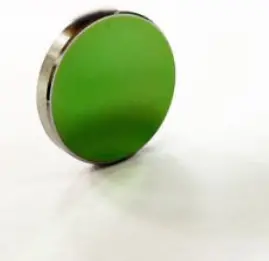
Understanding Laser Focus Lenses and Their Role in Engraving and Cutting
Laser focus lenses are precise optical parts that bring together laser beams that are spread out into a single focus point. This concentration greatly raises the energy density at the top of the material, which lets melting, vaporization, or ablation happen in a small area. Refraction is the scientific concept behind this process. Light that passes through curved lens surfaces bends toward a single convergence point, which is where the most energy is transferred.
Materials That Define Performance
The choice of material has a big effect on how well the lens works with different light bands. Zinc Selenide (ZnSe) is still the best material for CO₂ laser devices that work at 10.6 micrometers because it lets more than 98% of infrared light through. This high level of clarity keeps energy loss to a minimum during beam passing, which keeps the lens substrate from getting too hot. ZnSe lenses are also very stable at high temperatures, so they keep their visual integrity even after long periods of high-power exposure. The material's crystalline structure gives it a natural yellow tint. It doesn't get in the way of infrared light, but it does soak up visible light.
Fiber lasers that work at ranges close to infrared, around 1.06 micrometers, use fused silica. This man-made glass is harder and less likely to scratch than ZnSe glass, which means it will last longer in dirty industrial settings.
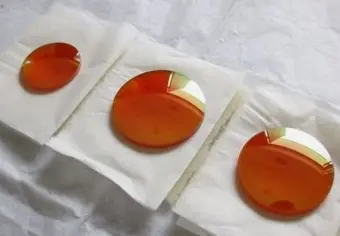
Optical Design Variations
Plano-convex shapes have one flat surface and one outwardly curved surface. They are easy to make and have reliable focusing behavior. When these lenses are set up correctly, with the curved side facing the incoming beam, they reduce spherical aberration, which is a common flaw that makes spot quality worse. Biconvex lenses have two curvy sides that work together to handle beams in a way that is symmetrical and can be used in relay systems or beam expanders.
Aspheric lenses have non-spherical surface shapes that are designed to get rid of all optical defects. These high-tech designs create focus spots that don't bend light, which lets you engrave very fine details and cut with better edge quality. Aspheric lenses are more expensive because they are harder to make, but the improvement in performance makes the cost worth it for uses that need the highest level of accuracy.
Key Criteria to Consider When Choosing Laser Focus Lenses for Your Engraver/Cutter
Wavelength Compatibility and Material Selection
Optical materials have transmission properties that depend on the frequency. Compatibility is critical when selecting laser focus lenses, as lenses designed for CO₂ systems cannot be used in fiber laser platforms. Fiber lasers need fused silica or special infrared glasses, while CO₂ lasers need ZnSe or germanium optics. Making sure of this basic connectivity stops mistakes that cost a lot of money and machine downtime.
Material clarity affects performance life in ways other than basic compatibility. Chemical Vapor Deposition (CVD) makes ZnSe with fewer flaws than other ways of making it, which means it absorbs less in the bulk. This means less thermal lensing, which is when energy is taken and the lens expands and the focus point moves. Even though they are more expensive, industrial users who work with thick materials always get a lot out of CVD-grade glasses.
Focal Length Impact on Application Performance
The working distance between the lens and the object is set by the focal length. This has a direct effect on the spot width and depth of focus. When the focal length is between 50 and 75 mm, the spot size is smaller, which is great for fine etching and cutting thin materials, but the standoff needs to be maintained very carefully. Longer focal lengths (127–200mm) make bigger spots with a deeper field of view. This can work with materials that aren't perfectly flat and are thicker while also allowing for more setting variation.
This theoretical benefit has to be weighed against real issues such as the need for help with gas supply, access to fume extraction, and the risk of collision on complex geometries.
Coating Technology and Durability
Lens surfaces with anti-reflective treatments reduce back-reflection, which can damage parts further up the chain, and increase energy transfer to the workpiece. High-quality multilayer coatings get the remaining reflection down to less than 0.2% per surface, which means that more than 99.5% of the light passes through. These coats have to be able to handle changes in temperature, humidity, and occasional spatter contact without peeling or breaking down.
Cost Versus Performance Analysis
When evaluating laser focus lenses, total cost of ownership is more important than initial purchase price. A cheap lens that needs to be replaced every six months costs more over time than a high-quality lens that lasts three years, and that's before you factor in the time lost during lens changes. There are changes in how much energy is transmitted. For example, a lens with 95% transmission loses 5% of the laser power as heat, so it needs a higher generator output to keep the cutting speed the same as a lens with 99% transmission. Over thousands of hours of use, the cost of energy and the shorter life of the tubes become quantifiable.
Comparing Laser Focus Lenses: Standard Lenses vs Laser-Specific Lenses
The main difference between general-purpose optical lenses and laser-specific focusing optics is how they are designed and how well they need to work. Unlike standard optical lenses, Laser Focus Lenses are specifically engineered for high-energy laser transmission and thermal stability.
Performance Differences in Industrial Settings
Precision surface figures held to fractions of a wavelength in laser-specific designs keep beam disturbance to a minimum. This care in controlling aberrations keeps the Gaussian beam shape that is needed for predicting how materials will interact. Standard lenses deform enough to make asymmetric focus spots, which leads to uneven kerf walls and changes in cutting speed that depend on the direction.
Advantages and Limitations of Specialized Optics
Specialized laser lenses improve the quality of the edges, the accuracy of processing, and the uptime of the machine. Manufacturers say that cutting speeds go up by 15 to 30 percent when they switch from poor optics to properly designed laser lenses. This is because the better energy coupling and less heat disruption make the lenses work better. Sharper detail resolution and regular depth control are especially helpful for engraving applications when creating grayscale images or making small character marks.
If you don't align things correctly, the benefits of deviation control are lost. Maintenance methods are also different. For example, the soft ZnSe base needs to be cleaned carefully with certain liquids so that the surface doesn't get scratched. Standard glass lenses can handle being cleaned more harshly, but they can't match the visual performance.
Supplier Selection and Quality Assurance
Decisions about where to get lenses have a big effect on how consistently they work and how reliable they are over time. Reliable providers use strict quality control measures such as interferometric surface testing, transmission measurement across the lens aperture, and coating adhesion proof to make sure the products are of high quality. Material certificates, coating specs, and damage threshold values should all be part of the documentation.
Manufacturers like Yuhui Laser use ISO9001-certified methods and CE compliance checks to make sure quality control is done throughout the whole production process. Each of our lens parts is checked individually before it is put together to make a full laser system. This makes sure that every unit meets the stated specifications. This methodical technique cuts down on failures in the field and helps make repair schedules more regular.
In the global supply landscape, there are both well-known optical makers and new companies that offer reasonable prices. When building strategic relationships with suppliers, procurement teams should test samples to make sure the suppliers can do what they say they can do and ask for checks of the production facilities. The cost of an early lens failure, which includes machine downtime, faster shipping of a substitute, and the possibility of having to throw away a workpiece, is much higher than the savings from choosing a poor provider.
How to Buy Laser Focus Lenses: Procurement Tips for B2B Clients
Procurement strategies that work well strike a mix between instant access and long-term stability in the supply chain. The way things are bought is very different when they need to be replaced quickly versus when they are planned to be upgraded or the fleet is expanded.
Distribution Channel Selection
Online industrial markets have a lot of options, and prices are clear, so they're good for comparing specs and finding possible sellers. As long as the specs are clear, these platforms work well with standard focal lengths and popular laser types. However, technical help is often limited, so buyers need to be sure they know what they need in order to correctly describe their needs.
When you work with a local distributor, you can get technical advice, faster shipping in an emergency, and maybe even stocking plans for important parts. These middlemen take on some of the hassle of dealing with suppliers and may be able to offer combined billing for a number of different types of parts. When application needs require expert advice or when reducing failure risk is more important than saving money, the value proposition supports small price increases.
When you buy in bulk, have special needs, or need to buy an entire system, having direct ties with manufacturers can be helpful. Manufacturers can help with application engineering, make special coatings, or change focal lengths that can't be found through distribution. Lead times are usually longer than with wholesaler stock, so this method works best for planned purchases rather than last-minute backups.
Customization and Bulk Purchasing Strategies
Standard stock glasses work well for most industrial tasks, but custom optics are better for certain situations where performance is important. Custom focal lengths make the working distance best for each machine geometry, and special finishes deal with problems in the surroundings like corrosive fumes or high humidity. For customization, you need to be very exact about the laser settings, the type of material, the processing speed, and the surroundings.
Depending on how complicated the specifications are, the minimum order quantity for handmade lenses is usually between 10 and 50 units. Lead times range from 4 to 8 weeks, which includes checking the design, applying the finish, and testing for quality. Planning purchases around these dates keeps production from being held up and lets you get the most out of your employees.
When you buy in bulk, you should talk about unit prices, payment terms, shipping dates, and how to handle your inventory. A lot of sellers give discounts based on how many units you buy (25, 50, or 100). To find the best order amounts, buyers should compare the costs of keeping inventory with bulk savings. Holding costs are passed on to producers through consignment deals or vendor-managed inventory programs, which make sure that parts are always available.
Contractual Protections and Warranty Considerations
Technical requirements should be made clear in procurement deals. These should include the type of material, focal length, width, transmission percentage, and coating standards. There are performance guarantees that cover transmission degradation, coating delamination, and substrate flaws for 90 days to a year. Offering extended warranties that last up to 450 days, like the ones Yuhui Laser offers, show that the maker trusts the parts to last a long time and keep operating costs predictable.
When lenses are shipped and don't meet specs or aren't compatible even though they were ordered correctly, return policies cover those cases. Understanding the rules for quality testing and return permission before buying something keeps disagreements from happening. When doing business across borders, where new parts take a long time to arrive, shipping insurance is even more important.
Payment terms affect how you handle your cash flow and how you work with your suppliers. For known buyer-supplier ties, standard net-30 terms work well. For new deals, letters of credit or payment-on-delivery arrangements offer more security. Buyers who buy in bulk may be able to negotiate longer terms or savings for paying early, which can improve the efficiency of working capital.
Practical Use Cases and Industry Applications of Laser Focus Lenses
Laser focusing optics make a lot of different production processes possible. The lens specifications are chosen based on the needs of the application. Knowing about these real-world examples helps procurement teams guess what parts will work best and plan ahead for performance goals.
Metal Fabrication and Sheet Processing
In metal fabrication, laser focus lenses are essential components in fiber laser cutting systems for stainless steel, aluminum, and carbon steel processing. Focal lengths range from 125 mm to 200 mm and can handle materials from thin gauge to 25 mm plate thickness. Longer lengths provide the depth of focus needed for cutting thick sections. When it comes to car parts, edge quality and dimensional accuracy are very important. This is why luxury optics that keep tight standards during multiple shifts are used.
Handheld laser welding systems have lenses with shorter focal lengths (50–100 mm) so they can get the small spot sizes needed for fine control of the heat input. Strong lens safety systems, like cover glass that keeps weld spatter off of the main focusing lens, are useful in these situations. Maintenance times vary a lot depending on the processing environment. For example, if the environment is dirty or has a lot of scatter, the cover glass needs to be replaced more often to keep the main lens in good shape.
When stainless steel processing plants upgrade to better focusing optics, they report measured efficiency gains. Better beam focus cuts down on heat-affected zones, which lets parts fit together more tightly and lose less material. One company that makes hardware saw a 22% increase in output after switching from standard lenses to military-grade optics with better thermal stability. This shows that expensive components can be useful for business.
Precision Engraving and Marking Applications
Laser tagging systems are needed in many fields, from aircraft to medical devices, so that products can be identified and tracked. Focusing lenses with very short focal lengths (25–75 mm) are used in these uses to get spot sizes below 50 micrometers, which lets you read text at 1 mm character heights. Maintaining a constant focal point across the marking field is very important for marking speed and brightness, so lenses with low thermal drift are needed.
CO₂ laser engravers that work with wood, plastic, and other non-metal materials need ZnSe filters that let infrared light so that energy can be delivered efficiently. These systems usually have focus mechanisms that can be adjusted so that users can find the best depth of focus for different thicknesses of material. The quality of the lens directly affects the sharpness of the engraving details. High-quality lenses reproduce digital pictures with clear grayscale gradients.
In the signs business, big-format laser engravers with long focal-length lenses (200–300 mm) are used to work with bigger materials over longer distances. For these uses, it's important that the spot size stays the same across large marking fields. This means that the lenses need to be optically adjusted to account for field curve effects.
Automation Integration and Smart Manufacturing
Modern production lines use automatic processes to include laser processing stations. This makes the focusing optics more reliable and consistent in how they work. On assembly lines for cars, laser welding cells work constantly with little help from people. If a lens fails, expensive output stops happen. In these settings, strong optics with long service lives and regular repair times work best.
More and more, machine vision systems work with laser processing tools. The same optical path is used for both processing and checking. This combination needs focusing lenses that can work with multiple wavelengths and let both the processing laser wavelength and visible inspection light through. With these kinds of requirements, optical design and covering formulas need to be very careful.
Smart manufacturing projects use data from sensors to improve laser settings right now. These optimization methods are affected by the way the focusing lens works. For example, thermal lensing changes the relationship between the desired and real focal positions, which needs to be fixed in software or re-calibrated on a regular basis. Lenses that are more resistant to heat make these control systems easier to use and make the process more consistent.
At Yuhui Laser, we've equipped numerous automation integrators with unique laser systems with focusing optics that work best for their production needs. Our flexible metal structures and great heat-dissipation designs make sure that the power performance stays stable even after years of nonstop use. Using special optical lenses and high-quality beam delivery together keeps the scanning and cutting very precise, which is needed for automatic quality control. After a year of use, these systems still produce the same amount of power without losing any of it, meeting the stability needs of modern industry.
Conclusion
To choose the right laser focus lenses, you have to weigh the technical requirements, the needs of the application, and the total cost of ownership. Laser Focus Lenses' processing performance, upkeep needs, and operating costs are all directly related to the type of material they are made of, their focal length, and the quality of their coating. Fused silica meets the needs of fiber lasers, while ZnSe optics are great at transmitting IR light and staying stable at high temperatures for CO₂ devices. Instead of just looking at the price, procurement strategies should judge suppliers on their quality assurance processes, expert help skills, and track records of performance. When makers and wholesalers understand these principles, they can choose focusing optics that work reliably over long service lives. This helps with production efficiency and staying competitive in tough industrial markets.
FAQ
Can I use standard optical lenses instead of laser-specific focusing lenses?
Standard optical lenses don't have the coatings, thermal design, or damage level grades that are needed for laser uses. If you use general optics, you run the chance of severe lens failure, bad beam quality, and damage to laser parts upstream. The small cost savings quickly go away when you consider how often the parts need to be replaced and how badly the processing works.
How do I determine the appropriate focal length for my application?
The thickness of the material and the amount of clarity needed help choose the focal length. Shorter focal lengths (50–100mm) that make small spot sizes are good for thin materials and fine etching. Longer focal lengths (125–200mm) are needed for thicker materials or surfaces that aren't smooth. This gives the lens a deeper field of view. The working distance is also limited by the shape of your machine and the way it delivers help gas.
What lead time should I expect for custom lens orders?
Standard custom specs usually take 4-6 weeks from the time the order is confirmed until it is delivered. This time includes verifying the optical design, making the base, applying the coating, and testing for quality. If you need complicated standards like new coating formulas or materials that aren't standard, the time frame could be extended to 8–10 weeks. Planning purchases around these plans keeps output from being interrupted.
Partner With a Trusted Laser Focus Lenses Manufacturer
Yuhui Laser makes high-precision focusing lenses that are designed for tough industrial uses in areas like metal fabrication, precise engraving, and automatic production. Our ZnSe focusing lenses have a high infrared transparency of more than 98%, great focusing performance with finely focused light spots, and better laser damage resistance that makes them perfect for high-power operation over a long period of time. Good temperature stability keeps the shape from changing over time, and smooth, wear-resistant sides make the product last 1.5 times longer than similar ones. Our ISO9001 and CE-certified production plant carefully checks each lens for quality before sending it out to customers. We also offer the best guarantee in the business, covering your lenses for 450 days. We keep a large inventory that allows for 14-day delivery on normal specs. We can also make changes to meet the special needs of your application. Get in touch with our engineering team at jianghui@yuhui-laser-tech.com to talk about your focusing lens needs and find out how our factory-direct supply model can help your laser systems work better and cost less.
References
1. Bass, M., et al. (2010). Handbook of Optics, Volume IV: Optical Properties of Materials, Nonlinear Optics, Quantum Optics. McGraw-Hill Professional.
2. Ready, J.F., & Farson, D.F. (Eds.). (2001). LIA Handbook of Laser Materials Processing. Laser Institute of America.
3. Steen, W.M., & Mazumder, J. (2010). Laser Material Processing (4th ed.). Springer-Verlag London.
4. Ion, J.C. (2005). Laser Processing of Engineering Materials: Principles, Procedures, and Industrial Application. Butterworth-Heinemann.
5. Powell, J. (1998). CO2 Laser Cutting (2nd ed.). Springer-Verlag London.
6. Migliore, L. (Ed.). (2013). Laser Materials Processing. CRC Press.
Contact us directly for customized solutions, quotations and long-term strategic cooperation.