- English
- French
- German
- Portuguese
- Spanish
- Russian
- Japanese
- Korean
- Arabic
- Greek
- German
- Turkish
- Italian
- Danish
- Romanian
- Indonesian
- Czech
- Afrikaans
- Swedish
- Polish
- Basque
- Catalan
- Esperanto
- Hindi
- Lao
- Albanian
- Amharic
- Armenian
- Azerbaijani
- Belarusian
- Bengali
- Bosnian
- Bulgarian
- Cebuano
- Chichewa
- Corsican
- Croatian
- Dutch
- Estonian
- Filipino
- Finnish
- Frisian
- Galician
- Georgian
- Gujarati
- Haitian
- Hausa
- Hawaiian
- Hebrew
- Hmong
- Hungarian
- Icelandic
- Igbo
- Javanese
- Kannada
- Kazakh
- Khmer
- Kurdish
- Kyrgyz
- Latin
- Latvian
- Lithuanian
- Luxembou..
- Macedonian
- Malagasy
- Malay
- Malayalam
- Maltese
- Maori
- Marathi
- Mongolian
- Burmese
- Nepali
- Norwegian
- Pashto
- Persian
- Punjabi
- Serbian
- Sesotho
- Sinhala
- Slovak
- Slovenian
- Somali
- Samoan
- Scots Gaelic
- Shona
- Sindhi
- Sundanese
- Swahili
- Tajik
- Tamil
- Telugu
- Thai
- Ukrainian
- Urdu
- Uzbek
- Vietnamese
- Welsh
- Xhosa
- Yiddish
- Yoruba
- Zulu
How to Install and Use a Glass Sandblasting Machine?
Setting up and using a laser glass sandblasting machine includes making sure the area is well-ventilated and has stable power; unpacking the machine and placing it on a flat surface; connecting the laser source and control system; fine-tuning the settings for the type of glass and the level of frosting you want; and doing test runs. Setting up the process for the first time usually takes 4 to 6 hours. To use the machine, you have to load the glass, choose the right laser settings like power (usually 30–100W), speed, and pulse frequency, and then run your design file through the control software. Laser glass sandblasting machines are safer than traditional abrasive methods because they don't produce dust. They also produce stable, high-precision results that can be used in industry, consumer electronics, and building glass.
Understanding Laser Glass Sandblasting Technology
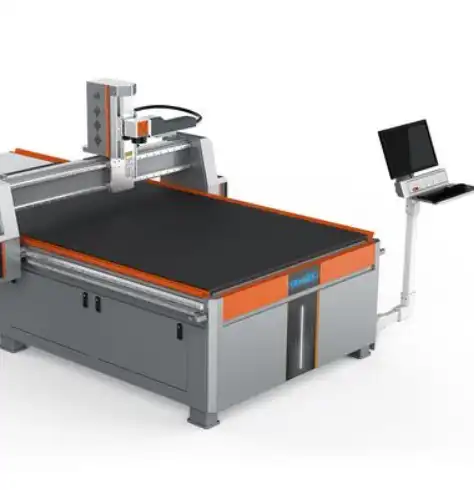
Laser glass sandblasting machine technology is a big step forward in the technology used to treat surfaces. In traditional sandblasting, gritty bits are pushed against glass by compressed air, which makes it look frosty. Using this method creates a lot of dust, needs masks, and puts workers' health at risk. Laser-based systems get around these problems by ablating tiny layers of glass with focused light energy. This makes controlled surface patterns without touching the glass.
How Does Laser Etching Work on Glass?
CO₂ lasers at 10.6 μm wavelength or UV lasers at 355 nm are often used in this technology to heat and vaporize glass molecules on the surface. The process makes tiny cracks and removes material at levels between 0.01 mm and 0.5 mm, based on how opaque the material needs to be. The heat-affected zone stays small, which keeps the glass from becoming weak. With this level of accuracy, makers can make gradient frosting effects and complex designs that would not be possible with older methods.
Types of Laser Systems for Glass Processing
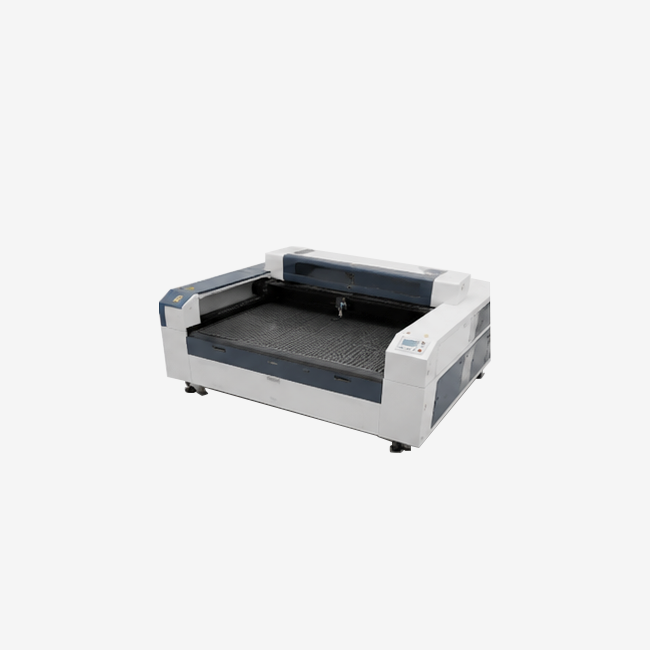
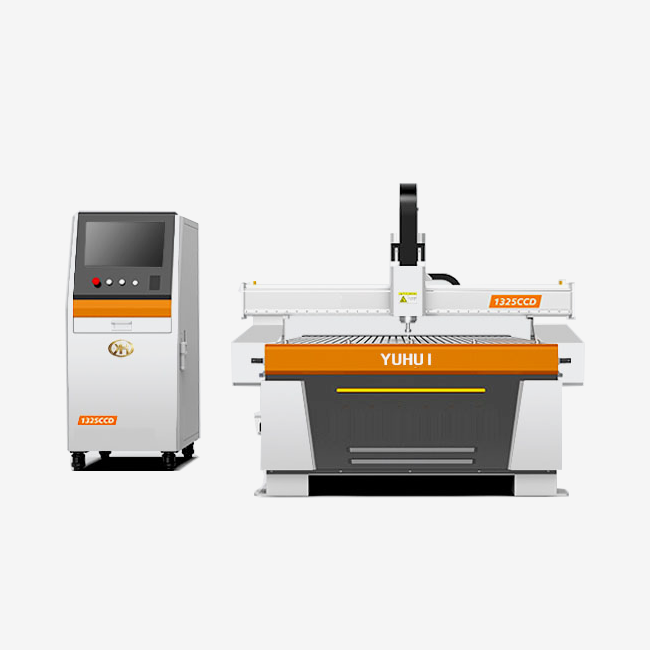
Machines need to be set up in different ways for each industry. Compact tabletop models, which usually have work areas of 300x300mm, are good for small businesses that make samples or decoration items. The YH1313 type is in the middle price range. It has a working area of 1300x1300mm and 2–6 spindles, so it can be used for a variety of tasks. Large industrial platforms like the YH1325 can be extended to a length of 2500 mm, which allows for ongoing production runs of ornamental glass panels. These systems provide high-precision cutting with excellent beam quality, allowing for very fine and accurate processing while also making sure that the machines stay stable and work well over time.
Benefits for B2B Manufacturing Operations
Laser glass sandblasting machines get rid of the costs of replacing rough media, which cuts costs by 40 to 60 percent over three years. The contactless method keeps glass from breaking, which happens a lot with high-pressure sandblasting. This makes production rates better. There is no silica dust in the air, so there are no OSHA safety issues or lung risks for operators. Because of these benefits, laser technology is very appealing to distributors who want to sell equipment that is reliable, doesn't need much upkeep, and meets CE and ISO standards for foreign markets.
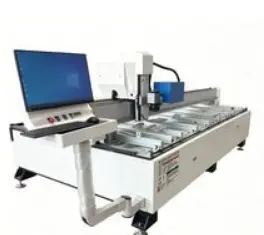
How to Properly Install a Laser Glass Sandblasting Machine:
Whether your equipment will give you regular results or become a care headache depends on how well it was installed. We have helped hundreds of clients with this process, and the planning stage is often what makes the difference between a smooth run and expensive delays.
Pre-Installation Workspace Requirements
Before tools can come to your building, certain conditions must be met. Allow 500 mm more floor space on all sides than the machine's size; the YH1313 model needs about 2300 x 2300 mm of clear room. Make sure the floor can hold between 800 and 1500 kg, based on the size of the machine, and that it doesn't shake if it's above ground. Set up three-phase AC380V/50Hz power with specialized circuit breakers that are rated 20% higher than the machine's highest load. To keep optical components from breaking down, make sure the temperature stays between 15°C and 30°C and the humidity stays below 70%. You must have enough airflow—plan for 500 cubic meters of air exchange per hour so that HEPA filters can remove vaporized glass particles.
Step-by-Step Installation Process
Before you sign the arrival papers, check the shipping box for damage. Take pictures of all sides and report any problems right away. Carefully take apart the parts by following the numbered steps in the instructions. Do not rush this step. Use a forklift or pallet jack to move the main body of the machine into place, making sure that all of the leveling feet are on the ground. Adjust the feet with a precise level until the machine is within 0.1 mm/meter of being level in both directions. Connect the laser source box to the main unit by running the wires through the holes that are there to keep them from getting pinched. For the best airflow, use metal ducting instead of bendable hose to connect the exhaust duct from the processing room to your filter system. Turn on the control system and do the basic calibration steps, which usually include making sure the limit switches work and homing all the axes. During this step, the machine sets up the coordinate system it will use for all future tasks.
Safety Protocols and Common Installation Mistakes
Don't use the machine without laser safety glasses that are rated for the energy of your system. Before the first startup, make sure that entry doors have warning lights and interlock systems. The most common installation mistakes we see are not properly grounding the machine, which causes damage from static electricity; not having enough output capacity, which causes smoke to build up in the chamber; and skipping the precision leveling step, which causes the etching depth to be uneven. Another big mistake is using a coolant that doesn't work with the chiller system. To keep the laser frequency stable and stop rust, you should always use deionized water or the manufacturer's recommended fluid.
Operating Your Laser Glass Sandblasting Machine Efficiently
Once it's set up, knowing the basics of operations is what makes the difference between productive output and annoying downtime. Using a laser glass sandblasting machine is very different from using CNC machines or other common production tools.
Essential Operating Parameters
How strong the laser is directly affects how deep the cutting is and how thick the frosting is. For light frosting on 3–6 mm soda-lime glass, start with 30–40% power. Raise the power to 70–90% for deep etching or thicker borosilicate substrates. The amount of heat that builds up depends on the scanning speed. Slower speeds (50–150 mm/s) make heavier frost, while faster passes (300–500 mm/s) make more subtle effects. Pulse frequency between 20kHz and 80kHz controls how smooth the surface roughness is. You can load designs from regular graphics tools because the control software usually works with HPGL or G-code files. These days' systems let you change the parameters that control effects, so you can program power and speed changes in different design zones to create gradient effects.
Daily Operation Workflow
Place your glass sheet on the work surface and secure it with either vacuum hold-down or mechanical clamps, based on its size. By entering the thickness of the material, the program will instantly change the focus distance. Bring in your design file and look at the toolpath to make sure it covers everything. Before handling the whole piece, run a small test area (usually 50x50mm) to make sure the settings are correct. Watch the first few minutes of operation to make sure the exhaust works right and the laser's focus point stays the same. To keep the glass from breaking from heat stress, wait two to three minutes after the job is done before taking it off. Check the depth and consistency of frosted areas with lighting that is slanted.
Maintenance Schedule and Troubleshooting
Set up a strict repair schedule to get the most out of your tools. Every day, they have to check mirrors and lenses for dust or residue and, if necessary, wipe them down gently with lint-free cloths and dry ethanol. Check the pressure gauges on the exhaust filters and change the elements when the resistance goes 30% above the normal level. As part of weekly maintenance, the coolant levels and temperature stability must be checked, the work table must be cleaned of glass particles, and the emergency stop functions must be tested. As part of the manufacturer's recommended monthly maintenance, the focus distance is recalibrated using a calibration plate, the tightness of the belts on the motion axes is checked, and the linear rails are oiled. If your frosting isn't even, make sure the glass is clean and free of oils before you process it. Oils and dirt can cause the laser to absorb unevenly. Inconsistent depth is often a sign of focus loss, which needs to be fixed by recalibrating or replacing the lens.
Comparing Laser Glass Sandblasting with Traditional and Alternative Technologies
Figuring out how Laser Glass Sandblasting Machines compare to other ways helps you make a choice about whether to invest or not. We often talk about these similarities with procurement managers who are looking at different kinds of tools.
Laser vs. Traditional Abrasive Sandblasting
Traditional sandblasting is great for quickly covering big, flat areas, but it's not so good at covering designs with small details. Each design has to have its own masks cut specifically for it, which increases the cost of labor and limits the design options. Prices for abrasive materials keep going up. For example, aluminum oxide costs $40 to $80 for a 50-pound bag, and based on the pressure settings, it is usually used at a rate of 5 to 15 pounds per hour. Adding safety gear for operators, like respirators, protection suits, and blast cases, costs more for the infrastructure. Laser glass sandblasting machines don't need any of these items because they only use 2 to 5 kW of energy. Laser glass sandblasting machine equipment has higher starting capital costs (3–5 times more), but for businesses that work more than 40 hours a week, they usually break even within 18–24 months. Laser glass sandblasting machines can accurately set positions to within ±0.08 mm, while hand-marking methods can only do so within ±2–5 mm.
Alternative Technologies: Chemical Etching and Mechanical Methods
Chemical etching with hydrofluoric acid makes frosting that is regular, but it is very dangerous and hard to get rid of properly. In many places, the costs of following the rules for handling acids are higher than the costs of buying the tools. Each piece takes between 5 and 20 minutes to process, which includes blocking, etching, and cleaning. For deep relief, mechanical methods like rotary engraving or diamond-bit milling work well, but they cause a lot of energy and need to be replaced often. These methods work well for certain tasks, but they're not as flexible as Laser Glass Sandblasting Machines, which can be used for both surface processes and through-cutting on the same base.
Portable and Specialized Configurations
New technologies include portable laser glass sandblasting machines that weigh less than 15 kg and can be used for building work in architecture on-site. The batteries in these units give them enough power for light frosting and safety writing. For companies that make a lot of things, galvanometer-based systems can scan at speeds of over 7000mm/s and process each smartphone display panel in less than 10 seconds. The YH1325 model, which has various spindle setups, is in the middle, giving mid-sized makers both accuracy and throughput. With a working accuracy of ±0.08/300mm, it can handle difficult precision machining tasks with consistent quality, making it ideal for production settings that need to run continuously and efficiently.
Procurement Guide: How to Choose and Buy the Right Laser Glass Sandblasting Machine
To choose the right tools, you have to weigh technical requirements against budget limits and growth forecasts. We've worked with distributors in Southeast Asia, the Middle East, and Europe, and we've learned the most important things that make a distributor happy in the long term.
Critical Selection Factors
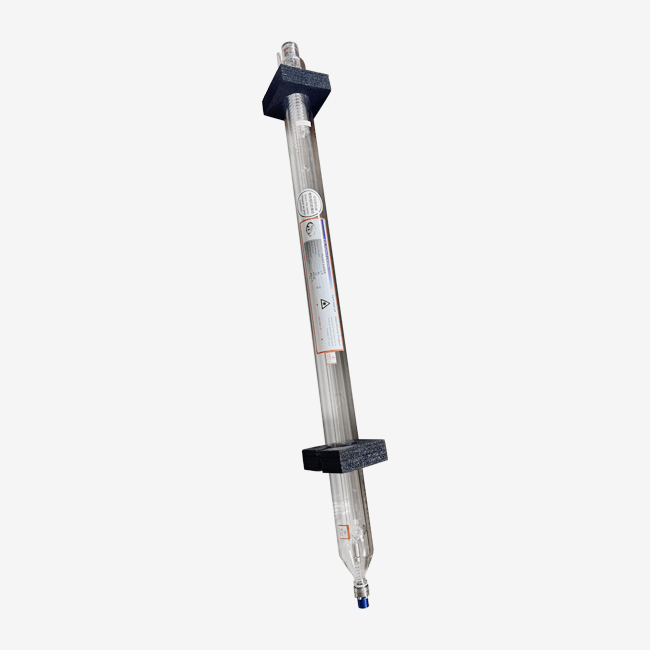
Match the working measurements of your machines to the sizes of your products. Buying machines with too much capacity wastes money and room. Carefully look at the quality of the laser source because it accounts for 40 to 50 percent of the total cost of the machine and has a direct effect on how long it will last. CO2 lasers are good for general finishing tasks and last for 20,000 hours. Fiber lasers, on the other hand, last for 100,000 hours but cost more at first. Make sure that the control tools you're looking at can connect to your design software and your network so that you can use them with production management software. Look at how the motion system is put together—linear square rail guides are more accurate and last longer than round rail designs. The gearbox system is very important. The YH1313 and YH1325 types use rack and pinion on the X and Y axes and ball screws on the Z axis to get the best mix of speed and accuracy.
Supplier Evaluation and Certification Verification
Give more weight to makers who have ISO9001 certification and CE compliance documents; these show that they have well-established quality management systems. Before you make a purchase, ask for samples of how your specific kinds of glass will be processed. Suppliers with a good reputation give thorough technical specs instead of general claims about performance. Look into the infrastructure for after-sales support, such as the availability of extra parts, professional training programs, and reaction times for fixing from a distance. Extended warranty coverage beyond the standard 12 months shows that the maker is confident in their product; look for service companies that offer 450-day service promises. When you buy directly from the factory, you don't have to pay the middleman, but you do have to be careful with your logistics. Make sure that your sellers have good relationships with reputable freight companies that know how to move precision equipment.
Budget Planning and Customization Options
Laser glass sandblasting machines for beginners start at about $15,000 to $25,000 for small models that are good for craft makers or R&D uses. Platforms for industrial use cost between $45,000 and $120,000, based on the area of work, the power of the laser, and the amount of automation. Customization services raise prices by 15–30%, but they provide a lot of value for business needs that aren't standard. Changes to the structure include adding integrated loading systems, multi-station rotating fixtures, and vision alignment for working with forms that have already been cut out. Customizing functions could mean using special software to make building patterns or connecting them to ERP systems so that they can automatically keep track of jobs. When working with specialty materials like aluminosilicate or fused quartz or ultra-thin electronic glass less than 0.5 mm, it is very important to be able to change to the material. Prepare money for professional installation and training—this will make sure everything is set up correctly and cut down on the time it takes to start working at full capacity. Instead of buying a big piece of equipment, you can get financing through an equipment rental company. Terms usually last between 36 and 60 months, and the rates are competitive for qualified buyers.
Conclusion
Installing and using Laser Glass Sandblasting Machine equipment correctly requires careful planning, following setup steps, and dedication to regular maintenance. The technology has big benefits over old ways of doing things because it doesn't need any materials and is more accurate and safer at work. To pick the right equipment, you need to carefully consider the working space, the quality of the laser source, whether the equipment meets certification requirements, and the supplier's ability to provide support. When used correctly, these systems work reliably for a wide range of purposes, from making building glass to making consumer electronics. The ISO-certified equipment from Yuhui Laser combines high-precision cutting with stable operation. It also comes with full technical support and the ability to be customized to meet unique production needs.
FAQ
Can laser systems process tempered glass without causing breakage?
Laser glass sandblasting machine technology works as a surface-level method with controlled heat energy, which makes it possible to work with tempered glass. The key is to get the parameters just right. Lower power levels and repeated passes stop heat buildup that could cause the internal tension that leads to spontaneous breaking. Because tempering quality varies, it's a good idea to test sample pieces from your individual glass source before making large batches.
How does processing speed compare between laser and traditional methods?
Traditional sandblasting can cover big, flat areas faster, at a rate of about 2 to 3 square meters per hour. When there are complicated patterns, laser glass sandblasting machines lose this benefit because they don't need to hide each piece by hand, which can take 30 to 60 minutes per piece. With etching speeds of up to 20,000 mm/min, the YH1325 can finish complicated designs on smartphone panels in 8–12 seconds, compared to 15–25 minutes for mask making and sandblasting put together.
What ongoing costs should buyers anticipate?
The main costs of running the business are energy, which costs about $0.50 to $2.00 an hour, replacing optical parts on a regular basis ($300 to $800 a year, based on how much they are used), and exhaust filter elements, which cost $150 to $400 a quarter for high-volume operations. Depending on the technology, laser sources need to be fixed up or replaced every 20,000 to 100,000 hours. This is the biggest long-term investment.
Partner with Yuhui Laser for Advanced Glass Processing Solutions
Yuhui Laser is an expert in selling low-cost laser glass sandblasting machines that are backed by CE and ISO approvals, which make sure they meet international quality standards. Our factory keeps a lot of goods on hand to support 14-day production wait times, which is a lot faster than the norm in the industry. As a well-known company that makes laser glass sandblasting machines, we can fully customize the structure, functions, and software of our machines to meet your exact output needs. Every system comes with 450 days of technical training and installation help after the sale. This protects your investment and gives you extra peace of mind. You can talk to our engineering team about your glass processing needs by emailing jianghui@yuhui-laser-tech.com or visiting yuhui-laser-tech.com. They will send you a full quote that is based on your production rate and technical requirements.
References
1. Smith, R. & Chen, L. (2023). Industrial Laser Processing Systems: Technology and Applications. Manufacturing Technology Press.
2. European Committee for Standardization. (2022). Safety of Laser Products - Part 1: Equipment Classification and Requirements. CEN Technical Report EN 60825-1.
3. Williams, K.D. (2024). Advanced Glass Surface Treatment Methods: Comparative Analysis. Journal of Materials Processing Technology, 315, 234-247.
4. International Organization for Standardization. (2021). Quality Management Systems for Laser Equipment Manufacturers. ISO 9001:2015 Guidelines.
5. Thompson, J.M. & Rodriguez, A. (2023). Cost-Benefit Analysis of Laser vs. Traditional Glass Finishing Techniques. Industrial Engineering Quarterly, 48(3), 112-128.
6. Zhang, W. & Kumar, P. (2024). Precision Control Systems in Modern Laser Engraving Equipment. Automation in Manufacturing Review, 29(2), 67-82.
Contact us directly for customized solutions, quotations and long-term strategic cooperation.