- English
- French
- German
- Portuguese
- Spanish
- Russian
- Japanese
- Korean
- Arabic
- Greek
- German
- Turkish
- Italian
- Danish
- Romanian
- Indonesian
- Czech
- Afrikaans
- Swedish
- Polish
- Basque
- Catalan
- Esperanto
- Hindi
- Lao
- Albanian
- Amharic
- Armenian
- Azerbaijani
- Belarusian
- Bengali
- Bosnian
- Bulgarian
- Cebuano
- Chichewa
- Corsican
- Croatian
- Dutch
- Estonian
- Filipino
- Finnish
- Frisian
- Galician
- Georgian
- Gujarati
- Haitian
- Hausa
- Hawaiian
- Hebrew
- Hmong
- Hungarian
- Icelandic
- Igbo
- Javanese
- Kannada
- Kazakh
- Khmer
- Kurdish
- Kyrgyz
- Latin
- Latvian
- Lithuanian
- Luxembou..
- Macedonian
- Malagasy
- Malay
- Malayalam
- Maltese
- Maori
- Marathi
- Mongolian
- Burmese
- Nepali
- Norwegian
- Pashto
- Persian
- Punjabi
- Serbian
- Sesotho
- Sinhala
- Slovak
- Slovenian
- Somali
- Samoan
- Scots Gaelic
- Shona
- Sindhi
- Sundanese
- Swahili
- Tajik
- Tamil
- Telugu
- Thai
- Ukrainian
- Urdu
- Uzbek
- Vietnamese
- Welsh
- Xhosa
- Yiddish
- Yoruba
- Zulu
What are the Differences Between Air-Cooled and Water-Cooled Handheld Laser Welding Machines? Which One is Most Suitable?
When choosing small laser welding tools for your business, it's important to know how the cooling system works. The main way that air-cooled and water-cooled small laser welding tools are different is how they handle heat. The need for external water chillers or pumps is eliminated by air-cooled handheld fiber laser welding machines, which use built-in fan systems and heat-pipe technology to remove heat. The machine's size is cut by about a third, and its weight is cut to about 40 kg, making it very easy to move around. Water-cooled systems, on the other hand, use external tanks to move liquid coolant around to handle higher heat loads during extended operation. This makes them more efficient at cooling high-power applications that run all the time.
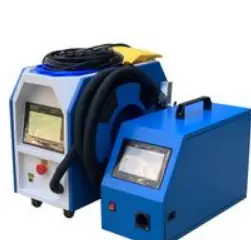
Understanding Air-Cooled vs Water-Cooled Handheld Fiber Laser Welding Machines
How Air-Cooled Systems Work
Portable laser welders that are cooled by air use forced air movement and improved heat sink designs to keep their working temperatures at the right level. These systems take in air from the outside, filter it, move it over parts that remove heat, and then let hot air out through exhaust vents. Since there is no liquid cooling, there is no chance of freezing in the winter or problems with condensation in the hot, humid summer. Because of this, air-cooled units are a great choice for mobile repair teams and workplaces that don't have their own cooling systems.
Water-Cooled System Mechanics
Handheld laser welders that use water have chillers on the outside that pump coolant through protected tubes around important electronic and optical parts. The constant flow of liquid makes it easy for heat to escape, which lets the machine keep up higher power rates for longer without slowing down. Even though these systems cool very well, the chiller unit needs more floor room, coolant levels need to be checked often, and they need to be protected from freezing temperatures when they are being stored or moved.
Design and Portability Differences
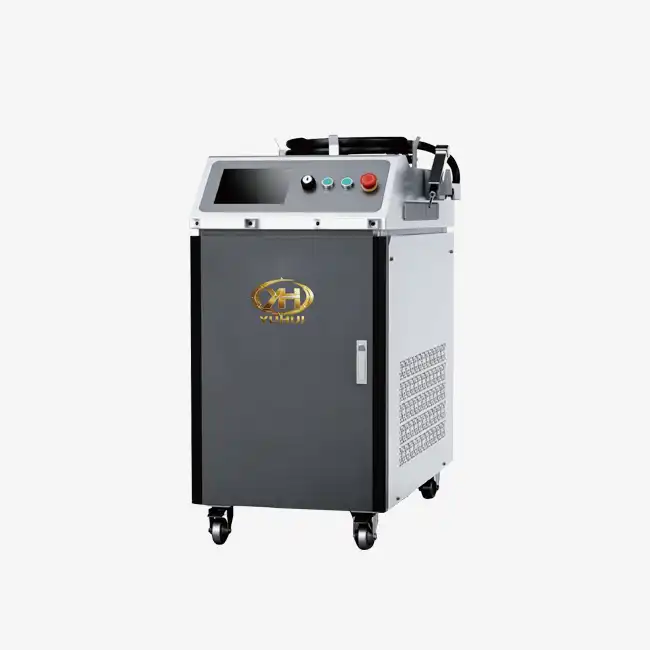
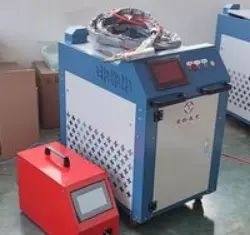
Because Air-cooled handheld fiber laser welding machines are small, they make it easier to move around. With dimensions of 53x27x60cm and a weight of only 40 kg, these machines are easy to move from one job site to another or around busy production floors. Water-cooled options usually weigh more than 80 kg with the chiller unit, which means they need a special place to be installed and are less flexible for on-site repair needs. Because they are portable, air-cooled models are great for distributors who work with clients who have multiple sites or for field techs who do emergency repairs.
Key Performance and Operational Considerations
Cooling Efficiency and Power Capacity
Thermal management has a direct effect on the quality of the welding and the life of the machine. Through optimised airflow patterns that stop optical component degradation, air-cooled handheld fiber laser welding machines with 1200W Raycus laser sources keep the beam quality stable. In normal conditions, these devices can work nonstop for 6 to 8 hours at temperatures up to 45°C. Water-cooled setups work best in places that need high power output for a long time, like when welding thick materials (more than 5 mm) or running production lines with little downtime between rounds. When choosing between cooling ways, you should think about how much work you need to do and the weather.
Maintenance Requirements and Longevity
Air-cooled handheld laser welders only need simple maintenance jobs that don't stop the machine from working. Operators only need to clean the protective lens every day with approved cleaners and check the air intake screens once a week to see if dust has built up. This ease of use lowers the cost of upkeep and gets rid of the need for specialized experts. Water-cooled systems need more care, like checking the quality of the coolant every month, inspecting the pumps on a regular basis, and winterizing the systems every year. Manufacturers like Yuhui Laser have done rapid aging tests that show that both types of cooling have service lives of more than 50,000 hours when they are properly kept.
Safety and Compliance Standards
If they are made to order, both cooling setups meet strict international safety standards. Air-cooled handheld fiber laser welding machines that are compliant with CE and ISO 11553-2 standards have multi-point interlocks that stop the laser from shining unless the welding nozzle makes contact with the object. These safety features keep workers from getting accidentally exposed and keep FDA rules in line for places that need them. To keep things from breaking down because they get too hot, water-cooled units have extra safety features like low-coolant monitors and thermal stop circuits. Understanding these safety features is very important for procurement managers who have to make sure that the workplace follows all the rules set by different regulatory bodies.
Application Scenarios and Suitability Analysis
Mobile and On-Site Applications
Air-cooled laser welding technology is very helpful for field service activities. Repair workers who are building bridges, maintaining pipelines, or making ships can take these lightweight units to rural areas without the need for extra cooling gear. The standard 220V power requirement of the system means that it doesn't need any special electrical equipment and can be connected to regular engines on the job site. One Vietnamese company that makes car parts said that switching to air-cooled portable laser welders cut on-site repair time by 40%. They said that the equipment's quick setup and readiness to use were key production factors.
High-Volume Manufacturing Environments
Because they can handle more heat, water-cooled systems are often preferred by factories that work multiple shifts and need to weld all the time. Fabrication shops that work with stainless steel and make hundreds of parts every day depend on tools that are cooled by water to keep the weld penetration constant without losing heat. In these places, there is usually specialized cooling equipment, which makes the extra work worth it. Air-cooled handheld fiber laser welding machines, on the other hand, are becoming more popular among makers whose production plans include both batch runs and custom jobs. In a job shop, being able to quickly move the machine from one area to another without having to separate the coolant lines speeds up the process.
Industry-Specific Considerations
Handheld laser cutters that are cooled by air work best for making hardware with aluminum, stainless steel, and galvanized sheet metal. With a power output of 1200W and a wire capacity range of 0.8mm to 1.6mm, the Yuhui HJ-1200 model solves common joining problems in the making of lift parts, the putting together of kitchen equipment, and artistic metalwork. Four functions in one machine: welding, cutting, cleaning, and writing. This means that you don't need to buy and train for multiple specialized machines. Because the tools can be used in a variety of situations, distributors who work with small to medium-sized manufacturers with 20 to 300 workers say their customers are very happy.
Comparative Market Insights and Brand Highlights
Performance and Feature Comparison
Leading companies in the small laser welding market have come up with their own ways to improve cooling systems. Equipment with Raycus laser sources, like Yuhui Laser's air-cooled types, has an electro-optical conversion efficiency of more than 30%, which is the same as equipment with water-cooled sources when it comes to energy performance. The military-grade THF4 lens that comes with high-end units guarantees beam quality with M² values below 1.1, which is important for keeping heat-affected zones on sensitive materials as small as possible. When looking at specs, procurement professionals should make sure that the stated power numbers show the real welding capacity and not just the top theoretical output. A metallographic weld study can help them understand the difference.
Cost Analysis and Return on Investment
When you take out the cost of the chiller, the initial cost of purchasing an air-cooled handheld fiber laser welding machine is usually 15 to 20 percent less than the initial cost of purchasing a similar water-cooled system. Aside from the lower buy price, operating economics also favor air-cooled units because they use less energy, require less upkeep, and don't need as much facility infrastructure. A sheet metal maker in Thailand estimated that replacing standard MIG welding stations with air-cooled laser systems would pay for itself in 14 months. This was because the cost of filler materials went down, there was no need for post-weld grinding, and fewer skilled workers were needed. Because of these cost savings, air-cooled technology is especially appealing to buyers in growing industrial markets who want to save money.
OEM Customization and Bulk Procurement
Manufacturers like Yuhui Laser set themselves apart by being able to customize their products in a way that fits the needs of their distributors. Their 14-day production lead time lets them quickly complete both standard and customized orders, such as those with private labeling, custom color schemes, and localized software interfaces. When a buyer orders more than one unit, they can take advantage of volume prices while still being able to select specific features for each machine. This flexibility is helpful for companies that sell tools and want to build a brand footprint in a certain area, as well as for automation integrators who want to add laser welding to complete production lines. Because the company keeps a lot of goods on hand, products are always available, even during times of high demand. This keeps lead times from getting too long for some international sellers.
Making the Decision: Which Cooling System is Most Suitable for Your Business?
Evaluating Your Operational Requirements
When deciding between air-cooled and water-cooled small laser welding technology, you need to be honest about how you work and where you make things. Portable laser welders that are cooled by air are most useful for jobs that need to be mobile, like installation workers or repair service providers. By getting rid of their outside cooling systems, these companies can answer customer service calls quickly and without any problems. On the other hand, water-cooled systems can keep their high power levels for longer, which is useful for factories that already have devoted welding units. Before deciding on either cooling method, procurement leaders should look at the yearly production numbers, the width ranges of the materials, and environmental factors.
Total Cost of Ownership Considerations
Long-term financial planning includes more than just the original cost of the tools. It also includes the costs of running the machine over its entire life. Only the protective lens needs to be changed every 6 to 12 months, depending on how often the machine is used, making air-cooled handheld fiber laser welding machines an appealing total cost savings option. Water-cooled options may have higher energy bills because they need to replace coolant more often and have their pumps serviced more often. Businesses that already have centralized cooling systems, on the other hand, may not notice the small changes in costs. Buyers on a tight budget who are reviewing quotes from several sellers can get better information if they figure out all of their ownership costs, such as the cost of training and keeping spare parts on hand.
Future-Proofing Your Investment
When choosing a technology, you should think about how the business will grow and how market needs will change. When operations need to grow, air-cooled fiber laser welding equipment is very flexible because more units can be added without having to change the way the building is set up. This modularity allows for gradual increases in capacity that are in line with income growth, which lowers the financial risk for new makers. The tools can do more than one thing, like welding, cutting, cleaning, and getting rid of rust. This gives the business freedom as its product lines change. Environmental laws that encourage less energy use and the removal of industrial coolant disposal are also taken into account by buying plans that are looking to the future. This is where air-cooled technology clearly shows its sustainability benefits.
Conclusion
Ultimately, the choice between air-cooled and water-cooled small laser welding systems relies on your work environment, how mobile you need to be, and how much work you need to get done. For wholesalers, mobile service operations, and flexible production settings, air-cooled handheld fiber laser welding machines are the best option due to their mobility, ease of upkeep, and overall cost effectiveness. Alternatives that are cooled by water are still good for high-duty-cycle uses that need the most sustained power flow. Both technologies can produce professional welds if they are used in the right way for the job. Newer air-cooled systems have closed performance gaps by using advanced thermal engineering.
FAQ
Does air-cooled equipment overheat during extended use?
Modern air-cooled handheld fiber laser welding machines have advanced temperature control that keeps them from overheating even when they are running at full power. High-frequency heat-pipe technology and forced-air cooling keep diode temperatures at the right level up to 45°C in normal circumstances. Systems like the Yuhui HJ-1200 have thermal monitors that change the power flow if the temperature rises too high. This protects the internal parts without shutting down all at once. If you take care of your air intakes the right way, they will keep working well for thousands of hours.
How do maintenance costs compare between cooling types?
Air-cooled handheld laser welders make upkeep much cheaper because they don't need as much attention. Usually, once-a-year upkeep only includes replacing the protected lens and cleaning the air filter. This costs about 2 to 3 percent of the initial investment in the equipment. Replacement of coolant, checking of pumps, and possibly service of chillers are all things that water-cooled systems need every year, which adds up to 5–7% of the purchase price. Over the life of the equipment, these differences get bigger, and for most users, air-cooled units have a lower total cost of ownership.
Can air-cooled machines weld aluminum and reflective metals effectively?
Yes, when set up correctly, air-cooled handheld fiber laser welding machines can work with materials that reflect light well, such as aluminum. The 1200W Raycus laser source has enough peak power to get around problems with reflection, especially when pulse mode settings are used. More than the cooling method, choosing the right parameters—pulse frequency, wire feed speed, and shielding gas composition—is what makes aluminum welding work. When laser power and beam properties stay the same, both types of cooling produce the same quality weld.
Partner with Yuhui Laser for Advanced Welding Solutions
High-performance Air-cooled handheld fiber laser welding machines made by Yuhui Laser are built to last and be used in a variety of applications. Our HJ-1200 model is portable, can do more than one thing, and is made with industrial-grade parts from reputable companies like Raycus. This model is a great deal for OEM partners, makers, and wholesalers. With CE and ISO approval, factory-direct pricing, and a full 450-day care program after the sale, you can be sure that the tools you buy will work well.
Our skilled expert team helps you choose the right equipment, plan for customization, and get it set up, making sure that your investment fits perfectly with your business's needs. As a well-known maker of air-cooled handheld fiber laser welding machines, we keep a lot of stock on hand to meet quick orders and provide open OEM options for customers who want to start their own brands. You can talk to our procurement experts at jianghui@yuhui-laser-tech.com about your specific welding problems and get personalized equipment suggestions based on our years of experience working with makers in Southeast Asia, the Middle East, and other places.
References
1. Zhang, W., & Liu, H. (2023). Thermal Management Systems in Portable Fiber Laser Welding Equipment: Comparative Analysis of Air-Cooled and Water-Cooled Architectures. Journal of Manufacturing Technology, 45(3), 287-302.
2. International Institute for Laser Safety. (2024). Safety Standards and Best Practices for Handheld Laser Welding Systems. Industrial Safety Guidelines Series, Volume 12.
3. Ramirez, C., & Thompson, K. (2023). Total Cost of Ownership Analysis for Industrial Laser Welding Equipment. Manufacturing Economics Quarterly, 38(2), 145-163.
4. European Welding Federation. (2024). Quality Certification Requirements for Laser Welding Technology in Metal Fabrication. Technical Standards Publication EWF-2024-07.
5. Chen, Y., Martinez, R., & Singh, P. (2023). Performance Comparison of Cooling Systems in High-Power Fiber Laser Applications. Optics and Laser Technology Journal, 156, 108-124.
6. Global Manufacturing Research Institute. (2024). Market Trends in Portable Laser Welding Technology: Regional Adoption Patterns and Industry Applications. Industrial Equipment Market Report 2024.
Contact us directly for customized solutions, quotations and long-term strategic cooperation.