- English
- French
- German
- Portuguese
- Spanish
- Russian
- Japanese
- Korean
- Arabic
- Greek
- German
- Turkish
- Italian
- Danish
- Romanian
- Indonesian
- Czech
- Afrikaans
- Swedish
- Polish
- Basque
- Catalan
- Esperanto
- Hindi
- Lao
- Albanian
- Amharic
- Armenian
- Azerbaijani
- Belarusian
- Bengali
- Bosnian
- Bulgarian
- Cebuano
- Chichewa
- Corsican
- Croatian
- Dutch
- Estonian
- Filipino
- Finnish
- Frisian
- Galician
- Georgian
- Gujarati
- Haitian
- Hausa
- Hawaiian
- Hebrew
- Hmong
- Hungarian
- Icelandic
- Igbo
- Javanese
- Kannada
- Kazakh
- Khmer
- Kurdish
- Kyrgyz
- Latin
- Latvian
- Lithuanian
- Luxembou..
- Macedonian
- Malagasy
- Malay
- Malayalam
- Maltese
- Maori
- Marathi
- Mongolian
- Burmese
- Nepali
- Norwegian
- Pashto
- Persian
- Punjabi
- Serbian
- Sesotho
- Sinhala
- Slovak
- Slovenian
- Somali
- Samoan
- Scots Gaelic
- Shona
- Sindhi
- Sundanese
- Swahili
- Tajik
- Tamil
- Telugu
- Thai
- Ukrainian
- Urdu
- Uzbek
- Vietnamese
- Welsh
- Xhosa
- Yiddish
- Yoruba
- Zulu
Choose the Laser Cutting Machine Size: Expert Guide
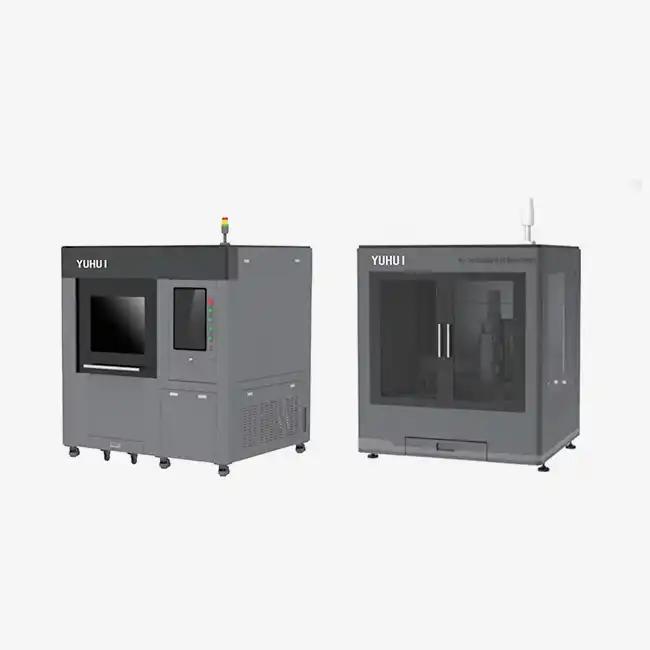
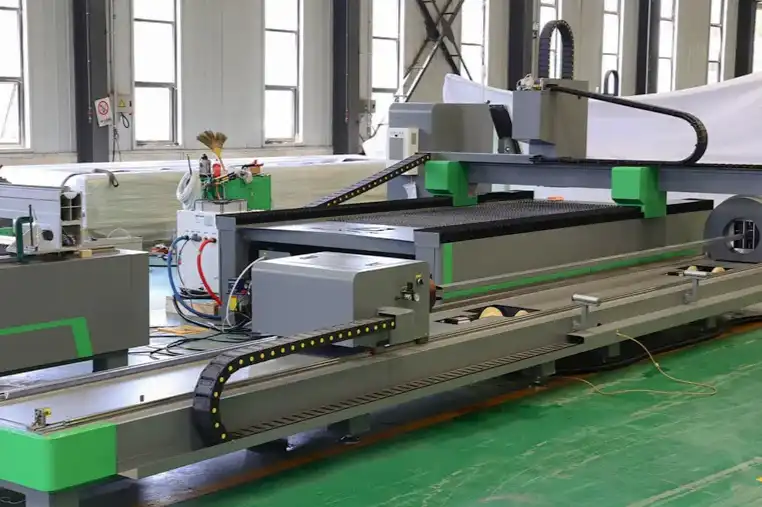
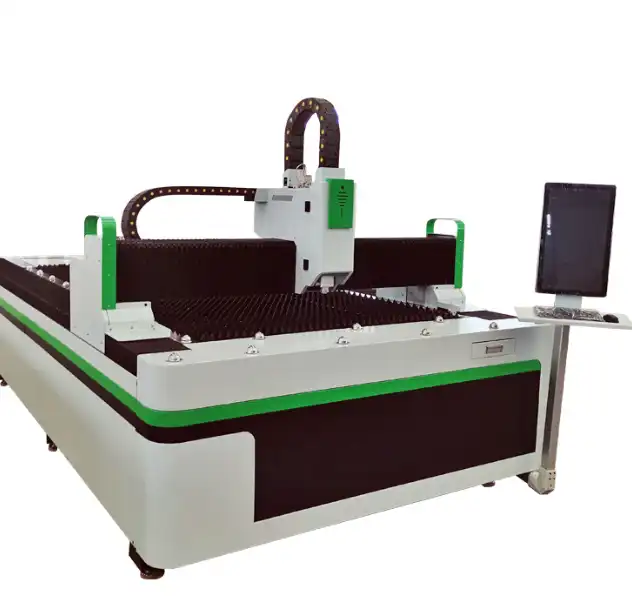
Choosing the right size laser cutting machine has a direct effect on how much you make, how much you waste, and your return on investment. Fabrication shops and sellers of metal sheets that are looking into fiber laser technology need to know how the working area size, laser power, and structure design fit with their unique needs. Yuhui Laser's S Model Plate Fiber Laser Cutting Machine series has four different working area sizes (1300x1300mm, 3000x1500mm, 4000x1500mm, and 6000x2000mm) and laser power levels from 1500W to 6000W. It is intended to make precise metal sheet cutting cheap. This guide shows you the most important things you should think about when picking the right machine size for your business.
Understanding Laser Cutting Machine Sizes and Their Impact
When it comes to fiber laser cutting tools, machine size means more than just the amount of space it takes up. It includes the size of the cutting bed, the largest piece of work that it can hold, and how these things work with laser power to determine cutting speed and the thickness of the material that can be cut. Purchasing managers and manufacturing engineers often don't realize how much the work area impacts daily operations when I talk to them about it.
How Working Area Dimensions Shape Your Production
The cutting bed size tells you the biggest piece of material that you can work with at once without having to move it. A 3000x1500mm bed works well for normal 10-foot sheets of paper, while a 6000x2000mm bed is best for high-volume jobs that involve processing big architectural panels or car parts. Smaller models (1300x1300mm) are used by prototype shops and companies that make complicated parts that don't need to move a lot of material.
Bed size affects cycle times in more ways than one. Larger beds can nestle more small parts together, which lowers the number of times they need to be loaded and unloaded. This is very important when you have to handle hundreds of the same bolts or hardware parts every day. With a 3,000-kg body and 6 mm wall-thickness rectangular tube, the S Model Plate Fiber Laser Cutting Machine is built to last. The bed stays stable and vibration-free in all size setups, and the positioning accuracy stays within ±0.03 mm even during high-speed operations at 60 m/min.
The Relationship Between Machine Size and Laser Power
The laser's power and working area must be right for the object you're working with. A 1500W fiber laser can easily cut 3 mm stainless steel but has trouble with 12 mm carbon steel. On the other hand, a 6000W system on a small bed loses power and makes running costs go up for no reason.
The S Model Plate Fiber Laser Cutting Machine line makes sure that the power is right for each bed size. For thin-gauge work, smaller beds usually work with 1500W to 3000W lasers. For thick-plate cutting or high-speed processing of thinner materials, the 6000x2000mm bed can handle up to 6000W. In real life, bigger beds are used to work with heavy, thicker stock that needs more power, so this match makes sense.
Criteria for Choosing the Right Fiber Laser Cutting Machine Size
You need to be honest about your present and future production needs in order to choose the right machine size. Businesses have bought small equipment to save money up front, only to run out of space within months, and others have spent a lot of money on large systems that aren't used all the time.
Matching Bed Size to Your Material Specifications
First, look at the sizes of the materials you usually work with. Standard sizes of 4x8 feet (1220x2440mm) and 5x10 feet (1524x3048mm) are kept in stock by sheet metal providers in North America. A 3000x1500mm bed can handle 4x8 sheets with little cutting, but a 4000x1500mm bed can handle 5x10 sheets more cheaply.
Think about the parts you make all the time. The 4000x1500mm or 6000x2000mm types stop material waste from combining smaller cuts if you make enclosures, signs, or decorative panels that are longer than 3 meters. On the other hand, shops that only sell jewelry parts, electronic enclosures, or small tools find the 1300x1300mm form to be suitable. It also needs less floor space, which makes it perfect for workshops that don't have a lot of it.
Evaluating Production Volume and Material Variety
Batch nesting works better on bigger beds for businesses that do a lot of work. It is faster to cut 50 identical parts in one pass than to handle them in five separate runs on a smaller machine. Figure out how much output you need each day. For example, if you process 200 kg of stainless steel every day in different part sizes, a 3000x1500mm bed with 3000W of power is usually the best combination of speed and flexibility.
Variety in materials is also important. The 1070 nm fiber laser in the S Model Plate Fiber Laser Cutting Machine can work on all bed sizes and can cut carbon steel, stainless steel, aluminum, brass, and copper. Aluminum and copper, on the other hand, reflect more light and need more power, so it's important to have the right power-to-bed-size ratio. It is better to use a 4000W laser on a 3000x1500mm bed to cut metal than a 2000W laser, even if both tools can handle the same sheet sizes.
Infrastructure and Operational Considerations
As a machine gets bigger, it needs more physical installation. The biggest model, 6000x2000mm, needs a lot of floor space, a strengthened concrete base that can hold more than 3,000 kg, and enough room for systems that load materials. Smaller units, like the 1300x1300mm one, can fit in tighter areas with normal industrial floors.
Power needs also change as needed. All S Model Plate Fiber Laser Cutting Machine models work on AC 380V or AC 110V ±10% at 50 Hz or 60 Hz, but lasers with bigger wattages need more power. Before you buy a 6000W system, make sure you know how much electricity your building can handle.
The series all comes with water cooling systems that need to have chiller capacities that match the laser's power output.
Benefits of Appropriately Sized Fiber Laser Cutting Machines for Model Plates
Getting the right-sized laser-cutting investment gives you real practical benefits that build up over time. The S Model Plate Fiber Laser Cutting Machine was made with the goal of balancing potential with small and medium-sized businesses' real-world production needs.
Precision and Quality Advantages
Fiber laser technology naturally produces better edges than plasma or mechanical cutting, but the stiffness of the machine makes this benefit even greater. The frame is made of 6mm-wall cylindrical tubes that don't bend when the machine speeds up quickly. This keeps the positional accuracy throughout the cutting area. This structural stability is especially helpful on bigger beds where gaps that aren't supported could bend.
All S Model Plate Fiber Laser Cutting Machine sizes come with the THF4 military-grade lens system, which focuses the 1070nm laser beam to a very fine point, allowing for kerf widths as small as 0.1mm. This accuracy cuts down on material waste, which is very important when working with expensive metals, and it allows for tight nesting designs that make the best use of the sheet. Better spacing can get back 5–8% more parts per sheet on a 3000x1500mm bed than wider-kerf cutting methods.
Operational Efficiency and Cost Management
Laser power, not bed size, affects how much energy is used. A machine that is the right size and going close to full capacity uses less energy than a machine that is too big and only partially loaded. The S Model Plate Fiber Laser Cutting Machine's photoelectric conversion rate is higher than 35%, which means that it turns grid power into cutting energy more efficiently than older CO₂ systems. This economy, along with water cooling that reuses heat energy, makes the cost of running each part less.
This is because all versions are small, which makes maintenance easier. Important parts like the laser source, cutting head, and servo motors are easy to get to, which cuts down on repair time. No matter what size configuration you choose, Yuhui Laser's 450-day after-sales service program protects your investment with expert help, training, and the availability of parts.
Flexibility for Future Growth
Manufacturing needs change over time. The S Model Plate Fiber Laser Cutting Machine's flexible design lets you make changes without having to buy a whole new machine. As your business grows, you can add more automation systems, boost the power of your lasers, and keep your software up to date. If a shop starts out with a 3000x1500mm bed and a 2000W laser, they can later switch to a 4000W laser when they need to work with harder materials. This protects their initial investment.
This adaptability is especially important for OEM buyers and wholesalers who want to sell tools to a wide range of customers. With Yuhui Laser's flexible production options and the ability to change structure, functions, and software, a single platform can be set up for different regional markets or industry verticals without having to be redesigned from scratch.
How to Choose the Optimal Cutting Parameters for Model Plate Applications
The size of the machine sets the limits, but the cutting factors decide how well it works. For the best results, the laser power, cutting speed, type of help gas, and focus position must all be adjusted based on the type of material and its thickness.
Balancing Speed and Power for Material Thickness
Cutting thinner materials goes faster, but you have to be very careful with the power so that you don't get burn-through or areas with too much heat damage. At 10 to 15 meters per minute, a 1.5-mm stainless steel sheet can be cut smoothly with 1500W of power and nitrogen gas to help. If you want to keep the edge quality when the width goes up to 6mm, you'll need 3000W–4000W of power and a slower speed, maybe 2–4 m/min.
The S Model Plate Fiber Laser Cutting Machine can go as fast as 60m/min, which lets it quickly move between cuts and process very thin gauges at high speed. Cutting speeds depend on the material. For example, carbon steel cuts faster than stainless steel because oxygen gas helps remove heat, but aluminum needs more power to cut through its thermal resistance. Yuhui Laser offers parameter libraries that are specifically made for common materials. These libraries give operators tried-and-true starting places that cut down on test cuts and material waste.
Software and Control System Capabilities
Modern CNC control systems connect what machines can do with what they need to do in the real world of production. The S Model Plate Fiber Laser Cutting Machine has control software built in that handles power adjustments in real time, nested optimization, and automatic focus control. These features become more useful on bigger beds, where differences in the material across the cutting area could otherwise make the uniformity less reliable.
Nesting software makes the best use of materials by placing parts so that there is less waste. When processing mixed orders on a 4000x1500mm bed, intelligent nesting can boost yield by 10–15% compared to human planning. The software also arranges cuts in a way that minimizes heat distortion. This is especially important when working with thin materials that tend to bend.
Purchasing and Procurement Insights for Fiber Laser Cutting Machines
To get through the buying process, you need to know both the technical requirements and the skills of the suppliers. When it comes to special equipment, dealing directly with the maker is often a better way to get better value and help than going through a reseller.
Evaluating Manufacturer Credentials and Support
The CE and ISO licenses from Yuhui Laser show that they follow international quality and safety standards, which is important for importing equipment into markets that have rules about it. These certificates aren't just pieces of paper; they show how the product was designed, what materials were used, and how it was made in a way that makes it reliable and safe for the user.
The 14-business-day production lead time is due to efficient output and a large stock of standard parts. This speed is important when you need to quickly increase production capacity or replace old equipment. With strong transportation partners for sending goods across borders, Yuhui Laser provides full solutions on schedules that match real project timelines.
Technical help goes beyond just installing. The 450-day after-sales service time includes training for operators, advice on preventative upkeep, and help with fixing problems. This longer support window—substantially longer than normal warranties in the industry—lowers the total cost of ownership by reducing unexpected downtime and increasing the useful life of equipment.
Cost Considerations and Value Assessment
Factory-direct prices from Yuhui Laser don't include markups for distributors, which is especially helpful for OEM buyers who want to buy a lot of units or wholesalers who want to keep stock for selling in their own region. Prices go up or down depending on the size of the bed and the power of the laser, but the 3000x1500mm type is often the best value for money in terms of cost per square meter of cutting area.
Add up all the costs that go beyond the buying price. Return on investment is based on how much energy is used, how much consumables (like glasses, nozzles, and assist gas) cost, how often upkeep needs to be done, and how long the equipment is expected to last. The 20-year bed stability promise backs up the S Model Plate Fiber Laser Cutting Machine's strong construction, which spreads the cost of capital over a longer service life. This is better for the bottom line than lighter-duty options that need to be replaced more often.
For some uses, being able to customize something is useful. To meet the specific needs of each production, Yuhui Laser can make changes to the structure, add functions, and customize software. Because of this, you don't have to give up important features or buy extra gear to fill in the gaps in normal setups.
Conclusion
When you pick the right laser cutting machine size, you can balance your current production needs with your room to grow in the future. The bed size and laser power should be matched to your materials, part sizes, and output needs. The S Model Plate Fiber Laser Cutting Machine line offers affordable options with four different layouts for work areas. It is built to last with military-grade lasers and comes with full support. The right size is important for getting the most out of your materials, your operations, and your investment in the long run, whether you're working on complex experiments on a small 1300x1300mm bed or making a lot of things on a 6000x2000mm platform. Be honest about your material requirements, make growth projections that are based on reality, and give more weight to makers that offer customization options and long-term support after the sale to make sure your equipment investment gives you a long-term competitive edge.
FAQ
What bed size works best for standard sheet metal fabrication?
The most flexible choice is the 3000x1500 mm bed, since most North American sheet metal shops work with 4x8 foot (1220x2440 mm) sheets. With this size, normal stock can fit with little waste, and the footprint is still doable. The 4000x1500 mm design is a good choice for shops that deal with 5x10 foot sheets on a daily basis.
How does laser power relate to bed size selection?
When working with thicker materials or larger amounts, larger beds usually need more laser power. A 1300x1300mm bed doesn't need more than 3000W, and 6000x2000mm beds usually work best with 4000W to 6000W lasers for cutting thick plates or getting the most work done on smaller sizes.
Can I upgrade laser power after the initial purchase?
The S Model Plate Fiber Laser Cutting Machine's flexible design lets you add more laser power, so your initial investment will be safe as your production needs increase. Talk to Yuhui Laser about the best ways to update your setup, since the electricity and cooling systems might need to be changed to handle large power increases.
What floor space should I allocate for installation?
Allow extra space around the machine for adding materials, user access, and extra tools. A 3000x1500 mm machine needs about 6x4 meters of floor room, while a 6000x2000 mm machine needs 10x5 meters. When planning your building, think about where to put the chillers and how to get to the power panels.
Partner with Yuhui Laser for Your Precision Cutting Solution
Are you ready to get the most out of your metalworking by setting up your S-Model Plate Fiber Laser Cutting Machine correctly? Yuhui Laser is a top company that makes fiber laser cutting machines. Their products are CE-certified and have military-grade optics. They also sell them directly to small and medium-sized makers, wholesalers, and OEM partners, which makes them a great value. Our 14-day production wait time, 450-day complete after-sales service, and ability to make changes to the equipment you buy will make sure it meets all of your production needs. You can email our technical team at jianghui@yuhui-laser-tech.com to talk about your unique cutting needs, get more information about our four bed size options, or set up a demonstration. Visit yuhui-laser-tech.com to explore our complete product line and discover why fabricators worldwide trust Yuhui Laser for precision, reliability, and lasting performance.
References
1. Powell, J. (2021). CO2 Laser Cutting: Advanced Applications and Comparative Analysis. Springer Series in Materials Science, London.
2. Steen, W.M., & Mazumder, J. (2020). Laser Material Processing: Fundamentals and Industrial Applications. Springer International Publishing, New York.
3. Chryssolouris, G. (2019). Laser Machining: Theory and Practice in Manufacturing Engineering. Mechanical Engineering Series, Cambridge University Press.
4. Radovanovic, M., & Madic, M. (2022). Optimization of Fiber Laser Cutting Parameters for Stainless Steel Processing. Journal of Manufacturing Processes, 45(3), 217-229.
5. Ion, J.C. (2020). Laser Processing of Engineering Materials: Principles, Procedures, and Industrial Applications. Butterworth-Heinemann Technical Books, Oxford.
6. Yilbas, B.S. (2023). Laser Cutting Technologies: Fundamentals and Recent Advances in Metal Sheet Processing. International Journal of Advanced Manufacturing Technology, 118(7), 1893-1912.
Contact us directly for customized solutions, quotations and long-term strategic cooperation.