- English
- French
- German
- Portuguese
- Spanish
- Russian
- Japanese
- Korean
- Arabic
- Greek
- German
- Turkish
- Italian
- Danish
- Romanian
- Indonesian
- Czech
- Afrikaans
- Swedish
- Polish
- Basque
- Catalan
- Esperanto
- Hindi
- Lao
- Albanian
- Amharic
- Armenian
- Azerbaijani
- Belarusian
- Bengali
- Bosnian
- Bulgarian
- Cebuano
- Chichewa
- Corsican
- Croatian
- Dutch
- Estonian
- Filipino
- Finnish
- Frisian
- Galician
- Georgian
- Gujarati
- Haitian
- Hausa
- Hawaiian
- Hebrew
- Hmong
- Hungarian
- Icelandic
- Igbo
- Javanese
- Kannada
- Kazakh
- Khmer
- Kurdish
- Kyrgyz
- Latin
- Latvian
- Lithuanian
- Luxembou..
- Macedonian
- Malagasy
- Malay
- Malayalam
- Maltese
- Maori
- Marathi
- Mongolian
- Burmese
- Nepali
- Norwegian
- Pashto
- Persian
- Punjabi
- Serbian
- Sesotho
- Sinhala
- Slovak
- Slovenian
- Somali
- Samoan
- Scots Gaelic
- Shona
- Sindhi
- Sundanese
- Swahili
- Tajik
- Tamil
- Telugu
- Thai
- Ukrainian
- Urdu
- Uzbek
- Vietnamese
- Welsh
- Xhosa
- Yiddish
- Yoruba
- Zulu
Focussing Lens: Understanding Optical Systems and Laser Technologies
Laser focus lenses are very precise optical parts that are made to focus and direct laser beams very precisely. Unlike regular lenses, these special elements can handle high power levels and high temperatures while keeping the beam's integrity during cutting, welding, marking, and engraving in factories. It's important to know about the design principles, material science, and performance qualities of the parts you're choosing if you want them to work reliably and with precision in harsh manufacturing settings.
Understanding Laser Focus Lenses: Science and Technology Explained
The Physics Behind Laser Beam Focusing
When laser light goes through a focusing element, the shape of the lens changes the wavefronts so that the energy is focused in one place. The way materials like zinc selenide reflect light controls how infrared bands bend and focus. Coatings applied to lens surfaces reduce the amount of light reflected, allowing transmission rates to exceed 99.5% and directly improving processing efficiency. Cutting accuracy is based on the link between focal length and spot size in laser focus lenses. For thin materials, shorter focal lengths make spots that are smaller, while longer focal lengths keep the beam width the same across thicker workpieces in laser focus lenses.
Choosing the right materials has a significant effect on efficiency. Zinc selenide has a refractive index of about 2.403 at the 10.6 μm wavelength that CO₂ lasers use. It also has very low absorption values, less than 0.0005 cm⁻¹. This mixture makes sure that the lens itself doesn't lose too much energy as heat, so the visual quality and dimensional stability are kept during long operations. The material’s relatively good thermal conductivity efficiently dissipates heat. This stops thermal lensing effects that would otherwise move focus points and make cutting less accurate.
Lens Types and Their Industrial Applications
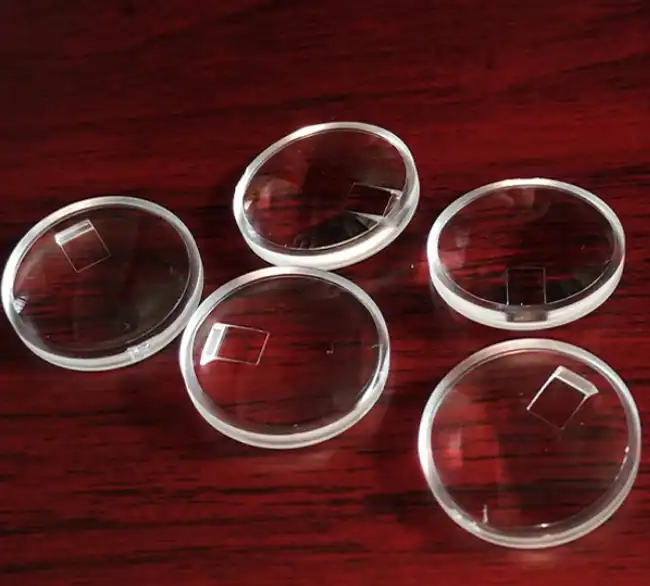
For different operating needs, different shapes are best. When used for general cutting tasks, plano-convex designs make focusing easy because the curved surface faces the beam source, which lowers spherical distortion. When beam quality protection is most important, meniscus lenses work better in high-power situations in laser focus lenses. These different designs work with a range of bands, from the 10.6 μm infrared spectrum of CO₂ systems to the1.064 μmm output of fiber lasers. For each, the right material and coating must be chosen to match the energy transfer windows.
Surface treatments greatly increase the useful life of an item. Chemical vapor deposition methods are used to make anti-reflective coatings. These processes form molecular bonds that can handle the high photon flux and mechanical pressures that are common in industrial settings. Back-spatter contamination, thermal cycling, and ambient humidity can't damage these processes. These are things that quickly damage exposed lenses in metal production settings.
How to Choose the Right Laser Focus Lens: A Decision Support Approach
Critical Selection Parameters for Industrial Buyers
The main factor that determines working distance and spot width is focal length in laser focus lenses. When working with thin sheets, where quality standards depend on fine detail clarity, focal lengths between 50mm and 75mm work best. For tasks that need to work with thicker materials, focus lengths between 100mm and 150mm are beneficial because they keep the beam consistent even when the material is deeper. Aperture values given in numbers show how much light can pass through and how tightly it can focus. Lower f-number values can focus energy more tightly, but they require more precise positioning.
Material suitability is more than just matching wavelengths. When reacting metals are processed, they release fumes and spatter that stick to optical surfaces. Lenses used for cutting aluminum or copper need more maintenance than those used for stainless steel in laser focus lens environments. Realistic cost-of-ownership estimates consider how often things need to be replaced, along with the initial purchase price, when these environmental factors are understood.
Evaluating Supplier Capabilities and Support Infrastructure
Warranty coverage shows that the company that made the product is sure that it will last. Standard warranties usually last between 90 and 180 days, but top providers who are sure of their manufacturing processes offer longer warranties that last up to 450 days. This wider reach shows strict quality control and better material sourcing, which are clear signs of dependable supply agreements. Access to technical support is also important. Suppliers who give installation instructions, calibration methods, and troubleshooting help lower the risk of downtime that can affect production plans.
The ability to customize sets basic sellers apart from strategic partners. When providers keep their factory infrastructure flexible, it helps operations that use unique materials, power levels that aren't standard, or integrated automation systems. Being able to choose specific focal lengths, coating formulations, or mechanical mounting connections makes sure that the system works well together without having to make decisions around standard parts.
Top Lens Solutions in 2026: Performance Characteristics Worth Evaluating
Military-Grade Optics Delivering Commercial Value
Advanced focusing lenses made with high-quality optical materials in laser focus lenses resist damage even when used at high power for a long time. Based on accelerated lifecycle tests, engineers designed these components for long-term stability and durability under continuous industrial use. They keep producing the same amount of output. Precision-ground substrates, optimized coatings, and heat management features in laser focus lenses make them suitable for operation across a wide range of industrial power levels, from 40W systems for hobbyists to setups with kilowatts of power.
Stability in storage is something that distributors and processors who keep supplies often forget to think about. Quality lenses can maintain stable performance during long-term storage when kept under proper environmental conditions. This stability gives people faith in bulk buying plans that take advantage of huge discounts while making sure that parts still meet specifications when they are used months after they were bought.
ZnSe Focus Lens Technical Advantages
When it comes to many operating areas, Zinc Selenide optics provide real performance benefits. When there is a lot of infrared transmittance, there is less energy loss, which would show up as slower cutting speeds or partial entry. Good focusing results in the beam energy being concentrated into small, packed spots, which in turn leads to clean kerf lengths and minimal heat-affected zones. These are quality indicators that show the difference between professional and amateur-level output. Because the material is naturally resistant to damage from lasers, it can be used for long periods of time at high power levels without losing its performance.
In production settings where duty cycles are close to constant, thermal stability is especially useful in laser focus lenses. The material doesn't change shape when the temperature changes, so the dimensions stay the same and the focus point stays in place. Wide application compatibility across CO₂ laser cutting and engraving platforms makes it easier for service groups that work with a wide range of tools to keep track of their inventory. Smooth, durable surface finishes make it possible to go longer without cleaning while also making images clearer, which improves both cutting accuracy and etching fine resolution.
Optimizing Laser Focus Lens Performance in Optical Systems
Addressing Common Operational Challenges
Misalignment problems often make systems less effective in laser focus lenses, even when the parts are good. Beam centerline departure from the lens optical axis of as little as 0.5 mm lowers the quality of cutting processes in a clear way. These losses can be avoided by following the right alignment steps during installation and regularly checking the work. When there isn't enough protection, fumes and particles can build up on optical surfaces, which speeds up contamination from results of processing. Using the right air-knife protection or pressurizing the container greatly increases the time between repair tasks.
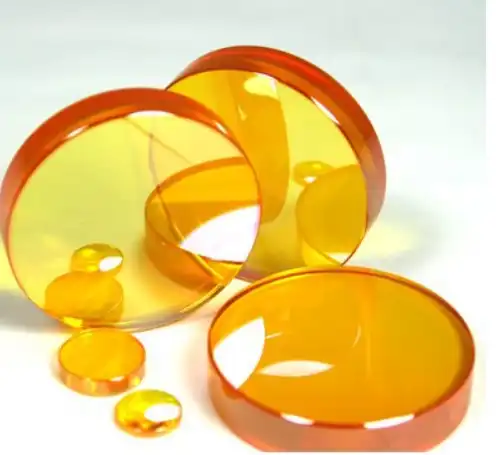
First-time users are sometimes worried about zinc selenide materials because of their natural yellow or amber appearance in laser focus lenses. This color comes from the crystal structure's ability to absorb visible light bands while still being very clear to the infrared energy used in laser processing. There are no performance effects from the coloring, and it only serves as a way to tell the difference between real ZnSe and cheaper materials that aren't as good.
Maintenance Protocols Extending Operational Lifespan
Soft optical surfaces can't be damaged if they are cleaned correctly. The suggested drop-and-drag method, which uses high-purity liquids like acetone or isopropyl alcohol and lint-free optical wipes, gets rid of dirt and dust without leaving scratches. When you try to wipe down dirty surfaces, you spread out rough bits that damage the surface permanently. If lenses have obvious cracking, stay cloudy after cleaning, or need a lot more power to cut as well as they did before, they should be replaced instead of being used again because it lowers the quality of the production.
In plano-convex designs, orientation is very important. Spherical distortion effects that hurt spot quality can be kept to a minimum by pointing the curved surface toward the arriving beam. When this direction is switched around, the effects are noticeably worse, even though the same parts are used. To avoid mistakes during regular maintenance, installation instructions should make it clear which way the parts should be placed.
Procurement Guide: Buying Laser Focus Lenses with Confidence
Building Strategic Supplier Relationships
Successful shopping goes beyond just buying things; it also involves building relationships with sellers who can show they have a lot of industry experience and technical knowledge in laser-focus lenses. When compared to trade middlemen, vendors who run their own production sites offer more consistent quality and more ways to customize their products. When you have a direct connection with a maker, you can have technical conversations about specific application needs. This lets you get ideas that are best for your specific working conditions instead of general catalog choices.
Reliability in logistics keeps production plans from getting thrown off. Suppliers who keep a lot of goods on hand can meet pressing replacement needs without having to wait for long lead times that keep expensive equipment from being used. Logistics companies with whom we have long-term partnerships make sure that transit times are regular and that fragile optics are safely packed for foreign shipping. In supply deals, there should be clear language about how to handle damaged goods and how to get replacements quickly. This will transfer risk in the right way and set clear settlement processes.
Customization and OEM Partnership Opportunities
Companies that can make unique products are good for businesses that need to meet specific requirements in laser focus lenses. Adjustable metal structures can be used for mounting needs that aren't standard, and designs that effectively dissipate heat allow them to handle more power than regular housings. Intelligent automation integration features let focusing optics be added to complex production systems that need to be controlled and monitored in an organized way. With these customizing services, standard parts are turned into optimized sections that work perfectly with specific working needs.
In addition to unit-price savings, volume purchasing agreements offer big economic benefits. Negotiating longer guarantee terms, faster access to expert help, and better payment terms makes you more competitive. Long-term deals that lock in prices protect against changes in the market and keep supplies going, which is important for planning production reliably.
Conclusion
To choose the right focusing glasses, you have to weigh technical requirements against practical needs and cost considerations. Knowing about the properties of materials, differences in design, and performance traits lets you make smart choices that lead to long-lasting accuracy and operating efficiency. Quality parts from companies that show they have technical knowledge, the ability to make things, and a commitment to customer service give you real benefits in cutting accuracy, repair times, and the total cost of ownership. Strategic relationships with suppliers that focus on technical teamwork and the ability to make changes as needed set up businesses to stay competitive in tough manufacturing environments.
FAQ
What differentiates CVD and PVD manufacturing processes?
Chemical Vapor Deposition (CVD) is commonly used to manufacture high-quality ZnSe optical materials for industrial laser applications. Physical Vapor Deposition (PVD) is more commonly used for optical coating processes rather than producing the ZnSe substrate itself.
How does thermal lensing affect cutting quality?
When there is too much absorption because of contamination or coating degradation, lens elements grow unevenly, which moves the focus point while the device is working. The kerf width and entry depth are not always the same because of this dynamic focusing mistake. Cleaning or replacing it right away returns stable performance and stops quality from getting worse.
What replacement indicators signal necessary lens changes?
Visible surface pitting, continuous cloudiness that won't go away even after cleaning, or the need for a lot more power to get to the same cutting levels as before are all signs of poor optical performance. Working with worn-out lenses loses energy, slows down production, and increases the chance of quality problems with the item that are worse than the cost of replacing the laser focus lenses.
Partner with Yuhui Laser for Superior Optical Solutions
Yuhui Laser makes precise focusing optics that are designed for harsh industrial settings where performance stability and operating longevity have a direct effect on the cost of production. Our ZnSe focusing lenses have metal structures that can be adjusted and designs that get rid of heat more efficiently, so they keep their output stable over long duty cycles. Our advanced optical manufacturing technology is designed to provide stable beam quality and strong damage resistance for industrial laser applications. CE and ISO certifications prove that our quality systems are up to par, making sure that every part meets international standards.
As a company that only makes laser focus lenses, we keep a lot of stock on hand to support 14-day production lead times and offer full customization services to meet the needs of each application. Our 450-day warranty reflects our commitment to manufacturing quality and material reliability. It is backed up by expert support teams that help with installation, training in upkeep, and fixing problems. Contact our team at jianghui@yuhui-laser-tech.com to talk about your unique focusing optic needs and find out how our factory-direct price gives you the best value without sacrificing performance.
References
1. Bass, M. (2010). Handbook of Optics, Volume IV: Optical Properties of Materials, Nonlinear Optics, Quantum Optics. McGraw-Hill Professional.
2. Ready, J.F. & Farson, D.F. (2001). LIA Handbook of Laser Materials Processing. Laser Institute of America.
3. Steen, W.M. & Mazumder, J. (2010). Laser Material Processing, Fourth Edition. Springer-Verlag London.
4. Paschotta, R. (2008). Encyclopedia of Laser Physics and Technology. Wiley-VCH.
5. Weber, M.J. (2002). Handbook of Optical Materials. CRC Press.
6. Powell, J. (1998). CO2 Laser Cutting, Second Edition. Springer-Verlag London.
Contact us directly for customized solutions, quotations and long-term strategic cooperation.