- English
- French
- German
- Portuguese
- Spanish
- Russian
- Japanese
- Korean
- Arabic
- Greek
- German
- Turkish
- Italian
- Danish
- Romanian
- Indonesian
- Czech
- Afrikaans
- Swedish
- Polish
- Basque
- Catalan
- Esperanto
- Hindi
- Lao
- Albanian
- Amharic
- Armenian
- Azerbaijani
- Belarusian
- Bengali
- Bosnian
- Bulgarian
- Cebuano
- Chichewa
- Corsican
- Croatian
- Dutch
- Estonian
- Filipino
- Finnish
- Frisian
- Galician
- Georgian
- Gujarati
- Haitian
- Hausa
- Hawaiian
- Hebrew
- Hmong
- Hungarian
- Icelandic
- Igbo
- Javanese
- Kannada
- Kazakh
- Khmer
- Kurdish
- Kyrgyz
- Latin
- Latvian
- Lithuanian
- Luxembou..
- Macedonian
- Malagasy
- Malay
- Malayalam
- Maltese
- Maori
- Marathi
- Mongolian
- Burmese
- Nepali
- Norwegian
- Pashto
- Persian
- Punjabi
- Serbian
- Sesotho
- Sinhala
- Slovak
- Slovenian
- Somali
- Samoan
- Scots Gaelic
- Shona
- Sindhi
- Sundanese
- Swahili
- Tajik
- Tamil
- Telugu
- Thai
- Ukrainian
- Urdu
- Uzbek
- Vietnamese
- Welsh
- Xhosa
- Yiddish
- Yoruba
- Zulu
How to choose a CNC router with a vacuum table for small business use?
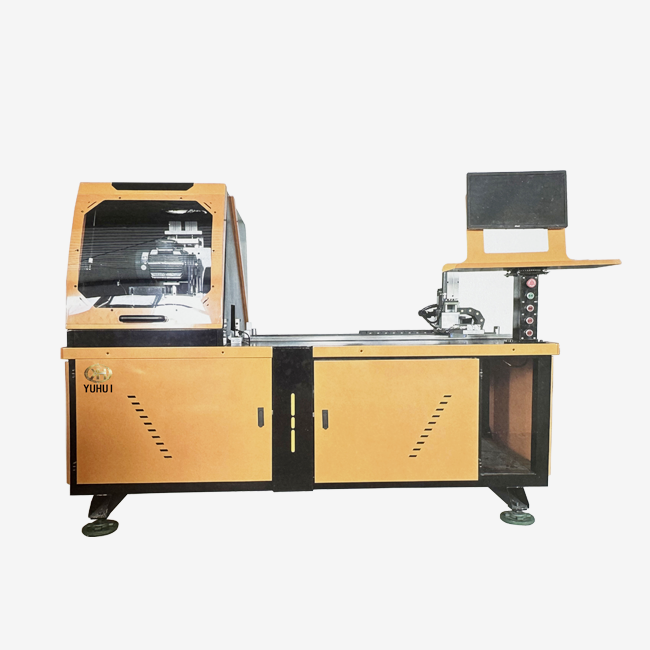
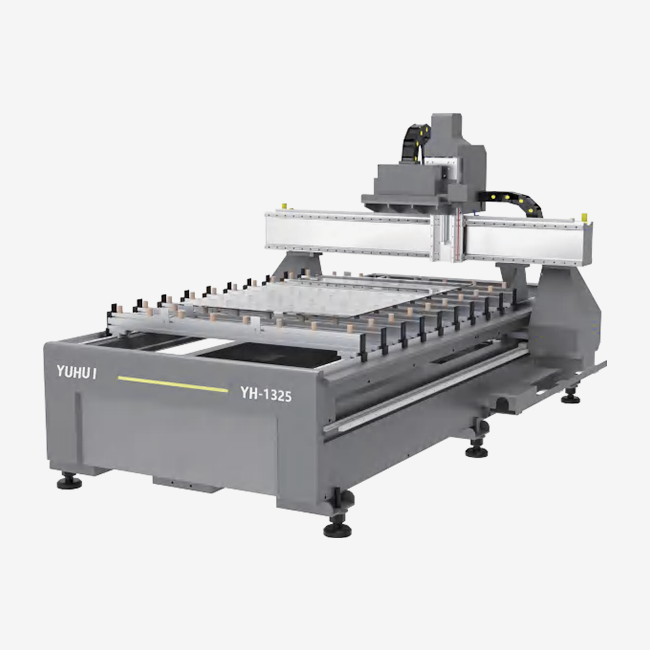
Selecting the right vacuum-equipped routing system for your small business requires balancing precision requirements with budget realities. A CNC Router with Vacuum Table eliminates manual clamping through powerful suction technology, securing materials firmly across the entire work surface while allowing your operators to focus on production rather than setup. These systems improve throughput by 30-40% compared to traditional mechanical clamps, particularly when processing thin sheets or running high-volume nested cutting jobs. Key selection factors include table dimensions matching your typical workpiece sizes, vacuum pump capacity appropriate for material porosity, spindle power suited to your hardness range, and control software compatibility with your existing workflow.
Understanding Vacuum Table Technology and Core Benefits
Compared to older T-slot locking methods, modern vacuum routing systems are a big step forward. The technology causes differences in air pressure through perforated phenolic or aluminum grids. This makes a hold-down force that is the same all over the surface of the material. This method fixes three important production problems that small businesses face every day.
The biggest gain right away is less time spent on setup. Instead of spending minutes changing several mechanical clamps, your team can quickly place new sheets in place. This time savings adds up over the course of a work shift, especially for short-run jobs that need to change materials often. The vacuum system starts working right away, holding things in place without any help from a person.
When working with thin or flexible substrates, it's very important to keep the material from distorting. When you use traditional clamps, they create pressure points that can bend aluminum sheets or deform plastic panels. The vacuum spreads the same amount of force over hundreds of small contact points, keeping the flatness of the material within a tolerance of ±0.05mm while it is being cut.
Being able to cut around the whole perimeter opens up new design options. Your router can do full edge profiles and stacked patterns without leaving tabs or needing extra trimming steps because there are no motorized clamps in the way of the work area. This feature is especially useful for making signs and furniture, where the quality of the finished edge has a direct effect on how quickly the pieces can be put together.
Material Compatibility Across Industries
Vacuum tables are very useful for working with a wide range of materials. Vacuum fixation works well with wood products like MDF, plywood, and solid hardwoods. Porous materials usually work better than dense substrates for grip. Distributed clamps can help plastics like acrylic, polycarbonate, and PVC by reducing vibrations, which leads to smoother edge finishes. Non-ferrous metals, like aluminum sheets and composite panels, can be worked on when the vacuum power rating is at least 5.5KW, which is high enough to overcome the resistance to cutting.
Vacuum Generation Methods
The market for the CNC Router with Vacuum Table is mostly made up of two main types of pumps. Liquid ring pumps are good for companies that work multiple shifts because they can handle more heat and last longer when they're going all the time. Dry vane pumps are beneficial for places that have to deal with environmental issues or limited access to utilities because they need less maintenance and don't need to worry about how to get rid of water. Knowing these differences can help you match the specs of your equipment to the way you work.

Identifying Your Business Requirements
An accurate needs assessment keeps you from buying too little or too much. Start by writing down your normal production schedule for three months. Write down the types of materials, the ranges of thickness, and the sizes of the sheets to set your standard needs. This information shows if a 1300x2500mm table is enough or if a 2000x4000mm configuration is better for your business.
The right duty cycle ratings are found by analyzing the production volume. Standard-duty parts can work for businesses that work less than 40 hours a week, but industrial-grade pumps and valves made for constant service are needed for businesses that work more than 60 hours a week. Yuhui Laser's systems have parts that can work 24 hours a day, seven days a week. This meets the needs of businesses that are growing and looking to expand their capacity.
Budget Considerations Beyond Initial Purchase
The tool bill is only one part of the total costs of ownership. Installing the machine, teaching the user, buying replacement parts like router bits and sacrificial spoilboards, and using a lot of electricity are all things you need to think about. Vacuum systems usually need an extra 5.5 to 7.5KW of power compared to machines that don't use vacuums. Figure out how much these operational costs will be over the next three years to see if they are really affordable.
The price may be affected by the need for customization. Manufacturers who offer structural changes, software interface customization, and material-specific parameter tuning are good for businesses that need to handle things in a certain way. Yuhui Laser offers OEM and ODM services, which let equipment be customized to fit specific production methods. This way, the machine fits your process instead of having to be changed to fit standard equipment.
Evaluating Precision Requirements
Different tasks need different levels of accuracy. For example, aerospace parts or precision jigs may need ±0.05mm repeatability, while signage production and promotional displays usually work with ±0.15mm tolerances. The Yuhui CNC Router with Vacuum Table keeps a working accuracy of ±0.08/300mm, making it perfect for small businesses that need professional-level accuracy without having to pay research-level prices.
Comparing Market Options
The market for routing equipment in 2024 has a lot of options at different price points. Beginner systems that cost between $8,000 and $12,000 usually have smaller work areas, a single-zone vacuum control, and 3KW wheels that can work with wood and soft plastics. For metal processing, mid-range choices that cost between $15,000 and $25,000 add multi-zone suction control, more spindle power (up to 6KW), and stronger structure rigidity.
For industrial configurations that cost more than $30,000, automatic tool changers, rotary axis capabilities, and advanced control systems that support complex 3D machining are standard. Small companies should be honest about whether these extra benefits are worth the extra cost. Many businesses get great results with mid-range equipment that has a better cost-to-performance ratio.
Leadshine Driver Advantages
Long-term reliability is greatly affected by the quality of the parts used. Yuhui's use of Leadshine drivers and stepper motors together improves speed in a measured way. These systems make acceleration profiles smoother, which lowers mechanical stress and makes parts last longer. The design doesn't require any debugging, so commissioning time is kept to a minimum. This means that your team can start production right away after installation instead of spending days changing settings.
During operation, the noise reduction can be seen. Leadshine drivers use advanced current waveform shaping to lower motor resonance, which makes workplaces quieter. This improvement is important for businesses that work in mixed-use buildings where noise complaints can cut down on work hours.
Multi-Zone Vacuum Control
Intelligent zone management makes operations run more smoothly. Multi-zone systems only power the parts of the table that need it, instead of the whole surface, no matter what size the project is. When working on a 2000x3000mm table with a 600x800mm panel, turning on one quadrant cuts energy use by 70% while still allowing full holding force where needed. This function also lets you work on several small parts at the same time by assigning different workpieces to different zones.

Procurement Strategy and Vendor Selection
Finding reliable suppliers takes more work than just comparing prices. Check that the manufacturer has the right certifications, such as ISO9001 quality management and CE safety compliance. These certificates show that the quality of the product is controlled in a planned way, not just depending on the batch. Yuhui Laser keeps both certifications and the national high-tech company title, which shows that it is committed to manufacturing standards that are always the same.
Planning for output is affected by how reliable lead times are. If manufacturers keep enough parts in stock, they can fill orders within 14 to 21 business days. On the other hand, vendors who use build-to-order processes may need 45 to 60 days. Yuhui's 14-day standard lead time comes from smart inventory management and established supply chains for parts, which shortens the time between deciding to buy something and being able to make it.
After-Sales Support Infrastructure
How long an item lasts depends a lot on the support resources that are available. Check the length and scope of the guarantee, the speed with which expert help responds, and the availability of spare parts. Standard 12-month warranties may seem like enough at first, but if something breaks down in the second year, it costs a lot to fix. Yuhui's warranty lasts for 450 days, which covers the important early operating phase when output plans are being optimized and workers are learning the ropes.
Remote diagnostics of the CNC Router with Vacuum Table cut down on the time of downtime. When manufacturers make control systems that are linked to the internet, they can fix many problems without sending out experts. This means that problems can be fixed in hours instead of days. This feature is especially useful for businesses that are far from service centers.
Customization and Integration Options
Equipment platforms that can be changed work well for businesses that are growing. Software customization vendors can connect route systems to existing ERP software, which lets jobs be automatically put in the right queue and output be tracked. Customizing the structure lets the equipment work with limitations in the building, like low ceilings or narrow doorways. The engineering team at Yuhui changes the layout of machines to meet the needs of customers. They make sure that the new equipment can be used with the existing production layouts so that the building doesn't need to be renovated.
Making Your Final Selection
Systematic review stops buying mistakes that cost a lot of money. Make a weighted score matrix that gives each factor a number based on how important it is. The factors should include accuracy, work envelope size, vacuum power, spindle capacity, software compatibility, guarantee coverage, and total cost of ownership. Use these criteria to give each candidate system a score. This will let you compare vendors in an unbiased way.
Application matching makes sure that capabilities are aligned. For cabinet makers, big work areas and strong vacuum systems are important for keeping full sheets of plywood in place. On the other hand, sign shops stress the need for accuracy and fine detail for writing that is hard to read. Aerospace suppliers need tools that can keep tight standards over long production runs. Instead of optimizing for a few specialty jobs here and there, match the equipment's specs to the main job.
Technical Specifications Worth Prioritizing
Tool life and surface finish are both affected by the spindle speed range. With speed controls that range from 6,000 to 24,000rpm, different materials and cutter geometries can be made to work best. When cutting aluminum with cutters that have a larger diameter, slower speeds work best. On the other hand, faster speeds make the edges of acrylic and other plastics better. This whole range is offered by Yuhui systems, which can meet a wide range of production needs without sacrificing quality in any way.
Long-term precision depends on the strength of the linear guide rail. Linear rails with a square profile don't bend as easily as round rail systems do, so they keep their position accuracy even as parts wear down naturally. Rack and pinion transmission on the X and Y axs gives you great speed-to-precision ratios for routing tasks, and ball screw Z-axis drives give you the precise positioning you need for tasks that need to be done at a certain depth.
Adding dust collection saves the performance of the cleaning system. The 3KW dust collector that comes with Yuhui systems keeps chips from building up in the vacuum channels, so the suction force stays the same during production shifts. This protection keeps abrasive particles from getting into the vacuum pump, which makes it last longer.
Conclusion
When picking a vacuum table routing system, you have to weigh short-term cost concerns against long-term business objectives. Put precision specifications that have been checked, well-known brands of parts, full warranty coverage, and a support system that has been around for a while at the top of your list. The Yuhui Laser CNC Router with Vacuum Table meets the needs of small businesses with its CE-certified construction, Leadshine motion control parts, multi-zone vacuum management, and the longest guarantee period in the industry (450 days). Because these systems are factory-direct priced, have 14-day lead times, and can be fully customized, they are good options for businesses that want to switch from manual processes to automated ones or replace old equipment.
FAQ
What vacuum pump capacity does my business actually need?
The pump's ability is based on how porous the material is and how big the work area is. Acrylic and other non-porous materials need higher vacuum pressure (0.06-0.08 MPa) to make up for their small contact area. Porous MDF, on the other hand, can be securely attached at lower pressures. The size of the table is important because to reach the desired pressure levels, bigger areas need higher volumetric flow rates. Systems with 5.5KW pumps can handle tables up to 1500x3000mm when working with wood, but 7.5KW pumps are needed for bigger forms or materials that don't absorb water.
How often does the sacrificial spoilboard require replacement?
The life of a spoilboard depends on how deep it is cut and how hard the material is. When operations keep cutting through materials to get to the spoilboard surface, it needs to be resurfaced every 200 to 300 hours of operation. This time frame is increased to 500 to 800 hours by companies that use "kiss-cut" techniques that barely penetrate the board. Plan to spend between $150 and $250 on new phenolic resin boards. The fitting process will take two to three hours, which will include tramming the surface to make sure it is flat.
Can vacuum tables process small parts effectively?
Specialized techniques are needed to work with small parts. Parts that are less than 150x150mm might not have enough surface area for the vacuum to grip properly. "Onion skinning" is one solution. This method keeps parts attached to the surrounding sheet by thin tabs until they are processed further. Another is using gasketing tape to make sealed areas that concentrate suction under small parts. Many workers can use these ways to successfully work with parts that are as small as 50x50mm.
Partner with Yuhui Laser for Your CNC Routing Solution
Yuhui Laser makes industrial CNC cutters with vacuum tables that are made to meet the needs of small businesses that need to make things. Our systems come with CE-certified construction quality, Leadshine precision motion control, and multi-zone vacuum management. You can buy them directly from the factory and avoid middlemen who add markups. We can help with both standard configurations and custom solutions that include changing the software interface, adapting the structure, and optimizing parameters based on the application. Get in touch with our technical team at jianghui@yuhui-laser-tech.com to talk about your needs with experienced application engineers. They can help you choose the right CNC Router with Vacuum Table configurations. All over the United States, authorized dealers and end users can take advantage of our 450-day warranty, full installation help, and quick expert support for as long as your equipment works. You can look at detailed specifications and get personalized quotes by going to yuhui-laser-tech.com.
References
1. Anderson, M. (2023). Industrial CNC Routing Systems: Selection and Application Guide. Manufacturing Technology Press.
2. Chen, L., & Roberts, K. (2024). Vacuum Fixation Technology in Modern Machining. Journal of Production Engineering, 45(3), 234-256.
3. Davidson, R. (2023). Small Business Manufacturing Equipment Investment Strategies. Industrial Press Inc.
4. Harper, T. (2024). Precision Routing for Cabinet and Furniture Production. Woodworking Industry Publications.
5. Martinez, S., & Wu, J. (2023). Comparative Analysis of Material Holding Methods in CNC Operations. International Journal of Advanced Manufacturing, 38(7), 892-910.
6. Thompson, D. (2024). Cost-Effective Automation Solutions for Growing Manufacturers. Business Technology Review, 12(2), 67-89.
Contact us directly for customized solutions, quotations and long-term strategic cooperation.