- English
- French
- German
- Portuguese
- Spanish
- Russian
- Japanese
- Korean
- Arabic
- Greek
- German
- Turkish
- Italian
- Danish
- Romanian
- Indonesian
- Czech
- Afrikaans
- Swedish
- Polish
- Basque
- Catalan
- Esperanto
- Hindi
- Lao
- Albanian
- Amharic
- Armenian
- Azerbaijani
- Belarusian
- Bengali
- Bosnian
- Bulgarian
- Cebuano
- Chichewa
- Corsican
- Croatian
- Dutch
- Estonian
- Filipino
- Finnish
- Frisian
- Galician
- Georgian
- Gujarati
- Haitian
- Hausa
- Hawaiian
- Hebrew
- Hmong
- Hungarian
- Icelandic
- Igbo
- Javanese
- Kannada
- Kazakh
- Khmer
- Kurdish
- Kyrgyz
- Latin
- Latvian
- Lithuanian
- Luxembou..
- Macedonian
- Malagasy
- Malay
- Malayalam
- Maltese
- Maori
- Marathi
- Mongolian
- Burmese
- Nepali
- Norwegian
- Pashto
- Persian
- Punjabi
- Serbian
- Sesotho
- Sinhala
- Slovak
- Slovenian
- Somali
- Samoan
- Scots Gaelic
- Shona
- Sindhi
- Sundanese
- Swahili
- Tajik
- Tamil
- Telugu
- Thai
- Ukrainian
- Urdu
- Uzbek
- Vietnamese
- Welsh
- Xhosa
- Yiddish
- Yoruba
- Zulu
How to Select the Right Laser Lens for Your Materials and Projects?
Choosing the right laser focus lenses for your industrial tasks can have a big effect on how quickly and accurately you can make things and how reliable your equipment will be in the long run. The choice depends on how well you understand the complicated connection between the lens material, the frequency of your laser system, and the materials you work with. When laser energy is converted into precise, focused beams that can cut, weld, and engrave with extreme accuracy, laser focus lenses play a crucial role. The right lens choice directly leads to less waste, better edge quality, and consistent output across production runs for sheet metal makers, car parts manufacturers, and metal processing facilities.
Understanding Laser Focus Lenses: Basics and Key Specifications
Key Lens Types and Their Application
Depending on the task at hand, industrial laser systems usually have more than one lens arrangement. Plano-convex lenses can focus on objects simply, making them good for general cutting tasks. Aspheric designs, on the other hand, reduce errors to make marking tasks very exact. The shape you choose affects the working distance, spot size, and depth of focus, all of which have a direct effect on how well the object interacts with the camera. When distributors look at tools to sell, knowing these differences helps them match customer needs with the right specs. Material Choices: ZnSe and Beyond
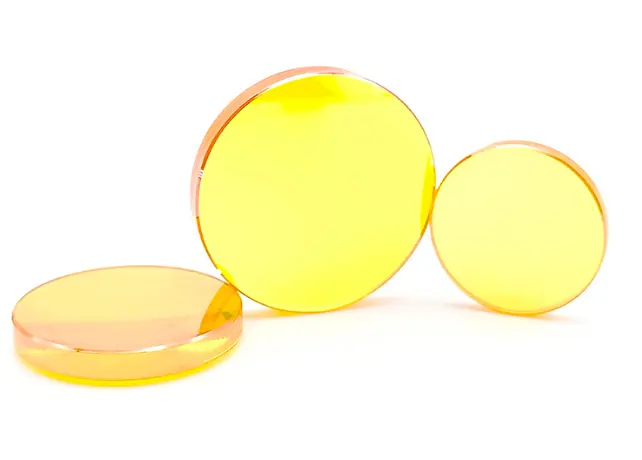
Zinc Selenide (ZnSe) is the most common material used in CO₂ lasers because it is very good at transmitting infrared light at a frequency of 10.6 μm. With the right anti-reflective coatings, it can achieve over a 99% transmission rate. This solid material with a yellow tint is very stable at high temperatures and keeps its focal point even when it is continuously used at high power. The natural color comes from the way the crystals are structured, and it doesn't affect how well it works, which is something that many first-time buyers worry about.
Fused silica lenses work well with fiber lasers that have shorter wavelengths, around 1.06 µm. They have higher damage limits for high-pulse-energy uses. On the other hand, calcium fluoride makes things clear under ultraviolet light for specific writing devices. The main selection factor that affects operating success is how well the material works with your laser source.
Critical Specifications to Evaluate
The focal length tells us how far away the lens should be from the top of the object for the best focus. In industrial systems, this distance is usually between 2.5 and 10 inches. For detailed work, shorter focal lengths make smaller spots, but they also shorten the working distance. Longer focal lengths, on the other hand, can handle thicker materials or areas that aren't flat. The laser damage threshold, which is given in watts per square centimeter, shows the highest level of power that can be sustained before the layer breaks down or the base cracks.
The diameter needs to match the fitting standards of your focusing head. Common industrial sizes are 18mm, 20mm, and 25mm. Coating quality has a direct effect on how well it transmits signals and how long it lasts. For example, military-grade coatings like the THF4 standard don't get dirty and keep working the same way for a long time.
Core Decision Criteria for Selecting Laser Focus Lenses
Finding the Right Wavelength for the Material
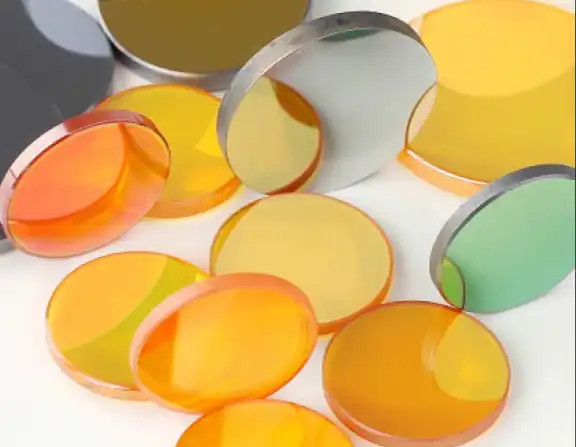
The wavelength of your laser's output decides the lens material that you need. Standard glass fully absorbs this wavelength, so CO₂ lasers that send out 10.6 μm infrared light need ZnSe optics. When used with fused silica or special IR-grade materials, fiber lasers at 1.064 μm work well. If the wavelengths don't work well together, the lens will heat up right away, the focus will change, and the power supply could fail catastrophically.
Processing materials involves more than just the lens itself. For example, cutting thick stainless steel needs different focusing skills than etching signs made of plastic. Copper or brass, which are reflective, cause back reflections that put stress on lens coatings and need higher longevity standards. Adjustable-focus laser focus lens systems let metal production shops work with a wide range of materials every day without having to make regular changes by hand.
Criteria for performance that define quality
How much of the laser's power actually gets to your item is based on how well it transmits. Premium ZnSe lenses have advanced covering technology that lets 99.5% of light through, while lower-quality lenses may lose 3–5% due to absorption and reflection, which is a big problem in production settings with a lot of lenses. This difference in efficiency leads to differences in cutting speeds and higher costs for replacement parts over the life of the equipment.
Thermal stability stops focus shift over long operation cycles. When glasses take in even a small amount of energy, they get heated, which changes their shape and moves the focus point away from the surface of the material. The quality of the cuts gets worse over time because of this "thermal lensing" effect, which forces users to stop and recalibrate. At 18 W/mK, ZnSe lenses have great thermal conductivity, quickly getting rid of absorbed heat to keep the focus properties stable. Our equipment has a great design for getting rid of heat and special optical lenses that keep the beam output high even after a year of nonstop use. The power stays the same and doesn't change.
When metal spatter, dust, and industrial fumes come in contact with lens surfaces in dirty places, damage resistance becomes very important. How well glasses can handle these harsh conditions depends on their surface hardness, how well coatings stick to them, and how pure the base is. Even though they cost more at first, production sites that need to change lenses often should look into higher-grade materials because they will keep the operations running smoothly.
Thoughts on Mounting and Integration
Different companies make different standards for attaching lenses. Threaded, bayonet, and kinematic systems all have their own benefits. Threaded bolts offer secure holding for static installs, while quick-change bayonet systems make it easy to switch lenses quickly during multi-shift operations. To stop caused aberrations, the mechanical interface needs to be perfectly parallel to the optical line.
What the working distance needs are based on the job. When soldering complex shapes into automotive parts, longer standoff distances may be needed. On the other hand, shorter distances that improve beam collimation are better for flat-sheet cutting. Modern laser systems have alloy frames that can be adjusted to allow for optimal focus position without replacing the lens. This gives job shops that work on a variety of projects more operating flexibility.
Comparing Laser Focus Lenses: Making the Best Choice for Industrial Needs
Performance vs. Cost: Things to Think About
When businesses buy things, they weigh the short-term costs against the long-term benefits. Physical Vapor Deposition (PVD) methods are used to make entry-level ZnSe lenses that work well for low-power craft systems but have higher absorption rates that make them less durable for professional use. Chemical Vapor Deposition (CVD) types offer higher purity and mass absorption values below 0.0005 cm⁻³, which means they can be used in kilowatt-class systems that run all the time.
The price difference is due to the difficulty of making the product and the quality of the materials used. Cheap glasses may cost 40–60% less at first, but they need to be replaced three times more often in difficult situations. When you look at the total cost of ownership over 24 months of use, expensive optics often give you better value because they have less downtime, produce steady quality output, and don't need to be replaced in an emergency.
Brand Comparisons and Details about different brands
Long-standing optical makers keep strict quality standards and keep a lot of testing records. Thorlabs and Edmund Optics are two brands that offer thorough transmission curves, damage threshold data, and environmental specs that help you make an informed choice. Their goods usually meet the visual standards set by ISO 10110 and the surface quality standards set by MIL-PRF-13830B. This means that they can be used with precision laser systems.
There are competitive options from regional providers, but the guarantees for specifics range. When procurement professionals are looking at their choices, they should make sure that the certification is real, ask for information on the coating's makeup, and look closely at the surface quality standards given in scratch-dig notation. A 40-20 scratch-dig number means the quality is good enough for industrial use, while 20-10 ratings are better for ultra-precise writing or making medical devices.
Our ZnSe laser focus lens advantages put them in a strong place in this field. High infrared transmittance keeps light loss to a minimum, and good aiming makes fine, focused light spots that are necessary for precise work. The laser is very hard to damage, so it can be used for long periods of time at high power without losing its effectiveness. Good thermal stability keeps the material from deforming at high temperatures, and it works with a lot of different CO₂ laser cutting and engraving tools in many different businesses. The smooth, hard-to-wear surface greatly increases the product's useful life. Our lenses last 1.5 times longer than similar ones and still work after being stored for five years. Our 450-day product guarantee is backed by this reliability, giving procurement teams more time to protect their investments and feel good about their choices.
Recommendations by Buyer Profile
Medium-priced CVD ZnSe lenses with focal lengths of about 5 inches work well for small manufacturing shops that work with common materials. For most sheet metal uses, this configuration strikes a good mix between cost, performance, and operating flexibility. Distributors who want to reach this group of customers should keep common sizes and focal lengths in stock so they can meet customers' instant needs while keeping inventory costs low.
Large producers who work multiple shifts need high-quality glasses with coatings that last longer and can be tracked back to the lot they came from. Investing in high-quality lenses pays off in the form of longer periods between replacements, uniform product quality, and fewer rejects by quality control. When building production lines, automation developers should include adjustable-focus mechanisms that can handle changes in material thickness without any extra work from the operator.
OEM buyers who are making their own brand of equipment can use customizable lens specs that make the best use of performance for their intended uses. Customized focal lengths, special coatings, and different mounting ports make products stand out. Through volume deals, costs may also go down per unit. Our factory-direct supply model and flexible production options make it easy to meet these customization needs.
Procurement Insights: Where and How to Buy Laser Focus Lenses
Assessing the Skills of Suppliers
It's not enough to just compare prices when buying lenses; you also need to look at how reliable the suppliers are, how much professional help they offer, and how consistent the supply chain is. Manufacturers of reliable laser focus lenses keep quality certifications, such as ISO 9001 quality management systems, and send full material certificates with every order. These paper trails make it possible to track things and help with quality checks that the car and aircraft industries need.
Thinking about lead times has a big effect on planning production. Standard store items usually ship within a few days, but items made to order may need a few weeks to be fabricated and coated. Our 14-day wait time for customized production, along with our large inventory stocks, makes this problem easy to solve for projects that need to be done quickly. Having providers who keep popular configurations in stock can protect you in case of sudden increases in demand or machine failures.
Bulk Ordering and Custom Fabrication
If you buy a lot, you can get better prices, but you have to plan ahead carefully to avoid having to pay too much for storage. Minimum order amounts depend on the seller and the difficulty of the design. For example, low minimums may apply to standard items, while higher minimums apply to custom coatings or unique geometries. Cost optimization and practical agility can be balanced by negotiating framework deals that set prices while allowing fluid calloff numbers.
Making custom lenses is useful for specific uses where store choices aren't enough. Medical laser systems, study setups, and custom-designed tools often need focal points or mounting connections that aren't found on other products. When looking for custom solutions, give providers all of your optical needs, such as the wavelength range, power density, weather conditions, and models of the mechanical interfaces. This detailed information makes it possible to give correct quotes and shortens the time it takes to make changes.
Warranty and After-Sale Support Evaluation
This shows that the seller is confident in the quality of the product and the consistency of the making process. Standard coverage usually lasts between 90 and 180 days against problems with the way the product was made. Premium providers offer coverage for 12 to 18 months. Our 450-day after-sales service period shows that we care about our customers and the quality of our products for a long time. Longer warranties lower the cost of repair and hold the maker responsible.
Access to technical support is very helpful when trying to fix problems with optical systems. Suppliers who give installation instructions, cleaning instructions, and suggestions based on the application speed up equipment optimization and keep lenses from breaking down too soon. When looking at possible partners, you should see how responsive they are, how knowledgeable their technical staff is, and how willing they are to offer unique solutions that go beyond standard product catalogs.
Building Trusted Partnerships
Long-term ties with suppliers offer more benefits over time, such as better prices, faster delivery during gaps, and working together to solve problems when they come up. Choosing partners who consistently provide high-quality work, communicate clearly, and genuinely care about their customers' success gives you a competitive edge that goes beyond individual deals.
Even with well-known providers, it is still important to check the certifications. Ask for up-to-date CE certificates that prove the equipment meets European safety standards, especially if it will be shipped or sold in other countries. Quality management practices are confirmed by ISO certifications, while industry-specific accreditations show unique skills that are useful for your needs.
Maintenance and Long-Term Optimization of Laser Focus Lenses
The Best Ways to Clean
Lens care has a direct effect on both the cost of operations and the quality of the output. Because the ZnSe base is soft, it can be scratched easily and needs to be cleaned in a way that is different from how glass optics are usually done. If you want to use the "drop and drag" method, you should soak lens tissue in high-purity acetone or isopropyl alcohol and then drag it across the surface in a straight direction instead of rubbing it. This method gets rid of contaminants without damaging the base or covering.
How often you clean relies on the surroundings and how the material is processed. Cutting stainless steel or making a lot of fumes may need to be inspected and cleaned every day or every week, but in clean rooms that process non-ferrous metals, the gaps are much longer. Setting up preventive repair plans based on real contamination rates is the best way to make the best use of workers and keep performance from dropping.
Protocols for Storage and Handling
Laser focus lenses that haven't been used need to be stored in a controlled setting that keeps them from getting wet, losing their covering, or breaking. Keep glasses in sealed cases with desiccant packs and keep the relative humidity below 40% to keep the coating from wearing off. Stability at any temperature is important, because thermal cycling can cause stress in the layer or microcracks in the base that hurt optical performance. As long as they are stored properly, our lenses will still meet specifications for five years, giving dealers more product options.
Handling methods lower the risks of pollution and damage to machines. Use powder-free gloves or tools made just for handling lenses and always work with them by their sides. Fingerprint oils have acids in them that slowly wear away surfaces, doing lasting damage that can't be seen at first. Setting up rules for how to handle things and giving employees the right tools makes sure they follow them during setup and maintenance tasks.
Recognizing Replacement Indicators
Several signs show that the lenses need to be replaced. If you can see pits or "cloudy" spots that won't come clean, that means the coating has failed or the base is contaminated in a way that can't be fixed. Over time, the laser power needed to keep the cutting depth signal stable goes up, but the signal transfer efficiency goes down as the layer breaks down or bulk absorption goes up.
When focal quality changes between cold starts and continuous operation, this is a sign of thermal lensing. This happens when there is too much absorption, which causes changes in size during warmth. This problem usually happens when contamination or covering wear makes absorption higher than what was intended. Changing the focus to try to make up for it helps for a short time, but it can't fix the underlying visual loss.
Keeping track of how long lenses last lets you plan when to change them, which avoids quality problems during important production runs. By keeping track of installation dates, working hours, and maintenance tasks, you can figure out how often to change things based on your needs and the conditions in your surroundings. This proactive method cuts down on emergency scenarios that need fast shipping and high replacement costs.
Staying Current with Technology Advances
Laser optics are still changing because coating technologies are getting better, material clarity is getting better, and new ways of making things are being invented. By keeping up with new developments, you can make smart improvements to your tools that give you a competitive edge. Adaptive lenses with automatic focus change, real-time contamination detection, and automated cleaning systems are new technologies that keep performance at its best while requiring less human input.
When you work with providers who put money into research and development, you can get new technologies before they're available to most people. These partnerships can help you stand out when you're fighting for difficult tasks or going after new markets that need higher accuracy or faster processing speeds.
Conclusion
To choose the best laser focus lenses, you have to think about a lot of things, like technical specs, material compatibility, source stability, and long-term costs. To make smart purchasing decisions, you need to know the basic differences between lens materials like ZnSe and fused silica, how focal length affects the range of applications, and how to evaluate a supplier's skills beyond just price. The lenses you choose have a direct effect on how well your production works, how good the result is, and how long your equipment lasts. Metal fabrication shops, distributors, and automation developers can get the most out of their laser system investments while keeping costs low over the lifecycles of their equipment by following the right upkeep procedures and building relationships with reliable suppliers.
FAQ
Why Does My ZnSe Lens Show Thermal Lensing?
When energy is taken by a lens, it expands and moves the focus point while it is working. This is called thermal lensing. This usually happens when the surface is dirty or the layer wears off, making the absorption higher than what was intended. The energy that is received warms the base, which changes its shape and gradually changes its optical properties as it is used. If pollution is to blame, cleaning the lens surface with the right chemicals might fix the problem for a short time. If thermal lensing stays even after thorough cleaning, it means that the coating is breaking down or the base is damaged, which means that the lens needs to be replaced. To keep this from happening, the lens needs to be maintained regularly and handled correctly, and operating factors must be watched closely to make sure they don't go beyond what is allowed.
What Differentiates US CVD From Chinese PVD Materials?
Chemical Vapor Deposition (CVD) makes ZnSe surfaces that are more pure and have lower bulk absorption coefficients, usually less than 0.0005 cm⁻³. This high-quality material is perfect for high-power uses over 150 watts, where even a small amount of absorption makes it hard to control the temperature. Most of the time, optical qualities of US-made CVD material are more uniform across production lots. Physical Vapor Deposition (PVD) processes are popular in low-cost manufacturing. They make good substrates for low-power DIY systems, but they have higher absorption rates that make them less useful for professional use. Material clarity, optical stability, and thermal efficiency are all affected by the way the lens is made. These are all things that have a direct effect on how well it works and how long it lasts.
When Should Lens Replacement Occur?
Replace the lenses when surfaces get pits that can be seen, when cloudy areas won't come clean, or when the laser needs a lot more power to keep cutting depth. These signs show that the optical quality has been permanently lost because of a failed coating, a contaminated base, or mechanical damage. Progressive loss of function, where new glasses briefly recover skills, is a sign of conditions that are getting close to the end of life. Setting up replacement plans based on working hours and weather conditions lets you do preventative maintenance that keeps quality problems from happening during key production times.
Partner With Yuhui Laser for Exceptional Optical Solutions
Yuhui Laser sells industrial-grade laser focus lenses that are certified by CE and ISO. This makes sure that the quality is always the same in tough production settings. The THF4 military-grade lens technology we use gives steady output performance that keeps power levels fixed even after long use. We know how hard it can be to buy things. Our 14-day production wait time and large supplies allow us to meet your urgent delivery needs. In addition to selling goods, we offer 450 days of service after the sale, which includes technical training and installation help to get the most out of your tools. Our factory-direct pricing plan gives you the best value, no matter if you need standard specs or optical solutions that are made to fit your special material processing needs. Our expert team can be reached at jianghui@yuhui-laser-tech.com to talk about your unique lens needs and find out why metal processing factories, distributors, and automation developers in Southeast Asia, the Middle East, and Europe trust our optical solutions.
References
1. Hecht, Eugene. Optics (5th Edition). Boston: Pearson Education, 2017.
2. Ready, John F. and Farson, Dave F. LIA Handbook of Laser Materials Processing. Orlando: Laser Institute of America, 2001.
3. Steen, William M. and Mazumder, Jyotirmoy. Laser Material Processing (4th Edition). London: Springer-Verlag, 2010.
4. Yoder, Paul R. Mounting Optics in Optical Instruments (2nd Edition). Bellingham: SPIE Press, 2008.
5. Fischer, Robert E. and Tadic-Galeb, Biljana. Optical System Design (2nd Edition). New York: McGraw-Hill Professional, 2008.
6. ISO 11146 Standards. Lasers and Laser-Related Equipment—Test Methods for Laser Beam Widths, Divergence Angles, and Beam Propagation Ratios. Geneva: International Organization for Standardization, 2005.
Contact us directly for customized solutions, quotations and long-term strategic cooperation.