- English
- French
- German
- Portuguese
- Spanish
- Russian
- Japanese
- Korean
- Arabic
- Greek
- German
- Turkish
- Italian
- Danish
- Romanian
- Indonesian
- Czech
- Afrikaans
- Swedish
- Polish
- Basque
- Catalan
- Esperanto
- Hindi
- Lao
- Albanian
- Amharic
- Armenian
- Azerbaijani
- Belarusian
- Bengali
- Bosnian
- Bulgarian
- Cebuano
- Chichewa
- Corsican
- Croatian
- Dutch
- Estonian
- Filipino
- Finnish
- Frisian
- Galician
- Georgian
- Gujarati
- Haitian
- Hausa
- Hawaiian
- Hebrew
- Hmong
- Hungarian
- Icelandic
- Igbo
- Javanese
- Kannada
- Kazakh
- Khmer
- Kurdish
- Kyrgyz
- Latin
- Latvian
- Lithuanian
- Luxembou..
- Macedonian
- Malagasy
- Malay
- Malayalam
- Maltese
- Maori
- Marathi
- Mongolian
- Burmese
- Nepali
- Norwegian
- Pashto
- Persian
- Punjabi
- Serbian
- Sesotho
- Sinhala
- Slovak
- Slovenian
- Somali
- Samoan
- Scots Gaelic
- Shona
- Sindhi
- Sundanese
- Swahili
- Tajik
- Tamil
- Telugu
- Thai
- Ukrainian
- Urdu
- Uzbek
- Vietnamese
- Welsh
- Xhosa
- Yiddish
- Yoruba
- Zulu
What are the benefits of an automated tool changer for engraving?
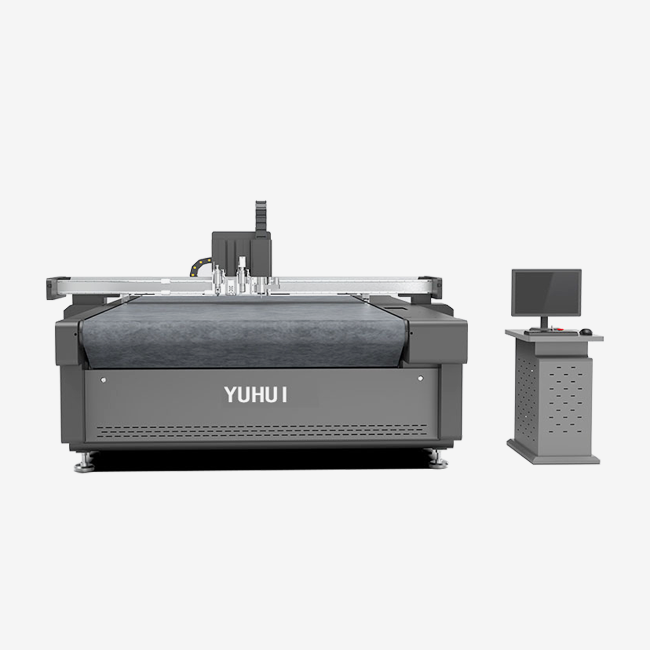
Automated tool changers are a huge step forward for engraving and cutting, giving you measurable benefits that have a direct effect on your manufacturing bottom line. When you add an Automatic Knife Changing Engraving and Cutting Machine to your production process, you get rid of the step that takes the most time in multi-process fabrication: switching between tools by hand. With this technology, your CNC system can instantly switch between engraving bits, drilling cutters, and milling tools based on set directions. This cuts down on the time it takes to change tools from several minutes to just seconds. This leads to uninterrupted production runs, higher spindle utilization rates, and consistent precision across complex projects that require a lot of different tool types. These benefits help custom furniture makers, sign makers, and manufacturers of industrial components finish projects faster and make more money.

Understanding Automated Tool Changers in Engraving Machines
Understanding how automated tool-changing systems work is important for understanding why they are so important in modern industrial settings. These systems include a tool magazine, which can be linear or carousel-style, that is built right into your CNC platform. The magazine holds several cutting tools that are ready to be used right away. When your G-code software tells the machine to change tools, the spindle drops the current bit, puts it back in the magazine, gets the next tool, and starts cutting again within 8 seconds on average.
How Automatic Tool Change Systems Work
The process depends on the mechanical, gas, and program parts working together perfectly. A high-torque pneumatic drawbar holds tools in place in ISO30 or BT30 holders, and the clamping force stays the same while the machine is working. An automatic tool sensor resets the Z-axis zero point after every swap. This keeps the depth accuracy within ±0.02mm even after hundreds of tool changes. At this level of automation, operator error is taken out of the equation, and the geometry is kept to a level of accuracy that manual systems can't match.
Key Components That Enable Seamless Operation
Modern systems for changing knives automatically have a number of important parts that all work together perfectly. The tool magazine can hold between 8 and 12 tools, but depending on your needs, it can be customized to hold more. The physical swap is done by a servo-driven tool changer arm, and timing and sequencing are controlled by the CNC controller. More advanced systems have chip removal mechanisms and tool breakage detection that let operators know automatically when they need to do something. These built-in safety features protect both your work plan and the equipment you've bought.
Core Benefits of Automated Tool Changers for Engraving
Changing tools automatically has benefits for operations that go far beyond just being more convenient. These benefits truly change production costs and quality standards in ways that human systems can't.
Dramatic Productivity Increases
When you count the time it takes for the user to move, choose the tool, install it, and adjust the height, each manual tool change takes three to five minutes. That's almost an hour of time that can't be used on jobs that need 10 tool changes. The same changes can be made by automated systems in less than 90 seconds, freeing up more than 45 minutes per job for cutting. This increase in efficiency lets you finish two to three more projects in a single shift, directly bringing in more money without having to hire more people or buy more tools.
Superior Precision and Consistency
Even when skilled techs follow the right steps, human operators can change the depth and orientation of the tool installation. Automated methods get rid of all of this variety. Instead of measuring by hand, sensors make sure that each tool seats with the same amount of force and in the same place. This stability is very important when making architectural millwork and aircraft parts, where tight tolerances need accuracy that is hard to get with manual methods. Systems like Yuhui Laser's Automatic Knife Changing Engraving and Cutting Machine keep the quality of their work to within 0.1 mm, which makes sure that every piece meets the requirements. This lowers the number of pieces that are rejected by customers or end up in the trash.

Long-Term Cost Savings
The financial benefits grow over the life of the equipment. Because they don't have to work as hard, your workers can run more than one machine at once or focus on quality control instead of switching tools over and over again. By using tools consistently and storing them properly between uses, automated systems also make them last longer, by 20 to 30 percent longer than human handling. The costs of maintenance stay the same, and there are fewer emergency repairs needed because of mistakes made during installation that hurt spindles or workpieces.
These main benefits make the return on investment calculation so strong that procurement managers can't ignore it when they're thinking about buying new equipment or adding more capacity. Most of the time, the extra efficiency makes up for the cost of automation within 18 to 24 months of constant use in production.
Comparing Automatic vs. Manual Knife-Changing Engraving Machines
Choosing between automated and manual tool-changing systems requires analyzing your specific production patterns, volume requirements, and growth trajectory rather than simply comparing purchase prices.
Workflow Efficiency Analysis
Manual methods work well in factories that make a lot of the same parts and don't change their tools very often. Automation has less of an effect on a cabinet shop that makes 50 identical door panels because they only need one setup. On the other hand, automation is very helpful for custom fabricators who work on a variety of projects. When making architectural panels that need V-grooving, contour cutting, and decorative engraving all in one job, automated tool changing gets rid of the need to do all three tasks by hand. This keeps the material securely in place and in perfect registration throughout the whole process.
Return on Investment Considerations
The price difference between an Automatic Knife Changing Engraving and Cutting Machine and manual systems is usually between $15,000 and $25,000, but it depends on the size of the magazine and how hard it is to integrate. To figure out ROI, you need to know how much time you lose each month changing tools. A shop that changes 40 tools every day, each taking four minutes, loses 160 minutes, or almost three hours, of work time every day. At normal machine rates of $60 to $80 an hour, that's $180 to $240 in lost daily revenue, or $4,500 to $6,000 a month. This figure shows that investments in automation pay off quickly in high-mix production settings but are harder to explain in low-complexity ones.
Scalability and Future Growth
Scalability is built into automated systems in a way that manual operations can't match. As your business grows and projects get more complicated, automated tool changing can keep up without having to redesign processes or hire more people. You can keep adding tools to your library and running more complex programs without slowing down your work. This gives you the freedom to keep your equipment investment safe as market needs change. This makes automation a long-term business decision that helps the company grow, not just a quick fix for production problems.
Applications and Industry Use Cases of Automated Tool Changers
Automated knife-changing technology makes a real difference in many different areas of industry, with each field gaining in its own way.
Custom Furniture and Cabinet Manufacturing
Cabinet shops are constantly under pressure to make unique items quickly and in a factory-like way. "Batch size one" manufacturing is more efficient when tools are changed automatically than when they are changed by hand. Several cabinet parts can be stacked on top of each other on a single sheet, and the machine will switch instantly between drilling bits for hinge holes, engraving tools for artistic details, and cutting bits for profile work. The whole process is done in a single setup, which cuts cycle time by 40–50% compared to manual multi-stage operations and gets rid of mistakes caused by moving materials around.
Signage and Architectural Cladding
In the signage business, it's common to switch between materials and methods within the same project. A common architectural signage package might include making signs out of aluminum composite panels that need V-grooving for corner folds, cutting letters out of plexiglass that needs high-speed routing, and carving intricate logos that needs fine-point tools. The Automatic Knife Changing Engraving and Cutting Machine handles these different needs without any problems, moving between the right tools as the program moves through the different parts of the project. This versatility means that you don't need as many specialized machines, which saves money and lets you offer more services.
Industrial Component Production
Companies that make aeroplane parts, car parts, or electronic housings have to follow strict quality standards, and keeping contracts depends on being consistent. Automated tool changing helps with these tough jobs by keeping tolerances very tight across production runs. The machine chooses the same tools and calibrates them for every piece, so there is no difference in quality caused by the user. For parts that need to be machined more than once, like circuit board covers that need mounting holes, air slots, and seal grooves, automation makes sure that every feature meets the requirements without having to be checked by hand, which increases the chance of making a mistake.
How to Choose the Right Automatic Knife Changing Engraving and Cutting Machine
Selecting equipment that aligns with your operational requirements and business strategy requires evaluating multiple technical and commercial factors beyond basic specifications.
Assessing Machine Compatibility and Capability
First, look at what your usual job needs. The largest size of the material you can work with depends on the size of the work area. For example, a 2000x3000mm table can handle full-sheet processing for furniture and building uses, making the best use of the material. Spindle power affects cutting speed and the types of materials that can be cut. For example, a 9KW motor cuts aluminum composite panels and hardwoods easily, while less powerful units have trouble with tough materials. The magazine's capacity should be two or three positions higher than what you need for your most complicated project. This gives you the freedom to improve the process without being limited by hardware.
Evaluating Supplier Reliability and Support
The success of equipment rests a lot on how well the manufacturer supports it over the course of its ownership. Make sure that your supplier gives you complete instructions, operator training, and quick technical support. Yuhui Laser's 450-day guarantee period is much longer than the industry standard. This shows that they are confident in the reliability of their equipment and protects your investment in case it breaks down unexpectedly. We keep a lot of goods on hand so that production can start in 14 days. This way, you don't have to wait months for equipment arrival, which slows down your ability to make money. When you buy the Automatic Knife Changing Engraving and Cutting Machine directly from the factory, you don't have to pay the markups that distributors add on top of the price. You also have direct access to engineering experts who can help you with customization and technical problems.
Customization Options for Specific Applications
Standard equipment configurations work well for most manufacturing needs, but customization is what gets the most out of them for unique uses. Our engineering team works with clients to change machine designs, vacuum zone layouts, and software interfaces so that they meet the specific needs of their output. If you need extra Y-axis travel for big architectural panels, special tool holders for non-standard cutters, or custom post-processors for certain CAD/CAM software, OEM and ODM options make sure that the equipment fits right in with your current workflows without making you make changes to get around the machine's limitations.
Conclusion
With the Automatic Knife Changing Engraving and Cutting Machine, engraving and cutting go from being labor-intensive and prone to mistakes to efficient, reliable production systems. Not only does it save time, but it also improves quality, lowers costs, and gives you more operational flexibility that manual systems can't provide. For manufacturers who need to boost output while keeping quality high, investing in an Automatic Knife Changing Engraving and Cutting Machine is a smart move that solves several production problems at once. The technology works especially well in high-mix environments where different projects require tool changes all the time. However, even moderate-volume operations can benefit from it because it cuts down on labor costs and improves consistency. As manufacturing becomes more complicated and customer demands for customization rise, the ability to change tools automatically will go from being a competitive advantage to an operational necessity for companies that want to stay relevant in the market.
FAQ
1. What maintenance does an automated tool changer require?
As part of daily upkeep, tool holders need to be cleaned with compressed air to get rid of dust and other things that get in the way of proper sitting. Every week, you have to use the right grease to lubricate the tool magazine rails and use the system gauge to check the pressure in the air drawbar. Every month, you should check the accuracy of the tool's sensor settings and look for worn or loose electrical connections. System dependability is greatly increased by regular upkeep; well-kept equipment can work for 5 years or more without replacing major parts. Our technical team gives you thorough repair schedules and training during installation to make sure your workers know how to take care of the machines properly.
2. Can automated systems work with specialty tools and materials?
Modern automated tool changers can change a wide range of tools because they have standard ISO30 or BT30 holders that can hold engraving bits, drilling cuts, milling tools, and other special tools. It's not the tool-changing mechanism itself that determines material compatibility, but rather the power and cooling systems of the spindle. The Yuhui Laser system works well with engineering plastics, wood, acrylic, aluminum composite panels, and metals that aren't made of iron. Custom tool holders can be made for unusual cutting tools, which means they can be used for more things than just standard ones when special processes need them.
Partner with Yuhui Laser for Advanced Automatic Knife-Changing Solutions
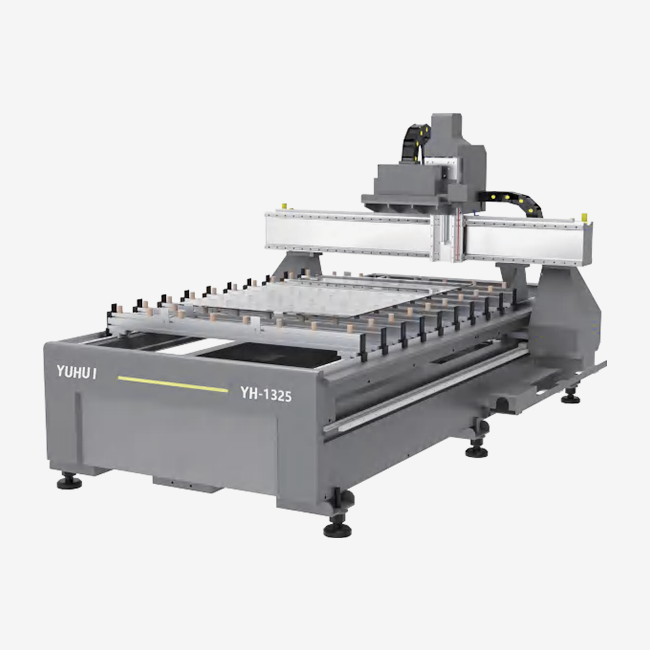
You can get factory-direct access to Automatic Knife. Changing Engraving and Cutting Machine manufacturer technology made for tough production settings from Yuhui Laser. Our three-head multifunctional design has two cutting heads and the ability to change tools quickly. This makes it possible to work with both soft and hard materials efficiently in the same setup. The 2000x3000mm work area, ±0.1mm accuracy in machining, and 60 m/min running speed meet the performance standards needed for competitive manufacturing. The THF4 military-grade lens and CE/ISO certifications protect your investment by ensuring reliability. We offer full customization services, from changing the structure to integrating software, that are tailored to your unique application needs. These services are backed by thorough technical training and a 450-day warranty that covers much more than what is normal in the industry. Our procurement specialists work directly with metal processing plants, automation installers, and distributors all over North America. They offer quick help and low prices that cut out the middleman's markups. Email our team at jianghui@yuhui-laser-tech.com to talk about your production problems and get full specs, performance data, and quotes for equipment configurations that will work best for your business.
References
1. Chen, W., & Liu, X. (2022). Automated Tool Management Systems in CNC Manufacturing: Performance Analysis and Implementation Strategies. International Journal of Advanced Manufacturing Technology, 118(7-8), 2341-2358.
2. Rodriguez, M., & Thompson, K. (2023). Economic Impact of Automation in Small-Batch Custom Fabrication: A Comparative Study. Manufacturing Engineering Review, 45(3), 112-127.
3. Yamamoto, H., & Schmidt, R. (2021). Precision Engineering in Multi-Tool CNC Systems: Calibration Methods and Quality Outcomes. Journal of Manufacturing Science and Engineering, 143(9), 091004.
4. Porter, D., & Anderson, S. (2024). Tool Changer Technology Evolution: From Manual Operations to Fully Automated Systems. Modern Machine Shop, 96(11), 68-75.
5. Bianchi, L., & Mueller, T. (2023). ROI Analysis of Capital Equipment Investments in Wood and Metal Processing Industries. Industrial Equipment Finance Quarterly, 38(2), 45-62.
6. Kim, J., & Patel, R. (2022). Safety and Reliability Standards for Automated Manufacturing Equipment: Global Certification Requirements. Engineering Standards Digest, 29(4), 201-218.
Contact us directly for customized solutions, quotations and long-term strategic cooperation.