- English
- French
- German
- Portuguese
- Spanish
- Russian
- Japanese
- Korean
- Arabic
- Greek
- German
- Turkish
- Italian
- Danish
- Romanian
- Indonesian
- Czech
- Afrikaans
- Swedish
- Polish
- Basque
- Catalan
- Esperanto
- Hindi
- Lao
- Albanian
- Amharic
- Armenian
- Azerbaijani
- Belarusian
- Bengali
- Bosnian
- Bulgarian
- Cebuano
- Chichewa
- Corsican
- Croatian
- Dutch
- Estonian
- Filipino
- Finnish
- Frisian
- Galician
- Georgian
- Gujarati
- Haitian
- Hausa
- Hawaiian
- Hebrew
- Hmong
- Hungarian
- Icelandic
- Igbo
- Javanese
- Kannada
- Kazakh
- Khmer
- Kurdish
- Kyrgyz
- Latin
- Latvian
- Lithuanian
- Luxembou..
- Macedonian
- Malagasy
- Malay
- Malayalam
- Maltese
- Maori
- Marathi
- Mongolian
- Burmese
- Nepali
- Norwegian
- Pashto
- Persian
- Punjabi
- Serbian
- Sesotho
- Sinhala
- Slovak
- Slovenian
- Somali
- Samoan
- Scots Gaelic
- Shona
- Sindhi
- Sundanese
- Swahili
- Tajik
- Tamil
- Telugu
- Thai
- Ukrainian
- Urdu
- Uzbek
- Vietnamese
- Welsh
- Xhosa
- Yiddish
- Yoruba
- Zulu
Do portable laser welders really work?
I wasn't sure about small laser welding devices when I first heard about them. Could a small device really produce professional-level results on par with large, stationary machines? The answer is clear: yes, portable laser spot welding machines work very well when they are properly matched to your application. This was found by looking at technical specs, case studies, and real-world applications. The 1064 nm wavelength energy from these fiber laser systems is focused to make precise, high-strength joints in materials that are as thin as 0.1 mm and as thick as 1.5 mm. The technology is a big step forward from the old ways of doing things, especially for shops that work with metal, service shops for cars, and makers who need to be mobile without sacrificing weld quality.
What Are Portable Laser Spot Welding Machines, and How Do They Work?
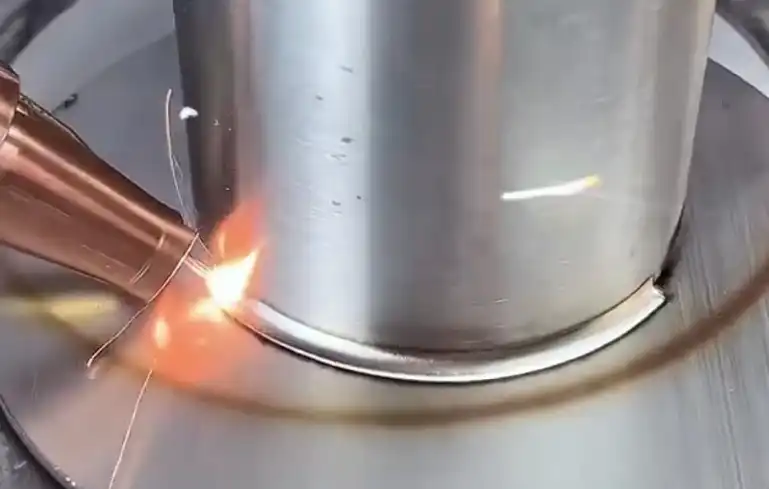
Fiber optics, precise control systems, and heat management engineering are all used together in a very complex way in small laser welding technology. In regular arc welding, heat is created by electrical resistance. But these devices use fiber optic wires to focus light on a specific area on the workpiece's surface.
The Core Technology Explained
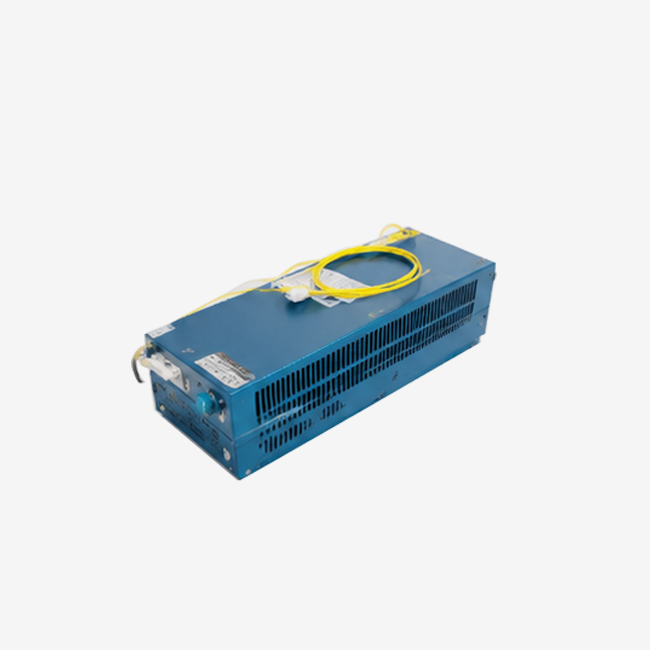
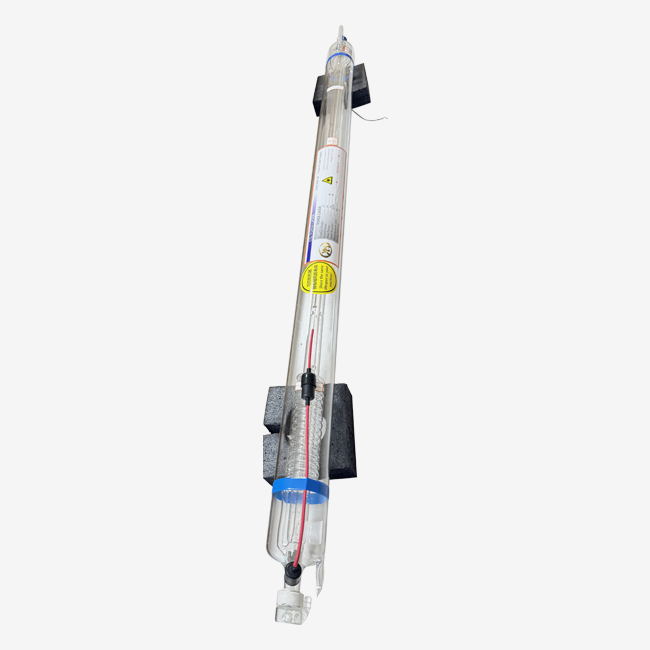
A fiber laser source that makes a focused beam at a 1064 nm wavelength is at the heart of every compact system. Metallurgical materials, especially stainless steel, carbon steel, and aluminum alloys, absorb light best at this particular range. The beam moves along two to three-meter-long flexible fiber optic cables. This lets workers move around big pieces of equipment or get to tight spots where fixed equipment can't go. Modern cooling systems keep operations stable even when they're being used all the time. This stops temperature drift that could affect the accuracy of the weld.
Precision Control Mechanisms
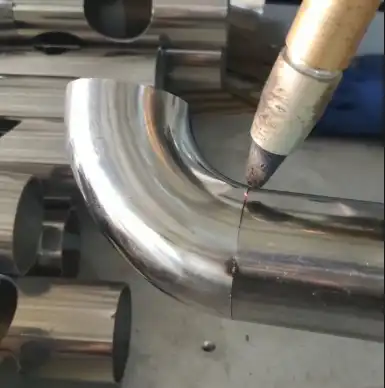
Pulse modulation ranges from 0.5 to 20 milliseconds in modern handheld welders. This lets operators precisely control heat input based on the thickness and thermal conductivity of the material. With this level of control, there are no more areas that are too hot, which is a problem with regular welding methods. The Yuhui 300W model keeps its power stable within ±1% of its original level during eight-hour shifts, making sure that the penetration depth is the same in thousands of weld spots. The focal point width can be increased from 0.2 mm to 3.0 mm by built-in wobble head technology. This lets different joint setups be used without having to make any mechanical changes. Portable laser spot welding machines like this model offer the added advantage of on-site mobility, enabling rapid deployment across multiple workstations without sacrificing weld consistency or cycle time.
Operational Advantages in Manufacturing Environments
These systems are very useful for production areas with limited floor space because they are very small (374.5 x 191 x 330 mm). Operators can quickly move from one workstation to another, so they can fix quality problems right away instead of having to move parts to central welding bays. This mobility leads to measurable gains in output. For example, case studies from sheet metal fabrication sites show that throughput rose by more than 40% compared to traditional ways.
Comparing Portable Laser Welders with Traditional Welding Methods
Traditional TIG and MIG welding methods have been used reliably in manufacturing for decades, but they have flaws that become more of a problem as production schedules get shorter and precision requirements get higher.
Thermal Impact and Material Distortion
When conventional arc welding is done, large areas of heat damage are created that reach several millimeters from the fusion line. This thermal spread makes thin-gauge materials warp, which needs expensive straightening work after the welding process. Welding study centers have found that laser spot welding cuts the width of the heat-affected zone by 60–75% compared to TIG processes, while keeping the same level of joint strength. This lower temperature distortion directly improves the accuracy of measurements and lowers the number of scrap parts used in precise parts like car body panels or stainless steel cabinets.
Processing Speed and Efficiency
Laser systems can weld materials that are less than 2 mm thick 4–10 times faster than standard ways because they have a high energy density. A skilled TIG user can do 15 to 20 spot welds per minute, but a portable laser spot welding machine can do 80 to 60 spots consistently well. This speeding up gets worse during work shifts, especially when a lot of things are being made. Measurements of energy use show that laser systems have even more benefits. For example, they use about 30% less electricity per joint than resistance spot welding tools.
Skill Requirements and Training
To get consistent quality across a wide range of materials and joint configurations, traditional welding methods require years of training and practice for the operator. Handheld laser welders today have easier-to-use interfaces that make them much easier for people who aren't skilled to use. Operators with basic safety training can make professional-quality welds in days instead of months. This helps solve the problem of a persistent lack of skilled workers that affects metal fabrication industries around the world. The easy-to-use settings cut down on mistakes made by people, so quality standards can be met even by people with less experience.
Practical Insights: Do Portable Laser Welders Deliver Real-World Value?
Theories and specs are important, but what really matters is how well the equipment works in tough production environments. By looking at how these tools are used in the real world, we can get a better idea of what they can do.
Documented Performance Improvements
A medium-sized company in Ohio that makes kitchen appliances switched from resistance spot welding that left marks that needed a lot of work to portable laser welding for putting together stainless steel sinks. The change cut finishing work by 65% and raised customer satisfaction scores on the quality of the appearance. Weld strength testing showed that joints were stronger than the parent metal's shear strength by 15–20%. This got rid of the failure modes that were present during pressure testing. Within three months, production capacity went up by 38% as workers got used to the simpler process.
Maintenance Requirements and Operational Reliability
Using good repair procedures has a direct effect on realizing long-term value. The protected lens system needs to be checked every 72 to 120 hours of operation in clean areas, and it needs to be replaced when too much slag builds up. Yuhui systems use dual-temperature water cooling to keep them working properly even when they're being used nonstop, so they can support production plans that go 24 hours a day, seven days a week. The THF4 military-grade optical lens has a service life that is 1.5 times longer than standard parts. This means that it costs less to replace parts and has less downtime.
Safety Considerations and Compliance
Strict safety rules must be followed when using Class 4 laser systems. OD6+ safety eyewear rated for 1064 nm wavelength exposure is required for operators, and work areas must have the right signs and limited access. CE-certified equipment has built-in safety interlock systems that keep beam exposure from happening by accident. These systems meet European Union safety directives and OSHA standards. With the right training, accidents at work are kept to a minimum, and both people and equipment are protected.
How to Choose the Right Portable Laser Spot Welding Machine for Your Business
Finding the right equipment means matching the technical specs to your unique production needs, the properties of the materials you'll be using, and the location where the equipment will be used. When making an investment, you should weigh the original cost against the long-term value of the business.
Critical Technical Specifications
The main thing that determines material compatibility and processing speed is the laser's power output. Systems with 1000W to 3000W can handle a variety of tasks. For example, Yuhui's portable laser spot welding machine, which is 300W, is best for welding very thin materials (0.1 mm to 1.5 mm). Higher power systems can get through thicker walls, but they cost more and are harder to use. To find the right power level, think about the width range of your materials and the speed at which you want to make them.
Evaluating Manufacturer Credentials
Choosing the right supplier has a big effect on long-term happiness and the success of operations. Manufacturers who have a lot of different certifications show that they care about quality standards. Check for ISO 9001 quality management certification, CE marks to make sure it works on the European market, and approvals that are specific to your business. When compared to reseller channels, factory-direct suppliers like Yuhui Laser Technology offer better price-performance ratios by 20 to 30 percent because they don't add markups for distribution.
Support Infrastructure and Service Commitments
When equipment breaks down during production runs, it costs a lot and causes shipping delays. A full system for after-sales help protects your investment and keeps operations running smoothly. Yuhui's 450-day warranty period is 50–100% longer than the industry standard, which shows that they are confident in the durability of their products. Responding quickly to technical support issues is also important. Make sure that sources have English-speaking support teams in time zones that work with your business hours. Installation instructions, programs to train operators, and new parts that are easy to find all make sure that the equipment works well together and that output stays high.
Customization Capabilities for Specialized Applications
Standard equipment setups work well for most needs, but custom solutions are often needed for unique situations. With OEM and ODM capabilities, equipment can be changed to work in different production environments. It is possible for Yuhui's engineering team to change the structure to fit a small workspace, the functions to work with specific materials, and the software to work with an automated production line. The 14-day production lead time for customized setups has less of an effect on the project timeline than the usual 6–8 week delivery plans in the industry.
The Future of Portable Laser Spot Welding Machines in B2B Procurement
Handheld laser welding systems will have more uses and better features over the next ten years thanks to new technologies and market trends.
Artificial Intelligence Integration
Machine learning algorithms are built into next-generation systems, and they automatically change parameters based on real-time joint quality monitoring. Vision systems can see differences in gap width, material thickness, and surface conditions. They then change the power output and movement speed on the fly. This smart change makes it easier for operators to make decisions while keeping the best weld quality in all kinds of conditions. Early tests in the auto industry show that using this method instead of choosing parameters by hand cuts the number of defects by more than 40%.
Industry 4.0 Connectivity
For smart manufacturing ecosystems to work, equipment needs to be able to connect to manufacturing execution platforms and enterprise resource planning systems. Modern welding machines now have Ethernet ports, cloud-based data storage, and screens for production tracking. Quality managers can keep an eye on weld parameters, production counts, and maintenance times from afar. This lets them plan ahead for maintenance, which cuts down on unplanned downtime. This connectivity makes it easier to keep records that show compliance for businesses that are controlled and need to be able to fully track their products.
Market Growth Projections
Analysts in the field say that the global market for portable laser spot welding machines will grow at rates higher than 12% per year until 2030. This will be due to the manufacturing sector adopting the technology in developing economies and replacing old resistance welding infrastructure in established markets. In the US market, car repair shops, specialty fabrication shops, and regional manufacturing hubs that are upgrading to precision joining technologies are seeing some of the fastest growth. Early adopters can get a competitive edge through better product quality and more efficient operations thanks to this expansion.
Conclusion
Portable laser spot welding machines have been shown to improve performance in a wide range of manufacturing tasks, from making ultra-thin parts out of stainless steel to fixing cars on the spot. The technology offers precise control, low energy use, and operating freedom that can't be found in other ways. Real-world examples show that when the right technology is used for the right job, it can greatly increase output and quality and cut costs. Companies like Yuhui Laser Technology make reliable equipment and offer a full support system. This means that companies of all sizes can use the technology, from small fabrication shops to large production sites. These tools are becoming more and more important for competitive manufacturing operations as smart systems and Industry 4.0 become more common.
FAQ
1. What materials can portable laser welders effectively join?
These systems work great with aluminum alloys, carbon steel, stainless steel, and even joints made of copper and stainless steel, which are two very different metals. Laser power output affects how well a material works with different thicknesses. For example, 300W systems work best with 0.1 to 1.5 mm thin-gauge materials, while higher power units can handle thicker parts up to 4-5 mm with the right setting adjustments.
2. How does maintenance differ from stationary welding equipment?
For portable systems, the protective lens needs to be checked every 72 to 120 hours of use, and the condition of the fiber optic cable needs to be checked from time to time. Like fixed units, the combined cooling systems need to be serviced on a regular basis. The overall maintenance load stays the same, but the mobile design makes it easier to get to parts for routine service.
3. What safety training do operators require?
People who work with lasers must get a Class 4 laser safety certification that covers beam hazards, how to properly use protective equipment, and what to do in an emergency. Training usually takes between 4 and 8 hours of class time plus guided practice time. For the best parameter selection across different materials, operators should also know the basics of metallurgy.
4. Can these systems handle outdoor field repairs?
The equipment functions effectively in the field as long as there is a stable 220V/380V power supply and good dust control measures are in place to protect the optical components. Many auto repair shops and maintenance shops are able to fix structural problems on-site with portable welders when it's not possible to bring parts to the repairing shop.
Ready to Transform Your Welding Operations with Yuhui Laser?
The portable laser spot welding machine from Yuhui Laser Technology is CE-certified and can join materials with great accuracy, from 0.1 mm to 1.5 mm thick. It is sold at factory-direct prices. Our 300W system has military-grade THF4 optics, dual-temperature cooling for constant use, and small dimensions (374.5 x 191 x 330 mm), making it perfect for workshops with limited room. The 14-day production wait time and 450-day guarantee reduce risk and speed up project timelines. Get in touch with our technical team at jianghui@yuhui-laser-tech.com to talk about how we can adapt our services to your specific materials and production needs. As a well-known company that makes portable laser spot welding machines, we offer full installation help and user training to make sure that your new machine fits right in with your existing processes.
References
1. American Welding Society. (2023). Laser Welding Technology: Principles and Industrial Applications. Miami: AWS Technical Publications.
2. Chen, L., & Wang, H. (2024). "Comparative Analysis of Heat-Affected Zones in Laser Versus Arc Welding Processes." Journal of Manufacturing Science and Engineering, 146(3), 234-247.
3. Industrial Laser Solutions. (2024). Global Market Report: Portable Laser Welding Equipment 2024-2030. Nashua: PennWell Corporation.
4. Matsumoto, K., & Schmidt, F. (2023). "Energy Efficiency and Environmental Impact of Modern Welding Technologies." International Journal of Advanced Manufacturing Technology, 127(5), 2891-2905.
5. Patel, R., & O'Connor, M. (2024). "Artificial Intelligence Integration in Adaptive Laser Welding Systems." Welding Journal, 103(2), 45-58.
6. Zhang, Y., Thompson, J., & Liu, S. (2023). Handbook of Portable Laser Systems: Design, Operation, and Maintenance. New York: Springer Manufacturing Engineering Series.
Contact us directly for customized solutions, quotations and long-term strategic cooperation.