- English
- French
- German
- Portuguese
- Spanish
- Russian
- Japanese
- Korean
- Arabic
- Greek
- German
- Turkish
- Italian
- Danish
- Romanian
- Indonesian
- Czech
- Afrikaans
- Swedish
- Polish
- Basque
- Catalan
- Esperanto
- Hindi
- Lao
- Albanian
- Amharic
- Armenian
- Azerbaijani
- Belarusian
- Bengali
- Bosnian
- Bulgarian
- Cebuano
- Chichewa
- Corsican
- Croatian
- Dutch
- Estonian
- Filipino
- Finnish
- Frisian
- Galician
- Georgian
- Gujarati
- Haitian
- Hausa
- Hawaiian
- Hebrew
- Hmong
- Hungarian
- Icelandic
- Igbo
- Javanese
- Kannada
- Kazakh
- Khmer
- Kurdish
- Kyrgyz
- Latin
- Latvian
- Lithuanian
- Luxembou..
- Macedonian
- Malagasy
- Malay
- Malayalam
- Maltese
- Maori
- Marathi
- Mongolian
- Burmese
- Nepali
- Norwegian
- Pashto
- Persian
- Punjabi
- Serbian
- Sesotho
- Sinhala
- Slovak
- Slovenian
- Somali
- Samoan
- Scots Gaelic
- Shona
- Sindhi
- Sundanese
- Swahili
- Tajik
- Tamil
- Telugu
- Thai
- Ukrainian
- Urdu
- Uzbek
- Vietnamese
- Welsh
- Xhosa
- Yiddish
- Yoruba
- Zulu
How do air-cooled handheld fiber laser welders work?
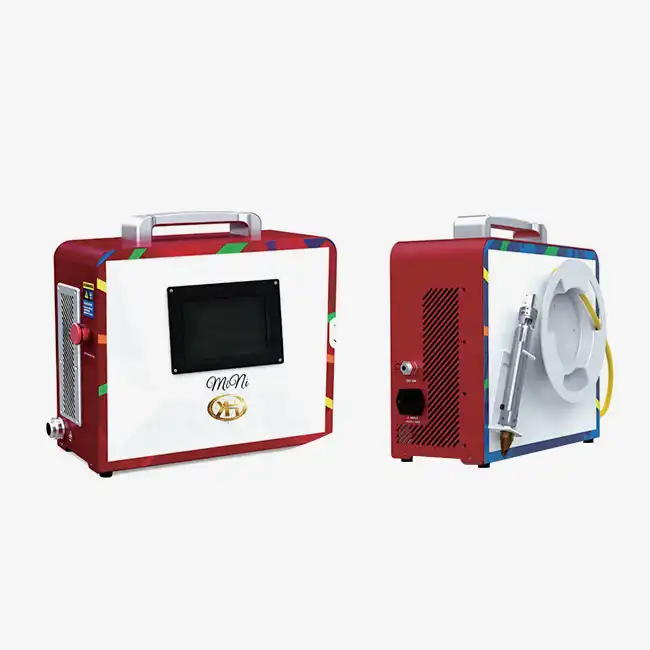
These days, when I walk through shops that work with metal, I see more workers carrying portable welding devices that look incredibly small compared to older tools. The air-cooled handheld fiber laser welding machine eliminates bulky water cooling systems while maintaining industrial-grade performance, representing a fundamental change in welding technology. At its heart, this piece of equipment makes a focused fiber laser beam that melts metal surfaces when it comes into contact with them. Built-in fans and heat dissipation channels handle thermal loads without using liquid coolants. This makes a solution that is easy to maintain, light, and can precisely weld stainless steel, aluminum, and galvanized materials. This is especially helpful for small to medium-sized manufacturers who want to be mobile without sacrificing the integrity of their welds.

Understanding the Working Principle of Air-Cooled Handheld Fiber Laser Welders
Figuring out how air-cooled handheld fiber laser welders work is important.
Portable laser welders work by having three systems that are all connected and working at the same time. Knowing about these parts helps procurement teams compare the powers of tools to the needs of output.
Fiber Laser Generation and Beam Delivery
The process of welding starts inside a fiber laser source, which is usually a Raycus unit in high-quality machines like the HJ-1200. Rare-earth-doped optical fibers are energized by diode pumps. This makes a 1080 nm laser beam with very good beam quality (M² < 1.1), which lets focused energy get to where it needs to go. The beam goes to the handheld welding head through armored fiber optic cables. This keeps the power density high while letting the operator move. Older CO2 systems needed complicated mirror arrangements, which is very different from this design. Power levels from 800W to 1500W can handle different amounts of material. For example, the 1200W setting works well with stainless steel up to 5 mm thick.

Air Cooling System Architecture
Instead of moving cold water around, these machines use forced air convection through heat exchanges that are placed in specific ways. Fans inside the computer pull air from the room across aluminum heat sinks that are connected to laser diodes and optical parts. The heated air is then pushed out through pathways that let air flow through them. The unique air-duct design keeps diode temperatures within acceptable ranges even when the temperature outside is 45°C. Compared to water-cooled peers, this method cuts down on equipment weight to about 40–70 kg while getting rid of the problems with coolant leaks, pump failures, and freezing in the winter that happen with standard systems. The small size (53 x 27 x 60 cm) makes it easy to use in crowded working spaces. This same air-cooling principle is applied in the air-cooled handheld fiber laser welding machine, which delivers portability and maintenance-free operation without compromising weld penetration or speed.
Metal Interaction and Weld Formation
A liquid pool forms when the focused laser beam hits metal objects and heats them up quickly in that area. The operator changes the power settings, travel speed, and focal distance to change the penetration depth. The machine can feed wires with diameters ranging from 0.8 mm to 1.6 mm, and filler material can be added to bridge gaps or strengthen the wires. It is possible to adapt to different joint shapes with both continuous wave and pulsed modes. This means that you can do butt welds, lap joints, and fillet welds. The small area affected by heat keeps thermal distortion to a minimum, which is especially helpful when working with thin gauge materials or applications that need to look good. On the right materials, welding speeds can go up to three to five times what they are normally.
Benefits and Applications of Air-Cooled Handheld Fiber Laser Welding Machines
In addition to meeting technical requirements, air-cooled handheld fiber laser welding machines offer real operational benefits that have a direct effect on the economics of production. Understanding application fit helps buyers match the capabilities of equipment to the needs of the manufacturing process.
Operational Advantages Over Traditional Systems
The biggest benefit right away is portability—workers can carry the welding head to the piece they're welding instead of moving heavy assemblies to stationary equipment. This is very helpful for big projects, installs outside, and routine repair. Energy efficiency is higher than 30% with electro-optical conversion, which is much better than resistance welding or plasma systems and means lower costs to run. The low number of consumables needed—just safety glasses and air filter changes every so often—lowers the ongoing costs. It takes a lot less time to set up because normal 220V power is enough. There is no need for three-phase lines or water infrastructure. After switching from old-fashioned ways, I've seen shops cut welding cycle times by 40%.
Material Compatibility and Industry Applications
The technology works best with stainless steel, carbon steel, aluminum alloys, and galvanized sheets, which are common materials for making HVAC equipment, car parts, and kitchen appliances. Hardware makers like the finish because it looks good and doesn't need much post-weld grinding. Suppliers to the aerospace industry, like how the constant entry and low spatter meet strict quality standards. Precise heat control keeps parts from breaking during the production of electronic enclosures. Sheet metal shops that work on jobs of different sizes use the quick- switching features. Even very specific tasks, like fixing jewelry and keeping tools in good shape, can find their own niches. Simple setting changes let you switch between welding, cutting, and cleaning functions, which makes the equipment more useful than one-use machines.
Productivity Metrics and Real-World Performance
Manufacturers say that gains can be seen and measured after adoption. A Vietnamese company that sells car parts said that their new TIG welding process made it 35% faster to put together exhaust component kits. Because of better weld accuracy, an Italian stainless steel maker cut the number of repairs needed from 8% to less than 2%. The low distortion properties let thinner materials be used in some situations, which lowers the cost of the materials. Workers are more productive because they can finish tasks faster and with less physical fatigue because the ergonomic design of the handheld torch makes it easier to hold than traditional welding torches. Training takes a lot less time; new workers become proficient in welding in days instead of the weeks needed for traditional certification.
Air-Cooled vs. Water-Cooled Fiber Laser Welders: Key Comparisons for Decision-Makers
There are more than just price factors to think about when choosing between cooling architectures. The choice will have an effect on running costs, upkeep work, and the flexibility of the tools in the long term.
Maintenance Requirements and Environmental Suitability
Air-cooled systems don't need much maintenance. The major regular jobs are replacing the protective lens and cleaning the air filter. Water-cooled versions need to have their coolant checked, their pumps inspected, and their reservoirs cleaned, and in cold places, antifreeze may need to be added. I've kept track of the number of maintenance hours needed and found that air-cooled machines need 60% less technician time each year. Environmental tolerance varies a lot. Unprepared air-cooled equipment works reliably from -20°C to 45°C, but unprepared water-cooled systems risk freezing damage below 5°C and condensation problems above 35°C. Both types have problems in dusty places, but air-cooled units don't have to worry about water loops getting dirty. For mobile tasks like fixing infrastructure on-site, air-cooled mobility is very helpful.
Cost Analysis and Return on Investment
When you first buy an air-cooled model, it's usually 15 to 20 percent more expensive than a water-cooled model with the same amount of power. For an air-cooled handheld fiber laser welding machine, total cost of ownership estimates, on the other hand, show a different picture. Getting rid of chiller units lowers the cost of installation and the amount of floor space needed. When there are no pump loads, the amount of energy used drops by about 200W per hour. Over the course of three to five years, the savings on maintenance costs add up. Cooling system failures that cause downtime almost never happen anymore. With better mobility, field service work that couldn't be done with stationary equipment can now be done and paid for. Based on 2,000 yearly working hours, small manufacturers usually break even in 18 to 24 months. In high-utilization situations, it happens faster.
Performance Characteristics and Limitations
When the power ratings are the same, the depth and speed of welding are pretty much the same for both cooling methods; they both produce the same metallurgical results. Because they can get rid of heat better, water-cooled systems have a slight edge in continuous-duty cycles over 90%, which makes them better for fully automated production lines. Machines that are cooled by air work best in intermittent-duty situations like those found in job shops and repair shops. Duty cycle rates of 60–70% work well for most handheld tasks where workers usually take a break between welding. When the temperature outside is above 45°C, air-cooled units may need environmental controls. Water-cooled systems, on the other hand, can handle these conditions better.
How to Choose the Right Air-Cooled Handheld Fiber Laser Welder for Your Business
An honest estimate of output needs and operational limits is the first step to successful procurement. Specifications that don't match up cause equipment to be underused or production to slow down.
Defining Your Production Requirements
Finding the right tools comes after identifying the materials. The minimum power needed depends on the thickness range you usually weld. For most jobs up to 5 mm of stainless steel, 1200W units are enough, but 800W units might be enough for thinner-gauge work. Expected production volume affects duty cycle needs; strong thermal management is helpful for high-repetition welding. Joint accessibility dictates ergonomic concerns—tight spaces call for welding heads that are small. The environment is important. For example, air cooling is great for jobs that are outside or in places that don't have temperature control. The budget has to cover more than just the purchase price. It also has to cover things like user training, stocking up on consumables, and upkeep. Documenting these factors honestly stops mistakes that cost a lot of money.
Critical Technical Specifications to Evaluate
There are more details that need to be looked at than just the top power scores. Weld accuracy and the size of the focal spot are affected by beam quality measures (M² values). The ability to feed wires allows the addition of filler metal, which increases the number of possible uses. The level of sophistication of the control interface ranges from simple parameter changes to USB storage for programmable weld schedules. The operational radius is affected by the length of the fiber cable. Longer cables give you more options, but they may not deliver beams as efficiently. Access to protective lenses affects how often consumables need to be changed. Safety interlock devices keep lasers from being accidentally released, which protects workers. CE and ISO certifications show that a product meets foreign safety and quality standards. This is especially important for companies that want to sell their products abroad or to people in Europe. The THF4 military-grade lens specification found in high-end gear makes sure that the optics will last and work well every time.
Supplier Evaluation and Support Considerations
Long-term happiness is strongly linked to the image of a brand. Established makers, like Yuhui Laser, have a history of doing good work, and they offer full after-sales support, which sets them apart as quality providers. The 450-day guarantee time shows that the company is confident in the quality of the product's production, which is a lot longer than the norm in the industry. Operators become more skilled faster when they have access to technical training. Look for suppliers who offer installation support and operational training as standard services. For an air-cooled handheld fiber laser welding machine, this training is especially valuable given the unique cooling system and handheld operation techniques. Delivery times affect how production plans are made. For example, the 14-day lead time from factory-direct suppliers lets things get done faster than long wait times. Long periods of downtime can be avoided by having spare parts for consumables and replacement parts on hand. Customization features let equipment be changed to fit specific needs, such as by changing the structure, changing the functions, or customizing the software. When troubleshooting, responsive communication methods, such as direct technical contacts instead of general help lines, come in very handy.
Maintenance Tips and Safety Precautions for Air-Cooled Handheld Fiber Laser Welders
Following safety rules and doing regular maintenance on equipment is important for both its longevity and the safety of the people who use it. These precautions keep accidents and expensive fixes from happening at work.
Routine Maintenance Procedures
Every day, the protective lenses should be inspected and cleaned with optical cleaning products and lint-free cloths that have been approved. Lenses that are dirty lower the quality of the beam and increase the risk of heat damage. Checking the air filter once a week keeps dust from building up and blocking airflow, which lowers the cooling efficiency. Every month, fiber cable is checked carefully to see if it is in good shape and looks for kinks or wear and tear that could affect beam delivery. Cleaning the connection point at the fiber link stops dirt and dust from getting into the optical paths. Keeping track of runtime hours helps you plan the preventative repair that makers suggest. Keeping working logs that record any strange sounds, weather warnings, or changes in performance helps find problems quickly. Environmental controls that keep workshop temperatures within certain ranges and keep airborne contaminants to a minimum greatly increase the life of components.
Safety Protocols and Operator Protection
Laser safety is the most important thing. Standard welding helmets don't protect enough against reflected laser radiation, so operators must wear laser safety glasses with a 1080 nm wavelength rating. Good machines have safety interlocks that only let the laser shine when the welding nozzle hits the piece being worked on. However, workers should never get around these safety features. Welding fumes contain metal particles and potentially dangerous gases that can be removed by good ventilation. When welding for long periods of time, repeated strain injuries can be avoided by using ergonomic handling methods. Keeping your workspace clean and organized gets rid of the trip hazards that come with power and fiber cables. Proper electrical grounding lowers the risk of getting shocked. Before they can work on their own, operators should get a lot of training that covers everything from how to shut down in an emergency to how to handle an event.
Troubleshooting Common Issues
Power changes can happen sometimes, and they're usually caused by dirty optics, an incorrect focal distance, or problems with the power source. By checking each variable in a planned way, the cause can be found quickly. Changes in travel speed or dirty surfaces on the workpieces can cause inconsistent weld penetration. Most of the time, this can be fixed by using the same method and properly preparing the surface. Too much spray could mean that the wire feed rates or protective gas settings need to be changed. Thermal shutdowns that happen during normal operation are a sign that there are blockages in the cooling system that need to be fixed or the airflow path cleaned. If you hear strange sounds coming from your cooling fans, you should look into them right away because broken bearings could cause thermal damage. Keeping manufacturer technical support contacts close at hand speeds up the process of solving diagnostic problems that are more complicated than simple troubleshooting.
Conclusion
Air-cooled handheld fiber laser welding machines are an established technology that gives metal fabricators real operational benefits. By getting rid of water cooling infrastructure, portable, low-maintenance equipment that can be used in a variety of production settings is made possible. Knowing the basic principles of operation, the operational benefits, and the right selection criteria helps you make smart purchasing decisions that meet the needs of your manufacturing process. This technology works best for small and medium-sized businesses that want to be flexible with their production without having to pay for expensive laser welding systems. Following safety rules and doing regular repair will make sure that the machine works well for a long time and keeps the person safe.
FAQ
1. What is the typical lifespan of an air-cooled handheld fiber laser welder?
Machines of good quality from well-known brands usually last between 20,000 and 30,000 hours of use before they need major parts replaced. Most of the time, the fiber laser source lasts longer than 100,000 hours without breaking. Maintaining equipment properly is very important for its longevity; equipment that gets regular maintenance and works within its environmental limits always lasts longer than equipment that isn't taken care of. Consumable parts, like protected glasses, need to be replaced every so often, depending on how much they are used.
2. Can these machines effectively weld thick stainless steel?
A 1200W air-cooled system can weld stainless steel up to about 5 mm thick in a single pass. For thicker materials, you need more than one pass or to prepare the joint with an angle. The type of material used has an effect on the outcome; austenitic stainless steels, such as 304 and 316, bond better than martensitic grades. When you optimize the travel speed, focal position, and wire feed rates correctly, you can be sure that the penetration and weld profiles will be good across a wide range of thicknesses.
3. How does fiber laser welding differ from CO₂ laser technology?
Fiber lasers work at shorter wavelengths (1080 nm vs. 10,600 nm for CO₂), which means that metal surfaces absorb them better and the electricity flows more efficiently. The solid-state fiber design gets rid of the need for gas and the complicated mirror alignment that CO₂ devices need. With fiber technology, flexible cable transport is possible that isn't possible with CO₂ beam routes. This makes handheld setups possible. With fiber systems, overall upkeep needs go down by a lot.
Partner With Yuhui Laser for Your Welding Solutions
As a reputable air-cooled handheld fiber laser welding machine manufacturer, Yuhui Laser is ready to assist you in making the switch to advanced portable welding technology. When you buy from us directly from the factory, you save money that you wouldn't get from a wholesaler, and our CE and ISO certifications make sure that we meet international quality standards. With its reliable Raycus laser source and THF4 military-grade lens, the HJ-1200 model gives your production the performance it needs. Our manufacturing lead time of 14 days keeps projects on track, and our 450-day comprehensive after-sales service protects your investment over the long term. We're happy to work with OEMs and can make a lot of changes to the structure, function, and smart automation integration. Contact our technical team at jianghui@yuhui-laser-tech.com to discuss your specific welding needs and receive a detailed quotation tailored to your operational needs.
References
1. Katayama, S. (2013). Handbook of Laser Welding Technologies. Woodhead Publishing Series in Electronic and Optical Materials.
2. Venkat Reddy, P. & Kumar, A. (2021). "Comparative Analysis of Cooling Systems in Industrial Fiber Laser Welding Equipment." International Journal of Advanced Manufacturing Technology, 115(7-8), 2341-2356.
3. Zhang, Y. & Li, L. (2019). "Thermal Management Strategies for Portable Laser Welding Systems." Journal of Manufacturing Processes, 43(Part A), 156-167.
4. Ion, J.C. (2017). Laser Processing of Engineering Materials: Principles, Procedure, and Industrial Application. Butterworth-Heinemann, Second Edition.
5. Müller, T. & Schmidt, H. (2020). "Air-Cooled vs. Water-Cooled Fiber Laser Systems: A Total Cost of Ownership Analysis." Welding Journal, 99(6), 178-187.
6. Chen, H., Wang, J. & Zhou, L. (2022). "Handheld Laser Welding Technology: Performance Evaluation and Industrial Applications." Optics & Laser Technology, 148, 107726.
Contact us directly for customized solutions, quotations and long-term strategic cooperation.