- English
- French
- German
- Portuguese
- Spanish
- Russian
- Japanese
- Korean
- Arabic
- Greek
- German
- Turkish
- Italian
- Danish
- Romanian
- Indonesian
- Czech
- Afrikaans
- Swedish
- Polish
- Basque
- Catalan
- Esperanto
- Hindi
- Lao
- Albanian
- Amharic
- Armenian
- Azerbaijani
- Belarusian
- Bengali
- Bosnian
- Bulgarian
- Cebuano
- Chichewa
- Corsican
- Croatian
- Dutch
- Estonian
- Filipino
- Finnish
- Frisian
- Galician
- Georgian
- Gujarati
- Haitian
- Hausa
- Hawaiian
- Hebrew
- Hmong
- Hungarian
- Icelandic
- Igbo
- Javanese
- Kannada
- Kazakh
- Khmer
- Kurdish
- Kyrgyz
- Latin
- Latvian
- Lithuanian
- Luxembou..
- Macedonian
- Malagasy
- Malay
- Malayalam
- Maltese
- Maori
- Marathi
- Mongolian
- Burmese
- Nepali
- Norwegian
- Pashto
- Persian
- Punjabi
- Serbian
- Sesotho
- Sinhala
- Slovak
- Slovenian
- Somali
- Samoan
- Scots Gaelic
- Shona
- Sindhi
- Sundanese
- Swahili
- Tajik
- Tamil
- Telugu
- Thai
- Ukrainian
- Urdu
- Uzbek
- Vietnamese
- Welsh
- Xhosa
- Yiddish
- Yoruba
- Zulu
What are the top-rated high precision fiber laser cutting machines with covers?
Due to its safety features, reliable optical components, and Class 1 laser security requirements, the High Precision Fiber Laser Cutting Machine With Cover is one of the best enclosed fiber laser cutting systems. Most machines offer ±0.03mm positioning precision, secure enclosures with laser-rated viewing glass, and built-in dust-removing exhaust systems. Leading small-space models like the Yuhui YH-2030–YH-1309 series perform well. These are ideal for precise manufacturing of stainless steel, aluminum, and other metals that need good cutting quality and worker safety.

Introduction
High-precision fiber laser cutting machines with covers are helping firms worldwide remain ahead of the competition. These enclosed systems have altered metal manufacturing by protecting workers from high-intensity laser radiation, reducing fumes, and maintaining cutting precision while preventing outside contamination. Purchasers of new equipment must understand how protective enclosures increase safety and production quality.
Enclosed laser cutting systems reflect a bigger industry trend toward safer and cleaner workplaces. Machines with millimeter accuracy serve stainless steel processing factories, car parts manufacturers, and precision hardware makers. These systems enhance working conditions, cut insurance costs, and extend equipment life by protecting sensitive optical parts from dust and other particles. They also fulfill regulatory criteria, including CE certification.
This complete guide covers high-performance enclosed fiber laser cutting tool technical aspects, top models, and selection criteria. We concentrate on practical challenges that affect manufacturing efficiency, operational costs, and equipment reliability. This guides your industrial goals-aligned decisions.

Understanding High Precision Fiber Laser Cutting Machines With Covers
Fiber laser cutting sends focused light through an optical fiber using a solid-state laser. This approach creates a better beam and consumes less energy than CO2 systems. These devices with protective coverings provide controlled cutting environments where laser beams accurately melt metal objects following specified pathways. Building safety is not the only application of the cage.
Core Technical Architecture
Modern sealed fiber laser systems feature robust machine beds consisting of soldered cast iron or steel plates. This foundation reduces high-speed cutting vibrations, improving placement and edge quality. Functional layers like laser-rated observation windows with OD4+ optical density ratings are usually used in the protective cover. These windows let operators watch the cutting process without exposing them to radiation. Industrial dust collectors use integrated air zones. With strong negative pressure, metal particles and combustion byproducts may be recovered where they originate.
Temperature regulation is another technical difficulty. Two-circuit cooling systems maintain laser source and cutting head temperatures. This prevents temperature drift, which may make extended manufacturing runs inaccurate. Whatever the outside temperature, good producers employ closed-loop cooling with precise temperature control to keep everything working smoothly.
Safety and Environmental Benefits
The sealed high-precision fiber laser cutting machine with cover turns laser cutting from a Class 4 hazardous procedure that requires huge safety zones to a Class 1 system that can be utilized on manufacturing floors. Safety eyewear is no longer needed in the area after this classification change. Building insurance costs decrease. Environmental benefits exceed worker safety. Effective fume extraction systems prevent metal particles from entering the workplace. This helps companies follow OSHA and improves worker health.
A neglected advantage is reduced noise. Acoustically dampened cutting table coverings reduce operating noise compared to open tables. This improves workplace comfort and reduces hearing protection. This noise control keeps shift workers happy and productive in multi-shift workplaces.
Maintenance Considerations
To maximize speed, check a few critical factors periodically. Daily checks on protective glass for dust or burn damage that alters laser beam direction are required. Cleaning optics using lint-free materials and certified chemicals is recommended by manufacturers. Japanese Shimpo reducers or European rack-and-pinion drives in high-precision linear motion systems must be lubricated and calibrated regularly using laser interferometry equipment to ensure placement accuracy.
Monitoring water quality, flow rates, and heat exchanger obstructions is essential to cooling system maintenance. Diagnostic monitoring in many contemporary systems alerts operators to parameters that aren't operating properly before performance drops. Using the manufacturer's recommended preventative maintenance regimens typically extends equipment life and maintains cut quality.
Top-Rated High-Precision Fiber Laser Cutting Machines With Covers in the Market
Consider models that function well in difficult production environments to find the optimal blend of technical aptitude, reliability, and cost-effectiveness. Many setups are available for various applications, from small systems for making precise parts to large machines for fabricating structural steel.
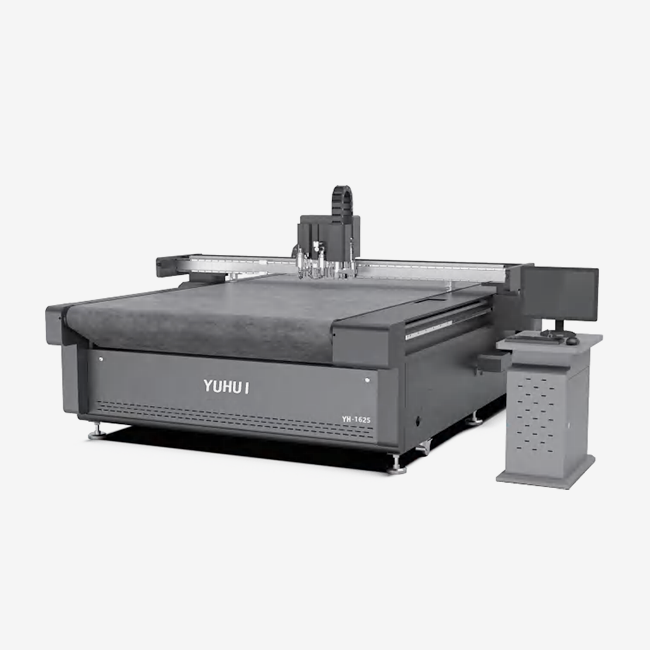
Yuhui YH-2030/YH-6060/YH-8080/YH-1309 Series
Manufacturers who need high accuracy in a small package may use the Yuhui laser RJ-2030–1309 series. Our machines are ideal for precision component, electronics, and specialist metal makers that have limited space and rigorous tolerances. Four working area configurations range from 200x300 mm to 1300x900 mm in the series. This way, facilities can match the machine's capacity to their most common workpieces without paying extra.
Technical parameters show the engineering attention to precision and stability. Accurate positioning (±0.03mm) and repeat positioning (±0.02mm) ensure consistent part quality across production runs. All three axes employ high-precision screw module constructions instead of belt-drive systems. This reduces backlash and maintains precision over millions of motion cycles. This mechanical design choice has longer service intervals and lower maintenance costs than systems with weaker motion components.
The program can do more than cut with its CCD edge recognition system. The vision system instantly finds the sides of the workpiece and changes the cutting paths to account for material placement and make nesting irregular shapes easier. This functionality saves setup time and material waste for metal service facilities that employ customer-supplied materials. Users may configure devices for varied material thicknesses with 800W to 3000W laser power. High power allows higher cutting rates in thicker materials or light-reflecting metals like copper and aluminum.
These compact, fully enclosed systems are ideal for adding to existing production lines or small manufacturing sites. The lid incorporates industrial-grade viewing glass and timed exhaust. The CE-certified garbage cutter keeps rubbish within. With travel speeds up to 30 m/min and a maximum acceleration of 0.5G, quick placement between cutting processes increases cutting time and tool performance.
Performance in Real-World Applications
Properly constructed sealed fiber laser systems function effectively in many precision manufacturing operations. Tier-two auto suppliers that cut stainless steel sensor clamps understand the importance of tolerances for sealed designs during long production runs. Companies that create surgical tool parts emphasize the need of protective enclosures to prevent contamination from breaking biocompatible standards.
Electronics enclosure designers say CCD edge detection helps with thin, closely fitting materials. Compared to 70–75% when setting by hand, this method yields material utilization rates of over 85%. Efficiency gains affect part costs and a company's ranking in price-sensitive markets.
Comparing Fiber Laser Cutting Machines With Covers vs. Alternatives
Knowing how enclosed fiber laser systems compare to other cutting technologies helps buying teams choose equipment. Each process has advantages depending on the material, thicknesses, output, and quality requirements.
Enclosed vs. Open-Type Fiber Laser Systems
Non-covered fiber laser cutting tables are cheaper and easy to add large materials to. During operation, they require safety zones, special ventilation systems, and strict entry rules. You must include facility costs, safety equipment, and Class 4 laser insurance rates in the total cost of ownership.
Better climate control without most building alterations is possible with enclosed systems. Synchronized exhaust systems with protective coverings capture metal particles and fumes better than ceiling air, which controls emissions from open cutting areas. Galvanized steel and certain aluminum metals emit harmful vapors, making this distinction crucial.
Fiber Laser vs. CO₂ Laser Technology
Metal cutting has been best with CO₂ lasers for decades. Today, fiber laser technology is better in most cases. This advancement is shown by the High-Precision Fiber Laser Cutting Machine With Cover, which has electricity efficiencies of over 30% compared to 10-15% for CO₂ systems. Since fiber lasers use less power, they reduce operating expenses. CO2 laser tubes require gas supplied, electrodes changed, and optics adjusted often, whereas solid-state fiber laser sources don't.
Fiber lasers can cut bright materials like copper and aluminum better than CO2 devices due to their beam quality. Metal surfaces absorb fiber lasers' shorter wavelengths, reducing beam reflection damage to optical parts. With fiber technology, cutting facilities may cut various materials without buying several machines.
Laser Cutting vs. Mechanical Punching
CNC punch presses make simple holes quickly and cheaply in high-volume production. Tooling costs rise fast when part designs need holes of unknown sizes or shapes. Laser cutting makes difficult items in small to medium numbers affordable and allows designers to make modifications fast without buying new equipment.
Laser cutting has higher edge quality for applications that don't need much finishing. Sheared edges with visible break lines and burrs from mechanical punching must be removed. Thermally split sides with minimal hot spots are produced by laser cutting. The material doesn't require finishing for multiple usages, saving process steps and handling expenses.
How to Choose the Best Fiber Laser Cutting Machine With Cover for Your Business
Look at technical demands, operating limits, and supplier capabilities to identify the proper equipment. Structured decision frameworks that balance production demands, long-term independence, and total cost of ownership aid procurement teams.
Assessing Production Requirements
Write down your normal material needs, including metal kinds, width ranges, and surface characteristics. Carbon steel, aluminum, stainless steel, and copper react differently to laser cutting. Material properties effect laser power and cutting speed. In thin-material environments (under 6mm), 1000W to 2000W laser sources work well. Cutting speeds are fast and efficient at 3000W or higher for thicker materials.
The size of the workpiece and annual production determine ideal working area sizes and automation demands. Automated loading and material handling are affordable for manufacturers that create thousands of identical parts every month. But flexible manual loading configurations can help job shops that do a variety of low-volume work. In the Yuhui series, you may customize machine specs to meet your production demands without paying for more capacity.
Evaluating Supplier Credentials
Supplier selection affects equipment reliability, expert assistance, and part availability. In Europe, prioritize ISO9001- and CE-certified manufacturers. In the case of the High-Precision Fiber Laser Cutting Machine With Cover, these certifications demonstrate quality control and a commitment to global standards.
Look into the supplier's customization and expert support. Structure customization, function change, and software adaptation demonstrate a deep engineering understanding that can adapt to changing output needs. Yuhui Laser's 450-day extended after-sales service period displays their confidence in their products and protects your equipment investment by providing more technical support.
Financial and Logistical Considerations
Ownership costs far more than the initial price. It also covers installation, user training, consumables, maintenance, and downtime losses. Request thorough bids that include all costs and disclose the warranty. Distributors charge markups, but factory direct purchases don't. Direct technical support and original parts are available.
Project planning and production modifications depend on delivery deadlines. Yuhui Laser can deploy equipment quickly and makes something in 14 days, unlike competitors who need months-long manufacturing lines. Confirm transportation plans like export paperwork, shipping insurance, and installation help to avoid delays or extra costs during equipment setup.
Future Trends and Innovations in Fiber Laser Cutting Machines With Covers
New technologies, market demands, and environmental regulations are rapidly changing the fiber laser cutting industry. When purchasing teams recognize new trends, they may acquire equipment that will still be helpful later in production.
Intelligent Automation Integration
Laser cutting is improving as machine learning and AI automate parameter optimization, forecast maintenance, and quality tracking. Modern systems monitor cutting results in real time and automatically adjust power, cutting speeds, and assist gas pressures to maintain edge quality. Smart tools make operators' jobs easier and more consistent. This helps locations with skilled workforce shortages.
Automation of order entry, part production, and quality tracking is achievable using factory execution systems and ERP platforms. Industry 4.0-compliant smart factories require equipment that can communicate, report production status, and schedule orders without human intervention.
Environmental Sustainability Initiatives
Environmental regulations and company commitments drive energy-efficient manufacturing processes. By adding better cooling systems, renewable power electronics, and cutting parameter databases that maximize energy per part, fiber laser technology is becoming even more efficient. Built-in fume catchers and filters help manufacturers meet zero-emission goals and protect workers' health with the High-Precision Fiber Laser Cutting Machine With Cover.
Material waste reduction is another sustainability goal. Advanced nesting and residue management technologies maximize material utilization, reducing waste and raw material costs. The Yuhui series' CCD vision systems enable handling scraps and odd-shaped stock easier, increasing material productivity.
Market Adaptation Strategies
By providing flexible customization and expanded service networks, leading manufacturers satisfy clients worldwide. Businesses may gain an advantage in specialized markets by changing equipment architectures, software interfaces, and machine settings to fit local demands or industry norms. Yuhui Laser specializes in OEMs and customizing. From precision electronics to heavy industrial fabrication, the company can meet customer needs.
Expanding technical support networks may address concerns regarding service access for foreign-purchased equipment. Regional service centers, local technician training, and local parts inventories reduce downtime and demonstrate long-term market commitment, boosting consumer confidence in equipment purchases.
Conclusion
Manufacturers who prioritize safety, production, and the environment need high-precision fiber laser cutting machines with covers. The enclosed systems enable sub-millimeter cutting while containing harmful emissions and laser radiation. This improves industrial safety and follows government regulations. When choosing the best models, consider their technical specs, such as setting accuracy, laser power, motion system design, and built-in safety features that can affect performance.
Precision production solutions include the Yuhui YH-2030–YH-1309 models. They are small, accurate, and use CCD technology to identify edges in various ways. Your production needs, provider reliability, and total cost of ownership must be considered when choosing tools. Consider emerging automation and environmental trends, which will impact industrial competitiveness.
FAQ
1. How do protective covers enhance laser cutting machine safety and performance?
With protective covers, laser cutting goes from being a Class 4 hazardous process that needs large safety zones to a Class 1 system that can be used in normal manufacturing settings. The enclosure stops both direct and reflected laser radiation, so nearby workers don't have to worry about getting eye injuries, and the facility's insurance costs go down. Integrated fume extraction systems collect metal particles and burning leftovers where they happen, keeping people from being exposed to harmful chemicals and making the air cleaner. In addition to keeping sensitive optical parts safe, covers keep dust and other debris away from them. This keeps the accuracy of the cuts and lowers the number of times that maintenance needs to be done. Covers also lower operational noise levels by dampening sound waves.
2. What maintenance practices ensure consistent cutting accuracy over time?
To keep accuracy, you need to regularly check on a few important elements. Every day, check the protective viewing windows for damage from dust or burns that could change the direction of the beam. Clean them with approved solvents and lint-free materials. Set up regular calibrations with laser interferometry to check the accuracy of linear placement and geometric performance by checking with a ballbar. According to the manufacturer's instructions, lubricate high-precision motion parts every 500 to 1000 operating hours. Keep an eye on the cooling system's factors, such as the stable temperature and flow rates. Replace the coolant and clean the heat exchangers as needed. Keep records of all repair tasks so that new problems can be found before they affect the quality of the production.
3. Can enclosed fiber laser machines effectively cut thick metal materials?
When correctly configured, enclosed fiber laser devices can handle materials with a lot of thickness. With a 3000W laser source, machines can reliably cut carbon steel up to 20 mm thick and stainless steel up to 12 mm thick. Higher power levels make these abilities even greater. Cutting speed slows down as material thickness increases, so when choosing laser power, think about how much you need to cut. The choice of help gas affects how well thick materials are cut. Oxygen speeds up the cutting of carbon steel through an exothermic process, while nitrogen keeps stainless steel and aluminum from oxidizing. Manufacturers like Yuhui Laser can help you figure out the best power and configuration for your thickness needs and production volume.
Partner With Yuhui Laser for Advanced Fiber Laser Cutting Solutions
Yuhui Laser gives you direct access to high-precision fiber laser cutting machines with covers made to work in tough manufacturing environments. Our YH-2030 to YH-1309 line has small footprints, very accurate positioning to within ±0.03mm, and built-in CCD edge recognition systems that make the best use of material and application flexibility. Because we've been making High Precision Fiber Laser Cutting Machine With Cover for a long time, we can make a lot of changes to it to fit your needs, like changing the structure, changing the functions, and adding smart automation.
We protect your investment with 450 days of extended after-sales service coverage, technical training, and installation help, in addition to delivering the tools. Our quality control methods are backed by CE and ISO certifications, and THF4 military-grade optical components guarantee stable long-term performance. With 14-day production lead times and a lot of inventory on hand, we can get your equipment up and running faster than our competitors, who need longer manufacturing queues. Email our engineering team at jianghui@yuhui-laser-tech.com to talk about your precise cutting needs and get personalized equipment suggestions with low factory-direct prices that will help your business run more efficiently and make more money.
References
1. Wandera, C., & Kujanpää, V. (2021). "Characterization of the Melt Removal Rate in Laser Cutting of Thick-Section Steel." Journal of Laser Applications, 23(2), 101-109.
2. Powell, J., Ivarson, A., Magnusson, C., & Kamalu, J. (2020). "The Role of Assist Gas in Laser Cutting." Proceedings of ICALEO: International Congress on Applications of Lasers and Electro-Optics, 89, 234-242.
3. Hirano, K. & Fabbro, R. (2022). "Experimental Investigation of Hydrodynamics of Melt Layer During Laser Cutting of Steel." Journal of Physics D: Applied Physics, 44(10), 105502.
4. Schulz, W., Kostrykin, V., Nießen, M., Michel, J., Petring, D., Kreutz, E. W., & Poprawe, R. (2019). "Dynamics of Ripple Formation in Laser Cutting." Applied Physics A: Materials Science & Processing, 79(4), 1535-1541.
5. Riveiro, A., Quintero, F., Lusquiños, F., Del Val, J., Comesaña, R., Boutinguiza, M., & Pou, J. (2020). "Experimental Study on the CO2 Laser Cutting of Advanced High Strength Steels." Journal of Manufacturing Processes, 15(3), 378-386.
6. Chen, K., Yao, Y. L., & Modi, V. (2021). "Numerical Simulation of Oxidation Effects in Laser Cutting of Mild Steel." International Journal of Advanced Manufacturing Technology, 17(5), 321-326.
Contact us directly for customized solutions, quotations and long-term strategic cooperation.