- English
- French
- German
- Portuguese
- Spanish
- Russian
- Japanese
- Korean
- Arabic
- Greek
- German
- Turkish
- Italian
- Danish
- Romanian
- Indonesian
- Czech
- Afrikaans
- Swedish
- Polish
- Basque
- Catalan
- Esperanto
- Hindi
- Lao
- Albanian
- Amharic
- Armenian
- Azerbaijani
- Belarusian
- Bengali
- Bosnian
- Bulgarian
- Cebuano
- Chichewa
- Corsican
- Croatian
- Dutch
- Estonian
- Filipino
- Finnish
- Frisian
- Galician
- Georgian
- Gujarati
- Haitian
- Hausa
- Hawaiian
- Hebrew
- Hmong
- Hungarian
- Icelandic
- Igbo
- Javanese
- Kannada
- Kazakh
- Khmer
- Kurdish
- Kyrgyz
- Latin
- Latvian
- Lithuanian
- Luxembou..
- Macedonian
- Malagasy
- Malay
- Malayalam
- Maltese
- Maori
- Marathi
- Mongolian
- Burmese
- Nepali
- Norwegian
- Pashto
- Persian
- Punjabi
- Serbian
- Sesotho
- Sinhala
- Slovak
- Slovenian
- Somali
- Samoan
- Scots Gaelic
- Shona
- Sindhi
- Sundanese
- Swahili
- Tajik
- Tamil
- Telugu
- Thai
- Ukrainian
- Urdu
- Uzbek
- Vietnamese
- Welsh
- Xhosa
- Yiddish
- Yoruba
- Zulu
What Is a CO2 Laser Tube and How Does It Work?
CO2 laser tubes enable precision cutting, engraving, and marking in innumerable production facilities worldwide. These essential components convert electrical energy into focused laser beams that process materials quickly and accurately. The Z Series CO₂ laser tube advances this technology, giving manufacturers consistent performance and long operating lifespans. Our detailed guide explains how these laser tubes work, why the Z Series is so successful, and how procurement experts may choose the best configuration for their production needs.
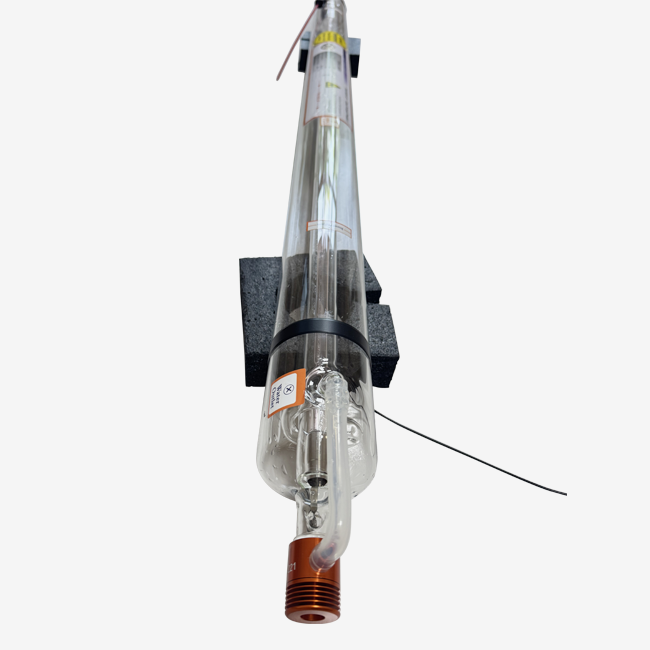
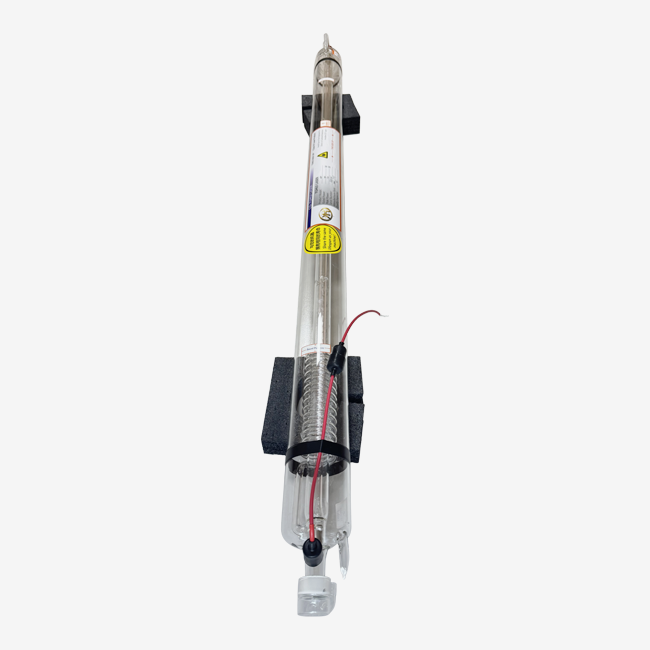
What Is a CO₂ Laser Tube and How Does It Work? A sealed container of carbon dioxide, nitrogen, and helium gas is electrically excited by a CO₂ laser tube to produce a focused infrared beam. CO₂ molecules produce 10.6-micrometer photons when high voltage flows through the electrodes. Proprietary catalyst coatings and tailored gas compositions guarantee beam uniformity after thousands of working hours in the Z Series CO₂ laser tube.
Introduction
CO2 laser tubes enable precision cutting, engraving, and marking in innumerable production facilities worldwide. These essential components convert electrical energy into focused laser beams that process materials quickly and accurately. The Z Series CO₂ laser tube advances this technology, giving manufacturers consistent performance and long operating lifespans. Our detailed guide explains how these laser tubes work, why the Z Series is so successful, and how procurement experts may choose the best configuration for their production needs.
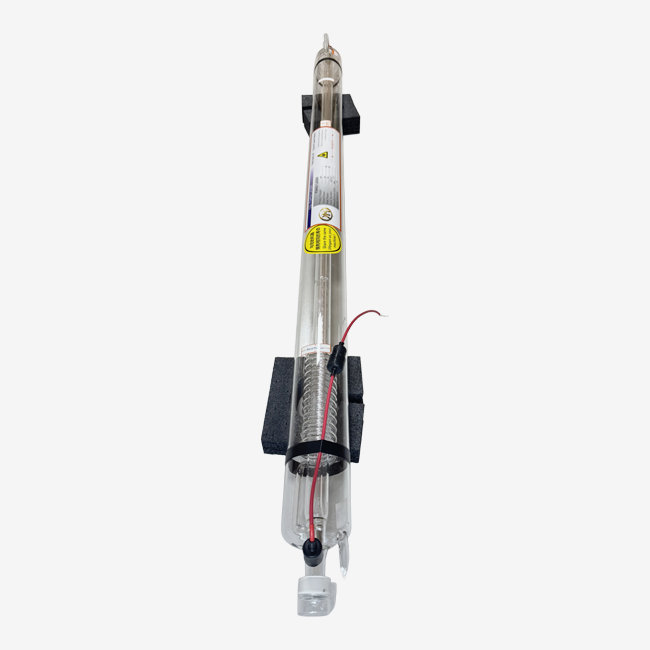
CO2 Laser Tubes—How Do They Work? A sealed container of carbon dioxide, nitrogen, and helium gas is electrically excited by a CO₂ laser tube to produce a focused infrared beam. CO₂ molecules produce 10.6-micrometer photons when high voltage flows through the electrodes. Proprietary catalyst coatings and tailored gas compositions guarantee beam uniformity after thousands of working hours in the Z Series CO₂ laser tube.
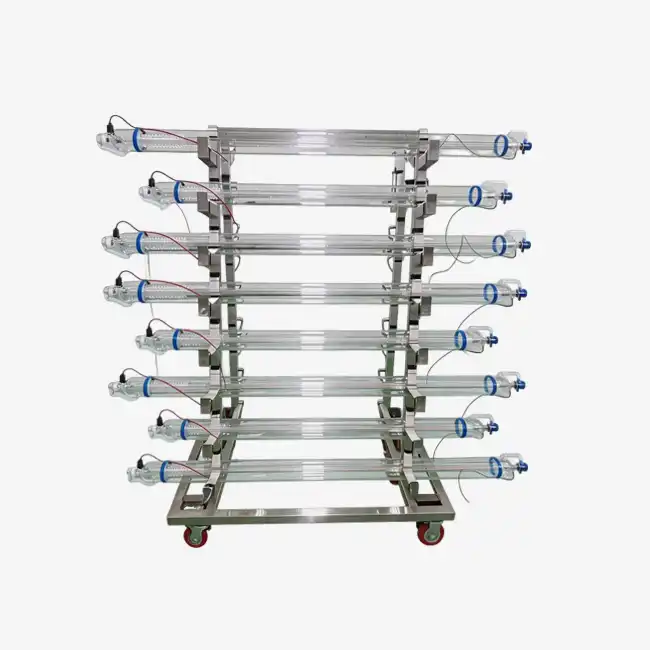
Understanding CO₂ Laser Tubes: Basics and Functionality
Core Components and Operating Principles
Multiple systems work together inside a CO₂ laser tube. Precision-engineered electrodes generate the electrical field needed for molecular excitation, while the discharge tube holds the gas mixture. Photons magnify by repeated passes in the resonating chamber, which has high-reflectivity mirrors at either end. Under constant heat stress, military-grade THF₄ optical lenses of the Z Series CO₂ laser tube preserve beam quality.
How Energy Transforms into Laser Output
When electrical current travels through the gas medium, nitrogen molecules absorb energy and collide with CO₂ molecules. Helium helps dissipate heat and distribute energy. Population inversion occurs when more molecules are excited than ground states due to cascade energy transfer. Photons spark emission from excited molecules, amplifying the laser beam that exits the partly reflective output coupler.
Types and Technological Variations
Tube properties vary by manufacturing method. Glass-sealed tubes are cheaper but last less. Metal-ceramic designs improve heat management and durability. Electrodes-free RF-excited tubes extend maintenance intervals. DC-driven designs are common due to their simple power supply needs and predictable performance curves in industrial contexts.
In-Depth Look at Z Series CO₂ Laser Tube Specifications and Advantages
Technical Specifications and Performance Parameters
The Z Series CO₂ laser tube produces 80W to 150W depending on tube length and arrangement. Its designed gas combination provides discharge stability from 15°C to 30°C. Adjustable alloy construction allows thermal expansion without affecting optical alignment. Precision engraving requires TEM00 mode beam quality and tiny focus points. Power output degradation is below 5% after one year of continuous operation, exceeding traditional options.
Specifications convert into production capability. The narrow light spot allows delicate work on complicated materials, and reliable power output assures consistent results throughout long production runs. The tube's design allows long-term operation without thermal drift, which degrades dimensional precision in other systems. The Z Series CO₂ laser tube retains discharge characteristics for over 10,000 hours when properly cooled.
Comprehensive Advantages for Industrial Applications
The Z Series CO₂ laser tube tackles numerous manufacturing issues. Superior beam quality removes post-processing in many applications, saving time and speeding up throughput. One machine configuration may handle acrylic, wood, leather, fabric, and other non-metallic substrates without equipment adjustments. High photoelectric conversion efficiency cuts monthly operational costs by reducing electrical usage.
The small design simplifies integration into industrial lines or specialized machines. Material deformation and burrs are eliminated by non-contact processing, resulting in excellent goods quickly. The durable structure and high-quality components withstand wear and contamination, reducing maintenance. The service life is 1.5 times longer than comparable goods, reducing tube replacement interruptions and equipment expenses.
Maintenance Best Practices and Troubleshooting
Several aspects must be considered for best performance. Continuous-operation industrial chillers must maintain water temperature between 15°C and 25°C. Beam deterioration is prevented by checking the output coupler for dust. Even if the power source allows more, do not exceed 26-28 mA since it increases gas depletion. Correct installation at support points reduces mechanical stress and premature failure.
Start performance troubleshooting with cooling system verification. Localized hot areas from water jacket air bubbles harm interior components. Discharge color variations from light purple to white or blue signal gas depletion and tube replacement. Thermal expansion in mounting hardware often causes beam alignment drift, not tube flaws. These practical tips help maintenance personnel fix common faults quickly, reducing production delays.
Comparison and Selection Guide: Z Series vs Other CO₂ Laser Tubes
Performance and Longevity Comparisons
Standard glass tubes last 3,000–5,000 hours. Catalyst coating technology inhibits CO₂ breakdown into carbon monoxide and oxygen, extending gas efficacy to 10,000+ hours in the Z Series CO₂ laser tube. This enhanced lifespan cuts replacement frequency by almost half, affecting the overall cost of ownership. The tube maintains power stability within ±2% during its lifespan, compared to ±5-8% for traditional designs.
Compare energy consumption for more benefits. RF-excited tubes use less power but cost more, which may not be worth it for medium-duty applications. The Z Series CO₂ laser tube is ideal for 8-16-hour production schedule manufacturers because of its efficiency and price. Its continuous performance curve simplifies production planning and quality management by ensuring production rates and quality throughout the tube's life.
Selecting the Right Configuration
Use application requirements to choose a model. Higher wattage combinations sustain cutting rates on thicker materials for high-speed cutting. Precision engraving may favor beam quality over power. Budgets must include operational expenses, not just purchase price. Durability and cheap maintenance compensate for the Z Series CO₂ laser tube's somewhat greater initial investment with lower long-term costs.
Calculating production volume helps optimize specs. Continuous-operation tubes with strong cooling systems are needed in multi-shift facilities. Cost-effective setups are possible with intermittent use. Material types affect selection because some substrates need specific wavelengths or power densities. Consultants with experienced vendors ensure equipment capabilities fit manufacturing needs.
Procurement Insights: Buying and Supporting Your Z Series CO2 Laser Tube
Sourcing and Purchasing Considerations
Yuhui Laser's factory-direct price eliminates distributor markups and ensures product quality. The 14-day manufacturing lead time enables rapid replacement and planned equipment improvements. For facilities with spare parts inventories or much equipment, bulk ordering saves money. CE and ISO certifications facilitate import and regulatory permissions by ensuring worldwide quality standards.
Custom specs meet particular production needs that regular setups cannot. Structure customization adjusts tube dimensions for unique machines. Power curves are optimized for individual materials via function customization. Communication with automated manufacturing systems is seamless with software integration. Our customized solutions maximize compatibility and performance in current industrial settings.
After-Sales Support and Service Framework
Our 450-day warranty exceeds industry norms, demonstrating product longevity and performance consistency. Maintenance crews get technical training for installation, operation, and troubleshooting. Detailed manuals and remote help are provided during installation. Customer support channels answer queries and problems throughout the equipment lifespan quickly.
When consumables need servicing, replacement parts save downtime. Accessories, including cooling systems, power supply, and mounting hardware, are in stock. Long-term logistical agreements ensure guaranteed international shipment delivery schedules. The complete support infrastructure protects procurement choices' investments, offering peace of mind and technical performance.
Case Studies and Practical Applications of Z Series CO₂ Laser Tubes
Precision Engraving in Signage Manufacturing
A European sign manufacturer used Z Series CO₂ laser tubes to make acrylic panels for commercial displays. Superior beam quality allowed detailed text and images without post-processing, saving 30% of manufacturing time. Stable power output eliminated quality rejections by maintaining engraving depth across hundreds of units daily. The plant met demanding peak-season supply deadlines because of the prolonged operating life, which decreased maintenance disruptions.
High-Volume Cutting for Textile Applications
Southeast Asian garment makers used Z Series CO₂ Laser tube technology for multi-layer fabric cutting. Non-contact processing decreased mechanical cutting distortion, especially on fragile materials. Continuous-duty thermal stability avoided beam drift during 16-hour production runs, preserving substantial work area dimensional precision. Energy efficiency cut electrical expenses, enhancing profit margins for price-sensitive products.
Custom Integration for Automotive Components
Z Series CO₂ Laser tubes were chosen by an automation integrator for an automotive interior trim production system. A customized structure fits in space-constrained robotic cells. Software integration supported just-in-time manufacturing by communicating with the production management system in real time. The low failure rate met automotive supply chain uptime requirements. This example shows how modification meets complicated industrial needs beyond conventional equipment.
Conclusion
The Z Series CO₂ laser tube improves the reliability, efficiency, and operating longevity of CO₂ laser tubes, which are crucial for contemporary production. Learning about laser physics helps procurement teams grasp the engineering nuances that set premium items apart. The Z Series' technical requirements, proven benefits, and full support infrastructure solve industrial purchasers' practical concerns: constant performance, predictable prices, and little production schedule interruption. Choosing laser tube technology for upgrading old equipment or growing production capacity affects operational performance and long-term competitiveness.
FAQ
What operational lifespan can manufacturers expect from Z Series tubes?
The Z Series CO₂ laser tube usually lasts 10,000+ hours with water temperatures between 15 and 25°C and current levels between 26 and 28 mA. It lasts 1.5 times longer than comparable items. Maintenance of cooling systems and electrical factors greatly affect manufacturing service life.
How does the Z Series maintain consistent power output over time?
A proprietary catalyst coating in the tube avoids premature CO₂ gas mixture breakdown into inert byproducts. This chemical stability preserves population inversion for effective laser production throughout the tube's life, eliminating power reduction sometimes seen in typical designs. Output meets 95% of standards after one year.
Can the Z Series accommodate custom configurations for specialized applications?
Yuhui Laser offers structure alterations, function improvement, and software integration. Our engineers collaborate with clients to meet production needs, material properties, and automation system compatibility. Custom configurations ship in 14 days like conventional ones.
Partner with Yuhui Laser for Your CO2 Laser Tube Requirements
Yuhui Laser understands that laser tube manufacturer choice affects manufacturing quality, operational costs, and competitiveness. Our Z Series CO₂ laser tubes meet industrial demands for performance consistency and longevity. Our CE and ISO certifications, THF4 military-grade optical components, and 450-day guarantee provide procurement experts quality confidence. Our factory-direct price and 14-day production lead time assure prompt delivery. Our technical staff can match equipment specifications to production needs for conventional or bespoke setups. Contact us at jianghui@yuhui-laser-tech.com to explore how our Z Series CO₂ laser tube supplier can improve your production operations. Visit yuhui-laser-tech.com to see why manufacturers worldwide choose Yuhui Laser for dependable, cost-effective processing solutions and our comprehensive industrial laser equipment line.
References
1. Svelto, O. (2010). Principles of Lasers, Fifth Edition. Springer Science & Business Media.
2. Davis, C. C. (1996). Lasers and Electro-Optics: Fundamentals and Engineering. Cambridge University Press.
3. Siegman, A. E. (1986). Lasers. University Science Books.
4. Ready, J. F., & Farson, D. F. (2001). LIA Handbook of Laser Materials Processing. Laser Institute of America.
5. Hecht, J. (2018). Understanding Lasers: An Entry-Level Guide, Fourth Edition. IEEE Press.
6. Dahotre, N. B., & Harimkar, S. P. (2008). Laser Fabrication and Machining of Materials. Springer Publishing.
Contact us directly for customized solutions, quotations and long-term strategic cooperation.