- English
- French
- German
- Portuguese
- Spanish
- Russian
- Japanese
- Korean
- Arabic
- Greek
- German
- Turkish
- Italian
- Danish
- Romanian
- Indonesian
- Czech
- Afrikaans
- Swedish
- Polish
- Basque
- Catalan
- Esperanto
- Hindi
- Lao
- Albanian
- Amharic
- Armenian
- Azerbaijani
- Belarusian
- Bengali
- Bosnian
- Bulgarian
- Cebuano
- Chichewa
- Corsican
- Croatian
- Dutch
- Estonian
- Filipino
- Finnish
- Frisian
- Galician
- Georgian
- Gujarati
- Haitian
- Hausa
- Hawaiian
- Hebrew
- Hmong
- Hungarian
- Icelandic
- Igbo
- Javanese
- Kannada
- Kazakh
- Khmer
- Kurdish
- Kyrgyz
- Latin
- Latvian
- Lithuanian
- Luxembou..
- Macedonian
- Malagasy
- Malay
- Malayalam
- Maltese
- Maori
- Marathi
- Mongolian
- Burmese
- Nepali
- Norwegian
- Pashto
- Persian
- Punjabi
- Serbian
- Sesotho
- Sinhala
- Slovak
- Slovenian
- Somali
- Samoan
- Scots Gaelic
- Shona
- Sindhi
- Sundanese
- Swahili
- Tajik
- Tamil
- Telugu
- Thai
- Ukrainian
- Urdu
- Uzbek
- Vietnamese
- Welsh
- Xhosa
- Yiddish
- Yoruba
- Zulu
W Series CO2 Laser Tube for High Precision Laser Engraving Machines
Introduction
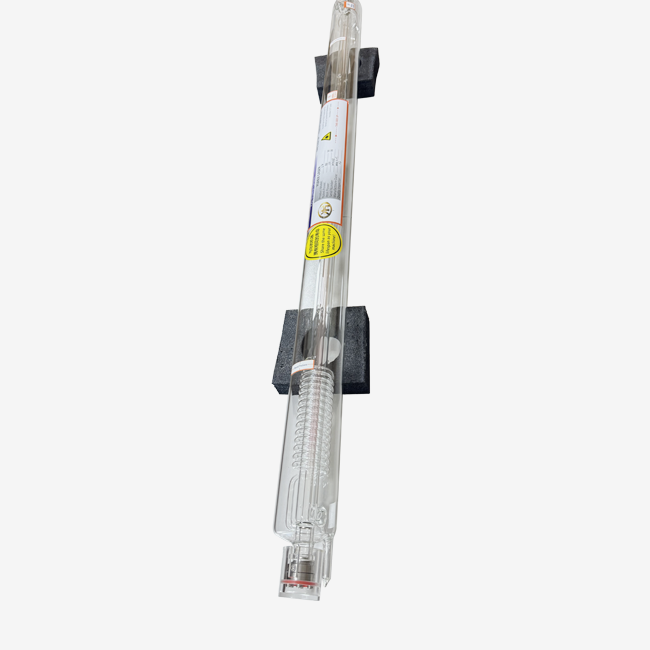
The W Series CO₂ laser tube is a breakthrough in precision laser engraving technology for industrial applications that need high accuracy and stability. This sophisticated component uses a changeable alloy construction, improved heat dissipation architecture, and patented optical lenses to sustain beam quality over lengthy manufacturing cycles, unlike sealed CO₂ laser sources. Engineers and purchasing managers struggle to locate laser equipment components with dependable performance and low power degradation. The W Series CO₂ laser tube solves this by providing consistent power output after one year of continuous usage and 1.5 times longer service life than comparable products. This thorough reference covers technical requirements, installation processes, procurement tactics, and supplier selection criteria for informed decision-making. Understanding these fundamental components optimizes performance and total cost of ownership in metal processing factories, private label laser machinery distribution, and automation systems. Through open information, this organized method fosters confidence to connect successfully with qualified manufacturers like Yuhui Laser, who provide cost-effective, CE-approved products with 450-day warranties.
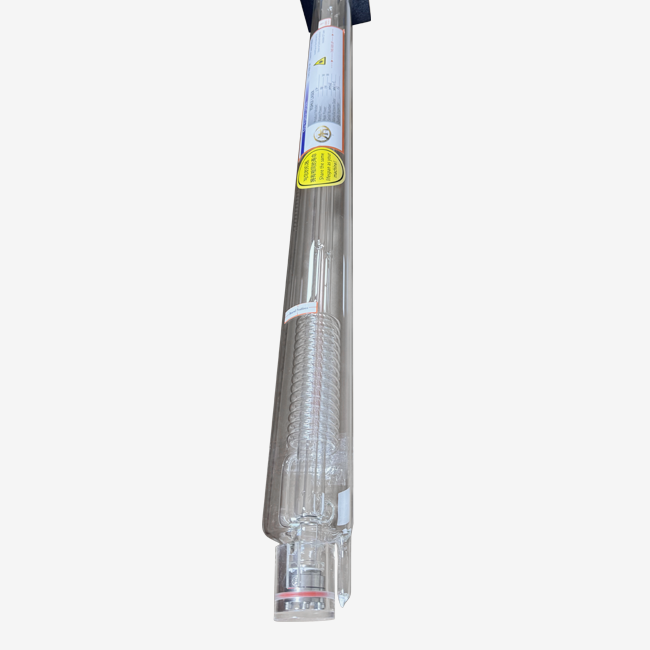
Understanding the W Series CO₂ Laser tube and Its Core Advantages
Precision engraving systems employ the W Series CO₂ laser tube to convert electrical energy into focused laser beams by regulated gas discharge in its enclosed glass chamber. This technology's sophisticated catalyst coating system avoids gas deterioration and preserves chemical equilibrium during high-frequency operations, unlike traditional CO₂ tubes. This design prevents "power drop" that affects production schedules and needs expensive tube replacements by keeping carbon dioxide molecules active longer.
Operational Principles That Drive Precision
In its discharge chamber, the W Series CO₂ laser tube uses a perfectly regulated combination of carbon dioxide, nitrogen, and helium gases. In this combination, electrical current excites CO₂ molecules to generate 10.6-micron photons, perfect for processing non-metallic materials and some metal applications. Technicians may fine-tune beam alignment to account for thermal expansion during protracted operations with the alloy structure. This versatility is especially useful in areas where temperature swings might damage etching precision.
Superior Beam Quality and Longevity
Engineers assessing laser components should notice that beam quality affects processing precision and edge polish. The W Series CO₂ laser tube's TEM00 mode produces focused light spots for fine detail work on acrylic, wood, leather, and specialist composites. Instead of focus drift like lower-grade alternatives, each tube's patented optical lens technology preserves beam constancy during operation. Industrial testing shows that these tubes maintain their rated power output for 10,000 hours with adequate cooling and maintenance. Distributors handling inventories in several markets have more procurement options with five-year storage without performance deterioration.
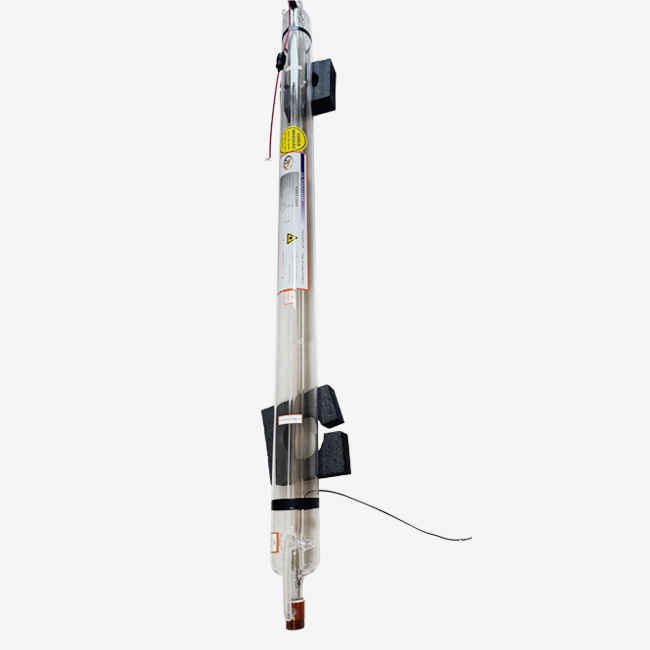
Technical Specifications and Performance Insights
Understand critical technological aspects that affect processing capability and long-term operational expenses when choosing a laser tube. The W Series CO₂ laser tube portfolio has power ratings designed for different application sizes; however, material thickness and production throughput should determine watts.
Power Ratings and Dimensional Considerations
CO₂ laser tubes' maximum power output usually correlates with their length. The W Series CO₂ laser tube is tiny for its performance class, allowing incorporation into existing machine frames without structural alterations. Heat dissipation and discharge stability depend on tube diameter and electrode spacing. These engineering factors influence whether a tube can operate continuously amid stringent production schedules or needs cooling periods that limit throughput.
Material Durability and Thermal Management
An adjustable alloy structure has various benefits over rigid mounting solutions. Tubes expand naturally at working temperature, which might misalign permanent installations. During warm-up cycles and extended runs, the W Series CO₂ laser tube architecture maintains beam focus while expanding optical paths. The optimized water jacket shape evenly cools the discharge tube length. This eliminates hot areas that increase electrode deterioration and gas decomposition, which shorten typical tube lifespan.
Comparative Analysis Against Alternative Technologies
When purchasing CO2 laser sources, procurement teams compare glass-sealed DC-excited tubes against RF metal-ceramic options. The W Series CO₂ laser tube glass tube design improves engraving beam quality and cost. RF tubes offer quicker modulation speeds for high-speed marking, but their high cost may not justify the investment for conventional engraving. The W Series CO₂ laser tube glass tubes produce smoother edges and greater detail resolution on complex patterns in beam mode. Industry-leading photoelectric conversion efficiency reduces power consumption per operating hour, which is important in multi-machine operations.
Maintenance Requirements and Lifecycle Economics
By understanding maintenance practices, procurement professionals may compute real ownership costs beyond purchase price. To avoid overheating, the W Series CO₂ laser tube needs regular water cooling system maintenance, including coolant replenishment and flow rate monitoring. The sealed W Series CO₂ laser tube avoids gas refill costs, unlike disposable gas cartridge tubes. Advanced cathode materials resist sputtering deterioration, extending electrode check intervals beyond competitors. Consider the extended warranty coverage and statistically reduced failure rates across varied operational settings when determining the total cost of ownership.
Installation, Safety, and Operational Best Practices
Proper installation affects equipment performance and operator safety. The W Series CO₂ laser tube integration process needs attention to numerous crucial aspects that impact functionality and dependability.
Pre-Installation Verification Steps
Technicians should check power supply voltage and current before attaching any laser tube. Check cooling system capacity to ensure chiller output meets tube model flow rate and temperature regulation. Optic path alignment and measuring instruments are needed for precise installation modifications to avoid beam delivery difficulties. Review facility electrical grounding requirements to safeguard equipment and workers against laser system high-voltage risks.
Mounting and Alignment Procedures
Allow thermal expansion clearance per manufacturer by placing the tube in machine mounting brackets. To remove air bubbles that shatter glass tubes, connect cooling water lines with inlets at the bottom and outlets at the top. Reversed high-voltage electrode connections harm internal components quickly. Use laser alignment tools to align the output coupler and rear mirror, ensuring the beam centerline matches the optical path via downstream mirrors and the focusing lens. This alignment requires care and accuracy, yet it decides whether the device cuts as advertised or underperforms owing to beam clipping and energy loss.
Safety Protocols and Protective Measures
Laser safety includes electrical, optical, and chemical risks. Lockout/tagout measures are needed to maintain high-voltage power sources to avoid electrocution. CO₂ tubes' invisible infrared laser radiation burns skin and damages eyes, requiring enclosure interlocks and warning signs. Even though enclosed tubes contain non-toxic gases, glass failure produces gas mixes that need ventilation. ANSI Z136 and related foreign norms require emergency shutdown, PPE use, and hazard awareness training for operators.
Extending Operational Lifespan Through Preventive Maintenance
Regular maintenance maintains premium component performance. Maintain cooling water temperature between 15-25°C to avoid condensation and thermal stress. Test water conductivity and cooling channel pollutant contamination monthly. Clean optical components quarterly with solvents and lint-free materials to prevent heat damage and beam distortion from laser energy absorption. Record operational hours and power output to spot progressive decline before it affects manufacturing quality. Current-limiting techniques should avoid overdriving tubes above specified specifications, which promotes electrode degradation despite momentarily increasing power output.
Procurement and Decision-Making Guide for Global B2B Clients
Long-term operational value and current financial restrictions are balanced in strategic procurement. A comprehensive cost-benefit analysis, not a price comparison, shows the W Series CO₂ laser tube's overwhelming benefits.
Matching Technical Requirements to Application Needs
Start purchase planning by listing material kinds, thickness ranges, and engraving resolution for your applications. Wood and acrylic processing need different beams than leather engraving or fabric cutting. Consider work changeover time and maintenance intervals when calculating production capacity in square meters per shift. This data helps establish power ratings and whether single- or multi-tube designs maximize workflow. Distributors with various clientele supply different power levels, whereas dedicated manufacturing facilities standardize on configurations that match their principal material profiles.
Evaluating Total Cost of Ownership
The initial purchase price is simply one laser tube economic factor. W Series CO2 Laser tube lifespan—1.5 times longer than typical alternatives—reduces replacement frequency and downtime expenses. Over thousands of working hours, energy efficiency reduces power costs. Industry-leading 450-day warranty coverage protects procurement budgets from premature failure costs. Use your facility's utility prices and production schedules to calculate the financial benefit. Factory-direct pricing from Yuhui Laser avoids middleman markups without losing quality certifications or technical assistance, which cost-sensitive procurement teams appreciate.
OEM and Customization Opportunities
Private label laser engraving machine distributors need flexible customization services. Engineering adjustments allow the W Series CO₂ laser tube to support different mounting configurations, power supply interfaces, and cooling system specifications. Structure modification, function adaptability, and software integration provide manufacturers a competitive edge in product creation. Provide CAD designs for mounting interfaces and full control system integration specifications early in procurement conversations to clarify bespoke needs. Reliable partners have enough production capability to offer customized units within 14 business days for standard adjustments without compromising quality.
Trusted Brands and Supplier Insights
Supplier selection greatly affects equipment performance and commercial relationships. Finding manufacturers with reliable quality systems, extensive support, and real dedication to customer success takes more than cheap quotes.
Industrial laser component manufacturers with ISO 9001 quality management systems and CE compliance for European market access exhibit their dedication. These certifications show that production procedures include quality controls, traceability, and continuous improvement. Yuhui Laser's CE and ISO certifications, military-grade THF4 lens integration across product lines, and national high-tech firm award for innovation investment demonstrate this strategy.
Benefits of Direct Manufacturer Relationships
Working directly with factories rather than through many distribution tiers has many benefits. Technical inquiries are answered by product development engineers, not salespeople reading specs. Custom modification requests allow production teams to deploy changes without lengthy approval processes. Pricing reflects production costs plus appropriate margins, not distribution network markups. Manufacturers schedule production directly rather than relying on intermediate warehouse inventories, improving lead time accuracy. Yuhui Laser's 14-day production lead time shows how inventory reserves and streamlined processes boost manufacturing efficiency.
Evaluating After-Sales Support Capabilities
Professional suppliers differ from commodity sellers in technical support. Complete support includes installation, troubleshooting, maintenance, and warranty servicing. W Series CO2 Laser tubes have 450 days of after-sales support, which surpasses industry standards. This shows manufacturer confidence in product dependability and customer success. Assess support availability by time zone and language, especially for multinational procurement. Suppliers with technical personnel proficient in client languages and available during business hours handle difficulties faster than those needing translation delays or awkward communication scheduling.
Real-World Performance Validation
Case studies and client testimonials go beyond technical specs. Successful applications in signs, furniture, textile cutting, and architectural model fabrication exhibit adaptability and reliability under varying operating circumstances. Reference contacts in comparable programs or geographic locations allow procurement teams to discuss performance, support response, and unforeseen implementation issues.
Conclusion
Engineering advancements that solve industry problems provide the W Series CO₂ laser tube precise engraving benefits. An adjustable alloy structure, efficient thermal management, and catalyst-enhanced gas system provide steady power production and a longer operating lifespan, lowering the total cost of ownership. Evaluating technical specifications against application needs, estimating lifespan economics beyond initial pricing, and choosing providers with true technical experience and extensive support infrastructure improve procurement selections. Yuhui Laser's quality certifications, customization, factory-direct pricing, and extended warranty coverage show its dedication to customer success. Using this guide's installation processes, maintenance schedules, and operating best practices, facilities may maximize equipment performance while keeping international safety requirements.
FAQ
What lifespan should I expect from W Series CO₂ laser tubes under typical industrial usage?
Under appropriate cooling and current control, the W Series CO₂ laser tube maintains rated power output for 10,000 hours. This is 1.5 times the lifespan of typical CO₂ tubes, with proven tubes working reliably beyond this baseline when operated within prescribed settings. Duty cycle intensity, cooling system maintenance, and current limitations affect lifespan.
How does W Series CO₂ laser tube energy efficiency compare with RF laser technology?
The W Series CO₂ laser tube's glass-sealed CO₂ tubes use less power per watt of laser output than entry-level RF systems due to their high photoelectric conversion efficiency. Premium RF tubes enable faster pulse modulation, but the W Series CO₂ laser tube has better cost-per-operating-hour economics for continuous engraving, especially for facilities with long manufacturing shifts.
Can I order W Series CO₂ laser tubes with custom specifications for OEM integration?
OEM partners offer mounting bracket, cooling interface, and power supply compatibility customization. Custom orders usually need minimum quantities and longer wait times. Early supplier involvement and clear specification documentation facilitate customization.
Partner with Yuhui Laser for Superior CO₂ Laser Solutions
Yuhui Laser offers precision engraving using W Series CO₂ laser tube technology, CE certification, ISO quality systems, and THF4 military-grade optical components. Our factory-direct pricing methodology saves money without sacrificing professional-grade laser source performance and longevity. We provide OEM integrators and private label distributors extensive customization services and a large inventory of W Series CO₂ laser tubes with 14-day production lead times. Our expert staff provides 450 days of after-sales support for installation, maintenance, and troubleshooting. To discuss your needs, seek technical specifics, or schedule factory visits in Shandong, email jianghui@yuhui-laser-tech.com. We invite US distributors, equipment manufacturers, and production facilities to experience the operational advantages and economic value of reliable Chinese manufacturing expertise, rigorous quality standards, and genuine client partnership commitment.
References
1. Chen, W., & Liu, H. (2023). Advanced CO₂ Laser Technology for Industrial Applications. Industrial Photonics Press.
2. International Laser Safety Association. (2024). Best Practices for CO₂ Laser System Installation and Maintenance. ILSA Technical Publication Series.
3. Martinez, R., & Thompson, J. (2022). Comparative Analysis of Sealed CO₂ Laser Tube Technologies. Journal of Laser Manufacturing, 38(4), 215-234.
4. Peterson, A. (2023). Procurement Strategies for Industrial Laser Components. Manufacturing Equipment Quarterly, 17(2), 88-105.
5. Schneider, K., & Wagner, M. (2024). Thermal Management in High-Precision Laser Systems. European Laser Institute Technical Review.
6. Zhang, Y., & Wang, L. (2023). Quality Assurance Standards for Export-Oriented Laser Equipment Manufacturing. China Industrial Technology Press.
Contact us directly for customized solutions, quotations and long-term strategic cooperation.