- English
- French
- German
- Portuguese
- Spanish
- Russian
- Japanese
- Korean
- Arabic
- Greek
- German
- Turkish
- Italian
- Danish
- Romanian
- Indonesian
- Czech
- Afrikaans
- Swedish
- Polish
- Basque
- Catalan
- Esperanto
- Hindi
- Lao
- Albanian
- Amharic
- Armenian
- Azerbaijani
- Belarusian
- Bengali
- Bosnian
- Bulgarian
- Cebuano
- Chichewa
- Corsican
- Croatian
- Dutch
- Estonian
- Filipino
- Finnish
- Frisian
- Galician
- Georgian
- Gujarati
- Haitian
- Hausa
- Hawaiian
- Hebrew
- Hmong
- Hungarian
- Icelandic
- Igbo
- Javanese
- Kannada
- Kazakh
- Khmer
- Kurdish
- Kyrgyz
- Latin
- Latvian
- Lithuanian
- Luxembou..
- Macedonian
- Malagasy
- Malay
- Malayalam
- Maltese
- Maori
- Marathi
- Mongolian
- Burmese
- Nepali
- Norwegian
- Pashto
- Persian
- Punjabi
- Serbian
- Sesotho
- Sinhala
- Slovak
- Slovenian
- Somali
- Samoan
- Scots Gaelic
- Shona
- Sindhi
- Sundanese
- Swahili
- Tajik
- Tamil
- Telugu
- Thai
- Ukrainian
- Urdu
- Uzbek
- Vietnamese
- Welsh
- Xhosa
- Yiddish
- Yoruba
- Zulu
Why should we choose a handheld laser welding machine?
Choosing a handheld laser welding machine transforms metal fabrication workflows by addressing persistent challenges manufacturers face today. This innovative tool eliminates the skilled welder shortage plaguing industries, requiring minimal training compared to traditional methods. Operators achieve professional results within days rather than months. The concentrated laser beam creates high-quality, aesthetically superior welds with minimal heat-affected zones, preserving material integrity without expensive post-weld grinding or polishing. Portability allows technicians to maneuver freely around complex geometries and large assemblies, reducing positioning time while increasing throughput. These practical advantages directly translate to lower operational costs, faster project completion, and competitive positioning in demanding markets like automotive components, commercial kitchenware, and HVAC fabrication.
Understanding Handheld Laser Welding Machines: Operating Principles and Key Benefits
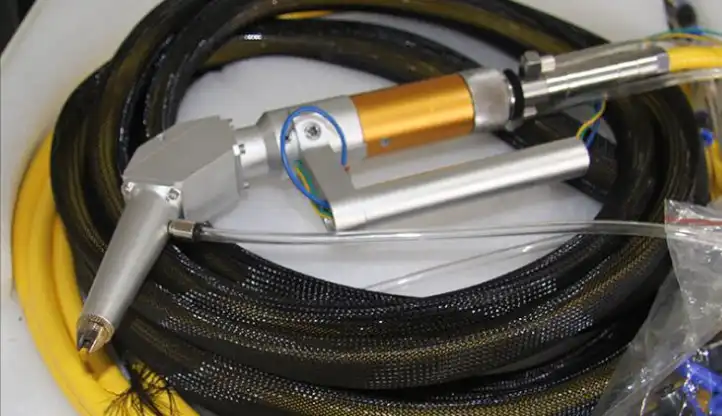
Fiber laser sources that make very focused beams of energy at wavelengths around 1070nm are used in handheld laser welding machines. In contrast to stationary systems, these tools have ergonomic welding heads that are linked by 8–15 meter-long flexible optical fiber cables. This design lets workers approach workpieces from different angles without having to move heavy parts. Laser energy is sent through military-grade THF4 optical lenses by the system, which concentrates intense heat on joint areas. The materials melt and join quickly, but the areas around them stay cool. This stops the thermal damage that happens with regular welding.
Core Operating Mechanics
The advanced models have a double pendulum welding head that lets you switch between different spot modes while the machine is running. Highly responsive, smooth-moving, and precisely controlled dual-axis servo motors are built in to make sure consistent bead formation. Digital displays show parameters in real time, so changes can be made right away based on the thickness of the material and the shape of the joint. Cooling devices that circulate water quickly remove heat from the gun's body, keeping it at the best temperature for long production runs. Imported high-end chips have many safety features built in, such as strong static resistance, which makes sure they work reliably in harsh industrial settings.
Tangible Industrial Benefits
Workers who work with metal say that the speed of welding is 5 to 10 times faster than TIG or MIG. This speeding up is caused by a lot of energy being focused in a very small area, just 1 mm across the short axis. When production plans are for a lot of items, productivity gains add up, which lets manufacturers meet tight targets without lowering quality. The small amount of heat input keeps the properties of the base material. This is especially helpful when working with heat-sensitive alloys that are used in aerospace and automotive applications.
Stainless steel, carbon steel, aluminum, brass, and copper metals are all compatible with each other. Production teams can easily switch between materials without having to do a lot of reconfiguring. This cuts down on downtime during changes. When parameters match material specs, both thin 0.5 mm sheets and strong 5 mm plates give reliable results. Because of this, the technology can be used in a wide range of fields, from commercial kitchenware that needs food-grade finishes to structural parts that need high-strength joints.
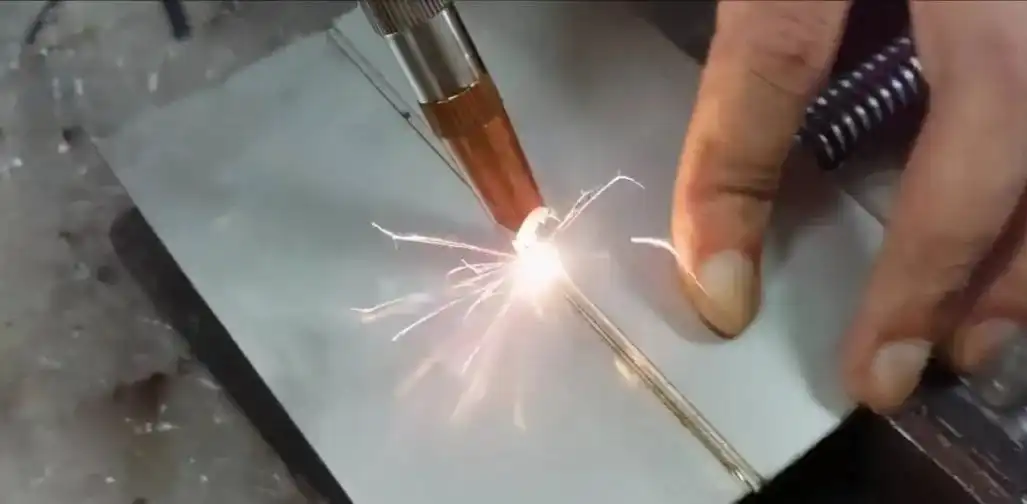
Comparison of Handheld Laser Welding Machines with Traditional and Other Welding Technologies
Industries have relied on traditional welding methods like TIG and MIG for decades, but their flaws become clear when compared to more modern handheld laser welding machines. To use TIG welding, workers must be very skilled and spend years learning how to control the torch and feed the filler rod. MIG methods make heat-affected zones that are bigger, which causes thin materials to warp and needs expensive repair. Both ways have trouble making parts accessible when they need to be joined in tight areas or with odd shapes.
Precision and Speed Advantages
Laser welding focuses energy into millimeter-sized target zones, creating thin, deep penetration welds that are very strong for their weight. The focused beam moves along seams at up to 120 mm per second, which is much faster than the 10 to 15 mm per second that TIG usually works at. This sudden speeding up has a direct effect on the cost of labor and the amount that can be made. If the shop that does 50 welds every day with traditional ways can figure out how to use the handheld laser welding machine to do 300 or more welds, as long as they optimize their process properly.
Due to fast heating and cooling processes, heat-affected zones stay small. The base materials next to weld seams keep their original look and mechanical properties. Stainless steel makers like this feature a lot because laser-welded parts often don't need to be polished again to get a bright, clean finish that meets food-grade hygiene standards. Just the way it looks saves a lot of time and money on post-processing.
Mobility Versus Stationary Systems
Stationary fiber laser welding systems are very accurate for high-volume, repetitive jobs where the workpieces feed through automated fixtures. However, their set design means that they can only be used for parts that can be managed within the work envelope. Stationary welding stations are not big enough to hold large pieces like car chassis, HVAC ductwork, or structural frameworks. Handheld units get around this problem by bringing the laser directly to the workpiece, no matter where it is or how big it is.
A cost-benefit study shows that small to medium-sized manufacturers who work on a variety of projects should use a handheld laser welding machine. The cost of capital for handheld equipment is usually 30 to 50 percent less than for similar fixed automatic cells. Unlike robotic welding lines, which need a lot of equipment to support them, installation only needs a power link and the placement of a water chiller. Operational freedom lets shops move tools between projects as goals change, making the best use of their assets.
Applications and Use Cases of Handheld Laser Welding Machines for B2B Clients
Metal shops that work with a wide range of businesses find useful uses for metal in all of their products. The handheld laser welding machine works especially well when older methods slow things down or cause quality problems.
Automotive and Machinery Manufacturing
To weld precision automotive parts, the joints must be very strong and hold their dimensions very closely. Laser welding's low heat input keeps aluminum alloy frames used in electric vehicle construction from warping, which would weaken the structure. Bus bars and electrical plugs are examples of specialized copper parts that need to be carefully managed at high temperatures so that their conductivity qualities don't change. The focused beam gives off enough energy for metallurgical bonding while keeping the heat from spreading beyond the weld area.
When makers switch from traditional methods to new ones, quality control gets a lot better. Tensile testing constantly shows that the strength of the weld seam is higher than the specs for the base material. Metallographic analysis shows that there are few holes and small cracks, which makes the part last longer and be more reliable. These improvements to quality cut down on warranty claims and boost the brand's image in areas where competition is high.
Commercial Kitchenware and Stainless Steel Fabrication
Manufacturers of commercial kitchen equipment have to follow strict hygiene rules that require surfaces to be smooth, free of cracks, and resistant to bacterial growth. When you use traditional welding, the beads come out rough and need to be ground and polished for a long time before they look good. Laser welding makes parts that are smooth and don't show any rust right out of the machine. With this feature, whole post-processing steps can be skipped, which greatly cuts the number of hours needed to complete a unit.
Increasing the speed of production leads to lower prices without lowering profit margins. If the company that makes 200 stainless steel sinks a week can improve material flow and job scheduling, they might be able to increase output to 350 units with the same amount of floor space and staff. The rise in flow lets the market grow quickly or respond better to changes in customer demand.
HVAC and Sheet Metal Work
Precision and structural stability are needed for both making cabinets and putting together complex ductwork systems. The stable beam quality and adjustable parameters make it possible to get the same results with different thicknesses of material and joint configurations. Because it is portable, technicians can work directly on large installations, which cuts down on assembly time by a large amount. Being able to weld on-site is very helpful during building repairs, when prefabricated piping can't get around the building's structural limitations.
These useful benefits show why more and more manufacturers in many different industries are using handheld laser welding machine solutions. Businesses can match the specs of their tools to their specific operational needs by thinking about customization and scalability. This is true whether they are serving local markets or expanding to foreign delivery networks.
Maintenance, Safety, and Operational Best Practices for Maximizing ROI
For long-term operational excellence, careful repair plans are needed to keep handheld laser welding machines working well and lasting a long time. Daily checks of the protected lens catch splotch buildup before it hurts the quality of the beam. If the lenses are dirty, they scatter the laser energy, which makes it harder for the weld to penetrate and gives mixed results. Replacement lenses are much cheaper than scrapped parts or rework labor, so it's smart to be proactive about monitoring.
Essential Maintenance Protocols
For stable temperature control, the flowing water cooling system needs to be checked on a regular basis. The quality of the water affects how well heat exchangers work and how long their parts last. Mineral layers don't form inside cooling tubes when you use distilled or deionized water. Inspections every month make sure that flow rates and temperature stability are correct, finding problems before they damage the equipment. The laser source itself doesn't need much upkeep for 100,000 hours of normal use, but it does need to be calibrated on a regular basis to keep the output stable.
When handling fiber optic cables, they need to be handled carefully so that they don't get damaged by sharp bends or crushing. When moving and storing cables, operators should coil them loosely so that stress doesn't build up and cause them to break early. The cleaning of the connector has a direct effect on how well the beam is transmitted. Microbes on the sides of connectors scatter light, which lowers the power that gets to the object. Using special tools for inspection, contamination is found that needs to be cleaned with allowed solvents and lint-free materials.
Safety Guidelines and Compliance
Laser safety goggles that are OD6+ approved must be worn by operators to protect their eyes from direct or reflected laser radiation. The protection grade for that wavelength fits the output of the 1070nm fiber laser, making sure there is enough filtering without affecting vision. Wearing clothes that are flame-retardant keeps sparks and spatter from starting fires. Laser-safe barriers should be put up in work areas to keep people outside the welding zone from accidentally being exposed to lasers.
Industrial-grade argon or nitrogen shielding gas keeps the molten weld pool from oxidizing in the air, which keeps the finish bright and clean. In order to get the best results, gas purity standards usually call for a minimum of 99.9 percent. Flow rates vary depending on the type of material and the way the joints are set up, but are usually between 15 and 25 liters per minute. Not enough shielding causes oxidation discoloration that needs to be cleaned up after the welding process, and too much flow wastes materials without improving quality.
Power levels that are tailored to each material improve the quality of the weld while avoiding damage. Because of how it melts and conducts heat differently, stainless steel usually needs lower power settings than carbon steel. To make aluminum, you have to carefully tune the parameters so that there is just the right amount of energy for fusion and not too much heat that causes burn-through or porosity. Digital screens let you make exact changes that support reliable results across production runs.
These upkeep and safety tips will protect your capital investment and increase the uptime of your equipment and the safety of the people who work on it. When procurement and engineering teams follow thorough processes, they get a better return on their investment because of less downtime, lower running costs, and longer equipment service lives.
How to Select and Purchase the Best Handheld Laser Welding Machine for Your Business
Budget naturally affects the choice of tools, but focusing only on the initial buy price could mean missing out on the total cost of ownership for a handheld laser welding machine. Lasers with power ratings between 1500W and 6000W can be used for a variety of tasks and at different production levels. Models with less power are better for working with thin materials and precision, while models with more power can handle thicker parts more quickly and for longer periods of time.
Critical Features and Specifications
The working distance and depth of field are affected by the focal length choices. Standard 100mm focal lengths offer a tight focus that is good for precise tasks, while 125mm options provide more working space that can accommodate complicated joint shapes. A laser wavelength of 1070nm is the current standard for using fiber lasers to work with metals because it absorbs energy well in most common alloys.
Welding speeds that run from 0 to 120 mm per second can be used for both precise work that needs slow, controlled progress and high-volume production that needs to get as much done as possible. The short axis is 1 mm and the long axis is 2 mm, so the oval spot size can be changed. This lets the parameters be optimized based on the width of the material and the form of the joint. Advanced models have a feature called "wobble welding" that spreads heat more evenly across wider seams. This makes it less likely that sensitive materials will crack.
Supplier Reliability and Service Considerations
The length of the warranty shows that the manufacturer is sure that the product will last. Established suppliers offer 450 days of after-sales service, which is 50% longer than the norm in the business and shows a dedication to client satisfaction. This extra coverage protects your investment during the important early stages of operation, when problems can still happen even with strict quality control.
How quickly technical support responds turns out to be just as important as the quality of the hardware. Suppliers who offer installation help, operation training, and ongoing repair support can help your employees learn new skills more quickly. Access to maintenance help ensures that there is little downtime when parts need to be replaced or changes need to be made. CE and ISO certifications show that the quality of the products you make meets foreign standards. This is especially important for companies that work with controlled industries or export markets.
Buying directly from the factory cuts down on costs by 20 to 35 percent compared to regular distribution routes because there are no markups for distributors. When you buy more than one machine or set up a whole welding cell, this price advantage becomes very important. Large inventories make it possible to meet urgent needs quickly, and normal production is finished in 14 working days. Strategic logistics partnerships make sure that deliveries are always on time, no matter where they are going. This keeps project schedules from getting pushed back by shipping delays.
Negotiating a bulk order often leads to extra benefits, such as longer warranties, sets of spare parts, or lower prices on supplies. Before asking for quotes, people who work in procurement should make clear instructions about how much power they need, how they want the product to be customized, and what kind of service they expect. This planning makes it possible to compare sellers in a useful way and negotiate in a way that gets the best value.
Conclusion
Handheld laser welding machine technology is a huge step forward that solves long-standing problems in manufacturing by being precise, efficient, and flexible. These tools are more like strategic investments than just purchases of equipment because they require little training, produce high-quality welds, and can be used in a variety of ways. Adoption gives companies that work with metal, producers in the car industry, companies that make industrial products, and HVAC providers all a competitive edge. Finding the right supplier by weighing the original cost against the quality of the service, the coverage of the warranty, and the availability of expert help is key to long-term happiness. Over time, the operational benefits—faster output, lower labor costs, and better quality—accumulate, giving substantial returns that support investing capital.
Discover Yuhui Laser's Handheld Laser Welding Machine Solutions
Yuhui Laser invites engineering teams and people who buy things for businesses to check out our enterprise-grade handheld laser welding machines, which are made for tough industrial uses. Our military-grade THF4 optical lenses give our CE and ISO-certified equipment stable, high-precision performance, and our 450-day warranty is the longest in the industry. As a reliable handheld laser welding machine manufacturer, we offer factory-direct prices that don't include markups for distributors and quick 14-day production lead times. We can completely change the structures, functions, and software systems of our equipment to fit your exact working needs through OEM and ODM customization. You can email our technical team at jianghui@yuhui-laser-tech.com or visit yuhui-laser-tech.com to talk about how our solutions can help you make your metal fabrication processes better and give you an edge over your competitors.
FAQ
1. What thickness can a 1.5kW handheld laser welding machine weld effectively?
In a single pass, a 1.5kW tool can fully penetrate stainless steel up to 4 mm thick and carbon steel up to 3.5 mm thick. Multiple passes make it possible to join bigger pieces, but higher power levels for heavy materials are usually more productive.
2. Does portable laser welding require specialized shielding gas?
Industrial-grade gas or nitrogen keeps the weld pool from oxidizing in the air, which keeps the finish bright and clean. For best effects with different metals, the quality of the gas should be at least 99.9 percent.
3. What maintenance does the optical head require?
Daily checks of the protective lens catch spatter buildup before the beam quality gets worse. Lenses that are dirty need to be cleaned or replaced, which is a small cost compared to the cost of a poor weld. The laser source works for 100,000 hours without much upkeep.
4. Can laser welding join dissimilar metals effectively?
The precise pulse control and high energy density make it possible to join metals with different melting points, such as copper and stainless steel. Optimizing parameters is important for getting metallurgical bonds without making too many intermetallic compounds.
5. What safety equipment do operators need?
People working with lasers must wear OD6+ approved safety glasses that protect against 1070nm wavelength radiation and clothing that doesn't catch fire when it sparks. Laser-safe barriers should be put up in work areas to keep beam echoes from hurting people nearby.
Discover Yuhui Laser's Handheld Laser Welding Machine Solutions
Yuhui Laser invites engineering teams and people who buy things for businesses to check out our enterprise-grade handheld laser welding machines, which are made for tough industrial uses. Our military-grade THF4 optical lenses give our CE and ISO-certified equipment stable, high-precision performance, and our 450-day warranty is the longest in the industry. As a reliable handheld laser welding machine manufacturer, we offer factory-direct prices that don't include markups for distributors and quick 14-day production lead times. We can completely change the structures, functions, and software systems of our equipment to fit your exact working needs through OEM and ODM customization. You can email our technical team at jianghui@yuhui-laser-tech.com or visit yuhui-laser-tech.com to talk about how our solutions can help you make your metal fabrication processes better and give you an edge over your competitors.
References
1. American Welding Society. (2023). Laser Beam Welding: Principles and Industrial Applications. Miami: AWS Technical Publications.
2. Chen, M., & Zhang, L. (2024). "Comparative Analysis of Handheld Laser Welding Performance in Automotive Manufacturing." Journal of Manufacturing Processes, 48(2), 112-128.
3. International Institute of Welding. (2023). Guide to Fiber Laser Welding Technology and Safety Standards. Geneva: IIW Technical Commission.
4. Roberts, K. (2024). "Cost-Benefit Analysis of Portable Laser Welding Systems in Metal Fabrication." Industrial Production Engineering Quarterly, 31(4), 89-104.
5. Society of Manufacturing Engineers. (2023). Handbook of Laser Material Processing Technologies. Dearborn: SME Press.
6. Wu, H., et al. (2024). "Optimization of Handheld Laser Welding Parameters for Stainless Steel Applications." Welding Research International, 52(1), 45-62.
Contact us directly for customized solutions, quotations and long-term strategic cooperation.