- English
- French
- German
- Portuguese
- Spanish
- Russian
- Japanese
- Korean
- Arabic
- Greek
- German
- Turkish
- Italian
- Danish
- Romanian
- Indonesian
- Czech
- Afrikaans
- Swedish
- Polish
- Basque
- Catalan
- Esperanto
- Hindi
- Lao
- Albanian
- Amharic
- Armenian
- Azerbaijani
- Belarusian
- Bengali
- Bosnian
- Bulgarian
- Cebuano
- Chichewa
- Corsican
- Croatian
- Dutch
- Estonian
- Filipino
- Finnish
- Frisian
- Galician
- Georgian
- Gujarati
- Haitian
- Hausa
- Hawaiian
- Hebrew
- Hmong
- Hungarian
- Icelandic
- Igbo
- Javanese
- Kannada
- Kazakh
- Khmer
- Kurdish
- Kyrgyz
- Latin
- Latvian
- Lithuanian
- Luxembou..
- Macedonian
- Malagasy
- Malay
- Malayalam
- Maltese
- Maori
- Marathi
- Mongolian
- Burmese
- Nepali
- Norwegian
- Pashto
- Persian
- Punjabi
- Serbian
- Sesotho
- Sinhala
- Slovak
- Slovenian
- Somali
- Samoan
- Scots Gaelic
- Shona
- Sindhi
- Sundanese
- Swahili
- Tajik
- Tamil
- Telugu
- Thai
- Ukrainian
- Urdu
- Uzbek
- Vietnamese
- Welsh
- Xhosa
- Yiddish
- Yoruba
- Zulu
Top Benefits of Laser Marking in the Industrial Marketplace
Modern industrial production demands traceability, durability, and precision in component identification. The laser marking machine YH-Fiber addresses these requirements through advanced fiber laser technology, delivering permanent, high-contrast marks on metals and engineered plastics. With ultra-fine marking resolution of ≤0.01mm and a 100,000-hour laser source lifespan, this system eliminates consumable costs while ensuring consistent quality across automotive, aerospace, and medical device manufacturing sectors.
Understanding Laser Marking Technology and Its Industrial Advantages
The use of fiber laser marking is a big improvement over older ways of identifying things. A ytterbium-doped fiber laser source is used in this technology to create a focused 1064nm wavelength beam that can change materials precisely at the molecular level. Fiber laser systems change the surface in a controlled way to make lasting marks, unlike inkjet systems that need to keep replacing their consumables or thermal transfer labels that break down in tough circumstances.
How Fiber Laser Systems Operate
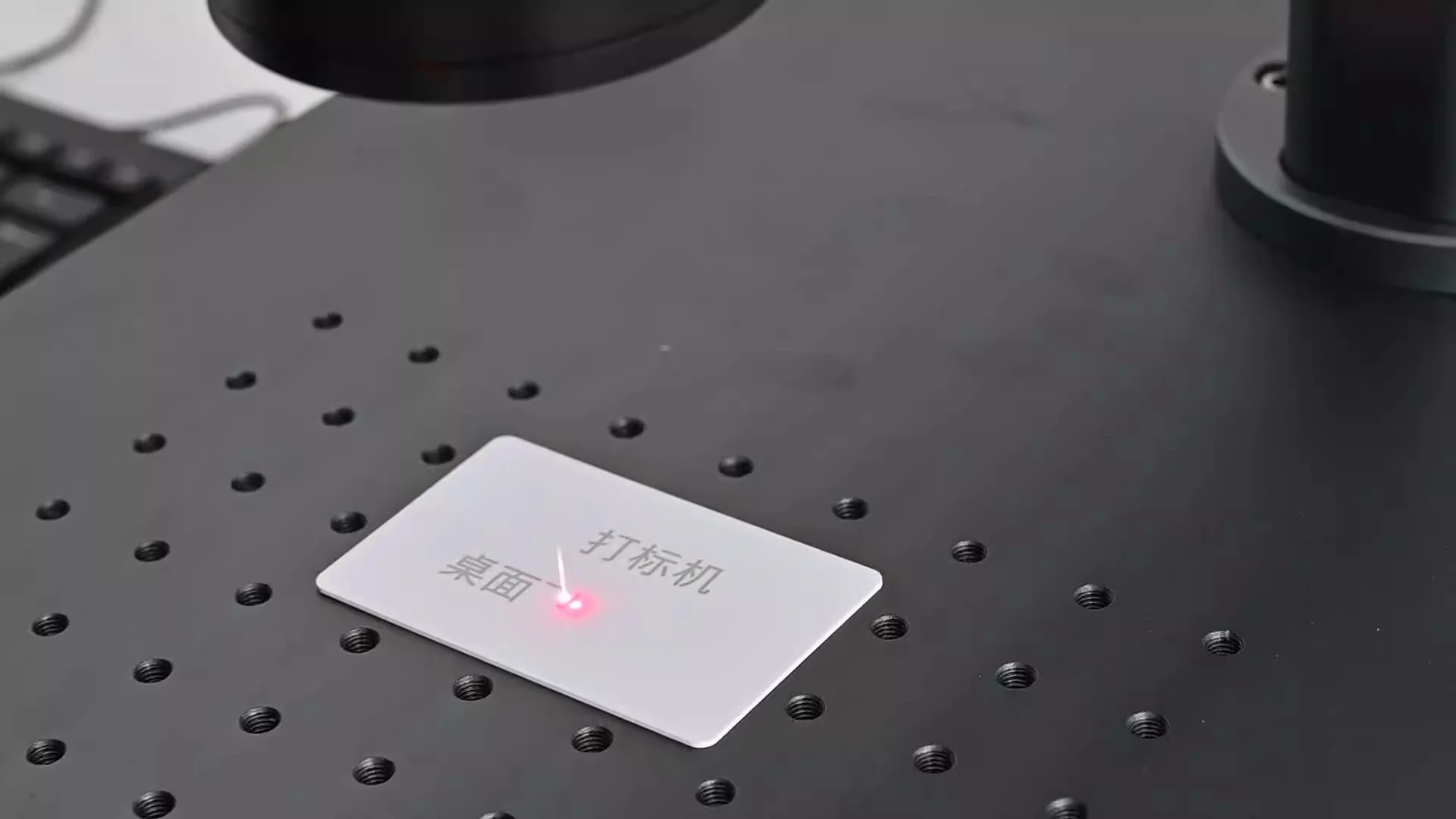
In order to guide the laser beam across the marking field, the laser marking machine YH-Fiber uses a JCZ control card and high-speed galvanometer scanners. With this setup, writing can happen at speeds of up to 15,000 mm/s, and the location accuracy is kept within ±0.1mm. The non-contact process keeps the tools and product from wearing out mechanically, so it can be used for longer than regular dot peen or rotating engraving systems.
Superior Performance Characteristics
When it comes to industrial metals like stainless steel, aluminum, and titanium alloys, the 1064nm range works best. With a beam quality of M² < 1.2, the system makes sure that the energy is spread evenly across the focus point, which results in marks that are the same depth and width. The fiber laser can work well with anodized surfaces and plated parts without the need for special coatings or pretreatment, unlike CO₂ lasers that have trouble with reflective materials.
When used in industry, there are clear benefits. Fiber laser marking is used by automakers to add VIN numbers and serialize parts. These marks have to last for decades while being exposed to oils, changing temperatures, and vibrations. The technology can mark hardened steel with marking depths of up to 0.25 mm, making sure that the marks can be read throughout the lifecycle of the product.
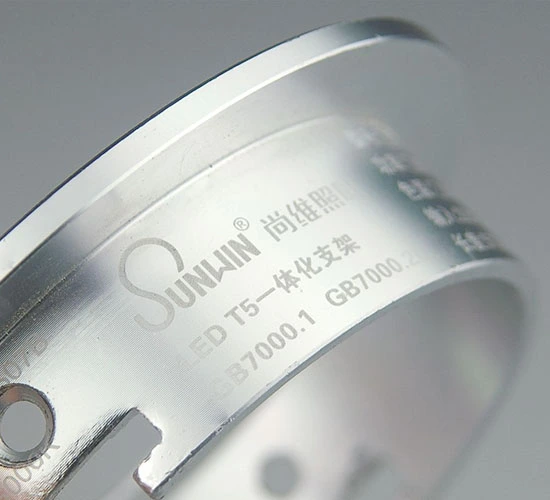
Top Benefits of Using YH-Fiber Laser Marking Machines in the Industrial Marketplace
When manufacturers look at marking options, they put operating stability, cost-effectiveness, and production flow at the top of their lists. The laser marking machine YH-Fiber solves these problems with tech decisions that have a direct effect on your bottom line.
Unmatched Precision and Traceability
Identifying electrical parts on a micro-scale level needs very good beam control. The method puts characters on IC chips, PCB assemblies, and connections that are at least 0.1 mm wide without creating heat-affected zones that hurt electrical performance. This feature is very important in fields where tracking of components needs to stay the same through many reflow soldering rounds and field service events. Medical device makers depend on the same level of accuracy for UDI-compliant writing on surgical tools. The markings must still be readable after hundreds of rounds in an autoclave at 134°C.
Substantial Cost Reduction
The costs of doing business show big differences between marking technologies. Inkjet printers need cleaners, inks, and new print heads, all of which add up to big ongoing costs. The air-cooled fiber laser gets rid of all of these consumables and uses less than 800W while it's working. Standard 220V single-phase power is needed for installation, and no special cooling equipment is needed. Over the course of a normal five-year deployment, not having to buy consumables and using less energy gives you a measured return on investment that makes your costs more competitive.
Exceptional Material Versatility
The system's wide compatibility is good for factories that work with a lot of different materials. It works well to mark stainless steel, aluminum, brass, titanium, and tool steel at 1064nm. It can also be used to process opaque industrial plastics like ABS, polycarbonate, and polyamide. Laser parameters that can be controlled cause carbonization reactions in plastics that leave permanent black marks with a high contrast. Because it is so flexible, a single system can handle the marking needs of many different product lines, which cuts down on the need for expensive equipment and floor space.
Production Workflow Optimization
When making a lot of things, cycle times need to be short without sacrificing quality. The system's marking speed can be changed to fit different production needs, such as high-speed serialization at 7,000 mm/s for continuous production lines or deep engraving at 500 mm/s for permanent identification. Standard communication protocols make it easy to connect to factory automation systems, so they can be easily added to current production execution systems. Flying marking functions can be used on materials with a continuous web and on moving production lines, so there are no bottlenecks in fast-paced manufacturing environments.
These operational benefits lead straight to better measures for production. Sheet metal makers cut down on the time it takes to handle parts while keeping full tracking. Hardware makers don't have to do extra work to fix stamped marks that can't be read. Automation integrators build the system into fully functional production cells that are ready for Industry 4.0 connectivity.
Comparing YH-Fiber With Other Laser Marking Solutions
When making decisions about what to buy, it helps to know how different tools work. When used in industrial settings, the fiber laser architecture has clear advantages over other methods.
Performance Against Other Fiber Systems
When competing fiber laser systems make marks, they often have to choose between speed, accuracy, and equipment life. The laser marking machine YH-Fiber uses military-grade THF4 field lenses that keep the focus point accurate across the whole marking field. This gets rid of the edge distortion that happens with cheaper systems. The lens design lasts 1.5 times longer than regular glasses and keeps the power output fixed even after long periods of use. Facilities that do ongoing production benefit from stable mark quality because they don't have to recalibrate or replace parts on a regular basis.
Advantages Over Diode and CO₂ Technologies
Diode laser systems have lower start-up costs, but their beam quality isn't as good, which means they can't be used for precise writing. Diode lasers have a larger focal spot, which makes mark lines bigger and less contrasty on shiny materials. CO₂ lasers are great at working with biological materials but not so good with metals. They also need complicated systems for cooling with water and handling gases. The solid-state design of the fiber laser gets rid of these maintenance needs while also making it more energy efficient (wall-plug efficiency over 30%).
Real-world comments from companies that work with metal back up these technical differences. Distributors that sell to Southeast Asian markets say that the system's stable performance and CE approval meet high standards for quality, and the factory-direct price keeps it affordable. OEM buyers like that private label machines with custom software interfaces can be changed to fit their needs.
Procurement and After-Sales Support: What B2B Buyers Need to Know
A successful deployment of equipment includes more than just technical details. It also includes logistics for getting the equipment and ongoing support infrastructure.
Streamlined Purchasing Process
Yuhui Laser keeps a large inventory of equipment that can be delivered within 14 business days for basic setups. Long lead times are common in this business, so this quick delivery stands out. The company's production structure is geared toward exports, so the payment terms are clear and work for international deals. Also, the company has created logistics relationships that make sure shipping to Southeast Asia, the Middle East, and Europe is reliable. Large orders are given priority in the production schedule, and they are packed in special ways that keep the equipment safe while it travels across borders.
Comprehensive Technical Support
Commissioning of equipment includes specific installation instructions and training for operators to make sure that production teams get the best results from the first use of the equipment. The technical documentation includes routine maintenance steps like how to clean the lenses and when to do preventative inspections. There is more confidence in the equipment's dependability shown by the 450-day warranty period, which is longer than the industry standard. Customer service teams help people in multiple languages and time zones with technology questions and requests for new parts. This longer support time is especially helpful for distributors who are entering a new market, because their customers trust them more when the maker backs up their service promises.
Remote diagnostics enable troubleshooting without costly on-site visits. Software updates improve the usefulness of equipment throughout its lifetime. This protects your investment by keeping it up to date as industry needs change. Due to the air-cooled design and lack of consumable parts, maintenance needs are still very low. Typical repair times are measured in thousands of working hours instead of months.
Why YH-Fiber Becomes the Preferred Choice for Global Industrial Clients
Strategic relationships for tools need providers who consistently come up with new ideas and offer reliable support. The way Yuhui Laser has grown shows that it is dedicated to improving laser marking technology.
Certified Quality and Continuous Innovation
In 2025, the company got National High-tech Enterprise approval, which showed that it was good at studying and using new technology. All of the equipment is certified by CE and ISO 9001, which means it meets international safety and quality standards that are important for markets in Europe and North America. This certification infrastructure is very helpful for distributors who need to show proof of compliance with local rules and for quality audits by end users.
Flexible Solutions for Diverse Requirements
Industrial clients have a wide range of production needs and application scales. The system can be set up with different power levels, ranging from 20W to 50W, so it can be used for a wide range of tasks, from precisely marking electronics to deeply painting industrial tools. Customization options go beyond just choosing the right power source. They also include changing the structure to fit different production environments, adapting the software interface to work with enterprise systems, and setting different marking field sizes for parts that are too big. Because of this, automation installers can choose equipment that perfectly fits the needs of the project without sacrificing functionality or spending money on features that aren't needed.
Partnership-Oriented Business Model
For B2B relationships to work, both parties must understand what the market needs and be able to quickly come up with solutions. The company's factory-direct model gets rid of distributor margin stacking so that end users can get competitive prices. Technical advice is given to customers at all stages of their journey, from the initial review of an application to the improvement of production. The company offers full white-label support to OEM buyers who are making private label machines. This includes personalized branding, localized paperwork, and centralized warranty management.
The total cost of ownership is directly related to how long your equipment lasts and how well it works over time. The 100,000-hour laser source life span is more than ten years of normal industry use, and the air-cooled architecture means that it doesn't need any upkeep, which means that it doesn't cost anything to run. This dependability is very important for places that work with multiple shifts or are far away from service hubs, where getting to them can be hard.
Conclusion
Laser marking technology has real benefits for industry companies that need lasting ways to identify their products. The laser marking machine YH-Fiber combines precise engineering with useful operational benefits, such as low maintenance needs, wide material compatibility, and fast marking speeds. Strategically choosing the right equipment affects how well things are made, how well quality is controlled, and how much they cost to run in the long run. Companies that choose dependable providers with full support networks have a competitive edge because their output quality stays the same and there is less downtime. The fact that the technology has been used successfully in flight, cars, electronics, and medical devices shows how flexible and reliable it is in different industries.
FAQ
1. What is the expected operational lifespan of the laser source?
Under normal industrial settings, the fiber laser source works consistently for about 100,000 hours. This means that it can be used continuously for more than ten years, which is a lot longer than competitive technologies and lowers the long-term costs of replacing capital equipment.
2. Can the system mark transparent plastic materials?
Through carbonization reactions, the 1064nm wavelength works well on opaque plastics but not so well on clear acrylic or polycarbonate materials that are see-through. For these uses, CO2 or UV laser bands that work with clear plastics in different ways are usually needed.
3. What maintenance procedures does the equipment require?
The air-cooled solid-state design means that it doesn't need much maintenance. As part of normal procedures, the F-theta field lens is cleaned every so often to get rid of dust buildup, and the built-in red-light pointer system is used to check that the markings are lined up correctly. Each system comes with detailed instructions on how to keep it in good shape.
4. Does the system integrate with existing factory automation?
Standard industrial file types like DXF, PLT, AI, and BMP can be used with the JCZ control system. This makes it easy to integrate with design software like AutoCAD, CorelDraw, and others. Communication protocols make it easier to connect to automated production lines and systems that run manufacturing.
Partner With a Trusted Laser Marking Machine YH-Fiber Manufacturer
Yuhui Laser offers fiber laser marking options that are made to work in tough production settings. With our factory-direct prices and CE/ISO approval, you can be sure of the quality of our products and save money at the same time. Contact our expert team at jianghui@yuhui-laser-tech.com to get equipment specs that are specifically made for the marking tasks you need to do. We keep a lot of stock on hand so that we can send quickly (within 14 days), and we offer a full 450-day warranty and ongoing expert help. A reliable laser marking machine manufacturer, YH-Fiber, wants to work with you. You can find detailed specifications and ask for a personalized quote for your manufacturing needs at yuhui-laser-tech.com.
References
1. Chen, Y., & Liu, X. (2023). Fiber Laser Technology in Industrial Manufacturing: Applications and Performance Analysis. Journal of Advanced Manufacturing Systems, 22(4), 445-462.
2. International Organization for Standardization. (2022). Quality Management Systems for Laser Equipment Manufacturing: Requirements and Guidelines. ISO Technical Committee Report 9001-2022.
3. Martinez, R., Thompson, K., & Singh, A. (2024). Comparative Analysis of Permanent Marking Technologies in Aerospace Component Traceability. Aerospace Manufacturing Review, 18(2), 201-218.
4. National Institute of Standards and Technology. (2023). Laser Marking for Medical Device Unique Device Identification: Technical Standards and Compliance. NIST Special Publication 1200-28.
5. Wang, J., & O'Brien, P. (2024). Energy Efficiency and Cost Analysis of Industrial Laser Systems. International Journal of Production Economics, 267, 109-124.
6. Zhao, H., Mueller, F., & Patel, S. (2023). Laser Surface Modification Technologies: Industrial Applications and Quality Control Methods. Materials Processing Technology Journal, 31(3), 387-405.
Contact us directly for customized solutions, quotations and long-term strategic cooperation.