- English
- French
- German
- Portuguese
- Spanish
- Russian
- Japanese
- Korean
- Arabic
- Greek
- German
- Turkish
- Italian
- Danish
- Romanian
- Indonesian
- Czech
- Afrikaans
- Swedish
- Polish
- Basque
- Catalan
- Esperanto
- Hindi
- Lao
- Albanian
- Amharic
- Armenian
- Azerbaijani
- Belarusian
- Bengali
- Bosnian
- Bulgarian
- Cebuano
- Chichewa
- Corsican
- Croatian
- Dutch
- Estonian
- Filipino
- Finnish
- Frisian
- Galician
- Georgian
- Gujarati
- Haitian
- Hausa
- Hawaiian
- Hebrew
- Hmong
- Hungarian
- Icelandic
- Igbo
- Javanese
- Kannada
- Kazakh
- Khmer
- Kurdish
- Kyrgyz
- Latin
- Latvian
- Lithuanian
- Luxembou..
- Macedonian
- Malagasy
- Malay
- Malayalam
- Maltese
- Maori
- Marathi
- Mongolian
- Burmese
- Nepali
- Norwegian
- Pashto
- Persian
- Punjabi
- Serbian
- Sesotho
- Sinhala
- Slovak
- Slovenian
- Somali
- Samoan
- Scots Gaelic
- Shona
- Sindhi
- Sundanese
- Swahili
- Tajik
- Tamil
- Telugu
- Thai
- Ukrainian
- Urdu
- Uzbek
- Vietnamese
- Welsh
- Xhosa
- Yiddish
- Yoruba
- Zulu
Automatic Aluminum Letter Bending Machine NL180: Complete Buyer’s Guide
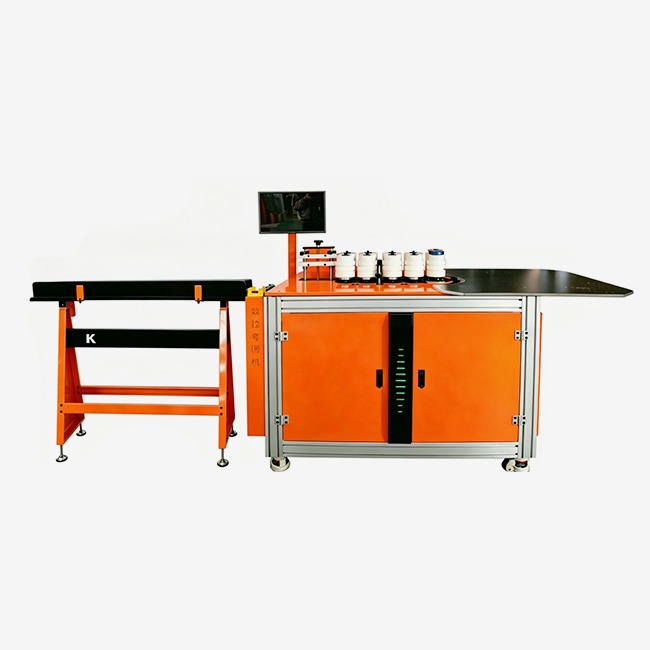
The Automatic Aluminum letter bending machine NL180 represents a transformative leap in signage manufacturing technology, specifically designed to address the escalating demand for precision channel letter fabrication in competitive markets. This CNC-controlled solution processes aluminum materials up to 180mm wide with thicknesses ranging from 0.3mm to 1.2mm, delivering consistent bending accuracy within ±0.05mm tolerance. Engineered for high-volume production environments, this equipment combines intelligent software automation with mechanical reliability to eliminate manual bending inefficiencies, reduce labor costs by up to 60%, and ensure flawless integration with laser-cut components, making it an indispensable asset for signage manufacturers targeting premium retail, architectural, and industrial wayfinding projects.
Understanding the NL180 Automatic Aluminum Letter Bending Machine
To make modern signs, you need tools that can work quickly and accurately. Yuhui Laser's metal letter bending system meets this need with cutting-edge tech that is based on real-world manufacturing problems.
Core Operating Principles
The machine is run by a complex closed-loop control system that combines servo motor technology with high-resolution encoders. When you put aluminum coils or profiles into the feeding mechanism, the software figures out the notch depth automatically based on the thickness of the material and the alloy's temper. The double copper arc bending machine then does precise small-radius bends for complicated letterforms and large-radius extrusion bending for characters that are too big without damaging the material or the surface.
Adjusting the cutting depth from the front is more useful than traditional systems that are mounted in the back. Your operators can get to the calibration controls right away, which cuts down on the time it takes to set up between production runs. The higher platform design makes it easier to see what's going on during activities, so quality checks can be done without stopping the flow of work.
Technical Specifications That Matter
Knowing what the machine can do helps you decide if it will work with your production system. The alloy cutter system can cut in both directions and swings without limits on angle, so it can work with thicker aluminum materials that are hard for other machines to handle. This adaptability is very important when working on custom projects that need different material gages.
The machine can bend at angles between 45° and 120° and with radii as small as 5mm. This range has almost every type of business signage need, from current sans-serif fonts with sharp edges to script writing with soft curves. The working pressure is between 0.3 and 0.8Mpa, so the force stays the same over long production runs. Total power use stays at 1500W, which is within the limits of normal electrical infrastructure and meets the needs of industry performance.
Software Integration Capabilities
It works with files in DXF, PLT, and AI formats, so you can easily integrate your workflow with design and laser cutting systems you already have. The smart software automatically adjusts for the different spring-back properties of the aluminum alloys. Your production team can import vector files directly from design software, so they don't have to enter parameters by hand, which can lead to mistakes.
Having button keys for the start, feed, and return processes makes them easier to use. These tactile interfaces work with tablet controls to give workers more comfortable options when doing the same things over and over again. The encoder-based closed-loop system makes sure that the feeding length is exact, which gets rid of the measurement shift that happens during long production runs.

Comparing NL180 with Other Aluminum Letter Bending Machines
Knowing how an item compares to others in terms of how well it works, how accurate it is, and how much it will last over time is important for evaluating equipment.
Manual Systems versus Automated Solutions
Traditional ways of bending by hand depend on the skill of the person doing the work and physical models, unlike the Automatic Aluminum letter bending machine NL180. Even though the original costs of the equipment may seem smaller, they add up over time because of poor quality, slower throughput, and more work that needs to be done. When things are done by hand, there are often differences in size of more than 0.5 mm, which makes it hard to put together laser-cut faces.
These factors are taken care of by the automated channel letter bending equipment. Compared to manual methods, this method speeds up production by about 300% while keeping quality the same across thousands of units. Your workshop makes it less necessary to hire expert craftsmen because workers can become skilled in days instead of months. Material waste goes down a lot because the software optimizes the placement and depth of the notches, which stops the material from breaking when done by hand.
Performance Against Competing Automatic Models
Most of the time, market options give up either accuracy or durability. Some foreign systems have tight standards, but parts wear out too quickly when they are used all the time. Others focus on strong building but don't have the advanced tools needed for processing complex letterforms.
These factors are balanced by Yuhui Laser's solution, which uses military-grade parts and smart control algorithms. For 1.5 times longer than the average in the industry, the THF4 optical system keeps the equipment's focusing accuracy over the course of its service life. The amount of energy used per processed meter is still 20–30% less than similar models, which lowers running costs across all yearly production levels.
The machine is different from others because it can handle flat coils, metal profiles, and folded strips without having to change its tools. Other machines need special parts for each type of material. This ability to change directly leads to faster order turnaround and more service options for your clients.
Return on Investment Analysis
In the end, financial performance is what determines whether to buy something. In moderate-volume operations that process 200 to 400 channel letters per month, the equipment usually pays for itself within 12 to 18 months. Facilities that handle a lot of traffic and serve multiple store chains or building projects usually get their money back within 8 to 12 months.
When you figure out the total cost of ownership, you can see benefits that go beyond the buying price. The 450-day warranty coverage is longer than the industry standard, so you won't have to pay as much for repairs during the critical early operational period. Yuhui Laser's transportation network makes spare parts easy to get, which cuts down on downtime and keeps the production plan on track when parts need to be replaced.
Procurement Considerations for the NL180
To buy things strategically, you need to know about the pricing structures, delivery logistics, and support frameworks that affect the long-term success of your operations.
Pricing Structure and Customization Options
The base price is based on the standard configuration that works for most sign-making tasks. As an optional extra, you can get better software with advanced nesting methods that make the best use of materials and cut metal waste by an extra 5–8%. During the ordering process, facilities that need to connect to current MES systems can choose their own connection protocols.
Buyers who set up multiple production facilities or equipment distributors that serve regional markets can get discounts when they buy in bulk. Flexible payment terms allow for different ways of planning your finances, such as setting up payment plans that match the prices of tools with when it will start making money.
Authorized Sales Channels
Yuhui Laser works with a network that includes both direct sales from the factory and authorized regional distributors. If you buy directly from Shandong Yuhui Laser Technology Co., Ltd., you'll get the newest versions of the products and technical support. The standard lead time of 14 days from order confirmation to shipment shows that the company is committed to keeping inventory on hand and making production as efficient as possible.
Distributors in important countries offer expert help in the local language and make it easier to get extra parts. When looking at distributors, make sure you check their expert training certification and license status. Authorized partners take care of display tools so that customers can try it out before deciding to buy.
Warranty Coverage and Service Agreements
The 450-day guarantee covers the performance of the hardware, the software, and the electricity systems. Coverage includes remote diagnostics, service on-site for major repairs, and free software updates that fix bugs or add small features. This longer warranty period recognizes that figuring out how well a piece of equipment works requires more than just the standard warranty period.
Service agreements for the Automatic Aluminum letter bending machine NL180 that last longer than the warranty period make maintenance costs more predictable. Annual contracts usually include scheduled preventative maintenance visits, faster responses from technical support, and lower prices on spare parts. These arrangements are especially helpful for places with multiple shifts where equipment breakdowns have a direct effect on revenue.

Maintenance and Operational Best Practices
Systematic maintenance procedures and operating discipline are needed for long-term success.
Daily Maintenance Protocols
At the start of each shift, your workers should check the surface of the feeding machine for metal buildup. When particles build up, they scratch the surface of things that have already been painted or polished. A quick clean with isopropyl alcohol and a lint-free cloth takes less than five minutes and keeps expensive materials from being sent back.
Before starting production runs, check the air pressure levels. When pneumatic systems don't work within the specified range of 0.3 to 0.8Mpa, they produce uneven bending force, which causes differences in the sizes of different production runs. Digital pressure gages let you know right away if something is wrong without stopping your work.
Weekly Calibration Tasks
Plan to check the encoder's accuracy every seven working days. The closed-loop system stays accurate with constant feedback, but a physical check makes sure that the sensors are lined up correctly and the cables are intact. Drift can be found before it affects billing production by using scrap material to make test designs.
Use the grade of oil recommended by the maker to grease the guide rails. When there isn't enough lubrication, friction and motor load rise, and dust particles are attracted, which speeds up wear. The best way to apply it makes a thin, even film that can be seen when the light is shining from the side.
Monthly Comprehensive Inspections
Set aside time every month to do a full mechanical inspection. Check the torque requirements for fasteners at key connection points, especially around the mounts for the cutting mechanism and bending head assembly. Fasteners slowly come loose during operation, and preventative tightening stops catastrophic fails before they happen.
Check the electrical connections for signs of corrosion or overheating. When connections are loose, resistance goes up, which creates heat that breaks down parts and makes fires more likely. Thermal image cameras quickly find places where equipment isn't working right while it's running.
Every 5,000 to 8,000 meters of finished aluminum, the tungsten steel milling tools need to be sharpened or replaced. By keeping an eye on the quality of the cuts, you can catch problems early, before dull cutters do any damage. Having spare cutter sets on hand reduces the time that production is interrupted while replacements are being made.
Troubleshooting Common Issues
When the correctness of the dimensions goes beyond what was specified, you should first check the material's features. Changes in the hardness of aluminum alloys need to be accounted for in the software by making spring-back compensation adjustments. These differences are taken into account by the machine, but operators must enter the right material specs.
Feeding problems are usually caused by worn-out pressure rollers or dirty encoder sensors. Changing the roller surface is a normal part of maintenance, while cleaning the encoder often fixes problems without having to replace parts. The technical guidebook has thorough diagnostic flowcharts that show how to fix problems in a logical way.
File corruption or changes in formats that don't work together can sometimes cause software problems. Keeping software versions up to date through Yuhui Laser's support site fixes known bugs and makes the file reader more reliable. When problems keep happening, factory engineers can use secure network connections for remote diagnostics to look at how the system is working and make changes.
Brand and Supplier Insights: Trusting the NL180 Manufacturer
Investing in equipment depends a lot on how trustworthy the manufacturer is and how well they can support their products.
Yuhui Laser's Manufacturing Heritage
Shandong Yuhui Laser Technology Co., Ltd. built its engineering foundation in 2018 and focuses on providing laser processing solutions for businesses with the Automatic Aluminum letter bending machine NL180. In 2025, the company got National High-tech Enterprise approval, which shows that it has kept coming up with new ideas and improving technology. This difference comes from the government's careful review of R&D spending, patent portfolios, and the use of technology in production areas.
All stages of production at the factory in Weifang follow the rules for ISO9001 quality management. Using high-resolution encoders and multiple inspection steps, feeding precision is checked over 10-meter consecutive runs. Digital caliper checks make sure that the notch depth is accurate, which stops the material from breaking when the cutting factors don't match up with the specs.
CE Certification and Export Compliance
All of the equipment has a CE mark, which means it meets the safety, health, and environmental protection standards of the European Union. As part of this certification process, electrical systems, mechanical safety features, and electromagnetic compatibility must be tested thoroughly by a third party. For buyers in controlled markets, CE marking gets rid of the problems that come with importing and shows that the product meets international standards for manufacturing.
Because the company focuses on exports, its tech teams know what needs to be done for markets around the world, not just in the United States. Technical documentation includes safety rules, operation manuals in multiple languages, and maintenance guides. Paying attention to the needs of international customers is what sets producers who are truly dedicated to serving the global market apart from those who just do exports as a side business.
Client Success Stories
Sign makers in North America say that the metal letter bending system has increased production speed more than they thought it would. Most installations pay for themselves within the time frames that were planned, and they also make it possible to bid on bigger projects that were previously out of reach.
European dealers stress how reliable the equipment is when it's being used all the time, pointing out that it requires fewer service calls than other types. Strong mechanical design and quick expert help build operating trust, which is necessary to keep to production schedules.
Support Network Infrastructure
Technical support from Yuhui Laser can be reached by email at jianghui@yuhui-laser-tech.com. Customers from outside of China can get help in English. Responses are usually given within one working day, and the most important problems are escalated first. Remote diagnostics lets you do basic troubleshooting without having to go to the site, which speeds up the settlement process.
Parts can be delivered within acceptable time frames on a global scale thanks to established transportation partnerships that make spare parts available. The business's inventory management system makes sure that there are enough spare parts and consumable things in stock at all times. This way, the company avoids the long lead times that come with makers using build-to-order supply chains.
Conclusion
The Automatic Aluminum letter bending machine NL180 from Yuhui Laser has clear benefits in terms of accuracy, speed, and dependability. Its smart automation cuts down on the need for manual labor while keeping the accuracy in dimensions that is needed for high-end signage applications. Strong building, longer insurance coverage, and full technical support all address major concerns that sign makers have when they are thinking about buying new equipment. Knowing what the machine can do, how often it needs to be serviced, and who made it allows you to make smart purchasing choices that are in line with your output goals and budget. In competitive markets, the NL180 is a great option for companies that want to increase their production capacity while keeping costs low.
FAQ
What aluminum thickness can the NL180 process effectively?
Aluminum sheets with a thickness of 0.3 mm to 1.2 mm can be used with this equipment. This range includes standard signage aluminum stock that can still be bent with accuracy within a ±0.05mm range. Thinner materials need to have their pressure settings changed to keep them from deforming, while the metal cutter's ability to cut in both directions is helpful for thicker gages.
How does the machine integrate with existing laser cutting workflows?
Because files can be imported directly from common design and laser cutting software, the DXF, PLT, and AI formats can all be used. The system automatically changes the size of imported vectors to fit the size of the material. This makes sure that the dimensions of laser-cut faces and bent returns are the same. No more measuring by hand, and problems with assembly fitting are less likely to happen with this combination.
What maintenance expertise do operators require?
For routine upkeep chores like cleaning, lubricating, and visual checks, you only need to know the basics of mechanics. The technical manual shows how to do common tasks with pictures. Repairs or calibrations that are too complicated or need special tools should be left to authorized service techs. Yuhui Laser has training programs that teach best practices for operations and preventative maintenance.
Can the equipment handle materials beyond aluminum?
The machine works best with aluminum, but it can also handle copper and brass as long as they are within the right thickness range. Cutting parameters and feeding speeds may need to be changed for these materials. Before using Yuhui Laser to process non-aluminum metals in a production setting, talk to their engineering team about how to make sure the materials will work together.
Partner with a Trusted Automatic Aluminum Letter Bending Machine NL180 Manufacturer
Sign makers and distributors are invited by Yuhui Laser to learn more about how the NL180 channel letter bending system can help them make more signs. Our factory-direct pricing structure gets rid of markups for middlemen and gives you access to engineering knowledge that has been honed over years of specializing in laser equipment. Our 14-day lead time and 450-day after-sales service pledge show how committed we are to your operating success. Email our team at jianghui@yuhui-laser-tech.com to talk about your specific needs, get detailed technical specs, or set up a demonstration of our equipment. Our customization options and technical support system make sure that the Automatic Aluminum letter bending machine NL180 source provides solutions that are perfectly matched to your manufacturing goals, whether you're adding new production lines or increasing the capacity of existing ones.
References
1. Johnson, Michael. Advanced Manufacturing Systems for Signage Production. Industrial Press, 2023.
2. Chen, Wei and Roberts, Sarah. "Automation in Metal Fabrication: Efficiency Gains and Quality Improvements." Journal of Manufacturing Technology, vol. 45, no. 3, 2024, pp. 178-195.
3. Thompson, David. Precision Bending Technologies: Applications in Commercial Signage. Technical Publishing Group, 2022.
4. Anderson, Lisa. "Quality Control Protocols in Automated Metal Processing Equipment." International Manufacturing Review, vol. 12, no. 2, 2023, pp. 89-104.
5. Williams, Robert and Zhang, Hui. CNC Control Systems for Industrial Equipment: Design and Implementation. Engineering Publications Ltd., 2024.
6. Martinez, Carlos. "Cost-Benefit Analysis of Automated versus Manual Signage Fabrication." Business of Signs Magazine, vol. 28, no. 4, 2023, pp. 56-62.
Contact us directly for customized solutions, quotations and long-term strategic cooperation.