- English
- French
- German
- Portuguese
- Spanish
- Russian
- Japanese
- Korean
- Arabic
- Greek
- German
- Turkish
- Italian
- Danish
- Romanian
- Indonesian
- Czech
- Afrikaans
- Swedish
- Polish
- Basque
- Catalan
- Esperanto
- Hindi
- Lao
- Albanian
- Amharic
- Armenian
- Azerbaijani
- Belarusian
- Bengali
- Bosnian
- Bulgarian
- Cebuano
- Chichewa
- Corsican
- Croatian
- Dutch
- Estonian
- Filipino
- Finnish
- Frisian
- Galician
- Georgian
- Gujarati
- Haitian
- Hausa
- Hawaiian
- Hebrew
- Hmong
- Hungarian
- Icelandic
- Igbo
- Javanese
- Kannada
- Kazakh
- Khmer
- Kurdish
- Kyrgyz
- Latin
- Latvian
- Lithuanian
- Luxembou..
- Macedonian
- Malagasy
- Malay
- Malayalam
- Maltese
- Maori
- Marathi
- Mongolian
- Burmese
- Nepali
- Norwegian
- Pashto
- Persian
- Punjabi
- Serbian
- Sesotho
- Sinhala
- Slovak
- Slovenian
- Somali
- Samoan
- Scots Gaelic
- Shona
- Sindhi
- Sundanese
- Swahili
- Tajik
- Tamil
- Telugu
- Thai
- Ukrainian
- Urdu
- Uzbek
- Vietnamese
- Welsh
- Xhosa
- Yiddish
- Yoruba
- Zulu
Best CCD engraving and cutting machines for small businesses
Automation that is guided by vision quickly becomes a game-changer for small businesses that need precise engraving solutions. High-resolution industrial cameras and CNC motion control are built into a CCD engraving and cutting machine. This lets the machine place itself automatically without the need for human alignment. This technology directly fixes important problems like misaligned graphics, wasted materials from twisted prints, and slow processing times when odd shapes are involved. By combining digital printing with physical finishing, these systems achieve sub-millimeter accuracy that can't be achieved by hand. This makes them essential for businesses that want to save money and get consistent results on a wide range of base materials.
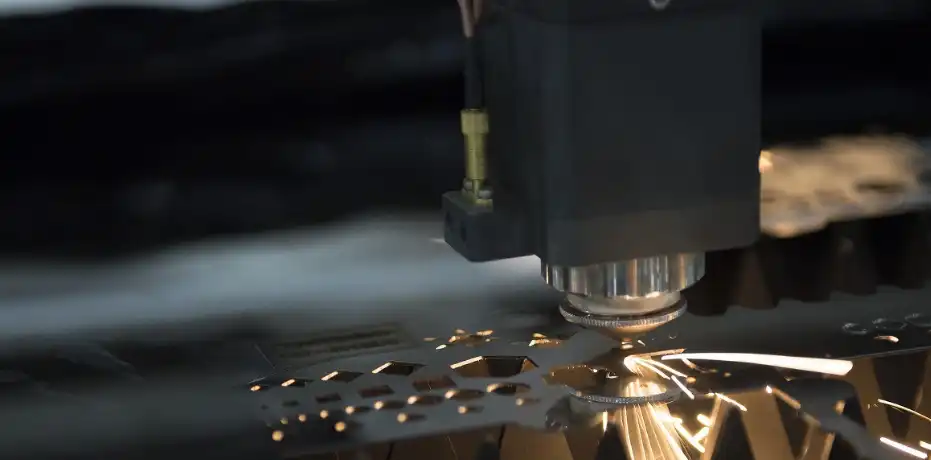
Understanding CCD Engraving and Cutting Technology
What Makes Vision-Guided Systems Different?
Traditional engraving uses pre-programmed measurements and assumes that the material is placed perfectly. This problem is solved by CCD technology, which adds "machine vision." Industrial cameras take pictures of the workpiece in real time and instantly find registration lines or printed contours. Within milliseconds, advanced image processing algorithms can extract edges, find circles, and match templates. These algorithms can also account for material rotation, expansion, or contraction, which can happen during thermal printing or transport.
Small businesses benefit a lot from this automation because it gets rid of the need to pay workers by the hour for alignment. One operator can watch over several machines, and the time it takes to set up each job goes from minutes to seconds. You can process KT board, PVC, acrylic, and other medium-hardness materials without having to recalibrate mechanical fixtures between orders, which gives you a lot more material options.
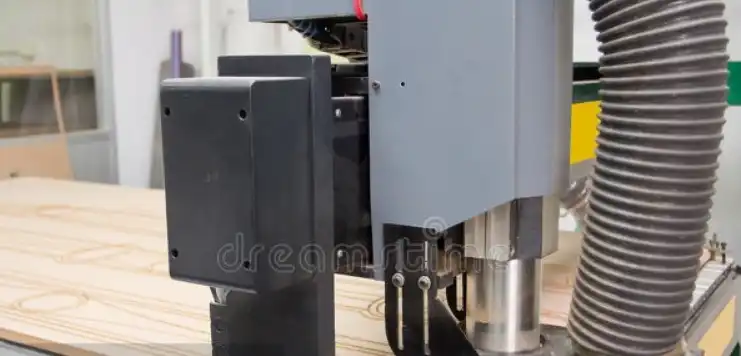
Core Technical Properties That Matter
It all starts with optical accuracy. Industrial cameras with 5MP to 20MP resolution work with fast DSP chips to process images right away. Motion accuracy is still very important, and positional repeatability within ±0.08mm makes sure that the cutting path follows complicated graphic borders correctly. Hardware standards include frames made of high-rigidity aluminum that don't vibrate, cables that are shielded to block electromagnetic interference, and compliance with CE and ISO 9001 certifications that global distributors need.
This mixture is useful for shops that print on UV-coated plastic, textile factories that trim sublimated clothing patches, and electronics factories that cut flexible printed circuits where a 0.1mm difference can break the circuit. This technology works well when printed images need to line up perfectly with actual cuts.
Comparing CCD Engraving Machines with Other Engraving Technologies
Vision Systems vs. Fiber Laser Cutters
Many small businesses think about using fiber lasers for metalworking at first, but they don't think about how they can't be used for printed materials. Fiber lasers are great at cutting metals that reflect light, like aluminum and stainless steel, but they have trouble with materials that don't like being heated. Laser heat can melt or change the color of designs printed on PVC or foam board, ruining the quality of the images that people paid to have printed.
With their mechanical design and carbide blades, vision-guided routers make clean edges without any thermal damage. A similar laser system costs 30–40% more. They can work with tool sizes ranging from φ3.175mm to φ12.7mm, which is something that fixed-beam lasers can't do. The trade-off is faster processing for thick metals, where lasers are better. The right choice is based on how well you understand your main subject.
Accuracy and Speed Considerations
CO₂ laser engravers work well with non-metallic materials, but they don't have the location knowledge that CCD systems do. When you need to print changeable images, like on personalized promotional items or stickers with sequential numbers, CO2 lasers need to be repositioned by hand for each piece. This problem is solved by CCD cameras, which can scan mark points at speeds of more than 1500 mm/min and change the cutting path on the fly.
Traditional CNC routers that don't have vision systems need jigs, templates, and careful placement of the operator. This method works for making the same parts over and over, but it doesn't work when the job size gets smaller and the range of parts grows, which is usually the case in small businesses. Vision-guided routers are always the best choice for procurement teams that want to find the best balance between cost-effectiveness and operating freedom.
Top CCD Engraving and Cutting Machines for Small Businesses in 2026
Key Selection Criteria
Before you can choose the right tools, you need to know what your work area needs. Small 600x900mm systems work well for studios that make small signs and models, while 1300x2500mm platforms can handle full-sheet materials needed by bigger sign shops. Working accuracy standards are very important. For example, ±0.08mm repeatability is needed for professional results, while ±0.2mm tolerances may be enough for less difficult tasks.
Spindle power has a direct effect on how well materials work together. With a speed range of 6000 to 24000 rpm and a 3 kW spindle, this CCD engraving and cutting machine can handle soft foam board and rigid acrylic sheets up to 80 mm thick. Another important factor is software compatibility. For example, if the files are compatible with DST, PLT, DXF, AI, and DWG, then famous design programs like CorelDRAW and Adobe Illustrator will work without any problems.
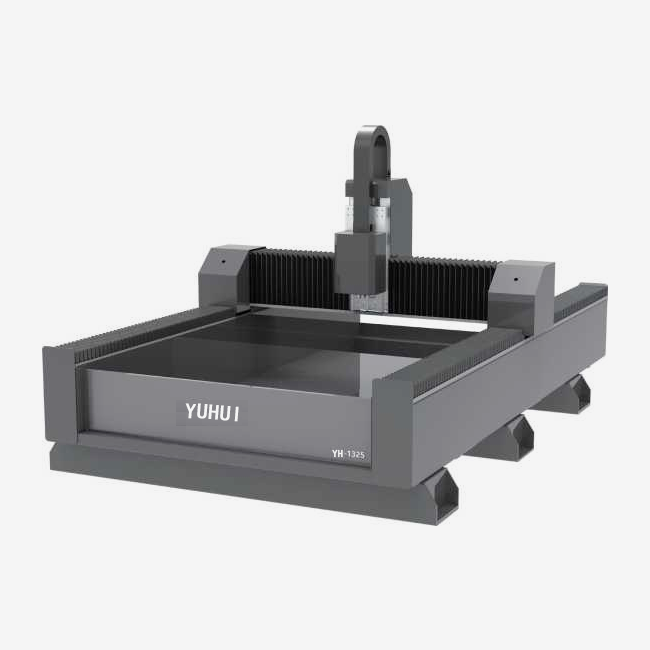
Yuhui YH-1325CCD: Built for Versatility
The YH-1325CCD has an advanced control system with one-click dual-system switching that lets workers move between flat cutting and 3D relief engraving without having to reprogram the machine. This machine can precisely cut edges for use in signs and printed image contour applications. It also fixes alignment problems that small businesses face every year and wastes thousands of dollars' worth of materials.
The built-in industrial camera does intelligent edge searching and automatic positioning, so there is no need to do any alignment by hand. The speed of recognition stays fast and stable, which makes production much more efficient than with systems that depend on operators. The work area is 1300mm x 2500mm and can fit standard sheets of material. The accuracy of ±0.08mm meets quality standards for decals for cars, promotional displays, and gaskets for electronic parts.
Having THF4 military-grade optical parts in the vision system makes it reliable for recognition even when the light level changes. The 3KW dust collection and 5.5KW vacuum system keep the work area clean while it's running all the time. This protects both the quality of the materials and the camera lenses. The ability to work with the LEYU control software makes training easier, and the G-code indication makes it possible to connect to current CAM processes.
Other Established Options
International names like Epilogue and Trotec charge high prices but have great build quality and service networks in North America. Han's Laser and GCC are in the middle of the pack. They offer good performance at more reasonable prices, making them ideal for businesses that want to see quick returns on their investment. Automation integrators that need non-standard configurations and the ability to connect to production lines like Bodor systems.
Startups that want to stay within their budgets usually start with entry-level systems that cost between $8,000 and $12,000. These systems have slower processing speeds and smaller work envelopes. Mid-range machines that cost between $15,000 and $25,000 balance accuracy and output, and they fit the needs of most small manufacturers. High-end platforms that cost more than $30,000 have advanced features that OEM operations need, such as rotary axis support and multi-tool changers.
How to Buy and Maintain Your CCD Engraving and Cutting Machine?
Sourcing and Procurement Channels
When it comes to B2B buyers, buying directly from manufacturers is the best deal. When you buy from a qualified seller like Yuhui Laser directly, you don't have to pay markups that can add 25 to 40 percent to the cost of the equipment. Our 14-business-day production wait time keeps projects on track, and we have a lot of stock so that basic configurations can be shipped right away.
Authorized dealers offer better local service, but they usually charge more to cover their costs. Online business-to-business (B2B) sites like Alibaba connect buyers with verified suppliers, but buyers still need to do their research before making a purchase. They should look for CE and ISO certifications, ask for video demonstrations, and confirm the terms of after-sales service. Leasing through equipment financing companies spreads out costs over 24 to 60 months, which helps growing businesses keep their working capital.
Maintenance Best Practices
Preventive repair saves your investment and makes CCD engraving and cutting machines last longer. The vision system keeps correct tool-to-camera offset readings by calibrating the cameras once a month. Clean the optical lenses with anhydrous alcohol to stop detection mistakes caused by dust that lowers the quality of the cut. To keep damage to a minimum, grease linear tracks and ball screws every three months using the manufacturer's recommended greases.
Every week, the vacuum table needs to be checked for blockages that weaken the force needed to hold the material down. Spindle bearings need to be checked every 500 hours of use. Listen for noises or vibrations that don't make sense, which could mean they're wearing out too quickly. By replacing worn router bits before the edge quality drops, you can avoid secondary operations and customer complaints. Our 450-day after-sales service program includes extended technical support, such as remote diagnostics and shipping replacement parts, so that when problems do happen, there is as little downtime as possible.
Making the Right Choice: A Decision Support Framework for Small Business Procurement
Defining Your Use Case
The variety of materials used has the biggest impact on the tools that are needed. Sign shops that work with foam board, acrylic, and PVC need systems that can handle different thicknesses without having to change tools all the time. Standard CNC routers don't have the fabric stretching compensation algorithms that textile operations need. For FPC trimming and membrane switch cutting, electronics makers need very high accuracy, less than ±0.05 mm.
Capacity planning is based on predictions of production volumes. Entry-level systems can work for single-shift operations that make 20 to 50 pieces per day, but multi-shift factories that want to make 200 or more units need industrial-grade platforms with reinforced gantries and longer duty cycles. Even though budgets are still limited, only looking at the original purchase price fails to see the total cost of ownership. When figuring out ROI, don't forget to include upkeep costs, consumables costs, and productivity gains.
Key Evaluation Metrics
Software compatibility determines how easy it is to integrate. Machines that can read industry-standard file formats like DXF and AI can easily integrate with current design workflows, but machines that can only read proprietary formats slow things down. Processing speed strikes a balance between speed and accuracy. Faster traverse rates increase output, but too fast speeds can damage the quality of the edges on complex outlines.
Carefully look over the warranty's benefits. Basic one-year guarantees cover problems with the way the product was made, but not things that wear out quickly, like cutter bits and vacuum pumps. Extended service agreements that cover everything for 450 days give businesses peace of mind, especially those that don't have their own technical staff. It's very important that vendors respond quickly. Before signing contracts, try contact channels, ask for references from customers, and check to see if parts are available.
OEM buyers and automation integrators need to be able to customize products more and more. Structure, function, and software that are flexible let equipment change as business needs do. Long-term partnerships that go beyond just buying equipment can be formed with suppliers who offer structure customization, smart system upgrades, and technical R&D support.
Conclusion
Vision-guided engraving technology has grown up to become an easy-to-use option for small businesses that want accuracy without a lot of hassle. Knowing the technical specs, like the camera's resolution, how well it tracks motion, and how flexible the material is, helps you make smart decisions about what to buy. When you look at CCD systems next to laser and other common technologies, you can see that they have clear advantages when it comes to cost-effectiveness, handling materials that are sensitive to temperature, and automated positioning that manual operations can't match. When you choose equipment based on its working area, spindle power, software compatibility, and after-sales assistance, you can be sure that its skills match your business's needs. With regular repair, you can make your CCD engraving and cutting machine last longer and keep its efficiency, so you can use it for many years without any problems.
FAQ
What materials can vision-guided routers process effectively?
Medium-hardness materials work great with these methods. That includes KT board, PVC sheets, plastic panels, wood composites, and foam board up to 80 mm thick. When they work with printed surfaces, they don't damage them with heat like lasers would. When machines use polarized lens filters and changeable LED lights to get rid of glare during identification, reflective materials work well.
How does the CCD system compensate for material deformation?
Advanced algorithms use non-linear deformation compensation to find multiple registration marks and change the cutting path based on where the marks are actually located. This method fixes problems caused by heat expansion during printing, mechanical stretching in fabrics, or rotational misalignment during material loading, so the accuracy stays the same across the whole work area.
What ongoing costs should buyers anticipate?
Plan for things that will break, like carbide router bits ($15 to $50 each; lasts 40 to 100 hours, depending on material), vacuum pump filter replacements ($30 to $80 every three months), and dust collection bags ($20 every month). 4-6 kW of electricity are used on average during running. Factory techs charge $200 to $500 a year to do annual testing services.
Partner with a Trusted CCD Engraving and Cutting Machine Manufacturer
Join forces with a reliable company that makes CCD engraving and cutting machines. Yuhui Laser focuses on providing low-cost vision-guided engraving services for small manufacturers, distributors, and original equipment manufacturers (OEMs). Our YH-1325CCD system has THF4 military-grade optical parts and quality control that is CE-certified. It works reliably and comes with 450 days of service after the sale. Our 14-day production lead time keeps your projects on track, and factory-direct pricing gets rid of markups that aren't needed. We can make unique configurations that fit your production needs, such as changes to the structure, improvements to the functions, and the inclusion of intelligent automation. You can email our expert team at jianghui@yuhui-laser-tech.com to get personalized advice, competitive quotes, and full product details. Contact us today to talk about your particular application needs and find out how vision-guided robotics can change your engraving process.
References
1. Industrial Automation Society, "Vision-Guided Machining Systems: Technical Standards and Best Practices," 2023.
2. Chen, L., "CCD Camera Applications in Precision Manufacturing Equipment," Journal of Manufacturing Technology, vol. 45, no. 3, 2024.
3. Small Business Manufacturing Council, "Cost-Benefit Analysis of Automated Positioning Systems in Engraving Operations," 2024.
4. Anderson, R., "Material Processing Technologies: Comparative Analysis of Laser and Mechanical Systems," Manufacturing Engineering Review, 2023.
5. International Quality Standards Organization, "Optical Inspection Systems in CNC Applications: Certification Requirements," 2024.
6. Martinez, S., "ROI Metrics for Small Business Equipment Procurement: Case Studies in Engraving Technology," Business Equipment Quarterly, vol. 12, no. 2, 2024.
Contact us directly for customized solutions, quotations and long-term strategic cooperation.