- English
- French
- German
- Portuguese
- Spanish
- Russian
- Japanese
- Korean
- Arabic
- Greek
- German
- Turkish
- Italian
- Danish
- Romanian
- Indonesian
- Czech
- Afrikaans
- Swedish
- Polish
- Basque
- Catalan
- Esperanto
- Hindi
- Lao
- Albanian
- Amharic
- Armenian
- Azerbaijani
- Belarusian
- Bengali
- Bosnian
- Bulgarian
- Cebuano
- Chichewa
- Corsican
- Croatian
- Dutch
- Estonian
- Filipino
- Finnish
- Frisian
- Galician
- Georgian
- Gujarati
- Haitian
- Hausa
- Hawaiian
- Hebrew
- Hmong
- Hungarian
- Icelandic
- Igbo
- Javanese
- Kannada
- Kazakh
- Khmer
- Kurdish
- Kyrgyz
- Latin
- Latvian
- Lithuanian
- Luxembou..
- Macedonian
- Malagasy
- Malay
- Malayalam
- Maltese
- Maori
- Marathi
- Mongolian
- Burmese
- Nepali
- Norwegian
- Pashto
- Persian
- Punjabi
- Serbian
- Sesotho
- Sinhala
- Slovak
- Slovenian
- Somali
- Samoan
- Scots Gaelic
- Shona
- Sindhi
- Sundanese
- Swahili
- Tajik
- Tamil
- Telugu
- Thai
- Ukrainian
- Urdu
- Uzbek
- Vietnamese
- Welsh
- Xhosa
- Yiddish
- Yoruba
- Zulu
CNC Router for Advertising: Precision, Speed & ROI
Advertising firms have to make a big choice when they buy production equipment: how to keep quality high while also meeting tight client deadlines. Digital designs are turned into physical signs, displays, and marketing materials using an advertising CNC router, which provides computer-controlled precision. This technology gets rid of the mistakes that come with cutting things by hand, cuts down on waste by optimizing nesting, and makes it possible to make complex 3D objects that traditional methods can't. For companies that make signs, displays, and visual communications, these switches are a smart investment that has a direct effect on their ability to make money and their output capacity.
Understanding CNC Routers for Advertising Applications
The advertising business needs people who can handle different kinds of materials and turn things around quickly. Computer Numerical Control (CNC) cutters are built for this industry. Digital files tell a motorized spindle how to cut, engrave, or shape materials with repeated accuracy. Unlike hand tools, these machines can make hundreds of similar pieces with the same depth, edge quality, and accuracy in size.
Core Components That Drive Performance
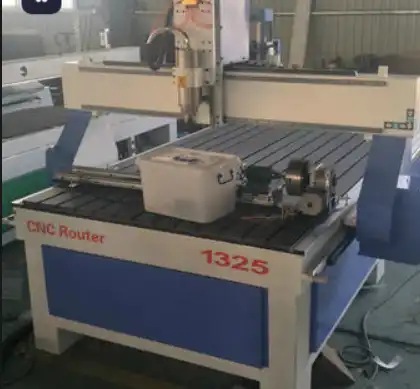
The wheel is the most important part of any cutter. High-quality models have spindles that are cooled by water and motors that don't use brushes. This makes them stable for long production runs. Between 6,000 and 24,000 RPM, these spindles let operators match speed to the hardness of the material. The gearbox system is also very important. High-precision rack and pinion gears allow for quick positioning while keeping the process smooth. This setup makes sure that the edges of acrylic sheets are clean and that the depth of the engraving is always the same on wood substrates.
The output quality is directly affected by how rigid the machine is. Frames made of welded steel that are industrial-grade don't vibrate when cutting at high speeds. This stops the tiny movements that cause edges to be uneven or dimensions to shift. This idea is shown by the Yuhui YH6090, YH1212, and YH1224 types, which are built to last and have working sizes that range from 600x900mm to 1200x2400mm to fit different production sizes. An advertising CNC router relies on this structural integrity to maintain long-term accuracy.
Material Compatibility in Advertising Work
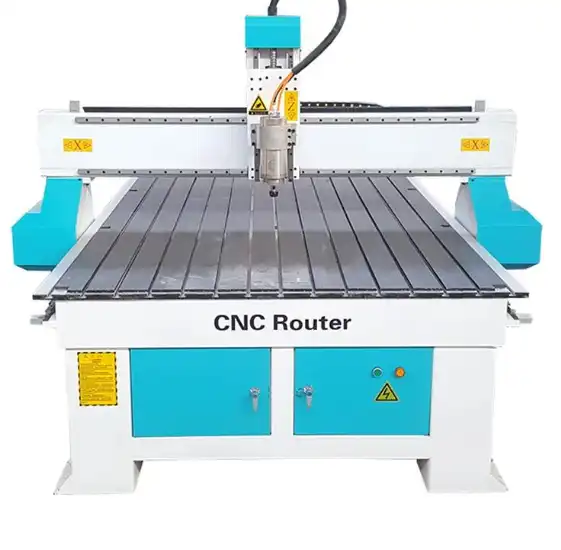
When making ads, you have to work with a lot of different materials. To keep the edges from melting, acrylic needs single-flute bits that are very sharp and feed rates that are just right. PVC boards cut cleanly at moderate speeds, but MDF needs to be vacuumed up to get rid of the dust that builds up during engraving. To get clean lines on foam materials without compressing them, you need special tools. With its variable spindle speeds and programmable feed rates, a flexible router can handle these differences and adapt to the properties of each material without needing to be recalibrated by hand.
CNC routers are useful for making wood signs because they can engrave deeply. With variable-depth carving, you can make logos and decorations that look more interesting by adding depth. Due to the layered structure of aluminum composite panels, which are often used for outdoor signs, they need to be worked with enough force and hard tools to stay accurate.
Benefits of Using CNC Routers in Advertising Production
In the advertising industry, how competitive you are depends on how efficiently you make things. Three important business needs are met by advertising CNC router automation: consistency, throughput, and cost management.
Precision That Protects Brand Integrity
A brand's reputation depends on how it looks. When a logo is used on more than one sign, the sizes, line weights, and spacing must all stay the same. Variables come into play when cutting by hand. For example, blade pressure, operator tiredness, and template wear can all cause differences. CNC routers get rid of these problems by following the same G-code instructions for every piece. This makes them very accurate, within ±0.05mm per 300mm. With this level of accuracy, a client's brand pieces will look the same whether they are made as the first unit or the thousandth.
Channel letters are a good example of this need. Even small mistakes in cutting or fitting the acrylic face can be seen with LED lighting. Precision CNC cutting makes sure that all of the parts are lined up correctly, which cuts down on assembly time and prevents the need for repair that hurts profits.
Speed That Meets Market Demands
Customers in stores usually only need a few days' notice to order signs. CNC cutters that can engrave at speeds of up to 6,000 mm/min can finish jobs that would take days of work by hand in just hours. Because of this throughput advantage, shops can take extra orders without stopping planned production. Automation also makes lights-out manufacturing possible, which means that properly trained machines can run without being watched during off-hours. This improves production capacity without raising labor costs by the same amount.
Financial Impact Through Automation
Workflow optimization is more than just speeding things up. CAM software creates toolpaths that organize cutting sequences to be as efficient as possible and reduce the amount of air travel. When programming is optimized, nested layouts make the best use of the material, cutting waste from 30% when cutting by hand to less than 10%.
When it comes to custom fabrication, labor is the most variable cost. A single operator can run a CNC router and do finishing work or talk to clients at the same time. When compared to manual processes that need full attention, this productivity multiplier lowers the cost of labor per unit.
Material loss has a direct effect on the edges. By arranging parts in a way that leaves the least amount of waste, intelligent nesting algorithms are able to get 15-20% more useful material from each sheet. This efficiency saves a lot of money over the course of a production year, especially when using expensive materials like colored acrylics or specialty woods. When shops handle moderate amounts, the mix of shorter worker hours and higher material yield usually gives them a return on investment (ROI) within 18 to 24 months.
How to Choose the Right CNC Router for Your Advertising Business?
When choosing equipment, you have to make sure that the technical specs match the production needs. Over-specificating raises the cost of capital without improving operations, and under-specificating makes growth impossible by causing bottlenecks. Selecting the right advertising CNC router involves balancing current needs with future expansion.
Defining Your Production Profile
First, look at the types of materials and standard job sizes. 1.5–2.2KW spindles can work well for shops that make indoor signs out of plastic and PVC. More spindle power is helpful for operations that work with thicker materials or make a lot of things. The YH1212 model's 1200x1200mm working area is good for standard signage, while the YH1224's 1200x2400mm area can handle full sheet processing without having to move the workpiece.
The amount of production affects the choice of machine grade. Entry-level systems are used by shops that make 20 to 50 pieces a week, while industrial models with stronger parts can handle continuous use in high-volume settings. Check to see if your workflow needs to work across multiple shifts or if it can mostly be done during the day.
Technical Specifications That Matter
Positioning accuracy determines the quality of the finished product. Specifications with a range of ±0.05mm make sure that the dimensions stay the same from one production run to the next. Spindle speed range affects how versatile the material is—wider ranges, from 6,000 to 24,000 RPM, let you do both rough cutting and fine detail work without having to switch tools.
When evaluating, software compatibility should be taken into account. Industry-standard CAM packages like VCarve or Type3 work perfectly with machines that accept standard G-code. This compatibility saves the money you spent on training operators and design tools. Some companies make their own control systems, which make it harder to choose software and make you more dependent on them in the long term.
Transmissions have an effect on both speed and life. Rack and pinion drives are more accurate than lead screw systems but have faster turning rates. Because of this benefit, cycle times are shorter for large-format jobs where moving the paper around takes a lot of time.
Evaluating Manufacturer Support
The availability of technical support has a direct effect on the uptime of production. When you buy equipment from a well-known maker, it usually comes with full instructions, training materials, and quick service lines. Yuhui Laser offers 450 days of service after the sale, which goes beyond normal warranty times and shows that they are confident in the product's durability. This extra help lowers the risk during the important break-in time, when workers get used to the equipment and set up maintenance schedules.
Help with installation and training for operators speed up productive use. On-site commissioning from manufacturers makes sure that everything is set up and running correctly, and training programs shorten the learning curve that slows down early production. Delivery procedures are important, especially when buying things from other countries. Having good ties with goods carriers ensures safe transport and the right care of sensitive equipment.
Best Practices for Operating and Maintaining CNC Routers in Advertising
The quality of the output and how long the equipment lasts depend on how it is used and how often it is serviced. Maintaining an advanced CNC router requires a disciplined approach to both software and hardware care.
Safety Protocols and Operator Training
There are certain risks with CNC routers that need formal safety procedures. A lot of spinning energy is made by high-speed rollers, and sharp tools put you at risk of cutting yourself when you change bits. Operators should get training on how to stop in an emergency, how to put bits correctly, and how to safely move materials. To keep people from being exposed to particles, dust extraction systems must be used during all cuts. This is especially important when working with MDF or composite materials that make fine dust.
Personal protective equipment includes hearing protection in places where many machines are running at the same time and safety glasses to protect against chip ejection. Clear rules for starting up, running, and shutting down machines lower the chance of mistakes that hurt the machines or put people in danger.
Maintenance Schedules That Prevent Downtime
Regular repair keeps things working correctly and makes them last longer. Every day, they check the tools for wear, clean the dust off of the linear rails, and make sure that the cooling systems keep the right fluid levels. Water-cooled spindles need to have their coolant checked once a week to keep them from getting too hot, which damages the bearings inside. Lubricating drive parts once a month according to the manufacturer's instructions stops them from wearing out too quickly and keeps the motion smooth.
Every three months, the mechanical balance and electrical links should be checked. Adjusting rack and pinion systems on a regular basis is a good way to keep the backlash in check, while checking the tension in belt-driven systems is necessary. These regular checks find problems as they start to happen, before they become major problems that stop production. Keeping detailed service records helps find patterns and guides decisions about what replacement parts to stock.
Software Optimization for Production Efficiency
CAM programming has a big effect on cycle times and the life of tools. Toolpath strategies that work well balance speed with the quality of the surface. Roughing passes quickly remove large amounts of material with fast feeds, while finishing passes at slower speeds give customers the edge quality they want. Most of the time, climb milling gives plastics a better edge finish than regular milling while using fewer tools.
Organizing cutting sequences cuts down on time spent doing nothing. Group all actions that need the same tool together before changing the programming tool. This cuts down on setup pauses. Place small parts close to the edges of the material to make them easier to remove after cutting while still providing enough hold-down during processing. When compared to the default CAM output, these programming tweaks can cut job cycle times by 20 to 30 percent.
Maximizing Your Advertising ROI with CNC Routers
Using advertising CNC router technology in a smart way gives you benefits over your competitors that go beyond simple automation of production.
High-Value Application Scenarios
Custom architectural signage is a high-margin business opportunity that can't be taken advantage of efficiently with manual methods. CNC machines can make intricate designs, complicated relief carvings, and integrated LED channels that are priced very highly. Being able to safely quote on these projects because you know your production capabilities match your design goals opens up market areas that are usually dominated by specialized fabricators.
There is a growing need for personalized promotional items and limited-edition displays, and small-batch customization meets that need. By getting rid of the costs of setting up jigs and forms, CNC technology makes single-unit production possible. Because of this, shops can take orders that rivals can't because they have to meet minimum order standards.
Displays at the point of sale need to be the same in all of a store's locations. Precision CNC cutting makes sure that modular parts fit right when they are put together in the field. This cuts down on installation work and service calls that hurt profits. This dependability makes customers trust you, which leads to more business.
Equipment Features That Enhance Value
When a shop can work with more than one medium, it can take on more jobs itself instead of hiring someone else to do them. Routers that work with wood, plastic, PVC, and aluminum composite panels get rid of the need for planning and the delays that come with hiring someone else to do work. This vertical integration cuts down on lead times and raises margins.
Automatic tool changes and vacuum table hold-down systems are examples of automation features that make work easier for operators. This means that one person can handle multiple stages of production at the same time. These improvements in efficiency add up over the course of a day's worth of production, which greatly boosts the facility's useful capacity without the need for physical expansion.
The Yuhui Advertising CNC Router line has these features that create value: a water-cooled spindle that is reliable; high-precision gearbox systems; and a wide range of materials that can be used with it. CE and ISO licenses show that a business meets foreign standards for quality and safety, which is very important for businesses that sell to people in other countries or to export markets.
Future-Proofing Through Technology Integration
Advertising production is changing because of new technologies. IoT-enabled machines can track production and send out maintenance alerts before they break down, which cuts down on unplanned downtime. This connection lets managers keep an eye on how the equipment is being used and find problems by analyzing data instead of guessing.
Integration with workflow management systems makes the whole job process smooth, from entering an order to planning production and finishing the job. Automated file preparation cuts down on mistakes and speeds up the start of a job, and real-time updates on the status of production make it easier to communicate with clients and manage their expectations.
When shops invest in CNC technology now, they should think about getting equipment that can be expanded in the future. Modular machines that can be updated with software can adapt to changing production needs without having to be replaced completely. This method protects investments in capital while keeping technical skills competitive.
Conclusion
Advertising CNC router technology has changed the way advertising is made from a craft that required a lot of handwork to a manufacturing process that is precise and scalable. When shops have accurate placement, a wide range of materials, and efficient machinery, they can keep quality high while keeping costs low and meeting tight deadlines. To choose the right tools, you need to carefully look at the production needs, technical specs, and the manufacturer's support options. Proper use and upkeep of equipment extends its life and improves the quality of its output, while smart use of CNC capabilities creates lucrative market possibilities. Advertising companies that do well see these machines not just as tools for cutting things, but also as strategic assets that help them grow, stand out, and make money over the long term.
FAQ
What materials can an advertising CNC router process effectively?
Acrylic, PVC, MDF, wood, foam, and aluminum composite panels can all be cut with a good router. Different materials need different tools and settings. For example, acrylic needs sharp single-flute bits to keep it from melting, while wood can handle more aggressive feeds. The Yuhui models can handle this range of materials because they have variable spindle speeds (6,000 to 24,000 RPM) and programmable feed rates that change based on the material. A high-quality advertising CNC router is defined by this versatility.
How long does programming typically take for new designs?
For 15 to 30 minutes, CAM code and toolpath testing are needed for simple 2D cutting jobs. Complex 3D relief work or projects with multiple operations may take a few hours to start, but that time spent makes programs that can be used again and again. Operators with a lot of experience make template sets that cut down on the time it takes to program common tasks.
Are financing options available for high-end machines?
A lot of manufacturers and distributors of equipment offer financing options to businesses that qualify. Terms depend on how good your credit is and how much the equipment is worth. When you buy directly from a factory like Yuhui Laser, you can often get better pricing that makes borrowing more cost-effective than when you go through a reseller.
Partner with a Trusted Advertising CNC Router Manufacturer
Yuhui Laser focuses on precise advertising CNC router solutions designed to meet the needs of advertising production. Our machines have reliable water-cooled spindles, high-precision rack and pinion gearboxes, and a lot of different ways to move materials. They are CE-certified systems. We help fabricators and wholesalers by offering factory-direct prices, 14-day production wait times, and full 450-day after-sales service that goes far beyond standard warranties. Our engineering team can change things about a workflow to meet specific needs, like the size of the equipment or how it works with other software. Email our team at jianghui@yuhui-laser-tech.com to talk about how our routers can help your production and speed up your return on investment (ROI) through proven technology and a responsive partnership.
References
1. Miller, R. (2023). Industrial CNC Systems: Applications in Modern Manufacturing. Technical Press International.
2. Anderson, P. & Chen, L. (2024). Precision Machining for Visual Communications. Manufacturing Technology Review, 18(3), 112-128.
3. Roberts, K. (2023). CAD/CAM Integration in Sign Production Workflows. Digital Fabrication Quarterly, 7(2), 45-61.
4. Thompson, J. (2024). Material Processing Techniques for Advertising Substrates. Industrial Equipment Journal, 31(1), 78-94.
5. Williams, S. (2023). Cost Analysis of Automated vs. Manual Fabrication Methods. Production Management Studies, 14(4), 203-219.
6. Zhang, H. & Kumar, A. (2024). Emerging Technologies in CNC Control Systems. Advanced Manufacturing Research, 22(2), 156-172.
Contact us directly for customized solutions, quotations and long-term strategic cooperation.