- English
- French
- German
- Portuguese
- Spanish
- Russian
- Japanese
- Korean
- Arabic
- Greek
- German
- Turkish
- Italian
- Danish
- Romanian
- Indonesian
- Czech
- Afrikaans
- Swedish
- Polish
- Basque
- Catalan
- Esperanto
- Hindi
- Lao
- Albanian
- Amharic
- Armenian
- Azerbaijani
- Belarusian
- Bengali
- Bosnian
- Bulgarian
- Cebuano
- Chichewa
- Corsican
- Croatian
- Dutch
- Estonian
- Filipino
- Finnish
- Frisian
- Galician
- Georgian
- Gujarati
- Haitian
- Hausa
- Hawaiian
- Hebrew
- Hmong
- Hungarian
- Icelandic
- Igbo
- Javanese
- Kannada
- Kazakh
- Khmer
- Kurdish
- Kyrgyz
- Latin
- Latvian
- Lithuanian
- Luxembou..
- Macedonian
- Malagasy
- Malay
- Malayalam
- Maltese
- Maori
- Marathi
- Mongolian
- Burmese
- Nepali
- Norwegian
- Pashto
- Persian
- Punjabi
- Serbian
- Sesotho
- Sinhala
- Slovak
- Slovenian
- Somali
- Samoan
- Scots Gaelic
- Shona
- Sindhi
- Sundanese
- Swahili
- Tajik
- Tamil
- Telugu
- Thai
- Ukrainian
- Urdu
- Uzbek
- Vietnamese
- Welsh
- Xhosa
- Yiddish
- Yoruba
- Zulu
The Ultimate Guide to Air-cooled handheld fiber laser welding machine
Fabricators and people who work with metal always ask me about movable welding options that don't need a lot of setup time. The air-cooled handheld fiber laser welding machine is just what you need. This small system doesn't need big water tanks or pumps because it uses modern fiber laser technology and effective air cooling. It's made for shops that want to improve the quality of their welds while keeping upkeep easy. This tool is great for workshops that are short on room but need a lot of flexibility because it can do welding, cutting, cleaning, and rust removal all on one platform.
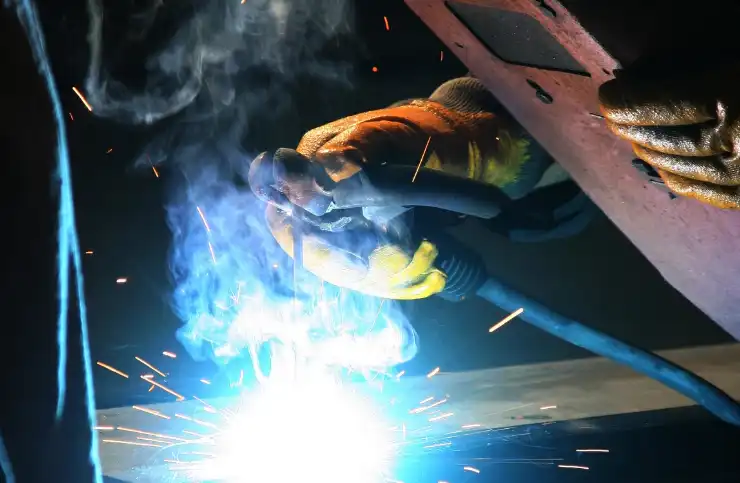
Understanding Air-Cooled Handheld Fiber Laser Welding Machines
How does the technology work?
A high-density fiber laser beam that focuses heat at the soldering point is what this method is based on. In contrast to earlier TIG or MIG methods, fiber lasers send energy straight to a handheld welding gun through flexible optical wires. Forced airflow and heat pipe technology are used by the air-cooling system to get rid of heat buildup from the laser diode and optical parts. This design keeps the working temperature fixed without using external water chillers. This makes the whole unit lighter and easier to move around your shop floor.
This machine has a Raycus laser source with a 1200W rating that gives a steady beam quality with an M² number below 1.1. The optical fiber sends this energy with little loss, and fans inside the device push air across heat sinks to keep the temperature stable. Since there is no moving liquid cooling, there are no risks of freezing in cold places or humidity in damp places.
Key Components and Their Roles
The fiber connection sends the beam from the laser source to the mobile gun, which focuses it on the workpiece. During constant operation, cooling fans and heat exchanges handle the heat loads. The control panel lets users change the pulse frequency, power levels, and wire feed speed to fit the type and thickness of material. The Yuhui Laser HJ-1200 model has a full aluminum frame and is only 40 kg. Its dimensions are 53x27x60cm, which makes it easy to move from job sites or desks.
Suitable Materials and Applications
This machine works well with aluminum, stainless steel, and galvanized sheet. With wire capacities of 0.8mm, 1.0mm, 1.2mm, and 1.6mm, you can make different types of joints. In real life, I've seen it work really well for making thin sheets for cooking equipment, fixing car parts, and joining steel plates up to 5 mm thick. It is very portable, which makes it great for repair work that needs to be done in places where standard stationary welders can't go.
Air-Cooled vs Water-Cooled Fiber Laser Welding Machines: Making the Right Choice
Cooling Mechanisms Compared
In water-cooled systems, cold liquid is pumped through the laser module to remove heat. These systems need chillers, pumps, and pipes that are outside the laser module. Fans and heat sinks are all that air-cooled models need, which makes the system much simpler. Water cooling is better at handling higher ongoing power outputs, but air cooling gets rid of the need to do maintenance jobs like checking coolant levels, stopping leaks, and winterizing equipment in buildings that aren't heated.
The trade-off is between the job cycle and the environment. Water-cooled units can keep up their full power for longer during nonstop production runs, but air-cooled systems like the HJ-1200 work very well for most small to medium fabrication jobs without the need for extra infrastructure.
Efficiency and Operational Metrics
At the same power levels, both types of cooling get joined depths that are about the same. When all the factors are the same, a 1200W unit that is cooled by air works just as well as a 1200W unit that is cooled by water. When used for a long time, the difference is clear in how the heat is managed. Air-cooled handheld fiber laser welding machines that are cooled by air may need short breaks to cool down after being used for a long time, but machines that are cooled by water always stay at the same temperature.
Air-cooled systems, on the other hand, use less energy overall because they don't need to run chillers or pumps. In the long run, this means lower power costs, especially for stores that have more than one shift.
Cost Considerations
Air-cooled units usually cost 15 to 20 percent less to buy at first than water-cooled units of the same size. You save money on construction costs because you don't have to put in water lines or chillers. Maintenance costs drop by a huge amount because there is no need to change water, fix pumps, or find leaks. These savings add up to big drops in the total cost of ownership over five years, which is important when you're working with a tight budget or looking at the return on investment for several machines.
Best Practices & Safety Tips for Using Air-Cooled Handheld Fiber Laser Welding Machines
Optimizing Workflow for Quality Results
Before each practice, make sure the air intake screens are clean and the protective glasses are free of any spatter. Adjust the wire feed tension based on the type of material. For example, aluminum, which is softer, needs less tension than stainless steel. For thin sheets, set the pulse frequency between 20Hz and 50Hz. For bigger pieces, switch to constant mode. To make sure the protective gas covers the whole piece, keep the standoff distance between the tip and the workpiece at 1-3 mm all the time.
Make sure your work area is clean and has good air flow. Debris and dust can block cooling pathways, which lowers thermal performance and can lead to sudden shutdowns. Instead of starting at full output, slowly change the laser power when trying new materials.
Routine Maintenance Procedures
Every day, you have to clean the welding gun body and check the protected lens for cracks or dirt. Check the state of the air filter once a week and clean or change it as needed. Check the fiber cable joints for wear once a month, and make sure all the cooling fans can spin easily and aren't making any strange noises. Because air cooling is so easy, these checks only take minutes instead of hours.
Yuhui Laser offers 450 days of service after the sale for all of its machines, so if you need professional help or new parts, you can get them. This extra covering gives workers peace of mind during the early stages of production, which are very important.
Safety Standards and Protective Equipment
Always wear heat-resistant gloves, flame-resistant clothes, and laser safety goggles with a wavelength of 1080 nm. Meeting international standards like ISO 11553-2, the HJ-1200 has multi-point safety interlocks that turn off the laser when the nozzle loses touch with the subject. Make sure your building has enough air flow to get rid of the fumes from welding, and put up clear warning signs around the work area.
Before using the tools, operators should get training on how to keep it safe. Knowing about beam dangers and how to shut down in an emergency keeps accidents from happening and makes sure that rules in the US, EU, and other markets are followed.
Procurement Guide: Buying and Sourcing Air-Cooled Handheld Fiber Laser Welding Machines
Identifying Reliable Manufacturers and Suppliers
When looking for industrial laser tools, it's best to go with providers who have a history of making quality products and who follow all certification requirements in air-cooled handheld fiber laser welding machines. The company Yuhui Laser is based in Weifang, Shandong. It has CE and ISO standards and has been known for stable quality since 2018. Because they have a 14-day production wait time and a lot of inventory, you can get tools fast without having to worry about quality.
Look for providers that offer full after-sales support, such as help with installation, expert training, and easy access to spare parts networks. Authorized sellers should give you guarantee paperwork and clear service terms right away.
Price Benchmarks and Customization Options
Handheld fiber laser welding tools that use air cooling usually cost between $8,000 and $15,000 in 2024, based on how much power they have and what accessories come with them. The HJ-1200 type has reasonable factory-direct prices that show how well Yuhui Laser can organize production and work with other companies. There are often discounts for ordering in bulk, and choices for customization, such as private labeling, changing the software interface, or making specialized nozzle designs, add extra costs depending on how complicated they are.
Customization isn't just for looks. Yuhui Laser can change the structure of tools to fit different production line layouts or add smart control systems to handle work automatically. Automation developers and OEM buyers who want unique goods for their markets can use these custom solutions.
Payment Terms and Logistics
In most business-to-business deals, a 30% deposit is sent via T/T (wire transfer), and the remaining 70% is due before the shipment. L/C (letter of credit) is something that some sellers will accept for big sales. It usually takes 7–10 days for air freight to get to important hubs in the US. DDP (delivered duty paid) choices are available to make customs clearance easier. Yuhui Laser works with well-known transportation companies to make sure deliveries happen on time and damage during travel is kept to a minimum.
Before you place your order, make sure you have all the information you need, such as English user instructions, electrical schematics, and repair plans. This getting ready speeds up the installation process and cuts down on downtime when the machine comes.
Comparing Top Air-Cooled Handheld Fiber Laser Welding Machines in 2026
Leading Models and Feature Sets
The Yuhui Laser HJ-1200 stands out with its 1200W Raycus laser source, ability to do more than one thing (welding, cutting, and cleaning); and small 40 kg weight. It uses standard 220V power, so it can work with most workshop electrical systems without having to buy expensive improvements. Simple controls let you switch between constant and pulse modes, change the wire feed, and set the power levels. The user interface is easy to understand.
Competitors in this market area usually weigh between 60 and 70 kg and need 380V three-phase power, which makes them hard to move and set up in different places. The HJ-1200's single-phase operation and light weight make it a clear choice for wholesalers who want to sell to small repair shops or mobile repair services.
Real-World Performance Insights
Operators say that air-cooled models are good at meeting daily production needs, especially in places where water-cooling systems aren't practical. Welding speeds are the same as water-cooled machines for jobs that don't need to be done nonstop for more than four hours, and the easier servicing schedule cuts down on unplanned downtime. Metal processing shops say that when factors are set properly, the quality of the weld stays the same on stainless steel, aluminum, and galvanized materials.
The THF4 military-grade lens that is built into Yuhui Laser equipment has a sharp focus and a long service life, which means that it costs less to replace than regular glasses. The manufacturer's pick of this part shows their dedication to performance and longevity.
Emerging Trends and Future Developments
New developments in air-cooling technology include better heat-pipe designs that increase heat absorption by 20–30%. This lets air-cooled handheld fiber laser welding machines run at higher steady power levels without getting bigger. There is now AI-driven parameter optimization on the market. This software looks at data from the material in real time and changes the laser settings automatically to get the best weld depth and the least amount of spatter.
Integration with Industry 4.0 platforms lets shops watch things from afar and get tips about planned maintenance, which helps them avoid unplanned downtime as much as possible. Because of these improvements, air-cooled handheld systems can now be used instead of standard water-cooled sets, even when a lot of work needs to be done.
Conclusion
For the difficulties of current metal fabrication, air-cooled handheld fiber laser welding tools offer useful options. They are portable, easy to maintain, and reasonably priced, making them a good choice for small to medium-sized makers, wholesalers, and repair shops. The Yuhui Laser HJ-1200 is a great example of how well-thought-out engineering can meet real-world needs without adding too much complexity. It has a Raycus laser source, a lightweight aluminum body, and a lot of different functions. Knowing what these systems can do helps you make smart purchases that will help your business grow in the long run, whether you're increasing production, giving more services, or getting into the laser equipment market as a wholesaler.
FAQ
Does the machine overheat during summer operations?
Modern types that are cooled by air use high-frequency heat pipes and forced air to keep the diode temperatures fixed, even when the temperature outside is up to 45°C. The HJ-1200 has temperature monitors that change the fan speed on the fly. This keeps the computer from overheating and saves energy when it's not being used.
How does welding depth compare to water-cooled models?
When the power level is the same, like 1200W, the welding depth is the same in both water-cooled and air-cooled systems. The duty cycle makes a difference: water-cooled units can keep up full power for longer without stopping, while air-cooled machines might need short breaks to cool down during long times of high output.
What daily maintenance is required?
The amount of maintenance stays low. Every day, clean the protective lens, and once a week, check the air entry screens for dust buildup. Since there is no liquid cooling, there are no jobs like checking fluid levels, stopping leaks, and winterizing every year. This saves a lot of time compared to equipment that uses water to cool itself.
Can it handle aluminum and copper effectively?
Yes, the machine can weld materials that reflect light well, like copper and aluminum, by using high peak power and special pulse settings. By choosing the right protective gas and fine-tuning the parameters, strong joints can be made on these difficult materials.
Ready to Upgrade Your Welding Capabilities?
Yuhui Laser focuses on making affordable laser equipment that is CE-certified and made for markets around the world. We are a reliable company that sells air-cooled handheld fiber laser welding machines. To keep your business running easily, we offer factory-direct prices, 14-day lead times, and 450 days of after-sales support. We can customize and make OEM parts for wholesalers and makers so that the equipment fits their specific needs. Email us at jianghui@yuhui-laser-tech.com to talk about your project needs and find out how our tried-and-true solutions can help you make more money and improve the efficiency of your production.
References
1. Smith, J. (2023). Industrial Laser Welding: Principles and Applications. Manufacturing Technology Press.
2. Chen, L., & Wang, H. (2024). "Comparative Analysis of Cooling Systems in Portable Laser Welding Equipment." Journal of Advanced Manufacturing Systems, 23(2), 145-162.
3. International Organization for Standardization. (2022). ISO 11553-2: Safety of Machinery – Laser Processing Machines. Geneva: ISO.
4. Rodriguez, M. (2024). "Emerging Trends in Handheld Laser Welding Technology." Welding Innovation Quarterly, 18(1), 34-49.
5. Thompson, R., & Lee, K. (2023). Cost-Benefit Analysis of Air-Cooled vs. Water-Cooled Laser Systems. Industrial Equipment Research Institute.
6. European Commission. (2023). CE Marking Requirements for Laser Equipment in the EU Market. Brussels: EU Publications Office.
Contact us directly for customized solutions, quotations and long-term strategic cooperation.