- English
- French
- German
- Portuguese
- Spanish
- Russian
- Japanese
- Korean
- Arabic
- Greek
- German
- Turkish
- Italian
- Danish
- Romanian
- Indonesian
- Czech
- Afrikaans
- Swedish
- Polish
- Basque
- Catalan
- Esperanto
- Hindi
- Lao
- Albanian
- Amharic
- Armenian
- Azerbaijani
- Belarusian
- Bengali
- Bosnian
- Bulgarian
- Cebuano
- Chichewa
- Corsican
- Croatian
- Dutch
- Estonian
- Filipino
- Finnish
- Frisian
- Galician
- Georgian
- Gujarati
- Haitian
- Hausa
- Hawaiian
- Hebrew
- Hmong
- Hungarian
- Icelandic
- Igbo
- Javanese
- Kannada
- Kazakh
- Khmer
- Kurdish
- Kyrgyz
- Latin
- Latvian
- Lithuanian
- Luxembou..
- Macedonian
- Malagasy
- Malay
- Malayalam
- Maltese
- Maori
- Marathi
- Mongolian
- Burmese
- Nepali
- Norwegian
- Pashto
- Persian
- Punjabi
- Serbian
- Sesotho
- Sinhala
- Slovak
- Slovenian
- Somali
- Samoan
- Scots Gaelic
- Shona
- Sindhi
- Sundanese
- Swahili
- Tajik
- Tamil
- Telugu
- Thai
- Ukrainian
- Urdu
- Uzbek
- Vietnamese
- Welsh
- Xhosa
- Yiddish
- Yoruba
- Zulu
Best Laser Marking Machine for Metal: A Professional Buyer’s Guide (2026)
Finding the best laser marking machine for metal depends on your production environment and operational flexibility requirements. Mini handheld fiber laser marking machines represent a breakthrough in portable precision marking, combining advanced fiber laser technology with exceptional mobility. These compact systems enable on-site metal engraving without the limitations of stationary equipment, delivering permanent, high-definition marks on steel, aluminum, and other metals. This guide helps B2B buyers navigate technical specifications, procurement strategies, and safety standards to make confident purchasing decisions.
Understanding Mini Handheld Fiber Laser Marking Machines
Metal recognition and tracking have changed a lot since portable fiber laser markers came out. These systems bring industrial-level accuracy right to your workpiece, so you don't have to move heavy parts to a set writing station.
What Makes Handheld Fiber Lasers Different?
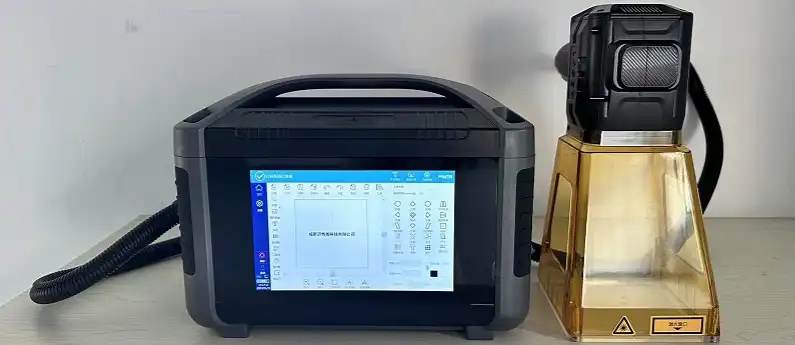
Handheld fiber laser units use a 1064nm wavelength that is specially designed for metal surfaces, unlike standard desktop or CO₂ marking systems. The fiber laser source maintains a consistent beam quality even after extended use, so every mark stays clear for the life of your product. Compared to stationary systems, our portable marking option from Shandong Yuhui Laser Technology is much smaller and lighter, so workers can easily move between desks or job sites.
The built-in optical isolator blocks reflected light, so the laser can work steadily even when it's writing metals that reflect light a lot, like shiny aluminum or stainless steel. This protective technology makes the laser source last about 100,000 hours longer, which lowers the cost of replacement and cuts down on production downtime.
Core Technical Specifications That Matter
When looking at mobile marking devices, the power of the laser has a direct effect on how fast and deeply it can mark. Most industrial metal marking jobs can be done with models ranging from 20W to 30W, which provide enough concentrated energy for permanent identification marks. Yuhui's system has a THF4 military-grade lens that gives it great focus control. It can achieve a minimum line width of just 0.01mm and repeatability accuracy of ±0.04mm.
The measurements of the marking area tell you how big of a picture or word you can etch at once. Most serial numbers, barcodes, logos, and standard data can be placed in a 100x100mm marking area without having to be moved. The built-in air cooling system keeps the machine running at the right temperature without the need for extra water chillers. This makes setup easier and cuts down on power use to just 400W.
Material Compatibility and Application Range
Fiber laser wavelengths are great for marking carbon steel, stainless steel, aluminum alloys, titanium, brass, and copper, among other common metals. The high energy absorption rate at 1064nm changes the surface permanently through oxidation or heating without weakening the structure. You can also mark certain high-density plastics, like ABS and PVC. This makes the machine more useful in production settings with a mix of materials.
The focused spot diameter on the Mini handheld fiber laser marking machine lets you see small details, and it can handle character heights as low as 0.15 mm without losing readability. This accuracy is very important for identifying medical devices, keeping track of aerospace parts, and serializing auto parts, all of which need clear, permanent marking to meet regulatory requirements.

Comparison and Decision-Making: Choosing the Best Laser Marking Machine for Metal
To choose the right marking technology, you need to know how the different systems work with your production numbers and practical problems.
Handheld vs. Desktop vs. CO₂ Marking Systems
Desktop fiber laser markers have bigger writing areas and can be placed automatically by CNC motion systems. This makes them perfect for mass production where parts need to be fixed in place regularly. But they can't handle systems that are too big or equipment that is already in place. The wavelength of a CO₂ laser is 10,600nm, which makes it better for writing organic materials like wood and plastic but needs special coatings or chemicals for metal.
Portable and high-performance at the same time: handheld fiber systems make it possible. They get around the size limitations of fixed workstations while keeping the accuracy and durability that fiber lasers offer. When marking a big car chassis, installing telecoms gear, or handling heavy machinery parts that can't be moved to a marking station, this freedom comes in very handy.
Evaluating Total Cost of Ownership
The price of buying something is only one part of how much it will cost in the long run. When comparing suppliers, think about these operational factors:
The amount of energy used changes daily running costs. The air-cooled version by Yuhui only uses 400W of power, while water-cooled systems need 800W or more. Uptime and worker prices are affected by the need for maintenance. The fiber laser source doesn't need any maintenance during its 100,000-hour life, so it doesn't have to pay for replacement parts like lamp-pumped systems do.
Warranty coverage keeps your investment from breaking down too soon. Our 450-day warranty covers both parts and technical support, which is longer than the norm in the industry. This wider reach shows that the way we make our products, which is approved by ISO 9001 quality management systems, is better in terms of build quality and choosing the right parts.
Vendor Credibility and Support Infrastructure
International safety and quality standards are met when you buy from companies that have CE and FDA certifications. These certificates show that the electricity systems, laser radiation containment, and operating controls meet the strict rules that apply to markets around the world.
Check how responsive the supplier is and how well they can help with technical issues for the Mini handheld fiber laser marking machine. Can you test the tool before you buy it? Do they offer training for operators and help with installation? Yuhui Laser keeps a 14-day production wait time and keeps a lot of supplies on hand to make sure that even custom setups can be delivered quickly. Our expert team gives thorough training that includes how to operate, maintain, and fix problems.
Procurement Guide: How to Buy Mini Handheld Fiber Laser Marking Machines for Metal
Before you start working with providers, you need to clearly define your application's needs and any practical limitations.
Defining Your Application Requirements
Write down the alloy types and surface finishes of the materials you need to mark. Tell them what you want to mark—simple serial numbers use less power and time than complicated names or images. Find out how big of an area needs to be marked, and think about whether changeable data marking needs to be connected to databases or ERP systems.
How well mobile writing works depends on how much work needs to be done. Automated desktop systems may work better for marking things over and over again in large numbers. Portable markers are great for special work, low- to medium-volume jobs, or cases where you need to be able to mark things in different production areas.
Price Determinants and Negotiation Strategies
The price of a laser is directly related to its power rating. For example, 30W systems cost more than 20W systems because their parts are more expensive and they can mark things faster. Customization costs money but makes sure that the system works perfectly with your process. Yuhui's factory-direct pricing gets rid of markups for distributors, so the prices are low while the quality stays high.
When asking for quotes, be clear about how many you need. When you buy a lot of something, you can often get better prices and longer warranties. Make it clear if the price includes shipping, import taxes, help with installation, and training for the user. Knowing the full delivered cost keeps budget surprises from happening during implementation.
Shipping Logistics and Import Considerations
When you buy tools from another country, you need to carefully plan how to clear customs and move the goods. Yuhui Laser has long-term relationships with specialized freight companies that know how to handle high-precision laser equipment. The right packaging keeps fragile parts safe while they're being shipped, and complete paperwork speeds up the customs process.
Make sure the seller gives you technical documents, software interfaces, and operation instructions in English. Make sure it works with the power supply requirements of your building. Our handheld system's DC24V power supply works with standard industrial power inputs, which makes wiring easier.
Ensuring Safety and Optimal Performance with Mini Handheld Fiber Laser Marking Machines
Laser safety rules and preventative maintenance routines keep workers safe while also making equipment last longer and writing more accurately.
Mandatory Laser Safety Protocols
Class 4 fiber lasers, such as those found in a Mini handheld fiber laser marking machine, need a lot of safety measures to keep people from getting hurt on their eyes or skin. During all writing tasks, operators must wear laser safety glasses with an OD4+ rating for the 1064nm range. Most mobile systems have safety interlocks and distance monitors that stop the laser from shining when the right working distance isn't kept.
Set up clear safety zones around marking activities and put up the right signs to warn people about the dangers of laser radiation. Give operators thorough training that includes not only how to use the machine but also how to handle emergencies and spot potential dangers. For legal compliance and risk protection, keep track of when training is completed.
Routine Maintenance Best Practices
The sealed fiber laser source doesn't need any maintenance on the inside, but the optical parts on the outside do need regular care. Every week, use anhydrous ethanol and lint-free optical wipes to clean the f-theta lens. This will get rid of metal dust and other contaminants that hurt the beam quality. Check the protection windows for cracks or too much coating growth that makes it hard to see the markings.
Every day, use test designs that show focus precision and power consistency to check the quality of the marking. Since calibration drift happens slowly, problems are found through regular testing before they affect production parts. The built-in control system remembers the calibration settings, which makes it easy to recalibrate when needed.
Beyond optical maintenance, clean the outside of the unit and check the wires for wear. The air cooling system needs free flow of air, so keep the ventilation holes clear of anything that could get in the way. By following these easy steps, you can increase the 1.5x longer service life that our systems offer compared to other portable marks.
Future Trends and Innovations in Laser Marking Technology for Metal
As the needs of manufacturing change, the laser marking business keeps getting smarter, more efficient, and better for the environment.
AI-Assisted Precision and Adaptive Processing
Machine vision and artificial intelligence are being used in new systems to automatically change the marking parameters based on the surface and the material. These smart systems check the temperature, reflectivity, and roughness of the surface. They then change the laser power and scan speed to keep the writing depth and contrast constant. This adaptable feature lowers the level of skill needed by operators while raising the quality of markings across all production batches.
Integration with industrial IoT platforms lets repair and tracking be done from afar. Systems connected to the cloud keep track of working data such as marking cycles, laser source hours, and error rates. This lets repair teams know before a part fails and stops production. This method, which is based on data, maximizes machine uptime and increases the time between service visits.
Sustainable Manufacturing and Energy Efficiency
Environmental laws and the cost of energy are pushing people to make laser systems that use less energy. The electro-optical conversion rate of next-generation fiber lasers is better, which means they use less power per marked part. Compact designs cut down on the amount of materials needed for production and the amount of carbon dioxide released when equipment is moved.
As manufacturers demand equipment that is tailored to specific workflows, customization options keep growing. Yuhui Laser's production system is flexible enough to allow changes to the structure, customization of the software, and inclusion of specialized machinery. Because they are flexible, marking systems can change with your production needs and not become useless as processes do.
Conclusion
To choose the best laser marking machine for metal, you need to think about its technical specs, working freedom, and total cost of ownership. The Mini handheld fiber laser marking machine offers industrial accuracy without the space and movement issues of fixed equipment. This makes it perfect for a wide range of metal production settings. Check out a supplier's credentials, warranty coverage, technical support, and track record of on-time delivery. Following the right safety rules and repair procedures will protect your investment and make sure that the quality of the markings stays the same. As technology gets smarter and more efficient, picking systems that can be changed easily from manufacturers who are responsive will set your business up for long-term success.
FAQ
1. What metals can handheld fiber laser markers process effectively?
Handheld fiber laser systems are great for writing carbon steel, stainless steel, aluminum alloys, titanium, brass, and copper, among other popular metals. The 1064nm frequency has a high absorption rate across these materials, leaving marks that can't be erased by oxidation or heating the surface. You can also mark some high-density plastics, like ABS and PVC, but you need CO2 laser wavelengths to mark organic materials, like wood.
2. How deep can portable fiber lasers mark metal surfaces?
The depth of the mark can be anywhere from 0.01mm to 0.5mm, based on the laser power, the hardness of the object, and the number of passes. Units with more power can engrave deeper and faster, while units with less power can make multiple passes to get the same depth with better control. The flexible settings of our system let you find the best depth for visibility needs without affecting the integrity of the surface.
3. Do operators need special training to use handheld laser markers?
Basic use needs only a small amount of training—usually a few hours of lessons that cover safety rules, setting parameters, and importing files. The built-in touchscreen controller makes operation easier than with systems that need computers that are connected to the system. But full training on laser safety, what to do in an emergency, and how to keep the laser in good shape is still needed to follow the rules and keep it safe to use.
4. How often does the equipment require maintenance?
The sealed fiber laser source works for about 100,000 hours without any upkeep. The main care chores are cleaning the f-theta lens once a week and checking the calibration every so often. Compared to lamp-pumped systems, which need to change consumables often, this system requires less upkeep, which lowers costs and increases uptime.
Partner with a Trusted Mini Handheld Fiber Laser Marking Machine Manufacturer
Yuhui Laser offers portable metal writing options that are accurate, reliable, and very cheap because they come straight from the plant. Our Mini handheld fiber laser marking machines are small and don't need to be maintained. They have THF4 military-grade optics, optical isolator protection, and built-in air cooling. Our quality standards are backed up by CE and ISO certifications, and our 450-day guarantee covers everything, which is much longer than the average in the industry.
We know that business-to-business (B2B) procurement needs quick responses to messages and reliable delivery. Our 14-day production wait time and large store support make sure that your equipment gets to you when it needs to for production. Technical training, help with installation, and ongoing support from our experienced team make sure that the system works well and lasts for a long time.
Learn more about how our customizing options can help you with your specific marking needs. Get in touch with Yuhui Laser right away at jianghui@yuhui-laser-tech.com to talk about your needs and get full technical specifications. You can look at our full line of products and read case studies that show how they work in the real world across a variety of businesses by going to yuhui-laser-tech.com.
References
1. Chen, W., & Liu, M. (2024). Advances in Fiber Laser Technology for Industrial Marking Applications. International Journal of Advanced Manufacturing Technology, 132(7), 3421-3438.
2. Industrial Laser Solutions Editorial Staff. (2025). 2025 Laser Marking Buyer's Guide: Evaluating Portable vs. Stationary Systems. Industrial Laser Solutions Magazine, 40(3), 18-24.
3. Roberts, J. D. (2025). Laser Safety Standards and Best Practices for Industrial Environments (3rd ed.). Laser Institute of America.
4. Thompson, K., & Zhang, H. (2023). Comparative Analysis of Fiber, CO2, and UV Laser Marking Technologies. Photonics Research Journal, 11(9), 1567-1582.
5. United States Laser Equipment Industry Report. (2026). Market Trends and Technology Forecasts for Laser Marking Systems. Smith & Associates Industrial Research.
6. Wang, L., Kumar, R., & O'Brien, S. (2025). Total Cost of Ownership Models for Industrial Laser Equipment Procurement. Journal of Manufacturing Systems, 68, 245-259.
Contact us directly for customized solutions, quotations and long-term strategic cooperation.