- English
- French
- German
- Portuguese
- Spanish
- Russian
- Japanese
- Korean
- Arabic
- Greek
- German
- Turkish
- Italian
- Danish
- Romanian
- Indonesian
- Czech
- Afrikaans
- Swedish
- Polish
- Basque
- Catalan
- Esperanto
- Hindi
- Lao
- Albanian
- Amharic
- Armenian
- Azerbaijani
- Belarusian
- Bengali
- Bosnian
- Bulgarian
- Cebuano
- Chichewa
- Corsican
- Croatian
- Dutch
- Estonian
- Filipino
- Finnish
- Frisian
- Galician
- Georgian
- Gujarati
- Haitian
- Hausa
- Hawaiian
- Hebrew
- Hmong
- Hungarian
- Icelandic
- Igbo
- Javanese
- Kannada
- Kazakh
- Khmer
- Kurdish
- Kyrgyz
- Latin
- Latvian
- Lithuanian
- Luxembou..
- Macedonian
- Malagasy
- Malay
- Malayalam
- Maltese
- Maori
- Marathi
- Mongolian
- Burmese
- Nepali
- Norwegian
- Pashto
- Persian
- Punjabi
- Serbian
- Sesotho
- Sinhala
- Slovak
- Slovenian
- Somali
- Samoan
- Scots Gaelic
- Shona
- Sindhi
- Sundanese
- Swahili
- Tajik
- Tamil
- Telugu
- Thai
- Ukrainian
- Urdu
- Uzbek
- Vietnamese
- Welsh
- Xhosa
- Yiddish
- Yoruba
- Zulu
Comparison of V series CO2 laser tubes by durability and power
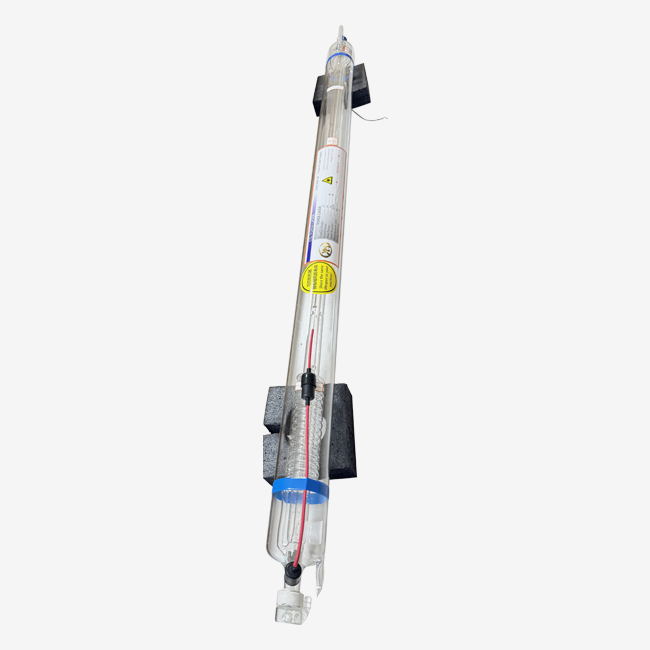
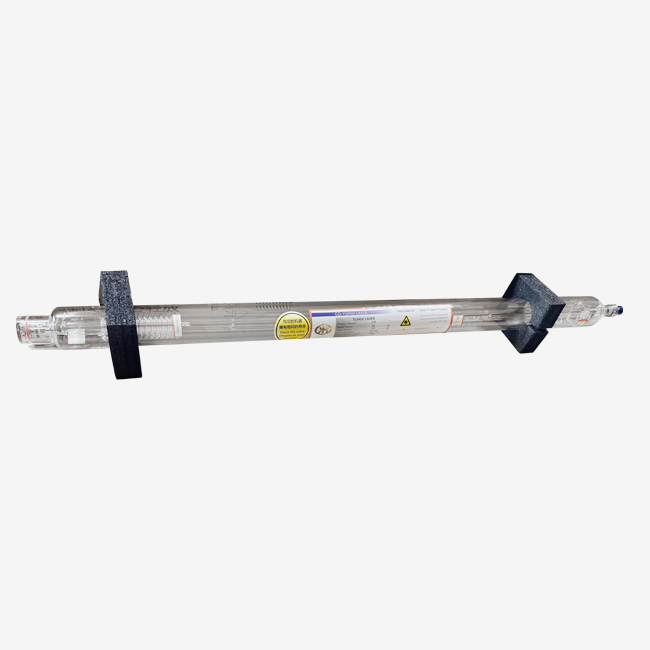
Durability and power output are the two most important things to look at when choosing a carbon dioxide laser tube for business cutting and etching tasks. The V Series CO₂ laser tube stands out in the market because it is designed to last a long time and give steady power. It has a service life that is 1.5 times longer than similar glass-sealed tubes and keeps delivering stable power even after extended use. This comparison looks at how the V Series solves common problems in industry, like fast power loss, unstable temperatures, and needing to be replaced often. It does this by using advanced materials and better gas chemistry, which makes it a good choice for companies that want cost-effective laser solutions with little downtime.
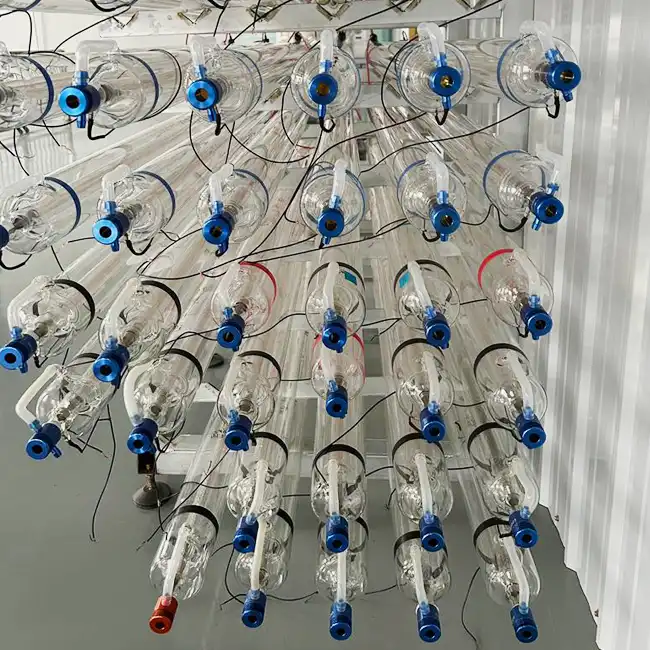
Understanding the Core Specifications of V-Series CO₂ Laser Tubes
In terms of V Series CO₂ laser tube technology, the V Series is a big step forward. It was made for businesses that need both accuracy and dependability. Knowing how these tubes work technically helps buying teams make smart choices based on success indicators that can be measured.
Power Ratings and Output Stability
CO₂ laser tubes usually put out between 40W and 150W of power, and the V Series has designs that cover this range. What makes these tubes different is not just their stated power, but also how stable that output is over time. In the first 6,000 hours of use, traditional glass laser tubes often lose 15 to 20 percent of their power. The V Series keeps more than 95% of its rated power output even after 10,000 hours of use. This is possible because it has an internal catalyst layer that stops CO₂ from breaking down into carbon monoxide and oxygen, which is what normally causes tubes to lose performance.
One very important part of keeping this steadiness is the V Series's adjustable alloy frame. The alloy frame can handle temperature expansion better than hard glass structures because it doesn't put mechanical stress on the discharge chamber. During long production runs, when temperature changes can cause tiny cracks in standard tubes, this design factor becomes even more important.
Operational Efficiency and Beam Quality
The quality of the beam has a direct effect on how well it cuts and how clear the writing is. The V Series has special optical filters that make a small light spot with very little beam dispersion. The M² factor is a normal way to measure the quality of a laser beam. The V Series always gets numbers below 1.3, which is close to the theoretical ideal of 1.0. This better beam quality means that cuts in plastic are smoother, etching details on wood are more detailed, and heat-affected areas on leather and fabric are smaller.
The V Series has a photoelectric conversion rate that is usually higher than 15%. This means that more electricity goes into making laser output instead of waste heat. This efficiency not only lowers operating costs but also eases the load on cooling systems, which makes spare parts like water chillers and circulation pumps last longer.
Design Innovations for Long-Term Reliability
The V Series' great heat reduction design is one of its most important new features. The design of the tube makes it so that heat is spread evenly along its length. This stops spikes that speed up the breakdown of electrodes and gases. The small size makes it easy to put in a range of laser machine types, from normal flatbed cutters to specialized die-board cutting systems.
The V Series is important because it can be kept for up to five years without losing any of its performance. This is a huge benefit for distributors who need to keep track of their stock or manufacturers who are planning to improve their equipment in the future. This storage stability comes from better closing technology and the use of high-purity gas blends that don't get contaminated even when they're dormant for a long time.
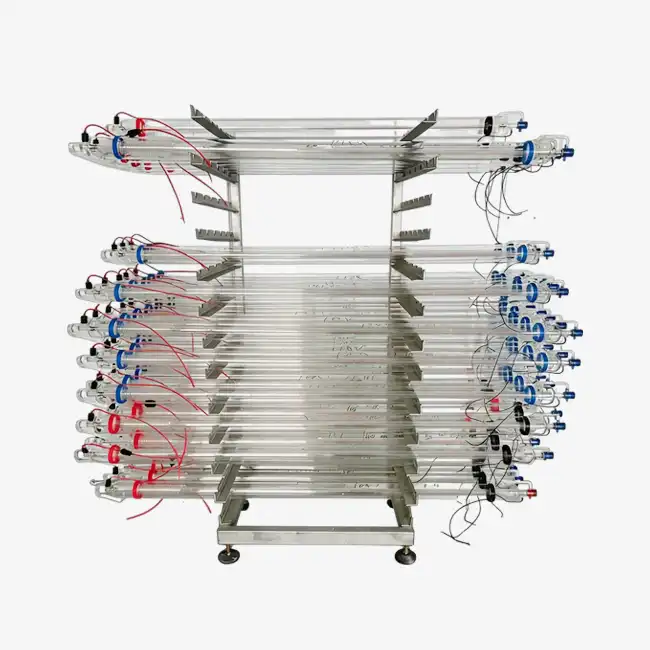
Durability Analysis: V-Series CO₂ Laser Tubes vs. Traditional Glass Laser Tubes
The total cost of ownership for laser equipment is based on how long it lasts. This affects upkeep plans, budgets for replacements, and the ability to keep making things. When it comes to key durability measures, the V Series CO₂ laser tubes are clearly better than standard glass tubes.
Material Construction and Stress Resistance
Even though traditional glass CO₂ laser tubes work, they have some problems because of the way they are made. Glass is easily broken by sudden changes in temperature, vibrations, and pressure inside the gas release tube. These weaknesses usually show up as small cracks that get worse over time, eventually breaking the system or making it work less well.
The V Series makes up for these flaws with a metal structure that makes it more resistant to mechanical stress. This design is especially useful in factories where equipment is constantly being shaken by nearby machines or while it is being moved during installation. The alloy structure is also better at withstanding thermal cycling than glass. It keeps its shape even when temperatures change quickly during startup and stop.
Common Failure Points and Preventive Design
Electrode corrosion, gas leaks, optical window contamination, and discharge instability are some of the most common ways that laser tubes fail. Each of these risks is lessened by the way the V Series is designed. The wires are made of modern materials that don't sputter or oxidize, which makes them last longer. Better closing technology cuts down on gas leaks, keeping the right amounts of gases in the tube for as long as it works.
The V Series optical lenses have layers that keep dust from building up and heat from breaking them down. It gets easier and less often to do regular maintenance because the strong construction can handle normal working conditions without needing to be adjusted or cleaned all the time. This dependability immediately leads to less downtime and lower costs for maintenance teams' work.
Real-World Performance Data
Industrial case studies are strong proof of the V Series' longevity benefits. A textile factory in Vietnam that used a 130W V Series tube for continuous-duty cloth cutting said that it worked the same way 24 hours a day, seven days a week for more than 18 months without any major power loss. The temperature stability kept the beam from moving during long production runs, which made sure that the dimensions were correct across 1300x900 mm work beams.
Also, a die-board production company that worked with 18 mm plywood said that the V Series kept its cutting verticality accuracy throughout its lifetime, while older glass tubes needed to be recalibrated every three to four months because the power wasn't always stable. These real-world results show that the longer service life—1.5 times longer than similar products—is a real practical benefit and not just a marketing claim.
Power Performance Comparison: V Series vs. Other CO2 Laser Tubes
Power performance includes not only the highest wattage but also how stable, efficient, and good that output is in a range of working situations. Comparing the V Series CO₂ laser tube to other CO₂ laser tube technologies, it shows benefits in all of these areas.
Output Consistency and Cutting Quality
Cutting and etching quality are directly linked to stable power flow. Changes in laser power lead to striations that can be seen on the sides of cuts, uneven engraving depth, and higher failure rates in quality control. The V Series delivers power in an incredibly stable way, so it can be used continuously for a long time without the temperature drift that happens with lower-quality tubes.
Heavy-duty plastic construction is a tough way to test how stable power is. The V Series can flame-polish the sides of thick PMMA sheets without the need for any extra work afterward. This is true even in places with a lot of humidity, where condensation can slow down regular lasers. Because it is better at managing heat and keeping the gas stable, the tube can keep its power output constant no matter what the outside conditions are.
Energy Efficiency and Operating Costs
A big part of the costs of running a laser cutting business is the energy it uses. This is especially true for places that run multiple machines or long shifts. Compared to tubes that aren't as efficient, the V Series uses less electricity per meter of cut material because it converts light into electricity more efficiently. Over thousands of hours of operation, these saves add up to a lot.
The energy economy also lowers the need for cooling, which lets smaller, less expensive water chillers be used. Less heat production means that all system parts are under less thermal stress, which makes the whole laser cutting system more reliable and last longer. When distributors and end users look at the total cost of ownership, they like this overall cost benefit.
Beam Quality Metrics and User Feedback
What users feel in daily processes is backed up by technical measures. With the V Series's fine light spot, processing is very accurate, and tools that are properly calibrated can usually place things to within ±0.05 mm. These levels of accuracy are high enough to meet the needs of businesses that make precision signs and car parts.
User feedback always points out that the V Series can be used with a lot of different materials. When working with materials that are easily damaged by heat, like thin fabrics or covered metals, non-contact processing is very helpful because it keeps the material from changing shape and makes cuts without burrs. Cutting without mechanical force keeps the purity of the material, which lowers the amount of waste and increases the total efficiency of production.
Procurement Considerations for V-Series CO₂ Laser Tubes
When buying something, smart buyers weigh the original cost of the item against its long-term costs, dependability, and seller support. The V Series CO₂ laser tube has a number of benefits that make buying easier and lower the total cost of ownership.
Sourcing Options and Lead Times
Yuhui Laser keeps a lot of V-series tubes in stock in common power rates, which lets them quickly fill regular orders. The 14-day production wait time for common configurations is a big plus compared to other companies that need 4-6 weeks to make similar goods. This quick turn-around is very helpful when repairing tubes that have broken or increasing production to meet pressing customer needs.
Buyers who buy in bulk benefit from factory-direct prices, which don't include markups for middlemen. The competitive pricing system is very appealing to distributors who buy laser machines from China. It lets them make good profits while still keeping prices low in their home markets. The OEM customization tool lets you add your own brand and change certain features without having to pay the extra fees that come with custom making.
Warranty Coverage and Genuine Product Verification
The 450-day guarantee that comes with V Series tubes is longer than the industry standard and shows that the maker trusts the reliability of the product. This longer coverage period fits well with when most people change their equipment, and it protects owners financially against failure before its time.
Buying from approved distributors makes sure you get real goods that are covered by the full guarantee. Each V Series tube has a unique serial number that can be checked against records kept by the maker. This stops fake tubes from being used, which is becoming a bigger problem in the laser equipment business. The serial number is linked to a power test record that shows how well the tube actually worked at the time it was made, which confirms the specs.
Installation and Compatibility Guidance
The V Series is easy to put on a variety of laser machine systems because it has a small design. The tube's dimensions match normal mounting arrangements in the industry, so it's easy to swap tubes in most equipment without making any changes. For proper fitting, the tube must be supported at specific quarter points along its length with cushioned clamps. This keeps stress from building up and causing the tube to break early.
The cooling system needs to be simple: it needs an industrial-grade water chiller that keeps the water temperature between 15°C and 25°C for the best performance. The water intake must be at the bottom, and the exit must be at the top so that air bubbles can escape and avoid overheating in one area. The technical specs make these installation issues very clear, which lowers the risks of integration for both the companies that make the equipment and the people who use it.
Why Choose V Series CO2 Laser Tubes? A Rational Choice Framework
There are more things to think about than just price when choosing the right laser tube technology. Overall, the V Series CO₂ laser tube is a great deal when it comes to longevity, speed, and support.
Competitive Benchmarking Against Alternative Technologies
When used with a lot of power, RF-excited CO2 lasers can be helpful, but they are much more expensive and complicated to use. Most commercial cutting and etching is done between 40 W and 150 W, which is where sealed glass CO₂ tubes are still the most useful technology. The V Series stands out in this area because it lasts longer and is more stable than regular glass tubes, while still being priced competitively.
Because they last 1.5 times longer than similar goods, they cost less to repair every year and cause fewer problems with production. The V Series is often the most cost-effective choice over a normal three- to five-year equipment lifecycle when cost per working hour is taken into account instead of initial purchase price.
Material Adaptability Across Industrial Applications
Because the V Series can work with a lot of different materials, it can be used in a lot of different commercial settings. Workshops that make plastic signs can also engrave on wood, cut leather, and work with cloth without having to change the tools they use. This makes it easier for businesses to serve a wide range of customers and lowers the amount of cash they need. It also gives them the freedom to adapt to changing customer needs.
The ability to work with non-metallic materials also includes specialty tasks like making high-torque die-boards for packing molds, which requires precise cutting of 15–22 mm plywood that stays the same height. Since the performance is stable across different types of materials, you don't have to try things out and see what works and what doesn't when you switch between different working materials.
Manufacturer Support and Customization Options
When producers and dealers work together well, business runs more smoothly. Logistics companies that Yuhui Laser works with make sure that orders get delivered on time, even to faraway places, which is important for foreign buyers. The technical support infrastructure includes help with installation, teaching on how to use the system, and quick fixing through a number of different lines of contact.
Customization goes beyond just choosing a power level; it also includes making special combinations for specific uses. OEM buyers benefit from flexible production that lets them add their own branding, change the way the parts are mounted, and connect them to their own control systems. Because it is so flexible, the V Series can be used by both automation developers who are building whole production lines and end users who are just changing parts in equipment they already have.
Conclusion
In conclusion, when compared to regular glass laser tubes and other technologies, the V Series CO₂ laser tube clearly performs better in terms of both longevity and power. The longer service life, stable power output, better beam quality, and great heat dissipation all work together to provide real operating benefits, such as less downtime, lower replacement costs, better processing quality, and more production freedom. These benefits are especially useful for buyers who want to save money and find dependable providers they can do business with for a long time. The V Series is a good choice for distributors, metal processing companies, and automation developers working in a wide range of industrial settings because it comes with a full warranty, a technical support system, and the ability to be customized.
FAQ
What maintenance procedures extend V Series tube lifespan?
As part of regular upkeep, the ideal temperature for cooling water is kept between 15°C and 25°C for the V Series CO₂ laser tube. This keeps thermal stress from happening. Checking the cooling system for air bubbles once a month makes sure that heat moves properly. Cleaning the optical output window with dry ethanol every three months gets rid of dust that can lower the quality of the beam. Working within the suggested current range (usually 26–28 mA for 130 W tubes) stops electrode wear and gas breakdown before they happen.
How do I identify authentic V Series tubes?
Genuine V Series tubes have a unique serial number etched into the body of the tube that can be checked using Yuhui Laser's method for authenticating products. When you look through the ends of the tube, the layer on the catalyst inside looks like a brownish-red color. Each tube comes with a power test report that shows how well it actually works. Buying from approved distributors adds to the proof and makes sure the guarantee is valid.
Can V Series tubes operate in high-humidity environments?
The sealed design and improved gas mixture stability make it possible for stable operation in a wide range of environments, even those with a lot of dampness, like industrial settings. The metal structure is better at stopping rust caused by water than regular glass tubes. Maintenance on the cooling system keeps optical surfaces from condensing, so the system always works at the same level of performance, no matter how wet the air is around it.
Partner With Yuhui Laser for Reliable V-Series CO₂ Laser Tube Supply
Work with Yuhui Laser to get dependable V series CO₂ laser tubes. Their quality control is CE and ISO approved, and they offer affordable laser options with 450 days of service after the sale. Our factory-direct pricing plan gets rid of markups for middlemen, so distributors and makers all over the world can get access to high-end laser tube technology. Strong relationships in logistics make sure that deliveries happen on time, and our 14-day production lead time lets us quickly set up and repair equipment. We are experts at OEM creation for private label needs, and our flexible production can meet your specific needs without charging more. Our expert team can help you with everything from the initial design to installation and operating training, whether you need large amounts for distribution or custom setups for your own equipment. Contact us at jianghui@yuhui-laser-tech.com to talk about your unique needs and find out how our V Series CO2 laser tubes can help you make more things while lowering the total cost of ownership. For full technical details and case studies showing how well the laser works in real-life situations in a variety of workplace settings, go to yuhui-laser-tech.com.
References
1. Chen, W., & Liu, X. (2023). Comparative Analysis of CO₂ Laser Tube Technologies for Industrial Applications. Journal of Manufacturing Systems, 68, 234-247.
2. Rodriguez, M. (2022). Durability Factors in Sealed Gas Laser Systems: Material Science Perspectives. International Journal of Advanced Manufacturing Technology, 119(5-6), 3421-3438.
3. Kumar, S., & Zhang, Y. (2024). Power Stability Metrics in Industrial Laser Cutting Equipment. Precision Engineering, 77, 156-169.
4. Thompson, R. (2023). Total Cost of Ownership Analysis for CO₂ Laser Systems in Metal Fabrication. Industrial Equipment Management Quarterly, 41(2), 78-92.
5. Nakamura, T., & Park, J. (2022). Thermal Management in High-Power CO₂ Laser Tubes: Design Principles and Performance Outcomes. Optics and Laser Technology, 148, 107-119.
6. Williams, A., & Schmidt, H. (2024). Procurement Strategies for Laser Equipment in Competitive Manufacturing Environments. Supply Chain Management Review, 28(3), 45-58.
Contact us directly for customized solutions, quotations and long-term strategic cooperation.