- English
- French
- German
- Portuguese
- Spanish
- Russian
- Japanese
- Korean
- Arabic
- Greek
- German
- Turkish
- Italian
- Danish
- Romanian
- Indonesian
- Czech
- Afrikaans
- Swedish
- Polish
- Basque
- Catalan
- Esperanto
- Hindi
- Lao
- Albanian
- Amharic
- Armenian
- Azerbaijani
- Belarusian
- Bengali
- Bosnian
- Bulgarian
- Cebuano
- Chichewa
- Corsican
- Croatian
- Dutch
- Estonian
- Filipino
- Finnish
- Frisian
- Galician
- Georgian
- Gujarati
- Haitian
- Hausa
- Hawaiian
- Hebrew
- Hmong
- Hungarian
- Icelandic
- Igbo
- Javanese
- Kannada
- Kazakh
- Khmer
- Kurdish
- Kyrgyz
- Latin
- Latvian
- Lithuanian
- Luxembou..
- Macedonian
- Malagasy
- Malay
- Malayalam
- Maltese
- Maori
- Marathi
- Mongolian
- Burmese
- Nepali
- Norwegian
- Pashto
- Persian
- Punjabi
- Serbian
- Sesotho
- Sinhala
- Slovak
- Slovenian
- Somali
- Samoan
- Scots Gaelic
- Shona
- Sindhi
- Sundanese
- Swahili
- Tajik
- Tamil
- Telugu
- Thai
- Ukrainian
- Urdu
- Uzbek
- Vietnamese
- Welsh
- Xhosa
- Yiddish
- Yoruba
- Zulu
Top manufacturers of 60*60 high-precision fiber laser cutting machines
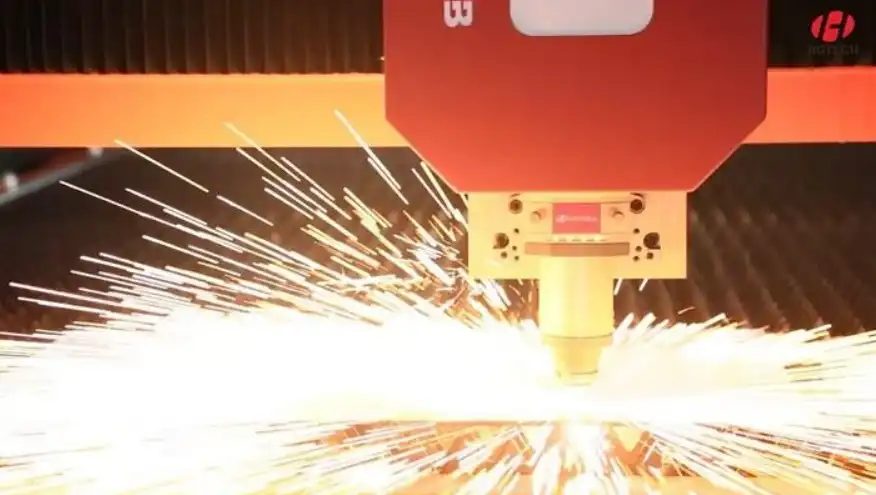
When procurement professionals look for the best makers of 60*60 high-precision fiber laser cutting machines, they come across a niche market segment that focuses on small, very accurate metal cutting systems. Within a 600mm x 600mm work area, the 6060 High-Precision Fiber Laser Cutting Machine is the latest in cutting-edge technology designed for making complex parts. Positioning accuracy of these tools is within ±0.03 mm, and repeat positioning accuracy is within ±0.02 mm. This makes them essential for businesses that need micron-level accuracy. Leading makers use advanced motor control systems and strong mechanical design to meet strict quality standards and offer customization options that meet specific production needs.
Introduction
Fiber laser cutting technology has completely changed the way metal is made by making it possible to be more precise and efficient than ever before. The small 60*60 size has become a smart choice for companies that need to meet strict tolerances for dimensions while also making the best use of important floor space. This guide talks about important choices that B2B buying workers have to make, like how to look at technical specs and choose reliable manufacturing partners. The information here comes from real-life examples in sheet metal casting, hardware manufacturing, and the production of precision components. It will help you make investment choices that meet both short-term business needs and long-term growth goals.
Understanding the Core Features of 60*60 High-Precision Fiber Laser Cutting Machines
Defining Physical Footprint and Precision Standards
The 600 mm x 600 mm work area makes this piece of industrial laser-cutting tools unique. The small size of this format makes it perfect for places where installation room is limited but processing needs extreme accuracy. Positioning accuracy for machines in this group is usually within ±0.01mm to ±0.03mm, and repeatability is usually within ±0.005mm to ±0.02mm. These specs are very important when cutting complicated shapes into thin-gauge metals or making parts where consistent dimensions affect how well they fit together. The smaller working area focuses structural stiffness, reducing shaking and thermal drift that can hurt the quality of cutting on bigger platforms.
Material Capabilities and Processing Advantages
Modern small fiber laser devices are very good at working with a wide range of metals. Focused fiber laser beams are good for cutting stainless steel, carbon steel, aluminum alloys, and copper because they leave behind less heat than other cutting methods. Processing speeds depend on the thickness of the material and the power of the laser. Systems with 1000W to 3000W sources can cut 3mm stainless steel at speeds of up to 10 to 15 meters per minute while keeping edges that are good enough for straight assembly. Another useful benefit is that fiber laser technology can turn electrical input into workable beam power at rates higher than 30%, which means that it is much cheaper to run than older CO₂ laser systems.

Operational Maintenance and Safety Protocols
High-precision small lasers need regular upkeep that focuses on keeping the optics clean, making sure the cooling system works well, and calibrating the motion system. As part of monthly inspections, safety lenses should be cleaned, the quality of the coolant should be checked, and the beam alignment should be confirmed. Many companies that make these systems make sure that they are safe by putting protected housings around them that meet Class 1 laser safety standards. This way, the user is not directly exposed to the beam radiation. Proper airflow is still very important because cutting metal creates fine particles that need to be removed using systems that are effective enough to meet local environmental standards. Machines that are well taken care of work reliably for more than 20,000 hours before they need major parts replaced.
Top 5 Manufacturers of 60*60 High-Precision Fiber-Laser Cutting Machines
Here are the top five companies that make 60*60 high-precision fiber laser-cutting machines.
Yuhui Laser - Innovation Through Customization
Shandong Yuhui Laser Technology has a great name because it is dedicated to customizing its products for each purpose and producing them quickly. The company's RJ-6060 model is a great example of their engineering theory. It has a small footprint and high-speed servo drives that let it hit 0.6G of acceleration and linkage speeds of up to 70m/min. This performance profile is especially useful in high-mix production settings where quick positioning between cutting processes has a direct effect on total throughput.
What sets Yuhui Laser apart from its competitors is its all-around approach to customer success. Weifang, Shandong Province, is home to the factory. Standard configurations have a 14-day wait time, but the factory keeps a lot of stock on hand to support faster shipping times. Their technical team offers a wide range of customization options, including changes to the structure, improvements to specific functions, and smart automation integration. OEM buyers and automation developers looking for unique solutions value these options the most.
Along with component-level excellence, the company's quality assurance system includes CE and ISO standards. For example, THF4 military-grade optical lenses maintain stable beam characteristics over long operating periods. Yuhui Laser offers 450 days of service after the sale for their equipment, which is a lot longer than the standard guarantee terms in the business. This longer support window addresses a major worry for foreign buyers by letting them know that they can still get professional help during the initial ramp-up and optimization stages of production.
Leading European Precision Engineering
European companies that make small laser cutting tools have decades of experience with precise engineering. Companies in Germany and Italy put a lot of emphasis on precise measurements. They often use linear motor drive systems and granite base structures to keep heat expansion to a minimum. It is common for these companies to charge high prices for their goods, which is backed up by high-quality construction and detailed process paperwork that makes ISO compliance monitoring easier. Their tools often have complex software with automatic nesting methods that make the best use of materials, which is very useful when working with expensive alloys.
Asian Technology Specialists
Several companies in Southeast Asia have come up with competing products that are good at both performance and price. These businesses take advantage of regional supply chain benefits and efficient production methods to make tools that meet international safety standards available at prices that most people can afford. Laser sources, cutting heads, and motion controls that are made in modern centers that follow strict quality standards are often Japanese or German core parts that go into their products. Different suppliers in this group have very different technical support systems, so it's important for international buyers to carefully check out the local service capabilities.
Established North American Brands
North American companies make machines for local markets that are built to meet certain regulatory standards and service demands. Their small laser systems usually have user-friendly interfaces that work best for users with different levels of skill, lots of monitoring tools that make troubleshooting easier, and easy access to replacement parts through regional distribution networks. These companies offer complete packages that include setup, training, and ongoing help with improving processes. These services lower the risks of operation but cost more.
Emerging Market Innovators
Manufacturers in industrial economies that are still growing are coming up with more and more good options that use modern technology and bold prices. Most of the time, these businesses use tried-and-true design architectures and put in place methods for continuous improvement that make performance standards better over time. If procurement workers are thinking about these suppliers, they should do a lot of research on where the parts come from, how quality control works, and how after-sales help is set up. Buyers often form successful partnerships when they make their performance standards clear and set up structured qualification processes, such as cutting trials on samples and factory checks.
These different types of manufacturers show how different business priorities—like focusing on total accuracy, customization options, low costs, or full support—affect how products are made and services are provided. A good way to choose a source is to know which goals match up with your unique production needs.
How to Evaluate and Choose the Best 60x60 Fiber Laser Cutting Machine Manufacturer
Critical Evaluation Criteria for Procurement Decisions
The first step in judging the quality of a build is to look at the skeletal parts. High-rigidity machine beds made of welded steel plate or cast iron keep vibrations from moving parts from getting to the cutting head. This directly affects the stability of the edge quality. High-end machines have absolute encoders paired with precision-grade ball screws or linear motors that get rid of slack and give real-time position input. It is important for thermal management systems, especially the cooling circuits that serve both the laser source and the cutting head, to have enough power to keep the working temperatures fixed during production shifts.
For precise proof, testing that goes beyond standard sheets is needed. Real-world skills can be seen by asking for sample cutting demos using your own production materials and part geometries. By looking at cut examples under a microscope, you can see how rough the edges are, how the dross forms, and how accurate the measurements are across the whole working area. Machines that consistently cut complicated shapes with little help from a user usually have better motion control algorithms and servo settings that are well-tuned.
Technology Comparison: Fiber Versus CO₂ Systems
When it comes to small metal cutting jobs, fiber laser technology—exemplified by the 60*60 high-precision fiber laser cutting machine—is clearly better than CO₂ devices. Flexible fiber optic lines make it easier to create motion systems while keeping the quality of the beams. Fiber lasers have a shorter wavelength—about 1.06 microns compared to 10.6 microns for CO₂—which makes them better at coupling with metals. This lets the 60*60 high-precision fiber laser cutting machine cut faster and use less power. Fiber systems are much cheaper to run than CO₂ lasers because they don't need to be maintained with expensive gases and optics that need to be replaced often.
CO2 technology still has some benefits for some uses, like cutting thick sections of some materials and working with materials that aren't metal. But for the 60*60 size that is usually used for precision metal parts up to 6 mm thick, fiber laser design offers better performance-to-cost ratios. When making a buy choice, the initial price should be weighed against the total costs of ownership, which include energy use, replacement parts, and maintenance labor over the equipment's useful life.
Supplier Verification and Risk Mitigation
Verification of credentials guards against suppliers lying about their credentials. It shows organizational maturity to ask for copies of ISO certifications, CE test results, and quality system documents. Checking references from current customers who use similar equipment in similar situations can give you an idea of how well the equipment really works and how quickly help responds. When buying something from another country, making sure there is a local service representative or set technical support methods in place can help avoid cases where broken equipment causes long periods of downtime because of problems with communication or getting replacement parts.
An after-sales commitment review should look at more than just the length of the guarantee. It should also look at specific coverage terms. Comprehensive warranties usually cover laser source performance promises, the ability to do diagnostics remotely, and clear answer times for technical questions. Manufacturers who offer organized training programs, including both initial operator education and continued assistance for advanced applications, show that they care about their customers' success in ways that go beyond just selling them tools.
Procurement Insights: Buying and Using 60x60 Fiber Laser Cutting Machines
Investment Analysis and Budget Planning
There is a big price range for small, high-precision fiber laser cutting machines that is due to differences in their capabilities and how the manufacturers place their products. Entry-level systems with 1000W laser sources and basic motion components usually cost between $35,000 and $50,000. These systems are good for handling thinner materials with modest throughput needs. Prices for middle-range sets with 1500W to 2000W sources, better motion systems, and full software packages usually run from $60,000 to $85,000. High-end machines with laser power choices up to 3000W, linear motor drives, and advanced automation interfaces can cost more than $100,000 to $120,000, but they work better in tough production settings.
The need for customization has a big effect on prices for the 60*60 high-precision fiber laser-cutting machine. Base equipment costs usually go up by 10 to 25 percent because of changes to the structure that allow it to work with automatic loading systems, the creation of custom software for specific cutting strategies, or the addition of safety features that meet government standards. Buyers should be smart about how they customize their 60*60 High Precision Fiber Laser Cutting Machine, telling the difference between features that are necessary for output and those that aren't necessary but don't add much value for the money.
Strategic Purchasing Considerations
Financing choices affect how you handle cash flow and how much it costs to buy something. You don't have to pay for everything up front if the manufacturer offers flexible payment terms, such as staged payments tied to production goals or equipment rental programs. Leasing agreements are especially helpful for businesses that are trying new market possibilities and want to keep their finances flexible more than owning assets. But buyers should carefully compare the total loan costs to the purchase prices and think about what this means for the leftover value.
Lead time management means coordinating when equipment is delivered and when the building needs to be prepared. Standard configuration machines from makers who keep stock usually ship within two to three weeks. Customized systems, on the other hand, may take six to twelve weeks, based on how complicated the changes are. Equipment arrival doesn't become a bottleneck because other tasks, like setting up the ventilation system, installing the electricity infrastructure, and getting ready for user training, are going on at the same time. Setting clear delivery dates and defining contractual milestones protects both parties by making sure that everyone knows what is expected of them and who is responsible for what.
Deployment and Training Requirements
Successful equipment rollout includes more than just installing the equipment. It also includes improving the process and making the operators more skilled. Manufacturers who offer full testing services usually set aside 3–5 days to set up the equipment, check its mechanical accuracy, and optimize the cutting parameters for the first time using customer materials. This investment in skilled commissioning pays off by speeding up the time it takes to get the machine ready for production and setting a baseline for future performance fixing.
How well an operation runs is directly related to how well the operators are trained. Effective programs combine learning about the basics of laser cutting with lots of hands-on practice that includes normal tasks, basic upkeep, and common problem-solving situations. Training more than one operator increases working flexibility and makes sure that team members remember what they've learned when they move on to other jobs. As production needs change, manufacturers who offer ongoing technical support, such as remote diagnostics and regular repeat training, can help operations keep running at their best.
Maintenance, Troubleshooting, and Precision Optimization for 60x60 Fiber Laser Machines
Preventive Maintenance Best Practices
Systematic repair plans keep equipment working precisely and stop it from breaking down when you least expect it. Every day, the operator should check the safety lenses for dirt, make sure the cooling system is working properly, and look at cut quality samples to see if there are any patterns of quality loss. A thorough cleaning of the cutting area, checking the lubrication state of the motion system, and making sure the gas pressure controls stay in the right settings are all part of weekly maintenance. On a monthly repair plan, more thorough checks are done, such as making sure the belt tension is correct, checking the integrity of the electrical connections, and doing calibration verification cuts.
Maintenance times for each component depend on how often they are used. Fiber laser sources from reputable manufacturers can usually work for 100,000 hours before they need to be serviced. However, how long they last relies on how clean the working area is and how often they are heated and cooled. Cutting head units need more regular maintenance. Depending on the type of material and the length of time it takes to process, protective lenses should be replaced every week to once a month. Scheduled lubrication according to maker instructions protects motion system parts like bearings and drive mechanisms from premature wear that lowers positioning accuracy.
Common Issue Resolution
When beam quality goes down, cutting speeds slow down, dross builds up, or edge quality isn't reliable. The first step in troubleshooting is to look at the optical path and see if the protective lenses, focusing lenses, and fiber connecting end sides are dirty. Problems with the cooling system, like not enough flow or too high a coolant temperature, can also make beam features worse. This is why checking the thermal system is an important part of diagnosing. A lot of new machines have beam-tracking sensors that let workers know when the power changes so that the quality of the cuts doesn't get much worse.
Most of the time, mechanical positioning mistakes are caused by wear on the motion system, changes in the control parameters, or temperature effects on the structure. Some ways to figure out what's wrong are to run standard test patterns that show problems with specific axes, look at the history of servo drive alarms for motion faults, and make sure that all mechanical parts are tight. Positional accuracy stays within specifications when precision measuring tools are used on a regular basis. This is especially important for machines that make parts with tight tolerance requirements.
Performance Optimization Strategies
To get the best cutting quality, you have to carefully adjust the laser power, cutting speed, help gas pressure, and focus position settings. Starting with the standard parameters suggested by the maker, operators should run organized tests in which they change one parameter while keeping the others the same. They should keep track of the results by measuring cut quality indicators in a planned way. This orderly approach helps you learn more about the process, which lets you quickly change parameters when you need to switch between types of material or sizes.
The choice of consumables affects both the quality of the cut and the costs of running the business. The purity of the assist gas directly affects how edges oxidize. For example, cutting stainless steel with high-purity nitrogen (99.99%+) makes edges that are bright and free of oxide, which is good for situations where cleaning the edges afterward would be too much work. Lower purity grades, on the other hand, may work well in less demanding uses and be less expensive. In the same way, choosing the right focusing lens combines the features of the focal spot with the lens's service life. For example, shorter focal length lenses produce smaller spot sizes for finer detail but need to be replaced more often because they are closer to the cutting zone.
Conclusion
To choose the best 60*60 high-precision fiber laser cutting machine, you need to look at its technical specifications, the reliability of the maker, and the total cost of ownership. When it comes to operations that need to prioritize making precise parts in buildings with limited room, the small format has strategic benefits. For procurement to go well, suppliers must be carefully evaluated, performance standards must be reasonable and in line with the needs of the application, and suppliers must be committed to regular upkeep. The information in this guide gives procurement professionals useful frameworks for choosing suppliers, understanding technical specifications, and putting into action operational best practices that make equipment more productive and last longer over its extended service life.
FAQ
What materials can a 60*60 high-precision fiber laser cutting machine process effectively?
These small fiber laser systems are great at cutting common metals like copper, brass, stainless steel, carbon steel, and aluminum alloys. The laser's maximum thickness depends on the type of material and its power. For example, a 2000W system can cut through 6mm of stainless steel, 8mm of carbon steel, and 4mm of aluminum. Copper and brass are highly reflective metals that need to be carefully optimized in terms of their parameters and may process more slowly than ferrous metals. Materials that aren't made of metal are usually not good candidates for use with fiber laser technology.
How does positioning accuracy impact my production quality?
The accuracy of positioning directly affects how consistent the dimensions are across all parts that are made. When properly kept and used, machines with a positioning accuracy of ±0.03mm can consistently hold part measurements within this range. Machines with higher accuracy standards are better for tasks that need tighter tolerances, like making parts with important fitting features. But to get the rated accuracy, the machine needs to be installed correctly on stable supports, calibrated regularly, and have the right controls in place to deal with temperature changes and shaking sources.
What warranty coverage should I expect from reputable manufacturers?
Standard guarantee terms usually last between 12 and 24 months and cover problems with the way the product was made and parts that break down under standard use. Premium makers offer longer warranty periods and include performance promises for the laser source, which make sure that the minimum output power is maintained during the warranty period. Comprehensive guarantees make it clear what they don't cover, which usually includes replacement parts, damage from improper use, and changes that were not authorized. Options for extended warranties or service contracts offer ongoing help beyond the normal terms. This is something to think about for operations where equipment downtime has a big effect on keeping the business running.
Partner with Yuhui Laser for Your Precision Cutting Needs
Our RJ-6060 compact fiber laser cutting machine from Yuhui Laser is a great deal. It was designed to meet the needs of producers who need precision without sacrificing output speed. Our factory-direct pricing plan gets rid of the markups that distributors add, and our 14-day production wait time makes sure that your products are sent out quickly, so you can stick to your project deadlines. Our dedication to long-term customer success is shown by the fact that we use THF4 military-grade optical components, quality standards that are approved by CE, and full 450-day after-sales service. If you are a maker of precision parts, an automation integrator, or an equipment distributor looking for a trusted 60*60 high-precision fiber laser cutting machine source, our technical team can make solutions that are tailored to your specific needs. You can reach us at jianghui@yuhui-laser-tech.com or visit yuhui-laser-tech.com to talk about how our cutting-edge laser technology can help your manufacturing and put you ahead of the competition.
References
1. Chen, M., & Zhang, L. (2023). Precision Manufacturing with Compact Fiber Laser Systems. International Journal of Advanced Manufacturing Technology, 118(5-6), 1847-1862.
2. Industrial Laser Solutions Editorial Staff. (2024). Fiber Laser Cutting Technology: Market Trends and Applications Analysis. Industrial Laser Solutions Magazine, March 2024 Issue.
3. Schmidt, H., & Hoffmann, T. (2022). Quality Standards for Industrial Laser Processing Equipment. German Institute for Standardization Technical Report, Series 4.7.
4. Wang, J., Liu, Y., & Tanaka, S. (2023). Comparative Analysis of Motion Control Systems in Precision Laser Cutting Machines. Journal of Manufacturing Processes, 87, 234-249.
5. Yamamoto, K. (2024). Maintenance Strategies for High-Precision Fiber Laser Systems. Laser Processing Technical Review, 29(2), 112-128.
6. Zhou, X., & Anderson, R. (2023). Global Industrial Laser Equipment Market: Manufacturer Landscape and Technology Evolution. B2B Manufacturing Intelligence Quarterly, 41(3), 78-94.
Contact us directly for customized solutions, quotations and long-term strategic cooperation.