- English
- French
- German
- Portuguese
- Spanish
- Russian
- Japanese
- Korean
- Arabic
- Greek
- German
- Turkish
- Italian
- Danish
- Romanian
- Indonesian
- Czech
- Afrikaans
- Swedish
- Polish
- Basque
- Catalan
- Esperanto
- Hindi
- Lao
- Albanian
- Amharic
- Armenian
- Azerbaijani
- Belarusian
- Bengali
- Bosnian
- Bulgarian
- Cebuano
- Chichewa
- Corsican
- Croatian
- Dutch
- Estonian
- Filipino
- Finnish
- Frisian
- Galician
- Georgian
- Gujarati
- Haitian
- Hausa
- Hawaiian
- Hebrew
- Hmong
- Hungarian
- Icelandic
- Igbo
- Javanese
- Kannada
- Kazakh
- Khmer
- Kurdish
- Kyrgyz
- Latin
- Latvian
- Lithuanian
- Luxembou..
- Macedonian
- Malagasy
- Malay
- Malayalam
- Maltese
- Maori
- Marathi
- Mongolian
- Burmese
- Nepali
- Norwegian
- Pashto
- Persian
- Punjabi
- Serbian
- Sesotho
- Sinhala
- Slovak
- Slovenian
- Somali
- Samoan
- Scots Gaelic
- Shona
- Sindhi
- Sundanese
- Swahili
- Tajik
- Tamil
- Telugu
- Thai
- Ukrainian
- Urdu
- Uzbek
- Vietnamese
- Welsh
- Xhosa
- Yiddish
- Yoruba
- Zulu
What are the advantages of a vacuum hold-down system on a CNC router?
A CNC router with vacuum table technology changes the way that makers hold on to materials while they are being machined. This system doesn't need mechanical clamps to hold workpieces securely. Instead, it uses atmospheric pressure, which cuts down on setup time and material deformation. The vacuum suction spreads the binding force evenly across the whole surface, which keeps it from moving or vibrating while cutting at high speeds. This technology helps people who work with sheet metal, make furniture, and make parts for spacecraft keep their measurements accurate while cutting down on labor costs. Vacuum hold-down systems are necessary for competitive production environments because they quickly fixate materials and improve the accuracy of machining.
Understanding Vacuum Hold-Down Systems on CNC Routers
For modern CNC cutting jobs, workholding solutions must strike a balance between speed, accuracy, and the safety of the material. Vacuum hold-down technology meets these needs with a complex but simple mechanism that has completely changed how we fix things together.

How Vacuum Suction Technology Works
Vacuum tables cause differences in the pressure of the air that make strong binding forces. When the vacuum pump takes air out of protected areas under the item, the pressure of the air around it presses the material hard against the table. In contrast to mechanical clamps, which focus force on a few places, this physics concept ensures even contact across the whole workpiece area. The phenolic resin or aluminum matrix surface has strategically placed holes that spread the suction evenly. This way, the holding power stays the same no matter what shape or size the material is.
Single-Zone vs. Multi-Zone Vacuum Systems
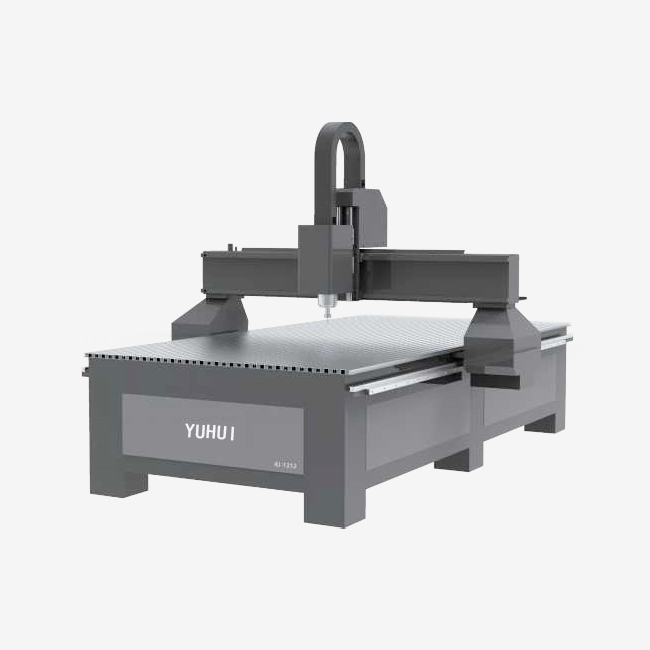
Single-zone tables have pressure that works across the whole surface at the same time. This means that they can be used for full-sheet processing, where the workpieces take up most of the table. Multi-zone configurations split the table into sections that can be controlled separately. This lets operators focus the vacuum power exactly where it's needed. This smart design keeps air from leaking around the sides of the workpiece and uses less energy when cutting smaller parts. The CNC router with vacuum table at Yuhui Laser Technology features multi-zone control that can adapt to material sizes from 1200x1200mm to 2000x4000mm, making it more efficient for a wide range of production needs.
Key Components and Maintenance Requirements
The vacuum system is made up of several important parts that work together to keep it running smoothly. For industrial use, high-capacity vacuum pumps usually need between 5.5KW and 7.5KW of power to create the necessary sucking force. Gaskets that seal and table surfaces with holes in them must stay in place so that air doesn't leak out and weaken the binding power. Dust collection systems keep particles from interfering with pump mechanisms, which greatly increases their service life. Regular checks on the state of the seals, cleaning of the filters, and tracking of the pump's temperature make sure that it keeps running. Our design doesn't require any debugging, so it needs less maintenance. This means that your operators can focus on production instead of fixing problems with the equipment.

Core Advantages of Using Vacuum Hold-Down Systems
Investing in vacuum workholding technology leads to measurable improvements in many areas of operations. These perks have a direct effect on how well your products are made, how competitive you are, and how efficient your production is.
Enhanced Material Stability and Machining Precision
Vacuum suction gets rid of tiny moves that make cutting less accurate in terms of size. The even pressure stops the material from bending and shaking, which is especially important when guiding thin sheets that would bend with motorized clamps. Our methods always work with an accuracy of ±0.08/300mm, which makes sure that the same results are achieved in every production run. The vibration-damping properties cut down on tool chatter, which increases the quality of the surface finish and extends the life of the cutter. This stability is very helpful when cutting complicated nested patterns, because even small changes in the material can lead to mistakes that cost a lot of money.
Rapid Setup and Increased Workflow Efficiency
With traditional clamping methods, workers have to place and secure several fixtures, which takes time away from other tasks that need to be done. With vacuum tables, you can place and activate materials right away, cutting down setup times from minutes to seconds. A CNC router with a vacuum table takes this efficiency even further, allowing your workers to simply place the sheet where they want it, turn on the vacuum zones, and start cutting right away. When the job is done, letting go of the vacuum pressure makes it easy to remove the item without damaging the bolts. This speed advantage adds up over the daily production output, raising the amount that can be done without hiring more people.
Versatility Across Material Types and Thicknesses
Vacuum hold-down systems can handle a wide range of materials that are hard to hold with traditional methods. Because they are made of pores, MDF, plywood, and particle board all respond well to vacuum suction. Clamp contact makes acrylic sheets, aluminum alloy panels, and thin metal skins more stable without damaging the surface. Through zone-selective activation, the device works well with irregular forms and partial sheets. The thickness of the material can be changed from thin veneers to full panels, so it can be used for a wide range of production needs without having to change the tools.
Safety and Ergonomic Benefits
Getting rid of clamps that stick out makes the work area cleaner and lowers the risk of getting hurt from sharp device edges. Operators don't have to deal with repetitive strain from clamping operations by hand, which makes the workplace more comfortable during long production shifts. Fully accessible edges can be machined without having to be repositioned in the middle of the process. This lowers the number of times the part needs to be handled and the chance of an accident happening. These changes to safety help keep workers from leaving, which lowers the cost of workers' compensation.
Practical Insights: Installation, Operation, and Maintenance Tips
To successfully integrate a vacuum system, you need to pay attention to the details of the installation and the best ways to run the system. Following the right steps for setup will help you get the most out of your investment.
Installation Best Practices
Place the vacuum pump somewhere with good air flow to keep the heat from building up while it's running all the time. Make sure the electrical connections meet the requirements for AC380V/50Hz that are set for industrial systems. Use accurate measuring tools to check that the table's surface is flat and that the limits are within 0.05mm across the work area. Make sure that the dust collection systems are properly connected to keep particles from contaminating the vacuum. When compared to competing products, ours comes with THF4 military-grade optical components and Leadshine drivers that are already calibrated. This makes installation a lot easier.
Material-Specific Calibration Guidelines
To get the best binding force without damaging the surface, you need to change the vacuum pressure settings for each material. When the vacuum level is moderate, porous materials like MDF grip very well. On the other hand, non-porous surfaces like sealed plastics may need more suction force or sacrificial board techniques. Aluminum sheets work best on tabletops that are clean and free of dust that could damage the seal. The phenolic resin bed in the CNC router with vacuum table doesn't expand or break down when heated or when coolants are used. This means that the systems keep working well as the materials change without having to wait for recalibration.
Routine Maintenance Protocols
Set up regular weekly checks to see how the seal is doing and look for damage or wear that lets air leak through. Regularly cleaning the filter bags will keep the pump working well and stop dust from building up. Keep an eye on the readings of the vacuum pressure to spot slow drops that could mean the seals or pumps are wearing out. When deep tool grooves make the surface less flat, usually every 20 to 50 hours of heavy routing, resurface the sacrificial spoilboard. Our fast-response technical support team and 450-day guarantee help you keep your equipment running at its best throughout the service lifecycle.
Comparative Analysis: Vacuum Hold-Down Systems vs. Alternative Hold-Down Methods
When you know how vacuum technology stacks up against traditional ways of holding work, you can make smart decisions about what tools to buy that fits your working needs.
Mechanical Clamps: Advantages and Limitations
T-slot tables with mechanical clamps can be used with any type of hardware and don't need any electricity. The fittings have a strong binding force that is good for heavy cutting on thick materials. However, positioning the clamps takes a lot of time during setup and makes it hard to get to the edges of the workpiece with tools. When pressure builds up at clamp points, it can bend thin materials or leave marks on the surface of final pieces. Physical obstacles stop continuous edge machining and often require moving in the middle of the process, which hurts the regularity of the dimensions.
Pin Tables and Adhesive Solutions
Pin tables are good for working with small parts where vacuum suction might not be enough. They use mechanical pins pushed through holes in the workpiece to ensure they stay in place. This method works well for processing a lot of pre-drilled parts at once, but it's not very adaptable for different part shapes. Adhesive tape solutions can temporarily stick together very thin materials that don't have through-holes, but they take more work to put on and take off. In most production situations, neither method is faster, more flexible, or better at protecting surfaces than vacuum systems.
Decision Factors for Your Operation
The amount of production has a big effect on the best workholding decision. Vacuum systems quickly pay for themselves in high-volume processes because they save time over thousands of rounds. Part size consistency is important. If you mostly machine full sheets, single-zone vacuum tables are easy to use, but multi-zone tables are better for making parts of different sizes. A CNC router with vacuum table offers the flexibility to handle both full-sheet processing and varied part sizes when equipped with the appropriate zone configuration. Budget concerns go beyond the initial purchase price and include gains in output and labor savings over the long run. Vacuum technology is almost necessary for sheet metal makers who work with thin materials, while businesses that focus on thick plate machining may put more importance on mechanical clamping power.
Procurement and Supplier Considerations for CNC Routers with Vacuum Tables
The long-term success of production depends on choosing the right equipment and supplier partnership. When making strategic buying choices, you should think about the total cost of ownership, technical specs, and service support.
Critical Performance Specifications
Compare the size of the vacuum table to the size of your usual project to make sure it has enough surface area and room for moving the material around. Our systems are available in sizes from 1200x1200 mm to 2000x4000 mm, so they can meet a wide range of production needs. The holding force is directly related to the pump's capacity. 5.5KW pumps are good for light-duty tasks, while 7.5KW units can handle heavier materials and continuous use. Spindle power choices from 3KW to 9KW determine the range of materials that can be cut. Different tool sizes and handling needs can be met by the speed range of 6000 to 24000 rpm. Working accuracy requirements of ±0.08/300mm make sure that the accuracy of the measurements meets your quality standards.
Supplier Evaluation Criteria
International certifications, such as CE and ISO norms, show that a maker is committed to quality. Factory-direct suppliers don't add markups for distributors, and they keep in touch with customers quickly. Production lead times show how much a company can make. For example, our standard 14-day delivery shows that we have a lot of inventory and that our production systems work well. When stock setups don't exactly meet your needs, the ability to customize is important. We offer OEM and ODM services that include changing the structure, adding functions, and customizing software in a way that works with your current processes.
After-Sales Support and Warranty Protection
How long equipment lasts depends a lot on how easy it is to get expert help and parts. Check out the length and scope of the warranty. Our industry-leading 450-day warranty period shows that we are confident in the quality of our manufacturing. Installation help and training for operators speed up productive operation and make the learning curve much shorter. Remote fixing can fix many problems without having to send a service technician to the site. This cuts down on downtime. Global logistics partnerships make sure that when you need replacement parts, they get to your facility quickly. This keeps production going throughout the lifecycle of the equipment.
Conclusion
In conclusion, vacuum hold-down devices are an investment that pays off in the long run because they improve the quality of all machining processes. The technology gets rid of setup delays, improves accuracy in measurements, saves material surfaces, and makes workers safer. A CNC router with vacuum table integrates these benefits into a single efficient system, making it an ideal choice for shops looking to streamline their workflow. Multi-zone control saves the most energy, and designs that are easy to maintain keep operations running smoothly. When choosing equipment, give more weight to suppliers that have been proven to be reliable through certifications, strong warranties, and quick technical support. When vacuum routing systems are set up correctly, they boost productivity and quality, which gives you measurable returns that make you more competitive in the market.
FAQ
1. What materials work best with vacuum tables?
Porous materials, like MDF, plywood, and particleboard, let air pass through easily, making them very good for grip. Acrylic, aluminum, and sealed plastics are examples of non-porous surfaces that need clean touch areas. Sacrificial spoilboards may help seals work better on these surfaces. Systems that are properly adjusted can work with a wide range of material layers, from thin veneers to solid panels, without damaging the surface.
2. How often should vacuum system maintenance occur?
Visual inspections once a week check the stability of the seal and the cleaning of the filter, which stops the performance from slowly declining. The pump's constant CFM output under load is confirmed by heat testing it every month. If the surface lines are deeper than 3 mm or the board isn't flat enough, it needs to be resurfaced. Our design doesn't require fixing, so it needs less upkeep than other systems, so it can be used more often and for longer periods of time.
3. Can vacuum systems handle small workpieces effectively?
With multi-zone control, the suction is focused on certain areas of the table, giving smaller parts enough binding power. Gasketing tape and onion skinning methods are two more ways to improve grip on parts that don't cover all of their surfaces. The zone-selective action stops air from leaking around the edges of parts, which would make the suction less effective.
Partner with Yuhui Laser Technology for Advanced CNC Router Solutions
If you buy a CNC router with vacuum table technology, your business will be able to work more efficiently and produce better results. Precision routing systems made by Yuhui Laser Technology are designed to work in tough production settings. They are made with military-grade optical parts, Leadshine drivers, and stepper motors to ensure stable long-term performance. Our factory-direct price cuts out costs that aren't necessary while still meeting CE and ISO quality standards. The 14-day production wait time and large inventory support make sure that your location gets the tools quickly. We offer full customization services that are adapted to your unique processing needs. These include changes to the structure, software adaptation, and function integration. With our responsive technical help and 450-day guarantee, we protect your investment for as long as it works. You can email our engineering team at jianghui@yuhui-laser-tech.com to talk about how our CNC router with vacuum table systems can help you make more things and be a more competitive supplier in your market.
References
1. Smith, J. & Anderson, R. (2022). Industrial Workholding Systems: Engineering Principles and Applications. Manufacturing Technology Press.
2. European Committee for Standardization. (2021). Safety Requirements for CNC Machine Tools with Vacuum Fixation Systems. CEN Technical Report 156-3.
3. Martinez, L. (2023). "Comparative Analysis of Workholding Methods in High-Speed Routing Operations." Journal of Manufacturing Processes, 78(4), 312-328.
4. Thompson, K. (2022). Precision Machining Handbook: Material Fixation Strategies for Modern Production. Technical Publishing International.
5. Zhang, W. & Liu, H. (2023). "Optimization of Vacuum Distribution in Multi-Zone CNC Router Tables." International Journal of Advanced Manufacturing Technology, 125(7), 3341-3356.
6. National Institute of Standards and Technology. (2021). Performance Evaluation Guidelines for Vacuum Workholding Systems in Automated Manufacturing. NIST Special Publication 1500-12.
Contact us directly for customized solutions, quotations and long-term strategic cooperation.