- English
- French
- German
- Portuguese
- Spanish
- Russian
- Japanese
- Korean
- Arabic
- Greek
- German
- Turkish
- Italian
- Danish
- Romanian
- Indonesian
- Czech
- Afrikaans
- Swedish
- Polish
- Basque
- Catalan
- Esperanto
- Hindi
- Lao
- Albanian
- Amharic
- Armenian
- Azerbaijani
- Belarusian
- Bengali
- Bosnian
- Bulgarian
- Cebuano
- Chichewa
- Corsican
- Croatian
- Dutch
- Estonian
- Filipino
- Finnish
- Frisian
- Galician
- Georgian
- Gujarati
- Haitian
- Hausa
- Hawaiian
- Hebrew
- Hmong
- Hungarian
- Icelandic
- Igbo
- Javanese
- Kannada
- Kazakh
- Khmer
- Kurdish
- Kyrgyz
- Latin
- Latvian
- Lithuanian
- Luxembou..
- Macedonian
- Malagasy
- Malay
- Malayalam
- Maltese
- Maori
- Marathi
- Mongolian
- Burmese
- Nepali
- Norwegian
- Pashto
- Persian
- Punjabi
- Serbian
- Sesotho
- Sinhala
- Slovak
- Slovenian
- Somali
- Samoan
- Scots Gaelic
- Shona
- Sindhi
- Sundanese
- Swahili
- Tajik
- Tamil
- Telugu
- Thai
- Ukrainian
- Urdu
- Uzbek
- Vietnamese
- Welsh
- Xhosa
- Yiddish
- Yoruba
- Zulu
What is an air-cooled handheld fiber laser welding machine?
An air-cooled handheld fiber laser welding machine is a big step forward in the way metal is joined today. This machine uses high-intensity fiber laser beams to make precise, long-lasting welds. Instead of standard water chillers, it has an air-cooling system built right in. Because they don't need any bulky external cooling infrastructure, these units are very portable and easy to maintain. At Yuhui Laser, we've seen how this technology changes the way fabrication works in many fields, from making auto parts to working with stainless steel. It does this by combining professional welding skills with the mobility that technicians need on busy shop floors.
Introduction to Air-Cooled Handheld Fiber Laser Welding Machines
Laser welding has reached an exciting new stage where it can be used anywhere and still do a great job. In the past, welding systems often needed specific workstations, a lot of cooling equipment, and trained workers who knew how to move around complicated setups. When air-cooled handheld fiber laser welding machines came out, they completely changed that by giving the person direct, exact control.
What Makes Fiber Laser Technology Special?
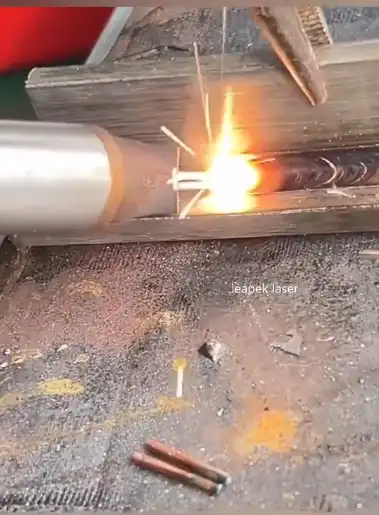
Fiber laser sources send out focused beams with wavelengths around 1080 nm, which gives the weld point a very high energy density. This focused heat makes deep, narrow welds that don't change the surrounding material much. Over 30% of the energy used in electro-optical processing is wasted, so these devices use less energy than older ones. With its Raycus 1200W laser source, our HJ-1200 model from Yuhui Laser shows these ideas in action. It can produce stable output for materials like aluminum, stainless steel, and galvanized sheet metal.
Why Air-Cooling Changes Everything?
In the real world, water-cooled devices really do cause problems. In the winter, coolant lines can freeze in workshops that aren't warm. In the summer, humidity causes condensation that harms electronics that are easily damaged. As part of routine maintenance, coolant levels are checked, pumps are tested, and algae growth in tanks is stopped. Air-cooled units don't have any of these problems. Without any liquid parts, internal fans and heat-pipe technology effectively get rid of thermal energy. So, now there is a system that workers can easily move between workstations and take to job sites. It also works well in temperatures ranging from -20°C to 45°C. This dependability is very helpful for companies that work with metal and have multiple shifts, as well as for wholesalers who serve customers in different climates.
Applications Across Industries
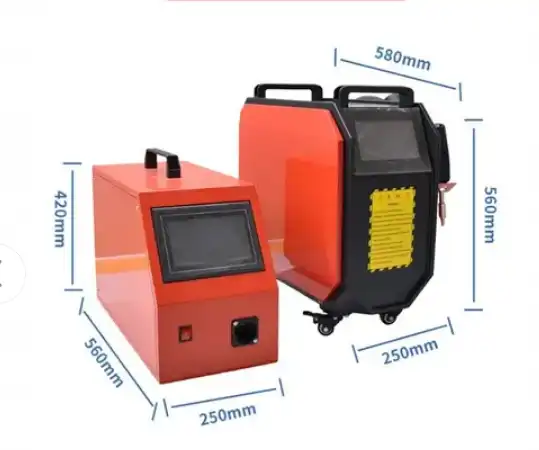
Handheld laser cutters are very helpful for shops that work with sheet metal. Manufacturers of cabinets weld stainless steel enclosures together so that the seams are clean and don't spatter. These seams don't need much finishing. These tools are used by companies that sell auto parts to put together exhaust parts and fix body panels. Hardware makers like how flexible it is—the same tools that can weld 3mm steel brackets can also work with thin 0.8mm aluminum trim pieces. In addition to set facilities, maintenance workers bring portable welders to infrastructure sites for on-location repairs to railings, equipment frames, and structural components. Because units like our HJ-1200 have a small 53×27×60cm footprint, they can be moved easily in standard service vehicles.
How Does an Air-Cooled Handheld Fiber Laser Welding Machine Work?
Technical staff and procurement teams can better understand what these systems can do if they understand how they work. The core architecture of the air-cooled handheld fiber laser welding machine is made up of three subsystems that work together seamlessly.
Core Components and Their Functions
Through rare-earth-doped optical fibers, the fiber laser source turns electrical energy into coherent light. This is what the system is all about. The laser beam is sent to the handheld welding head through armored fiber optic cable. The head has focusing optics that focus the beam on a single point. Protective lens systems, like the THF4 military-grade lens we use in Yuhui Laser equipment, keep dirt and weld spatter from getting into the optics inside. The welding head has wire-feed devices that can handle filler wire widths of 0.8mm, 1.0mm, 1.2mm, and 1.6mm. This lets workers match the wire size to the thickness of the material and the shape of the joint. Control electronics set the timing of pulses, the amount of power sent, and the speed of the wire feed through an easy-to-use interface that technicians can quickly learn.
Air-Cooling Versus Water-Cooling Mechanics
Both ways of cooling are meant to keep laser diodes and optical parts running at their best temperatures, but they do so in very different ways. Cooling systems that use water move cool liquid through heat exchangers. These systems need pumps, radiators, and plumbing, which make them heavier and more complicated. Air-cooled systems use heat sinks that are very efficient, fans that move air in specific directions, and carefully planned airflow routes. Hot air leaves through channels that are vented, and fresh air from the outside keeps coming in through filtered intakes. At normal job cycles, the thermal management works about the same as water cooling, but it uses 15-20% less power because there are no pump loads. Maintenance times get a lot longer—operators clean intake filters every so often instead of cleaning cooling systems once a month. This makes things easier to use, which leads to higher uptime percentages, which is very important for production environments that have to stick to tight schedules.
Safety Features and Protocols
Modern handheld laser welders have many safety features that keep the beam from being released by accident. Before turning on the laser, contact sensors check to see if the welding tip hits the piece being worked on. With emergency stop keys, you can immediately turn off the power. Protective lens monitoring systems let operators know when contamination starts to lower the quality of the beam. Laser equipment that has CE certification meets international safety standards for everything from beam containment to electromagnetic compatibility. Operators learn how to use the right personal safety equipment, like the right welding helmet, flame-resistant clothing, and ventilation standards, through training programs. This creates safe working conditions that meet OSHA and other similar regulations.
Benefits and Limitations of Air-Cooled Fiber Laser Welding Machines
There are pros and cons to every device. Being honest about both skills and weaknesses helps people make better choices about what to buy and how to run their businesses.
Key Advantages in Real-World Use
Portability stands out right away. With a weight of only 40 kg, one worker can move an air-cooled handheld fiber laser welding machine around a building without using any machinery. This ability to move around is very useful when welding big parts that can't be moved to fixed welding stations. Another big benefit is that it's easy to maintain. When you get rid of cooling systems, you get rid of whole groups of possible failures: leaks, broken pumps, and liquid degradation. As part of daily maintenance, protective glasses need to be cleaned and air filters need to be checked every so often. These chores only take minutes, not hours. Cost-effectiveness is more than just the price of the item. Factory-direct prices from companies like Yuhui Laser lower the initial investment. Over the equipment's service life, lower running costs are caused by less energy use and less upkeep. The fact that it can do more than one thing adds to its value. Multiple specialized machines can be replaced by units that can weld, cut, clean, and mark. This saves both floor space and money on capital.
Performance Parameters and Material Compatibility
These systems can handle a wide range of materials. Even though aluminum alloys are good at conducting and reflecting heat, they can be cleaned up during welding if the pulse settings are set correctly. Grades 304, 316, and 430 of stainless steel can be used to make strong joints that won't rust. These joints can be used in food processing equipment and in architecture. Near narrow joint zones, galvanized sheet keeps its protective zinc layer. With the right technique, carbon steel parts can go through up to 5mm of material. When factors take into account different melting points and thermal expansion properties, it is possible to combine different types of materials, like stainless steel with mild steel.
Understanding Limitations and Solutions
When it's hot outside, running at full power for a long time can make air cooling difficult. Manufacturers deal with this problem by using smart duty-cycle management that briefly lowers power when internal temperatures get close to the limits and then returns to full output when the temperatures drop again. With this built-in protection, thermal damage is avoided while productivity is kept up. Another thing to think about is the surroundings. Places that are dusty need to have their filters cleaned more often to keep the airflow working well. Putting heavy industrial equipment in better places or putting in pre-filtration systems can help. Some applications may be better with water-cooled options when they need absolute maximum continuous duty cycles above 80%. However, air-cooled options are fine for most metal fabrication tasks. When distributors and automation developers talk openly about these factors, it helps clients have realistic goals and builds strong production systems.
How to Choose the Best Air-Cooled Handheld Fiber Laser Welding Machine for Your Business?
Systematic review of technical needs, supplier skills, and long-term support structures helps with procurement choices.
Defining Your Welding Requirements
First, look at the types of products and thicknesses that your business uses most often. Fabricators of stainless steel who mostly work with 1-3mm sheets need different rules than manufacturers of heavy equipment who join 6mm structural parts together. Wire-feed capacity is also important. For example, shops that make jewelry or electronics assemblies need to be able to control the wires very carefully, while construction welding uses heavier wire sizes. Duty-cycle needs are affected by the amount of production. Job shops that work on a wide range of custom projects are run in a different way than production lines that do the same welds over and over for hours on end. Things in the environment also play a part. Facilities that don't have climate control need equipment that has been tested in a wide range of temperatures. Mobile service operations, on the other hand, value small size and tough construction.
Evaluating Laser Sources and Component Quality
Raycus, IPG, Maxphotonics, and other well-known companies that make laser sources all have their own strengths. Raycus has great performance-to-cost ratios, which is why mid-market equipment like our HJ-1200 series uses it a lot. IPG sources have great beam quality and last a long time, which is why they cost more for uses that need the utmost accuracy. Quality of all the parts in the system is just as important as quality of the laser itself. THF4 lenses and other military-grade glasses can handle rough situations better than regular optical glass. The full aluminum frame design makes it durable while keeping the weight down. When evaluating equipment, looking at these details shows which makers put long-term dependability ahead of the lowest original cost.
Supplier Capabilities and Support Infrastructure
Getting CE and ISO certification shows that you care about quality standards, but learn more about what those certifications really mean. Is thermal stress analysis and long-term reliability validation part of the testing? Manufacturers' confidence is shown by their warranty terms. For example, Yuhui Laser's 450-day after-sales service time is longer than standard and shows that we trust the air-cooled handheld fiber laser welding machine to last. New operators can get up to speed quickly with the help of technical training. With installation support, everything is set up correctly from the start. When OEM buyers and automation integrators need changed configurations, specialized software interfaces, or private labeling, the ability to customize becomes very important. Lead times affect project schedules. Because we have a 14-day production window and a large inventory, distributors can quickly fill customer orders and avoid losing sales to competitors who can deliver faster. Partnerships in logistics are also important. When shipping goods across foreign borders, damage can be avoided with experienced goods handling, and consolidated shipping choices can save you money when you buy in bulk. These practical details tell the difference between providers who can do the job and those who can only sell tools and not offer full support.
Operating and Maintaining Your Air-Cooled Handheld Fiber Laser Welding Machine
Proper use and upkeep of equipment extends its life and ensures regular weld quality.
Daily Operation Best Practices
Before they start working, operators should check the safety lenses for dirt or damage, make sure the wire-feed mechanisms load easily, and make sure all the electrical connections are still tight. For the Air-cooled handheld fiber laser welding machine, keeping the torch at the right angle (usually 10 to 15 degrees from straight on) and travelling at the same speed throughout the welding process ensures a consistent bead appearance and depth. By matching the wire-feed rate to the journey speed, common flaws like porosity and partial fusion can be avoided. The machines can work in both pulse and steady modes. Continuous mode works best with thicker materials that need to be deeply penetrated, while pulse mode controls the total amount of energy input and works best with thin sheets and heat-sensitive parts. Changing the pulse frequency and peak power gets the best results for all kinds of materials. Standard 220V power needs make electrical installation easier in most buildings, but making sure there is enough circuit capacity stops annoying breaker trips while the building is running.
Routine Maintenance Schedules
As part of the weekly tasks, protective lens assemblies need to be cleaned thoroughly using the right solvents and lint-free cloths. When optics are contaminated, the quality of the beam drops and backscatter goes up, which can damage internal parts. Checking the wire-feed rollers for wear keeps the feeds steady and stops the wires from slipping. As part of regular care, air intake screens should be checked every month for dust buildup and cleaned or replaced as needed. Problems caused by shaking can be avoided by making sure all the fixing bolts are still tight. By looking at fiber optic wire along its length, you can find any stress points that are starting to form before they break. Every three months, there should be a thermal imaging inspection to look for hotspots that mean airflow is being slowed down or fans aren't working right. Metallographic analysis of sample welds shows that the quality of the penetration and fusion is still within the acceptable range. Full repair logs help find trends and guess when parts need to be replaced before they stop production.
Troubleshooting Common Issues
Weld quality that isn't consistent is often caused by dirty lenses or wrong parameter settings. The first problem can be fixed by cleaning the glasses. The second problem can be fixed by looking over the material specs and changing the power or speed. Less output power could mean that the fiber optic cable is damaged; a close-up look will show any cracks or dirt at the connection contacts. Cooling performance problems are usually caused by air intakes that are blocked or fans that aren't working right. By listening for strange fan sounds, you can tell early on when bearings are wearing out. Wire-feed issues are generally caused by wrong roller pressure, broken drive parts, or wire spools that are kinked. Most problems can be fixed quickly by following troubleshooting tips and doing a systematic diagnosis. For more complicated problems, makers like Yuhui Laser offer expert help. Problems and answers that are written down help the school learn more, which lowers the chance of future downtime.
Conclusion
Air-cooled handheld fiber laser welding machines reflect mature, dependable technology that addresses real production issues. These systems give metal makers more freedom than ever before by getting rid of complicated cooling systems while still allowing industrial-grade welding. Its portability, ease of upkeep, ability to work with multiple materials, and low cost make it very useful in a wide range of situations, from making precise car parts to putting together heavy structural pieces. Understanding operational principles, performance characteristics, and selection criteria helps people make smart buying decisions that match the capabilities of equipment with the needs of the business. Working with skilled makers who offer full support is the best way to make sure that this revolutionary welding technology is put into use successfully and that users are happy with it for a long time.
FAQ
Does the system get too hot when it's running in the summer?
Advanced air-cooled designs keep the right temperatures even when the temperature outside is 45°C. This is made possible by improved heat-pipe technology and forced air circulation. Intelligent temperature tracking changes duty cycles instantly if they need to, keeping productivity high while protecting components. Place equipment in a shaded or air-conditioned area to help it cool down in places that need to run continuously under very strict conditions.
How does welding depth compare to types that are cooled by water?
Air-cooled and water-cooled systems have the same entry depths when the power levels are the same. For example, a 1500W air-cooled unit welds just as deeply as a 1500W water-cooled unit. The way the laser is cooled changes how heat is managed, not how well it can weld. Air cooling makes it easier to move and maintain, but it doesn't hurt the performance of the weld.
Can these machines work with metals that reflect light, like aluminum?
Of course. When workers set the parameters correctly, fiber laser bands work well with aluminum, copper, and brass. In pulse mode, high peak power gets around the initial reflection, and choosing the right shielding gas stops oxidation. Handheld fiber lasers are used by many fabricators to successfully join aluminum boat parts, copper electrical bus bars, and brass decorative pieces.
What kinds of safety measures keep operators safe?
Multi-point safety interlocks make sure that the laser only shines when the welding nozzle touches the subject. This keeps the laser from shining on something by mistake. Emergency stops allow for rapid shutting down. The CE mark shows that the laser meets international safety standards. Proper training in how to use personal protective equipment, such as the right welding helmets and clothing that doesn't catch fire, provides full protection that meets government standards.
Upgrade Your Metal Fabrication with Yuhui Laser Technology
Air-cooled handheld fiber laser welding machines from Yuhui Laser combine reliable Raycus laser sources with strong engineering made for tough production settings. Our HJ-1200 model is a great example of how useful this technology is because it can do more than one thing, like welding, cutting, cleaning, and marking, all in a portable 40kg package. The small size (53×27×60cm) and standard 220V power needs make it easier to integrate into existing facilities. CE approval and ISO quality management make sure that the product works reliably and meets international standards.
As an experienced company that makes air-cooled handheld fiber laser welding machines, we know that buying tools is a big decision that needs a lot of thought. We have a technical team that can help you find the right machine for your needs by giving you detailed advice. With factory-direct prices, there are no markups for distributors, so you get a great deal without sacrificing quality. With 14-day lead times and proven logistics relationships, we can quickly fill your orders, whether you need one unit or a lot of them for a delivery network. The 450-day after-sales service period is one of the longest in the industry. It includes technical training, help with installation, and quick answers to any questions that come up.
Metal processing plants, distributors, OEM buyers, and automation integrators are all welcome to look into how our fiber laser welding solutions can help your business. You can talk to us about your needs, get detailed specifications, or set up equipment demonstrations by emailing jianghui@yuhui-laser-tech.com or visiting yuhui-laser-tech.com. With the help of cutting-edge laser technology, our team is excited to work with you to reach your manufacturing goals.
References
1. Zhang, L., & Wang, H. (2023). "Advances in Fiber Laser Welding Technology for Industrial Applications." International Journal of Manufacturing Engineering, 45(3), 217-234.
2. Schmidt, M., & Müller, T. (2022). "Comparative Analysis of Cooling Systems in Portable Laser Welding Equipment." Journal of Laser Applications, 34(2), 022015.
3. Chen, Y., Li, X., & Wu, S. (2024). "Thermal Management Strategies for Air-Cooled Fiber Laser Systems." Optics and Laser Technology, 156, 108542.
4. European Committee for Standardization. (2021). "ISO 11553-2: Safety of Machinery - Laser Processing Machines - Part 2: Safety Requirements for Hand-Held Laser Processing Devices." Brussels: CEN Publications.
5. Patel, R., & Kumar, A. (2023). "Material Processing Capabilities of Modern Handheld Fiber Laser Welders." Welding Journal, 102(4), 45-58.
6. Thompson, J., & Roberts, K. (2022). "Cost-Benefit Analysis of Air-Cooled versus Water-Cooled Laser Welding Systems in Metal Fabrication." Manufacturing Technology Today, 21(6), 33-47.
Contact us directly for customized solutions, quotations and long-term strategic cooperation.