- English
- French
- German
- Portuguese
- Spanish
- Russian
- Japanese
- Korean
- Arabic
- Greek
- German
- Turkish
- Italian
- Danish
- Romanian
- Indonesian
- Czech
- Afrikaans
- Swedish
- Polish
- Basque
- Catalan
- Esperanto
- Hindi
- Lao
- Albanian
- Amharic
- Armenian
- Azerbaijani
- Belarusian
- Bengali
- Bosnian
- Bulgarian
- Cebuano
- Chichewa
- Corsican
- Croatian
- Dutch
- Estonian
- Filipino
- Finnish
- Frisian
- Galician
- Georgian
- Gujarati
- Haitian
- Hausa
- Hawaiian
- Hebrew
- Hmong
- Hungarian
- Icelandic
- Igbo
- Javanese
- Kannada
- Kazakh
- Khmer
- Kurdish
- Kyrgyz
- Latin
- Latvian
- Lithuanian
- Luxembou..
- Macedonian
- Malagasy
- Malay
- Malayalam
- Maltese
- Maori
- Marathi
- Mongolian
- Burmese
- Nepali
- Norwegian
- Pashto
- Persian
- Punjabi
- Serbian
- Sesotho
- Sinhala
- Slovak
- Slovenian
- Somali
- Samoan
- Scots Gaelic
- Shona
- Sindhi
- Sundanese
- Swahili
- Tajik
- Tamil
- Telugu
- Thai
- Ukrainian
- Urdu
- Uzbek
- Vietnamese
- Welsh
- Xhosa
- Yiddish
- Yoruba
- Zulu
What are the key benefits of a double head laser engraving and cutting machine?
The main benefits of a double-head laser engraving & cutting machine are that it greatly increases output and cuts down on costs. Manufacturers can almost double their output without buying two separate machines if they use two synchronized laser heads that work at the same time. The two-head setup shortens production cycles, lowers labor costs per unit, and makes the best use of workspace. This makes it perfect for high-volume batch processing in fields where speed and accuracy are essential, such as textile manufacturing, sign making, and auto part fabrication.
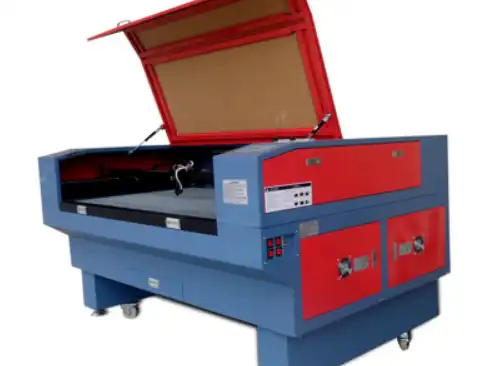
Understanding Double Head Laser Engraving and Cutting Technology
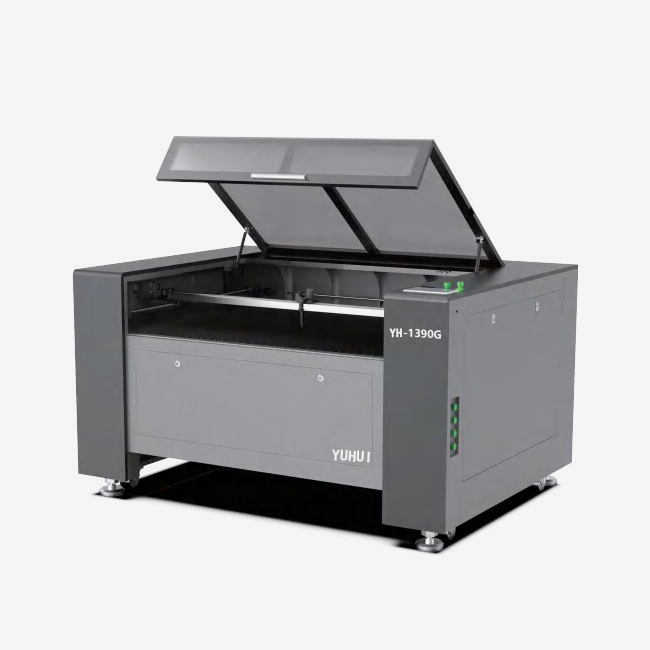
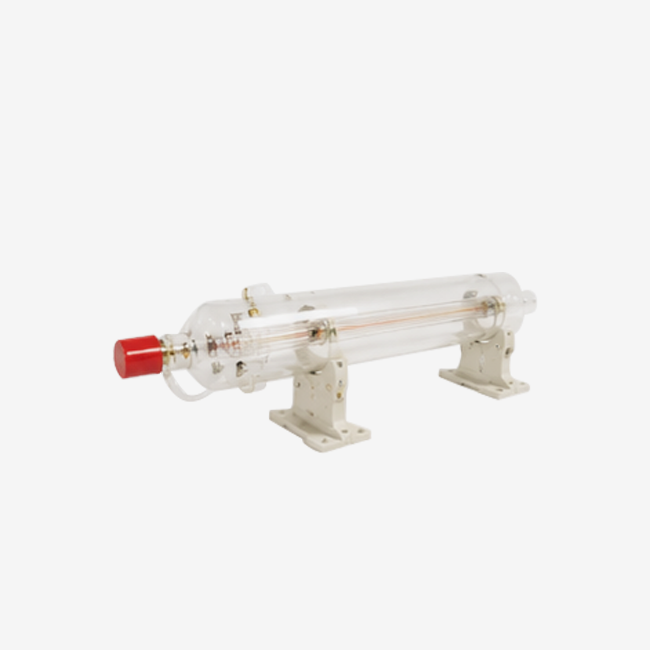
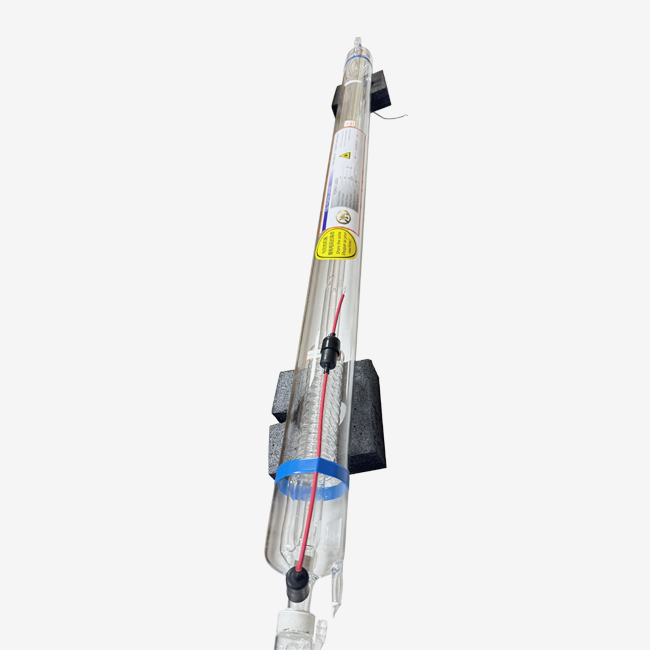
The main thing that makes Double Head Laser Engraving & Cutting Machine systems work is that they can do processing in parallel. Instead of processing one piece of work at a time like traditional single-head machines do, these advanced systems coordinate two separate laser sources to do the same or opposite tasks at the same time. At Yuhui Laser, our two-head models use Yongli and Reci CO2 sealed-off glass laser tubes that work at a frequency of 10.6 μm. This makes the beam quality stable over long production runs.
How Synchronous Operation Works
At the heart of this technology is a fast DSP control system that precisely moves both laser heads. This controller syncs up movement along the X and Y axes while letting each head have its own power modulation. Through the software, operators can change the laser output from 0% to 100%. This gives them fine-grained control over the depth of the engraving and the intensity of the cutting. The system can directly output files from AutoCAD and CorelDraw in formats like PLT, DST, DXF, DWG, and AI. This makes workflow integration easier for design teams that already know how to use these programs.
Core Components and Build Quality
The laser tubes in our YH1390 and YH1610 types are more structurally stable thanks to new ways of making them. The frames are made of industrial-grade steel that has been strengthened. This steel doesn't vibrate when working at high speeds, so the placement accuracy stays within ±0.01mm. Cooling systems that use water move cool fluid through both laser tubes at the same time. This stops thermal drift that could lower the quality of the cut. This design makes the tubes last longer and makes maintenance schedules more predictable, which cuts down on unplanned downtime that throws off production schedules.
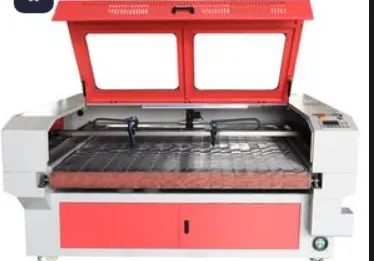
The Core Advantages of Double Head Laser Engraving and Cutting Machines
Investing in double-head laser engraving & cutting machine technology pays off in a number of practical ways that can be measured. Our customers say that not only has the throughput of raw materials improved, but so has the general cost of production and the quality of the products.
Doubled Production Capacity Without Doubled Footprint
On the factory floor, the biggest benefit is clear right away. A single double-head laser engraving & cutting machine takes up about the same space as a normal single-head unit, but it can make twice as much per run. For contract manufacturers who don't have a lot of floor room, this means they can handle more orders without having to pay for expensive facility growth. With a 1600x1000mm work area, the YH1610 model can handle two medium-sized acrylic signs or leather goods panels at the same time, finishing jobs in half the time it takes with regular machines.
Enhanced Precision Through Parallel Processing
Some people think that splitting up laser resources could hurt quality, but synchronized operation improves consistency. When both heads engrave the same pattern next to each other, even a small change in calibration affects both pieces the same way. This keeps the relative uniformity between batch runs. Our systems come with THF4 military-grade lenses that keep the beam focused evenly across the whole work area. This lets us get letter sizes as small as 1.5 mm for Chinese characters and 1 mm for English text. This level of detail accuracy is important for companies that make promotional items and gadgets that need to mark parts accurately.
Operational Cost Efficiency
When machines have two heads, they use a lot less energy per finished piece. During full operation, the total power draw is close to 1500W, but the output doubles, which means that the cost of electricity per unit is about 40% less than if two single-head machines were used. These saves are increased by the fact that less work is needed—one operator can oversee both heads at the same time, so no extra staff is needed. Yongli and Reci laser tubes have long service lives and low failure rates, which means that maintenance costs stay stable over the equipment's lifetime.
These combined advantages create a compelling price-performance ratio that resonates with cost-conscious procurement managers. Our 14-day production lead time and factory-direct pricing model further enhance the total value proposition, delivering industrial-grade capability without the premium markups typical of longer supply chains.
Applications and Industry Use Cases for Double Head Laser Machines
Double-head laser engraving & cutting machine systems are useful in many different types of manufacturing because they combine speed and accuracy in a way that no other technology does.
Textile and Apparel Manufacturing
These tools are used by clothing makers to cut out intricately stitched patches, appliques, and fabric panels where it's important to copy the pattern exactly. During busy holiday seasons, when tens of thousands of similar items need to be shipped in short amounts of time, the ability to process multiple orders at once is very useful. A medium-sized clothing company in Vietnam recently told us that they were able to meet retailer deadlines by cutting the time it took to make patches from six days to three after using our YH1390 model. Before, they had to hire multiple subcontractors to do the work.
Acrylic Signage and Display Fabrication
Double-head laser engraving & cutting machines are used by sign shops and display makers to make channel letters, point-of-purchase displays, and parts for show booths. The main problem in the industry is finding a balance between volume and quality. Being able to cut two identical acrylic panels at the same time with clean edges solves this problem. Also, better use of materials happens because workers can nest parts more effectively when working with symmetrical designs. This lowers the amount of waste, which has a direct effect on the cost of materials.
Industrial Gasket and Automotive Component Production
Precision part makers benefit from the fact that these machines stay stable at low temperatures for long periods of time. The advanced water cooling system stops heat buildup that can lead to measurement drift during long production runs. This makes sure that the ten-thousandth gasket cut is exactly the same as the first one, down to the micron level. This level of consistency meets the strict tolerances needed in automotive supply chains, where the number of rejected parts has a direct effect on profits and contractual relationships.
Maintenance, Safety, and Troubleshooting Best Practices
Structured maintenance protocols and proactive system monitoring are needed to get the most uptime and keep operators safe.
Regular Maintenance Schedules
As part of daily tasks, you may need to check the water coolant levels and look at the lens surfaces for dust buildup. Using test patterns to check the alignment once a week makes sure that both heads stay in sync. Every 500 hours of use, our high-subdivision stepper motor drivers need to be oiled, which is a simple process that is explained in the user instructions. The sealed-off CO₂ laser tubes need to be checked by a professional once a year, but because they were made to last, they don't need many repairs in the middle of their lifecycle.
Safety Protocols and Environmental Requirements
During setup and upkeep, operators must wear the right laser safety glasses with a wavelength rating of 10.6 μm. The temperature should stay between 0°C and 45°C, and the humidity should stay between 5°C and 95% so that condensation doesn't form. This will keep the machine running well and keep the operator comfortable. There are emergency stop buttons on both sides of the control panel that can be used to turn it off right away if something goes wrong.
Common Issues and Diagnostic Approaches
Lasers sometimes get out of line between heads after moving equipment. Our DSP control system has built-in diagnostic routines that use alignment targets to walk operators through the steps of recalibration. Power output changes are usually caused by problems with the cooling system. Most problems can be fixed quickly by checking for clogged water lines or low coolant levels. Yuhui Laser offers 450 days of after-sales service that includes remote technical support. For more complicated problems, you can email our engineering team get help.
These preventative maintenance steps keep the machine's positioning precision and beam quality over many years of production use. This protects the original investment and keeps the quality of the output consistent.
Considerations When Purchasing a Double Head Laser Engraving & Cutting Machine
Buying a double-head laser engraving & cutting machine involves more than just looking at the technical specs; it also involves checking out the supplier's skills and prospects for a long-term relationship.
Evaluating Technical Specifications Against Production Needs
By matching laser power to material needs, both under-capacity bottlenecks and over-specification waste can be avoided. Our models come with power options ranging from 60W to 150W per head. For most acrylic and wood projects, the 80W setting is best, while the 150W setting is best for heavier stainless steel cutting jobs. Cutting speeds of up to 100mm/s and engraving speeds of up to 500mm/s allow for both detailed work and high-throughput production modes. This gives operators the freedom to change parameters based on the priorities of each order.
Supplier Reputation and Support Infrastructure
The machine is a long-term investment that needs solid expert support. The CE and ISO certifications for Yuhui Laser show that we meet international quality standards, and our status as a national high-tech enterprise shows that we are known for our innovative abilities. Our large inventory makes parts available quickly, reducing the downtime that happens when important parts need longer wait times from foreign sources. Installation help and training classes for operators make sure that production teams get up to speed fast, cutting down on the learning curve that can delay realizing ROI.
Total Cost of Ownership Analysis
The initial buying price is only one part of the total costs over the life of the item. Operating costs are affected by how well energy is used, how often maintenance is done, and how often consumables need to be replaced. Our factory-direct pricing model gets rid of markups for distributors and keeps the quality of our parts high thanks to our partnerships with Yongli and Reci. The longer warranty period of 450 days is longer than the norm in the industry. This gives you more financial security during the important early production phase, when equipment performance is being tested.
Conclusion
Manufacturers who need to make a lot of things can get a huge boost in output from double-head laser engraving & cutting machines. The synchronised dual-head design doubles the output while keeping accuracy standards. This cuts down on unit costs and speeds up the time it takes to fill orders. The YH1390 and YH1610 models from Yuhui Laser use tried-and-true Yongli and Reci laser tube technology, as well as strong mechanical construction and full support services. This makes them a solid base for expanding production operations. These systems are great investments for businesses that want to improve both short-term throughput and long-term operational sustainability. They offer strong technical capabilities, competitive pricing, and extended warranty coverage.
FAQ
Can both laser heads process different designs simultaneously?
Standard synchronous models make copies of the same designs on both heads, which is great for batch output that needs exact copies. Different designs are possible with specialized asynchronous configurations that have separate X-axis motors, but this usually needs custom programming and makes the setup process more difficult.
What maintenance interval differences exist compared to single-head machines?
Since two laser tubes are under stress, the frequency of replacing parts almost doubles. But because of bigger output rates, maintenance costs per unit go down. Our sealed laser tube design reduces the need for intervention. However, a professional inspection is still recommended every year, no matter how many heads are in the room.
How does material compatibility compare between dual and single-head systems?
The Double Head Laser Engraving & Cutting Machine's design changes throughput instead of material range but not the ability to handle materials. Our CO₂ laser systems work well with thin metals, leather, fabric, acrylic, wood, and leather. The limits on material thickness stay the same as for single-head versions at the same power levels.
What training duration do operators typically require?
Operators who are already familiar with single-head laser systems usually get good at using them after just two days of hands-on training. The learning curve is shorter because our high-speed DSP control interface looks like standard layouts in the industry. As part of our service promise, we offer full installation help and training on how to use the equipment.
Partner with Yuhui Laser for Your Double Head Laser Engraving & Cutting Machine Needs
When you upgrade to double-head laser engraving & cutting machine technology, your business will have a clear competitive edge. Yuhui Laser makes systems that are CE-certified and come with Yongli and Reci laser tubes. These systems provide the stability and accuracy that are needed in tough production environments. With a 14-day lead time, we can get your order to you quickly, and our factory-direct pricing keeps the cost of capital investments low for small and medium-sized businesses. As a reliable double-head laser engraving & cutting machine supplier, we back up every system with 450 days of support after the sale. This includes technical help and parts that are easy to find to keep your production schedules on track. You can email our team at jianghui@yuhui-laser-tech.com to talk about customization options that are made to fit your specific processing needs. You can also visit yuhui-laser-tech.com to read detailed specifications and see real-world examples of how well the system works.
References
1. Zhang, L., & Wang, M. (2023). Advances in Industrial Laser Processing Systems: Design and Applications. Manufacturing Technology Press.
2. Chen, R. (2022). Precision Laser Cutting and Engraving: Principles and Practice. Industrial Engineering Publications.
3. Thompson, D., & Richards, K. (2024). Cost-Benefit Analysis of Multi-Head Laser Systems in Modern Manufacturing. Journal of Production Economics, 45(3), 112-128.
4. Liu, H. (2023). CO2 Laser Technology: Components, Performance, and Maintenance Strategies. Laser Applications Quarterly, 18(2), 67-84.
5. Martinez, S. (2024). Quality Control Standards for Industrial Laser Equipment in Global Markets. International Manufacturing Standards Review.
6. Patel, A., & Nguyen, T. (2023). Comparative Performance Metrics of Single vs. Multi-Head Laser Processing Systems. Advanced Manufacturing Technology Journal, 31(4), 201-219.
Contact us directly for customized solutions, quotations and long-term strategic cooperation.