- English
- French
- German
- Portuguese
- Spanish
- Russian
- Japanese
- Korean
- Arabic
- Greek
- German
- Turkish
- Italian
- Danish
- Romanian
- Indonesian
- Czech
- Afrikaans
- Swedish
- Polish
- Basque
- Catalan
- Esperanto
- Hindi
- Lao
- Albanian
- Amharic
- Armenian
- Azerbaijani
- Belarusian
- Bengali
- Bosnian
- Bulgarian
- Cebuano
- Chichewa
- Corsican
- Croatian
- Dutch
- Estonian
- Filipino
- Finnish
- Frisian
- Galician
- Georgian
- Gujarati
- Haitian
- Hausa
- Hawaiian
- Hebrew
- Hmong
- Hungarian
- Icelandic
- Igbo
- Javanese
- Kannada
- Kazakh
- Khmer
- Kurdish
- Kyrgyz
- Latin
- Latvian
- Lithuanian
- Luxembou..
- Macedonian
- Malagasy
- Malay
- Malayalam
- Maltese
- Maori
- Marathi
- Mongolian
- Burmese
- Nepali
- Norwegian
- Pashto
- Persian
- Punjabi
- Serbian
- Sesotho
- Sinhala
- Slovak
- Slovenian
- Somali
- Samoan
- Scots Gaelic
- Shona
- Sindhi
- Sundanese
- Swahili
- Tajik
- Tamil
- Telugu
- Thai
- Ukrainian
- Urdu
- Uzbek
- Vietnamese
- Welsh
- Xhosa
- Yiddish
- Yoruba
- Zulu
Best portable laser spot welding machines for small workshops
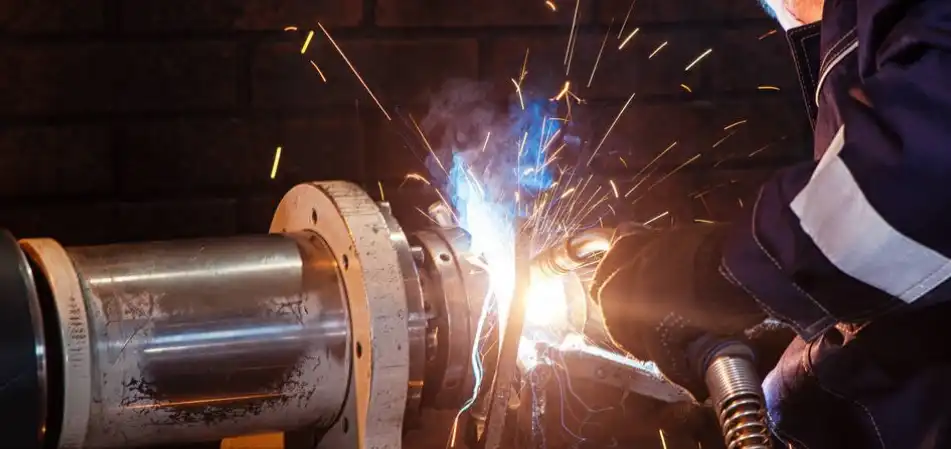
Precision and portability are two things that you need to look for in the best portable laser spot welding machines for small workshops. A portable laser spot welding machine is a new idea because it combines modern fiber laser technology with a small size. These systems can weld thin materials (0.1 mm to 1.5 mm) very well, which makes them perfect for shops that work with stainless steel manufacturing, making signs, and precise repairs. Because they are portable, they don't need as much space as standard welding stations, so they can be used on-site more efficiently without affecting the quality of the weld or the way it looks.
Introduction
Small shops are under a lot of pressure these days to do professional-level welding work with little space and little money. Because they are accurate, portable, and quick, portable laser spot welding machines are great for small workshops and business buyers who want to improve the way they weld.
A lot of attention is paid to important technical details, useful benefits, and differences between this method and others used for welding. We will talk about how to choose the right tools, how to keep them in good shape, and how they can be used in the real world. This will help procurement workers and workshop managers make smart purchases that improve quality and efficiency. If you know about these tools, you can find choices that fit your needs and give you the best return on your money.
Understanding Portable Laser Spot Welding Machines
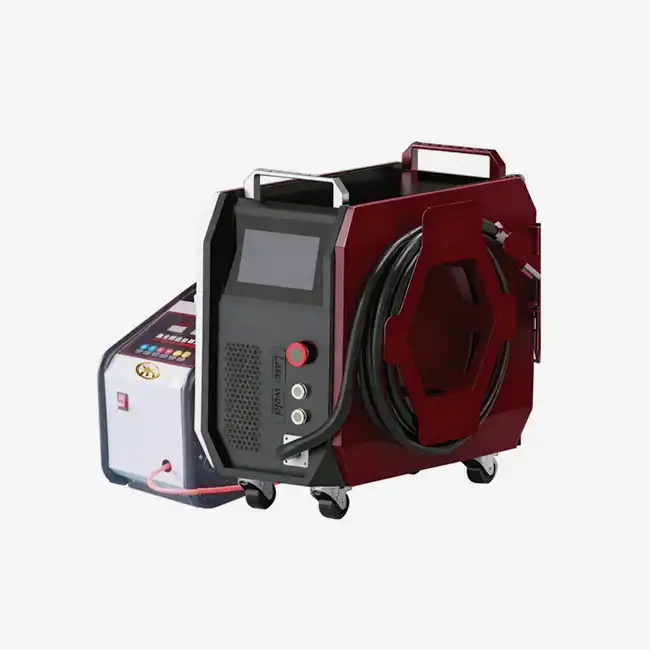
Concentrated laser beams are used by portable laser spot welding machines to make precise spot welds with little damage from the heat. Laser sources, control units, and flexible welding heads are some of the important parts that make them small. This makes them easy to move around and use in small areas.
How Does Laser Spot Welding Technology Work?
For this technology to work, 1064 nm fiber laser sources are used. They direct their energy at fusion zones that are between 0.2 mm and 3 mm across. The laser beam makes a zone of heat that is hotter than 3000°C when it hits metal. This forms metal bonds without melting the areas around them. Other types of welding don't use controlled energy like laser welding does. Instead, heat is spread over bigger areas.
The cooler has two different temperatures built in, so the temperature stays the same even when the machine is going for a long time. The cooling system stops the machine from getting too hot, which lets it weld for longer periods of time than other machines can. With careful beam control and good cooling, operators can make beautiful weld spots on very thin materials that don't leave a mark. With other methods, these spots would warp or burn through.
Key Advantages for Small Workshop Environments
These tools give small businesses the most options. They also make better welds and use less energy than older ways of doing things. This machine doesn't need separate welding bays because it has a small size (about 374.5 x 191 x 330 mm). It can be used in crowded work areas. Material handling takes a lot less time when tools are moved to workpieces instead of big parts being moved around set stations.
People who are new to the job can learn it faster now that the control interface is faster. It takes years to learn how to do TIG welding, but with laser spot welding systems, techs can do professional work just a few weeks after they learn how to use them. Many small companies that make things are having trouble finding skilled workers, but this makes it easier for them to find them. Their advanced features and ability to move around make operations more efficient while cutting costs. This makes them a good investment for businesses that want to improve their manufacturing capabilities.
Comparing Portable Laser Spot Welding Machines with Other Welding Technologies
Portable Laser Spot Welding Machines often offer faster speeds, better heat control, and more accurate results than traditional resistance welding, handheld spot welders, and TIG welding. When business managers know about these differences, they can buy better tools.
Laser vs. Resistance Spot Welding
Portable laser systems are easier to set up and offer better weld accuracy than big resistance welding setups that need a lot of floor room and three-phase power infrastructure. Electrical current flows between plates during resistance welding, which makes joins. This creates heat that melts the base materials. This process needs precise electrode alignment and pressure, which means that cycles take longer and electrodes need to be replaced more often.
Laser spot welding gets rid of all the electrodes that need to be replaced, which cuts costs by about 40% over three years. Laser welding doesn't touch the workpiece, so it doesn't get dirty or leave marks on the surface, which are important for areas that will be seen, like in kitchenware and artistic metals. Resistance systems have trouble joining different metals because they don't conduct electricity the same way. Laser welding, on the other hand, can join stainless steel and aluminum by adjusting the parameters correctly.
Advantages Over TIG and MIG Processes
These laser machines are more powerful and flexible than handheld spot welders, so they can be used for a wider range of tasks. TIG welding makes good results, but it needs tungsten electrodes, shielding gas, and filler rods that need to be replaced often, which adds to the cost of the materials. Because TIG welding requires human coordination, it slows down production and makes it possible for workers to be less consistent.
Laser spot welders are better for small workshops that want to be efficient and produce high-quality goods made from a variety of materials than TIG welders because they can work faster and need less maintenance. MIG welding leaves behind spatter that needs to be cleaned up afterward, but laser welding makes clean joints that can be finished right away. In laser welding, the heat-affected zone is 60–70% smaller than in arc welding. This keeps the qualities of the material near the join zones and limits distortion in thin-gauge materials.
How to Choose the Best Portable Laser Spot Welding Machine for Your Workshop?
Before you can choose the right portable laser spot welding machine, you need to figure out what kinds of materials, thickness ranges, and output amounts your workshop needs. A methodical evaluation process will make sure that your investment gives you the most operational value.
Evaluating Power Requirements and Material Compatibility
Welding power, speed, accuracy, and ease of use are all important factors, along with safety features that are required by law. 300W machines can work with stainless steel up to 1.5 mm thick, which makes them good for making signs, light fixtures, and thin-wall shelters. When working with thicker materials or aluminum alloys, higher power levels (1000W to 2000W) are better because they go deeper while keeping cycle times acceptable.
Material fit is more than just thinking about thickness. To keep beam reflection damage from happening to metals that reflect light, like copper and brass, they need certain wavelengths and pulse control. Make sure that the specifications of any potential equipment clearly list the materials you want to use and how thick they can be. Testing sample welds while showing off equipment gives you real proof of how well it works on your actual production materials.
Assessing Supplier Credentials and Support Infrastructure
Warranty terms, after-sales help, and the name of the seller are all very important for making sure that the investment is safe. Manufacturers who give guarantees that last longer than the standard 12 months show that they are confident in the durability of their products. Yuhui Laser Technology offers 450 days of service after the sale, which is much longer than the industry standard and shows our dedication to building long-term relationships with our customers.
Looking at well-known brands and product lines can help you find solutions with the features and levels of service that meet your business's needs. This will help you stay productive over time and reduce downtime. Check to see if suppliers keep spare parts in stock at their local service centers or if they have to ship new parts from other countries. Response time when equipment breaks down has a direct effect on how much work can be done, so the cost of local support infrastructure is just as important as the cost of the equipment itself. It's more valuable to buy from suppliers who offer installation help, operator training, and help with application creation than to buy tools only.
Operating and Maintaining Your Portable Laser Spot Welding Machine
To get the most out of your Portable Laser Spot Welding Machine and make it last as long as possible, you need to operate and maintain it correctly. Following the right steps will protect your investments and make sure that the quality of your work stays high.
Pre-Operation Protocols and Safety Measures
Reliable weld results come from following the pre-operation plan, following the right usage guidelines, and using the same welding methods every time. Before each shift, operators must check the fiber optic cables for kinks or damage. Cables that aren't in good shape lower the quality of the beam and could cause fires. Thermal shutdowns during production runs can be avoided by checking the water levels and flow rates in the cooling system.
Putting safety first by wearing the right gear and taking care in the job lowers the risk. Class 4 laser systems need OD6+ safety glasses that are rated for the 1064nm range. Normal welding hats don't protect well enough against laser radiation. Setting up restricted areas with warning signs and locking systems stops people from getting in without permission. In training, it should be stressed that laser radiation is invisible to human eyes, which makes casual observation very dangerous.
Preventive Maintenance and Performance Optimization
Regular checks, cleaning, and quick fixing keep machines from breaking down and keep them working at their best. When protective lenses need to be replaced depends on the working environment, but in clean conditions, they are usually changed every 72 to 120 hours. As slag builds up on lenses, it blurs the beam, which lowers the entry depth and weld power until the beam is completely blocked.
Service and calibration by authorized providers on a regular basis protect the accuracy and safety standards needed in modern manufacturing settings. Power stability tests should make sure that the laser's output doesn't change more than 1% over the course of eight hours of constant use. Beam profile analysis confirms that the quality of the focal spot stays the same for the same penetration depth. These diagnostic processes find patterns of wear and tear before they affect production. This lets maintenance happen during planned breaks instead of fixes being done on the spot during times of high production.
Applications and Practical Benefits of Portable Laser Spot Welding Machines
Jewelry making, auto repair, electronics assembling, and metal fabrication are just a few of the many industries that use portable laser spot welding machines. Their adaptability comes from being able to precisely control their energy and change how they send beams.
Industry-Specific Implementation Examples
Making advertising signs is one of the main uses for laser spot welding, which gives great results. Letters and panels made of thin stainless steel need parts that can't be seen and don't take away from the look. When you use traditional welding methods, the surface gets discolored and bumpy, which needs a lot of grinding and polishing. Laser spot welding makes clean joints that don't need much finishing, which cuts the cost of labor for artistic metalwork jobs by about half.
The technology makes it possible to join different types of materials without worrying about galvanic rusting, which is useful for making lighting fixtures. When you weld aluminum heat sinks to stainless steel housings, you get thermal management assemblies that are hard to make reliably with regular welding. The low heat input keeps thin-walled lamp reflectors and diffuser mounting clamps from bending, which is important for keeping the optics aligned correctly for good lighting performance.
Because they are small and use cutting-edge technology, small workshops can make high-quality welds with little damage to the environment. Laser spot welding is used for prototype development and small-batch production in both do-it-yourself production and special construction shops. Due to its portability, the equipment can be brought directly to installation sites for replacement work, which eliminates the need to move big parts.
Measurable Performance Improvements
Many client success stories show that these machines have increased productivity and cut costs. Portable laser spot welders are a great upgrade for B2B clients who want to be more efficient and expand their business. They offer more workflow freedom, less downtime, and a lower total cost of ownership compared to stationary welding systems. Manufacturers of kitchenware have found that switching from TIG welding to laser spot welding on washbasin assembly processes cuts cycle times by 40 to 60 percent.
Getting rid of consumables like electrodes, filler wire, and shielding gas lowers ongoing operating costs. On average, it uses 30–50% less energy than similar arc welding tools. This means lower electricity costs and a smaller impact on the environment. These operational savings add up over the many years that the equipment is used. Often, the initial capital investments are recouped within 18 to 24 months of heavy production use.
Conclusion
For small workshops looking to gain a competitive edge through accuracy, efficiency, and operational flexibility, portable laser spot welding machines represent a game-changing technology. Combining a small size, cutting-edge fiber laser technology, and low consumable needs creates a strong value proposition for metal fabrication operations. Careful equipment choice based on material needs, power requirements, and supply support infrastructure guarantees that investments lead to long-term gains in output. If you keep these systems in good shape and use them correctly, they will last 1.5 times longer than regular welding equipment and make better welds. The technology keeps getting better with more automation and smart control systems. This gives early users a competitive edge in industrial markets that are becoming more demanding.
FAQ
What materials work best with portable laser spot welding?
Portable Laser Spot Welding Machines perform admirably with types of stainless steel, carbon steel, and aluminum, and they can handle a range of sizes that are common in industrial manufacturing. The 1064nm fiber laser wavelength has the best absorption rates on ferrous metals, which means it can make deep penetration welds with few heat-affected zones. Because aluminum is both a good heat conductor and a good reflector, it needs certain parameter changes that usually mean higher power levels. Extreme reflectivity in copper makes it hard to join. For solid results, pulse shaping and surface preparation are often needed.
How do equipment costs compare across different specifications?
There are different prices for different brands and types of power supplies. Low-cost 300W units that can be used for thin-gauge work usually cost between $3,500 and $8,000. More powerful systems with 1500W or more can cost between $15,000 and $35,000, based on the automation features they have. Premium brands may cost more, but they may be worth it in professional settings because they are more reliable and come with better service support and warranties. Total cost of ownership estimates should include savings on consumables, better energy efficiency, and less work that needs to be done when compared to traditional welding options.
What after-sales support should buyers expect?
Leading sellers usually offer guarantees that last between 12 and 24 months, as well as expert support, spare parts, and optional upkeep plans. This gives B2B customers peace of mind and ensures that their operations don't stop. Support packages that cover everything include startup help, training programs for operators, and help with application creation for unique joining problems. Check that providers have fast technical support lines with trained engineers who can do remote diagnostics and troubleshooting to keep operations running as smoothly as possible during problems.
Partner with Yuhui Laser for Superior Welding Solutions
Yuhui Laser Technology is a reliable company that makes portable laser spot welding machines. They offer high-quality equipment for businesses that comes with great support systems. Our 300W small welding systems have CE/ISO certification and military-grade THF4 optical lenses. This makes sure that they meet international quality standards and strict export requirements. Our 14-day rapid production lead times and factory-direct pricing that doesn't include markups for distributors are good for workshop managers because they help you get the most out of your equipment investment.
Our 450-day extended guarantee is longer than the industry standard. This shows that we trust our tools to last and are dedicated to our customers' long-term success. Our machines have 1.5 times the service life of similar products because we choose better parts and follow strict quality control rules. We offer full customization for OEM and private label needs, changing machine structures, functions, and software systems to fit your unique production setting.
Email our technical team at jianghui@yuhui-laser-tech.com to talk about the needs of your welding application. We offer one-on-one talks, test weld samples, and in-depth ROI analyses that show how laser spot welding technology changes the way small workshops work. You can look at our full product specs and ask for pricing information at yuhui-laser-tech.com. Improve your metalworking skills with tried-and-true laser technology that is designed to be reliable, efficient, and produce high-quality welds.
References
1. Chen, W., & Zhang, L. (2023). Advances in Portable Laser Welding Technology for Small-Scale Manufacturing. Journal of Manufacturing Processes, 78, 245-259.
2. Thompson, R. J. (2022). Comparative Analysis of Spot Welding Methods in Metal Fabrication Workshops. International Journal of Advanced Manufacturing Technology, 119(5-6), 3421-3438.
3. Kumar, S., & Patel, M. (2024). Energy Efficiency and Cost Benefits of Laser Welding Systems in SME Environments. Welding Research Quarterly, 41(2), 112-127.
4. Martinez, A., & Johnson, K. (2023). Quality Control Standards for Portable Laser Welding Equipment in Industrial Applications. Quality Engineering International, 35(4), 567-581.
5. Liu, H., Wang, Q., & Zhou, T. (2022). Application of Fiber Laser Technology in Precision Metal Joining for Small Workshops. Laser Technology and Applications Review, 29(3), 189-203.
6. Anderson, P. D. (2024). Maintenance Protocols and Service Life Optimization for Portable Welding Equipment. Manufacturing Maintenance Quarterly, 52(1), 78-94.
Contact us directly for customized solutions, quotations and long-term strategic cooperation.