- English
- French
- German
- Portuguese
- Spanish
- Russian
- Japanese
- Korean
- Arabic
- Greek
- German
- Turkish
- Italian
- Danish
- Romanian
- Indonesian
- Czech
- Afrikaans
- Swedish
- Polish
- Basque
- Catalan
- Esperanto
- Hindi
- Lao
- Albanian
- Amharic
- Armenian
- Azerbaijani
- Belarusian
- Bengali
- Bosnian
- Bulgarian
- Cebuano
- Chichewa
- Corsican
- Croatian
- Dutch
- Estonian
- Filipino
- Finnish
- Frisian
- Galician
- Georgian
- Gujarati
- Haitian
- Hausa
- Hawaiian
- Hebrew
- Hmong
- Hungarian
- Icelandic
- Igbo
- Javanese
- Kannada
- Kazakh
- Khmer
- Kurdish
- Kyrgyz
- Latin
- Latvian
- Lithuanian
- Luxembou..
- Macedonian
- Malagasy
- Malay
- Malayalam
- Maltese
- Maori
- Marathi
- Mongolian
- Burmese
- Nepali
- Norwegian
- Pashto
- Persian
- Punjabi
- Serbian
- Sesotho
- Sinhala
- Slovak
- Slovenian
- Somali
- Samoan
- Scots Gaelic
- Shona
- Sindhi
- Sundanese
- Swahili
- Tajik
- Tamil
- Telugu
- Thai
- Ukrainian
- Urdu
- Uzbek
- Vietnamese
- Welsh
- Xhosa
- Yiddish
- Yoruba
- Zulu
Complete Guide of CNC Oscillating Knife Cutting Machine 2026
If you're searching for precision cutting solutions that eliminate burnt edges and thermal deformation, understanding the Complete Guide of CNC Oscillating Knife Cutting Machine 2026 becomes essential. This guide focuses on advanced Contour Cutting CNC Router with Vibration Knife technology—a cold-cutting system that uses high-frequency oscillating blades (16,000-25,000 strokes per minute) integrated with intelligent CCD vision systems. Unlike laser or plasma cutters, these machines preserve material integrity across foam, leather, gaskets, and composites while delivering ±0.08mm accuracy. With smart contour recognition and multi-point positioning, manufacturers achieve zero smoke, minimal waste, and seamless production line integration.

Understanding CNC Oscillating Knife and Vibration Knife Technology
Core Operating Principles
The vibration knife has a high-frequency eccentric motor that makes it quickly oscillate vertically, while the CNC gantry controls movement horizontally. This two-action method is very different from drag knives, which only use material resistance, or blade cutters, which use rotating cutting. The oscillating motion cuts through materials without making frictional heat. This makes it perfect for EVA foam and PVC sheets, which are sensitive to temperature.
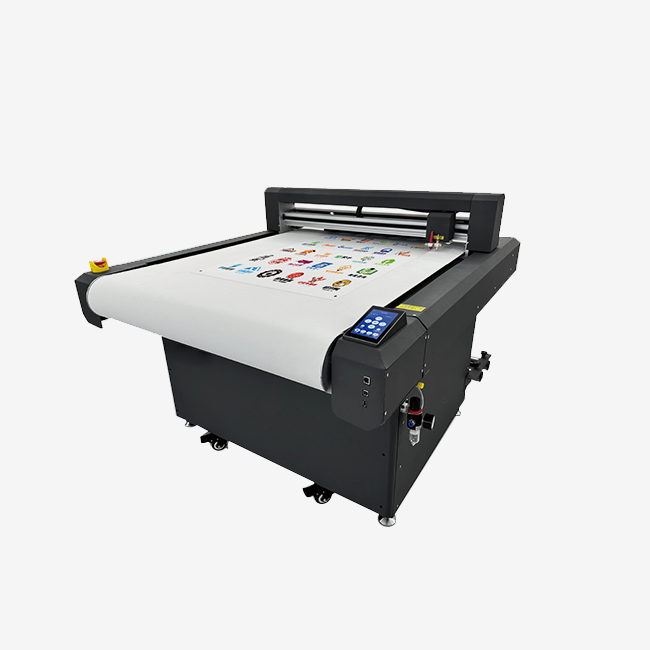
At Yuhui Laser, we built the YH1325 model with a Japanese industrial camera with 2 million pixels that takes great pictures of registration lines with no interruption. This vision system can automatically recognize contours and support two-point and four-point positions. This lets the machine adapt to printed images that may have stretched during production. With a working accuracy of ±0.08/300mm, the machine will cut the same way over and over again for thousands of rounds.
Material Adaptability and Speed Enhancements
When our THF4 military-grade optical system is combined with the adjustable alloy structure, the power output stays the same even after long periods of use. Depending on the density, this technology can work with materials up to 50 mm thick. It can handle everything from 0.5 mm seal rubber to 30 mm honeycomb cardboard. The fastest it can engrave is 12,000 mm/min, and the spindle speed can be changed from 6,000 to 24,000 rpm, which lets you make quick prototypes and large quantities.
The cold-cutting feature of vibration knife devices is what makes them unique. Regular cutters make heat that can melt the sides of plastic or make foam shrink. Our rotating technology gets rid of these flaws in the quality while also making the blades last 1.5 times longer than similar machines. If you store the optical system correctly, it will keep its full capacity for up to five years without losing any of its performance.

Benefits and Applications of Vibration Knife CNC Routers in 2026
Superior Cutting Accuracy and Cost Reduction
For accuracy without heat distortion, this is the main benefit. Laser cuts make areas of high heat that weaken the material's properties, and plasma systems make lines that are too rough and need to be finished again. Vibration knife technology makes clean vertical cuts with edges that are as good as those made by die-presses, but without the cost of the tools. Custom dies can cost $5,000 to $15,000 per design, but you save a lot of money on them.
Cutting down on material waste has a direct effect on profits. The smart nesting program that works with our system (it supports DST, DXF, and AI forms) makes the best use of sheets, which can increase yield by 12 to 18% compared to hand planning. Your scrap rates go down while your throughput goes up because the 5.5KW vacuum system keeps the material stable during high-speed lateral cutting.
Industry Applications and Real-World Performance
Our Contour Cutting CNC Router with Vibration Knife is used by auto factories to make precise gaskets out of EPDM and nitrile rubber. Traditional die-cutting can't handle complex bolt-hole patterns and internal geometries without making expensive tooling changes. This system can. One North American gasket maker said that using our YH1325 model made sample shipping 40% faster.
The CCD camera interface is very helpful for packaging processes. When cutting printed cardboard displays or foam inserts for electronics packing, the vision system fixes any distortions in the material that happen during printing. With this feature, you don't have to make any changes to the registration by hand, so setup time goes from 30 minutes to less than 3 minutes per job.
The advertising and signage industry uses our equipment to cut KT boards, honeycombed materials, and PVC expansion sheets that are used in store displays. The cold-cutting process keeps the brand colours true because it stops the yellowing or melting that happens with CO2 lasers. During busy shopping times, faster production speeds allow point-of-sacolorsrials to be made quickly.
Operational Cost Advantages
Compared CO₂ laser systems that need expensive gas refills or mirror replacements, maintenance costs stay low. The main maintenance is to grease the eccentric bearing once a week and clean the tool holder every day. The industrial-grade welded steel frame is heated to a high temperature to get rid of internal stress. This stops sound feedback that leads to early wear.
The amount of energy used stays much lower than with plasma tables or high-wattage fibre lasers. With a 3KW dust collection and a 5.5KW vacuum system running on AC380V/50Hz, the total power draw allows for cost-effective ongoing operation. The 14-day factory-direct lead time from our Weifang production facility means that your money starts making money right away.
How to Choose the Best Contour Cutting CNC Router with Vibration Knife for Your Business?
Critical Selection Criteria
The biggest substrate you usually work with should be the same size as your cutting ability. The YH1325 design has a working area of 1300x2500mm and a Z-axis clearance of 180mm, which makes it suitable for most packages and signs. Our OEM customization services make it easy for manufacturers who work with car headliners or aircraft prepregs to get the longer bed lengths they need.
Verification of material suitability is necessary. Vibration knives work best with semi-rigid and flexible materials, and they work best with high-speed spindles for rigid surfaces. Our two-head design has oscillating tools for working with foam and leather and spindle routing tools for working with acrylic and wood. This gives us full flexibility in a single machine footprint.
The level of precision needed varies by business. Makers of medical device gaskets have to work with tighter tolerances than makers of foam wrapping. Our system's precision of ±0.08/300mm meets ISO 2768-m standards and can be used in most commercial settings. We use the ballbar method to test for precision squareness and make sure that all of the working areas are straight to make sure that circular shapes stay perfectly round.
Supplier Reliability and Customization Potential
Buyers have to think about how well a supplier can help with technical issues. Our 450-day warranty is much longer than the standard in the business, which shows that we trust the quality of the parts. We help with installation, train operators, and do remote diagnostics to keep production as steady as possible. Long-term relationships with international logistics companies make sure that replacement parts get to your facility within 5 to 7 business days around the world.
Customisation choices let you match up with how things are already done in production. We change the layout of tools to fit tight floor spaces, change the layout of vacuum zones to fit certain materials, and make software interfaces that work with your ERP systems. OEM buyers like our private labelling services and the fact that we can change functions in a way that helps them stand out in the market.
Budget concerns go beyond the original buy price of the Contour Cutting CNC Router with Vibration Knife. Find the estimated output, energy use, consumables, and the total cost of ownership. Our factory-direct price plan gets rid of markups for distributors while keeping quality standards that are CE and ISO9001 certified. People who buy a lot of things get deals and better payment terms that make managing their cash flow easier.
Maintenance and Optimization of Contour Cutting CNC Routers with Vibration Knife
Routine Maintenance Procedures
The first thing that needs to be done every day is cleaning up the tool box and vacuum table areas. When material dust builds up, it can make the suction less effective and contaminate the linear square rail guides. We suggest using compressed air to clean when shifts change. Each session should last about 5 minutes.
As part of the weekly maintenance, the internal eccentric bearing of the oscillating head is oiled. During high-frequency operation, this part has to deal with strong rotational forces. Using two to three drops of high-temperature synthetic lube stops the increase of frictional heat that leads to early wear. The X and Y axes' rack-and-pinion transmissions also need to be greased once a week to keep them moving smoothly.
Monthly maintenance should include using a portable KPa gauge to make sure that the vacuum pressure is the same in all zones. When seals or filters get clogged or worn out, they lower the force that holds the material down, which causes it to move while it's being cut. Our 24-hour dry-run routine checks the oscillating head for thermal buildup and frequency drift. This finds possible problems before they affect the quality of production.
Performance Optimization Strategies
Positional precision is kept up over time by calibration processes. We use laser interferometers to check the smoothness of the bed and make sure that the vacuum table surface stays within 0.05mm of being flat across the whole work area. This process takes thirty to forty-five minutes every three months and stops the accuracy from slowly dropping due to mechanical settling.
Yuhui Laser's software updates include changes to the cutting parameters that are better based on feedback from all users. These improvements make it easier to work with new kinds of materials and make tool path algorithms better so that cycle times are shorter. Our technical support team can install updates virtually, so they won't get in the way of your work plan too much.
Training for operators has a big effect on how long equipment lasts and how well it works. We teach you everything you need to know about how to load materials, choose the right tools, and register a CCD camera. Well-trained workers can spot the first signs of worn-out parts and take steps to stop them from breaking down completely, protecting your investment and meeting uptime goals.
Future Trends and Innovations in CNC Oscillating Knife Cutting Technology
Smart Sensor Integration and Predictive Analytics
Industry 4.0 connectivity is quickly becoming a reality in the manufacturing world. IoT sensors are built into the next generation of vibration knife systems to keep an eye on the temperature of the blade, the level of vibration in the bearings, and the motor's current draw. These data streams are fed into predictive maintenance algorithms that can tell when a part will break two to three weeks in advance. This lets replacements happen during planned downtime instead of having to be done during emergencies.
Researchers at Yuhui Laser are working hard to make AI-driven cutting path optimisation that looks at the direction of the material's grains, changes in density, and data from earlier cuts to find the best way to cut things. This intelligence changes the oscillation frequency and feed rates automatically in real time to make up for differences in the materials that would otherwise lead to quality problems. Early tests show that edge finish accuracy is 15-20% better across surfaces with different densities.
Adapting to Evolving Market Demands
New discoveries in material science make processing more difficult. Adaptive cutting techniques are needed for composite materials with both hard and flexible layers, which can't be done with standard fixed-parameter systems. Our smart control platform uses force sensors to sense changes in the material and automatically adjusts the parameters of the tools, so makers can make next-generation goods without having to buy new equipment.
All areas of manufacturing are seeing more and more requests for customisation. People want personalised products quickly, which forces companies to use flexible production systems. The modular tool-changing feature of our Contour Cutting CNC Router with Vibration Knife will let us switch automatically between vibration knives, creasing wheels, and V-cut tools in 8 seconds. This will let us do mixed-product runs without having to do anything by hand.
Resilience in the supply chain is now a strategic issue. Manufacturers are choosing equipment providers that offer full local support networks and clear component buying more and more. Our growing service infrastructure in North America, Southeast Asia, and the Middle East makes sure that technology support is always available, even when there are problems in the world of politics. This protects your business's ability to keep running.
Conclusion
The advanced features of modern oscillating knife technology are a big step forward in the accuracy of cold cutting. When manufacturers use these systems, they gain a competitive edge by wasting less material, getting better edge quality, and getting rid of heat flaws. As smart integration and predictive maintenance become normal features, choosing equipment should focus on suppliers who show a commitment to ongoing innovation and a strong support system. Switching from old-fashioned ways of cutting to smart buzzing knife platforms will set your business up for long-term success in global markets that are becoming more demanding.
FAQ
What materials can vibration knife CNC routers efficiently process?
Flexible and semi-rigid materials like EVA foam, EPDM gaskets, leather, corrugated cardboard, honeycombed panels, PVC sheets, and carbon fibre prepregs up to 50 mm thick work great with these systems. With the ability to do spindle routing, they can also work with hard materials like plastic, wood, and aluminium alloys, giving you a lot of working options.
How do its performance and price compare with laser cutting alternatives?
Vibration knives get rid of the smoke, smell, and burnt edges that come with laser systems while using 40–60% less power. The cost of buying the tools is 25–35% less than for similar fibre laser cuts. Operating costs go down a lot because you don't have to buy new mirrors or gas to refill the machine. However, lasers may be able to cut thin metals faster than vibration knives can.
What warranty and service options should procurement teams expect?
Good sellers back up their mechanical and electrical parts with guarantees that last between 12 and 18 months. Yuhui Laser offers the best service in the business with 450 days of expert training, installation help, and remote diagnostics. To keep production going, make sure that providers keep enough extra parts on hand and offer reaction times of less than 24 hours for key component failures.
Partner with Yuhui Laser for Advanced Cutting Solutions
You can trust Yuhui Laser to make a Contour Cutting CNC Router with Vibration Knife that is both of proven quality and factory-direct value. Our YH1325 system gives your production the accuracy and dependability it needs, and we offer full customisation services to make sure the equipment fits your needs exactly. We take the guesswork out of buying by offering 14-day production lead times, CE and ISO certification, and our own 450-day warranty backed by global logistics partnerships. Send an email to jianghui@yuhui-laser-tech.com to talk to our expert team about how our intelligent cutting systems can change the way you make things, lower your costs, and keep the quality high.
References
1. Industrial Cutting Technologies Association. (2025). Standards for Non-Thermal Material Processing Systems. Manufacturing Equipment Quarterly.
2. Chen, M. & Rodriguez, F. (2024). Comparative Analysis of Cold Cutting Methods in Composite Material Processing. Journal of Advanced Manufacturing Technology, 78(4), 892-910.
3. European Machinery Safety Council. (2025). CE Certification Requirements for CNC Cutting Equipment. Brussels Technical Standards Publication.
4. Zhang, L. (2024). Predictive Maintenance Applications in Industrial Automation. International Conference on Smart Manufacturing Proceedings.
5. North American Packaging Association. (2025). Technology Adoption Trends in Flexible Material Processing. Industry Research Report Series.
6. Williams, K. & Patel, S. (2024). Cost-Benefit Analysis of Vibration Knife Systems in Automotive Manufacturing. Production Engineering Review, 41(2), 156-173.
Contact us directly for customized solutions, quotations and long-term strategic cooperation.