- English
- French
- German
- Portuguese
- Spanish
- Russian
- Japanese
- Korean
- Arabic
- Greek
- German
- Turkish
- Italian
- Danish
- Romanian
- Indonesian
- Czech
- Afrikaans
- Swedish
- Polish
- Basque
- Catalan
- Esperanto
- Hindi
- Lao
- Albanian
- Amharic
- Armenian
- Azerbaijani
- Belarusian
- Bengali
- Bosnian
- Bulgarian
- Cebuano
- Chichewa
- Corsican
- Croatian
- Dutch
- Estonian
- Filipino
- Finnish
- Frisian
- Galician
- Georgian
- Gujarati
- Haitian
- Hausa
- Hawaiian
- Hebrew
- Hmong
- Hungarian
- Icelandic
- Igbo
- Javanese
- Kannada
- Kazakh
- Khmer
- Kurdish
- Kyrgyz
- Latin
- Latvian
- Lithuanian
- Luxembou..
- Macedonian
- Malagasy
- Malay
- Malayalam
- Maltese
- Maori
- Marathi
- Mongolian
- Burmese
- Nepali
- Norwegian
- Pashto
- Persian
- Punjabi
- Serbian
- Sesotho
- Sinhala
- Slovak
- Slovenian
- Somali
- Samoan
- Scots Gaelic
- Shona
- Sindhi
- Sundanese
- Swahili
- Tajik
- Tamil
- Telugu
- Thai
- Ukrainian
- Urdu
- Uzbek
- Vietnamese
- Welsh
- Xhosa
- Yiddish
- Yoruba
- Zulu
How to Choose a Fiber Laser Cutting Machine for Metal Cutting?
To choose the best fiber laser cutting machine for working with metal, you need to carefully look at its technical specs, how it works, and how reliable it will be in the long term. There are many options to choose from, but the H Model Plate Fiber Laser Cutting Machine stands out as a strong option. It is built with a heavy-duty H-type skeletal bridge that makes it very stable during continuous production cycles. This guide tells you the most important things you need to think about before buying industrial laser equipment. This will help you make an educated choice that fits your budget and business goals.
Understanding Fiber Laser Cutting Technology for Metal Processing
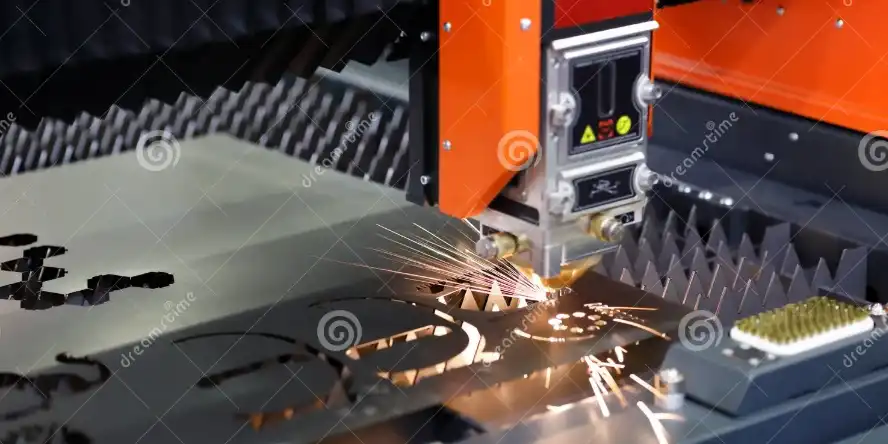
Fiber laser technology has changed the way metal is made by sending focused energy through optical fibers to make a focused beam that can cut through different metal pieces very precisely. Compared to older CO₂ systems, fiber lasers have a better electro-optical conversion efficiency—often above 30%. This means they use less energy and cost less to run.
How Fiber Lasers Generate Cutting Power
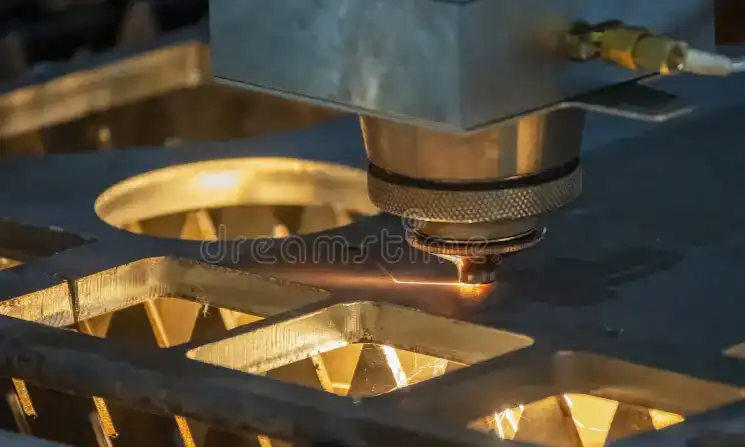
The main process involves making a laser beam with a wavelength of about 1070 nm by magnifying light in doped optical fibers. This frequency works especially well for absorbing metals, so the beam can cut through carbon steel, stainless steel, aluminum, and copper with only a few areas that get too hot. The directed beam melts the material, and helper gases like oxygen, nitrogen, or compressed air push the molten metal away, leaving clean lines.
Key Technical Specifications That Matter
You should look at a few important factors when judging machines like the YH-3015H, YH-4020, YH-6020H, or YH-8025H types. Laser power, which ranges from 3000W to 30000W, determines how well it cuts. Higher wattage cuts through thicker materials faster. Working areas that range from 3000x1500mm to 8000x2500mm can handle plates of different sizes, and top speeds of up to 70m/min allow for large-scale production. The water cooling system keeps the laser output stable during long operations, stopping temperature drift that could affect precision.
Precision parts like servo motors, rack-and-pinion drive systems, and powerful CNC controls are used in modern fiber laser systems. Together, these parts make it possible to achieve a setting accuracy of within 0.03 mm per meter. This makes sure that the quality stays the same over thousands of cutting rounds. Adding military-grade lenses, like the THF4 safety lens, makes maintenance times longer and keeps beam quality high even in tough workshop conditions.
Critical Criteria to Consider When Choosing a Fiber Laser Cutting Machine
Before you make a choice, you should have a clear picture of your production needs, such as the metals you work with, the average plate thickness, and your daily output goals. Nitrogen-assisted cutting is helpful for shops that work with stainless steel and aluminum because it makes edges that are free of rust and can be welded without any extra surface preparation. When making structure parts out of carbon steel, companies that make auto parts often put speed and accuracy first.
Evaluating Machine Performance and Operational Efficiency
Cutting speed has a direct effect on output, but you need to find a mix between speed and edge quality. When machines have cutting factors that can be changed, workers can find the best settings for each material. For example, for thick plates, slower speeds with more power are best, while for thin gauges, faster speeds are best. The heavy bed design in H-frame setups keeps the cutting precise even at speeds of up to 70 meters per minute by reducing vibrations during high-speed movements.
Energy economy should be carefully thought through when figuring out the total cost of ownership. Fiber lasers use a lot less power than older CO2 systems, which can cut electricity costs by 40 to 60 percent. Long-term costs are also affected by the need for maintenance. When optical lines are sealed and positive pressure safety systems are used, lenses need to be replaced less often, which cuts down on downtime and costs for consumables. You should ask for specific details about how often repair is done, when spare parts are available, and how long it takes for help to arrive.
Machine Stability and Structural Design
Long-term accuracy and dependability depend on how well the machine bed is built. Stress-relieving heat treatment on welded steel frames keeps their geometric accuracy over many years of use. Crossbeams that are both light and rigid allow for fast traversing without losing accuracy in placement. Ergonomic design in factories keeps workers safer and helps them avoid getting tired while setting up and moving things.
Cutting tools with built-in quality control systems are more productive because they find mistakes right away. Capacitive height sensing changes the focus distance automatically as the cutting head follows the shape of the plate. This fixes any issues with material twisting or uneven loading. Cutting parameter databases store tried-and-true recipes for common material-thickness combinations, and automatic tool centering systems cut down on the time needed to set up between jobs.
Comparing H Model Fiber Laser Systems Against Alternative Solutions
You should compare more than just the initial purchase price when comparing different makers and machine setups. The heavy-duty design of the H Model Plate Fiber Laser Cutting Machine gives it clear benefits in production settings where downtime and accuracy are important. Comparing performance data shows how the design of a structure affects how things work in the real world.
Performance Benchmarks and Quality Metrics
Cutting quality is shown by edge roughness values recorded in Ra (average roughness). High-end fiber lasers can cut stainless steel with Ra values below 12.5 micrometers, leaving sides that are ready to be directly welded or put together. Dross creation, which is when molten material sticks to the cut edge, should be very low or nonexistent if the cutting settings are set up correctly. Look at sample cuts that have been magnified to check the quality of the beam focus and help with gas optimization.
Thermal control affects both the quality of the cut and the life of the part. Strong water cooling circuits in machines keep the laser output stable during long production runs. Laser sources that are controlled by temperature keep the power from changing, which could lead to uneven kerf width or missing penetration. You should make sure that cooling systems have backup fans and flow monitors that shut down the system automatically if the temperature changes too much.
Total Cost Analysis and After-Sales Support
Buying directly from makers like Yuhui Laser is often a better deal than buying through a number of different channels. Equipment costs, shipping costs, installation services, and training programs should all be broken down into separate, clear price systems. Distributors may be able to get savings for buying in bulk, have the option to have their logos changed, and be given priority delivery times within 14-business-day production processes.
A warranty that lasts for 450 days shows that the maker trusts the stability of the equipment. Remote diagnostics, on-site technical help, and operator training that covers safety rules, maintenance processes, and parameter optimization are all part of full after-sales programs. Having access to application engineers who know your unique materials and production problems is very helpful in addition to buying the tools.
Application Scenarios and Industry Use Cases
Fiber laser cutting technology is useful for metal manufacturing shops that work with a wide range of businesses. Cutting chassis braces, suspension parts, and body panels with great accuracy is important for companies that make automotive parts because the standards for assembly depend on it. Fiber lasers are great for making safety-critical parts because they can work with high-strength steel types while keeping the quality of the edges.
Heavy Machinery and Structural Fabrication
For tool frames and connection brackets, companies that make farm equipment cut thick carbon steel plates. High laser power and stable beam delivery make it possible to cut through 25mm plates cleanly without having to do any extra work to finish them off. When nesting complex forms from large-format sheets, manufacturers of construction tools like how fast it is. This helps them meet tight production plans and waste as little material as possible.
In shipbuilding, tools are needed that can handle large plates and keep their accuracy over long cutting lines. Work areas that are 8000 mm x 2500 mm can fit bulkhead sections and deck plates, and the heavy bed construction stops movement that would affect the accuracy of multi-meter cutting operations. The strength needed for keeping accuracy when working with materials up to 50mm thick is provided by the H-type structural design.
Precision Engineering and Aerospace Components
Fiber laser cutting is used to keep the material qualities of heat-treated metals when industries need to keep heat-affected zones to a minimum. When aerospace makers cut titanium and Inconel metals, the high energy density and fast cutting speeds keep the materials from getting too hot. Holding tight tolerances across complicated shapes cuts down on the need for extra machining, which speeds up production and lowers costs.
Customization options let you connect to automatic loading systems, robots that move materials, and tools used after the initial processing. Customizing software lets you use advanced stacking methods that make the best use of materials, and smart control systems make it easy to connect production lines using standard industrial communication protocols. Because of these features, H Model Plate Fiber Laser Cutting Machines are important parts of smart production settings.
Making the Purchase: Procurement Guidance for Industrial Laser Equipment
To get through the buying process, you need to know about the different ways you can buy things and evaluate the skills of potential suppliers. Authorized makers offer clear control of the supply chain, quality certifications, and direct expert help that makes setting up and commissioning easier. Check for CE and ISO9001 certifications when buying from Chinese companies like Shandong Yuhui Laser Technology Co., Ltd. These show that the company meets foreign safety and quality standards.
Logistics, Installation, and Training Programs
Delivery dates affect how projects are planned and how much work gets done. Manufacturers who keep common setups in stock can ship equipment within two weeks. However, wait times may go up to four to six weeks for custom orders that need specific bed measurements or changes to the control system. Freight shipping is reliable when you have established relationships with foreign freight companies. You can get insurance for your cargo and track it from door to door.
Hiring a professional installation service gets rid of delays and mistakes during starting and testing. Before handing off to the next operator, technicians adjust motion systems, check laser alignment, and make sure that cutting parameters are correct. Daily operation methods, standard maintenance chores, troubleshooting common problems, and finding the best parameters for your products should all be covered in training programs. Documentation like electrical schematics, mechanical drawings, and software instructions help with upkeep and future updates.
Financing Options and Long-Term Partnership Benefits
Buying capital equipment can be hard on budgets, which is why small and medium-sized producers like finance options. Leasing programs split costs into monthly payments that are in line with how much money the business makes, and industrial banks offer low interest rates on equipment loans. Fleet price helps distributors who want to buy a lot of units because it lowers the cost per unit while making sure their customers can always get what they need.
Getting to know the companies that make the tools you use opens up the door for technical teamwork and constant growth. Suppliers who care about their customers' success offer application development support, which can help you add new materials or production methods to your list of capabilities. Access to software changes, retrofit choices, and technological upgrades makes equipment last longer and helps businesses stay ahead in markets that are changing.
Conclusion
When picking out a fiber laser cutting machine, you have to think about your technical needs, your income, and your long-term assistance needs. The H Model Plate Fiber Laser Cutting Machine performs at an industrial level thanks to its strong structure, precise parts, and flexible power choices that can be used for a wide range of metalworking tasks. Making sure that equipment capabilities and manufacturing goals are in line with each other is done by judging machines based on their real production needs instead of just their specs. Partnering with makers that offer full help and a track record of reliability reduces risk and increases return on investment.
FAQ
What materials can fiber laser cutting machines process effectively?
Carbon steel, stainless steel, aluminum, copper, brass, and titanium are just a few of the metals that fiber laser devices can cut very well. High-power setups can work with carbon steel that is up to 60mm thick. Stainless steel and aluminum can usually work with steels that are up to 50mm thick, but this depends on the laser wattage and help gas choice.
How does the H-frame structure improve cutting performance?
The H-type structure bridge evenly distributes weight and reduces vibrations better than the cantilever or O-frame types. This design keeps accuracy even when moving at speeds higher than 1.2G, which stops the dimension mistakes that happen when structures that aren't as rigid bend under inertial loads.
What ongoing maintenance do fiber laser cutting machines require?
Cleaning the protected glasses, checking the purity of the assist gas, checking the state of the nozzles, and making sure the cooling system works are all part of routine upkeep. Fiber laser sources can work for up to 100,000 hours without needing to be serviced, which is a lot longer than CO₂ laser tubes. Sealed optical lines lower the risk of contamination, which means that there are longer gaps between big service events.
Can these machines integrate with existing production workflows?
Standard industrial interfaces like Ethernet/IP, Profinet, and OPC-UA can be used to connect modern fiber laser cutting devices. When the right link hardware and software customizations are made during installation, automated material handling systems, robotic loading cells, and tools used afterward can all work together without any problems.
Partner With a Reliable H Model Plate Fiber Laser Cutting Machine Manufacturer
Yuhui Laser specializes in providing affordable commercial laser solutions that are backed by CE and ISO certifications, which make sure that the quality meets global standards. Our plant keeps a lot of standard designs in stock and can make them in 14 business days. If you have specific structural, functional, or automation needs, our engineering team can make them, too. The 450-day after-sales service program includes expert training, remote diagnostics, and on-site help. This gives you peace of mind throughout the lifecycle of the tools. Competitive factory-direct price gets rid of markups for wholesalers, fabricators, and automation installers, giving them more value. You can email our technical team at jianghui@yuhui-laser-tech.com to talk about your specific metal-cutting needs and get quotes for H Model Plate Fiber Laser Cutting Machine setups that will work best in your production setting. You can look at our whole selection of laser processing equipment at yuhui-laser-tech.com and learn why makers in Southeast Asia, the Middle East, and Europe choose Yuhui Laser as their main provider.
References
1. Powell, J., & Kaplan, A. F. (2012). Laser Cutting: From First Principles to the State of the Art. Manufacturing Engineering Series, London: Springer-Verlag.
2. Steen, W. M., & Mazumder, J. (2010). Laser Material Processing (4th ed.). London: Springer Science & Business Media.
3. Wandera, C., & Kujanpää, V. (2011). Characterization of the melt removal rate in laser cutting of thick-section stainless steel. Journal of Laser Applications, 23(2), 022002.
4. Hirano, K., & Fabbro, R. (2011). Experimental determination of temperature threshold for melt surface deformation during laser interaction. Journal of Physics D: Applied Physics, 44(43), 435402.
5. Riveiro, A., Quintero, F., Lusquiños, F., Del Val, J., Comesaña, R., Boutinguiza, M., & Pou, J. (2019). Laser cutting: A review on the influence of assist gas. Materials, 12(1), 157.
6. Chen, K., Yao, Y. L., & Modi, V. (2000). Gas jet-workpiece interactions in laser machining. Journal of Manufacturing Science and Engineering, 122(3), 429-438.
Contact us directly for customized solutions, quotations and long-term strategic cooperation.