- English
- French
- German
- Portuguese
- Spanish
- Russian
- Japanese
- Korean
- Arabic
- Greek
- German
- Turkish
- Italian
- Danish
- Romanian
- Indonesian
- Czech
- Afrikaans
- Swedish
- Polish
- Basque
- Catalan
- Esperanto
- Hindi
- Lao
- Albanian
- Amharic
- Armenian
- Azerbaijani
- Belarusian
- Bengali
- Bosnian
- Bulgarian
- Cebuano
- Chichewa
- Corsican
- Croatian
- Dutch
- Estonian
- Filipino
- Finnish
- Frisian
- Galician
- Georgian
- Gujarati
- Haitian
- Hausa
- Hawaiian
- Hebrew
- Hmong
- Hungarian
- Icelandic
- Igbo
- Javanese
- Kannada
- Kazakh
- Khmer
- Kurdish
- Kyrgyz
- Latin
- Latvian
- Lithuanian
- Luxembou..
- Macedonian
- Malagasy
- Malay
- Malayalam
- Maltese
- Maori
- Marathi
- Mongolian
- Burmese
- Nepali
- Norwegian
- Pashto
- Persian
- Punjabi
- Serbian
- Sesotho
- Sinhala
- Slovak
- Slovenian
- Somali
- Samoan
- Scots Gaelic
- Shona
- Sindhi
- Sundanese
- Swahili
- Tajik
- Tamil
- Telugu
- Thai
- Ukrainian
- Urdu
- Uzbek
- Vietnamese
- Welsh
- Xhosa
- Yiddish
- Yoruba
- Zulu
The Different Between of Glass & Metal CO2 Laser Tubes
When picking CO₂ laser tubes for your printing or cutting tools, it's important to know the main differences between metal and glass options so that you can get the best performance and value for your money. Glass tubes usually have a sealed glass cage that holds the gas mixture. They are cheap and easy to use, but they are fragile and need to be handled carefully. Metal tubes, on the other hand, use metal housings combined with ceramic insulation components, which makes them more durable and longer-lasting. Both types use CO₂ gas to excite laser beams, but the way they are built affects how well they cool, how often they need upkeep, and how stable the power is. The FLT Series CO₂ laser tube is a great choice for makers and wholesalers looking for a balanced solution. It has adjustable alloy structures, better heat reduction, and steady power output that stays reliable even after long use.
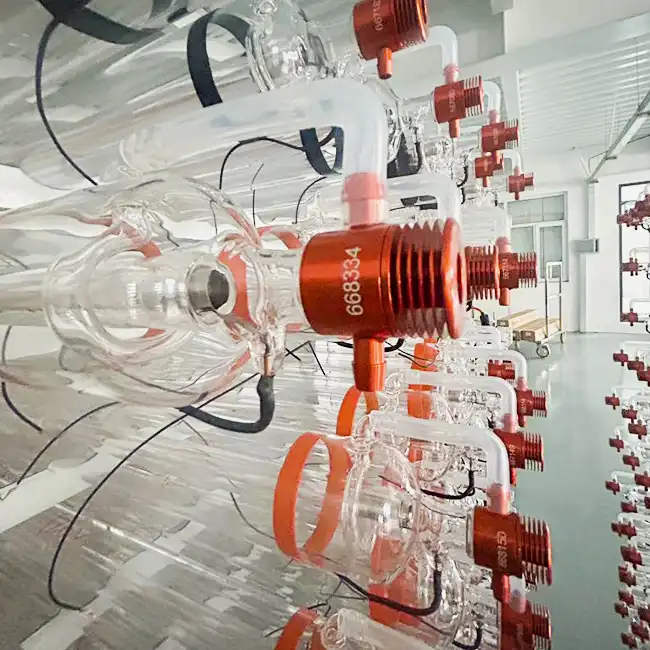
Understanding Glass and Metal CO₂ Laser Tubes
There's more to choosing the right laser tube than just looking at the power numbers. There are big changes in how glass and metal tubes are built that have a direct effect on operational costs, machine uptime, and the quality of the goods that are made.
Construction and Working Principles
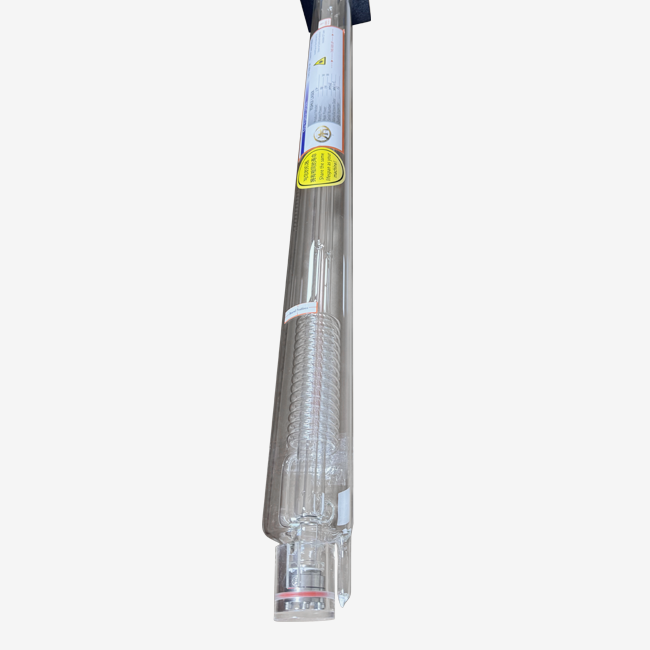
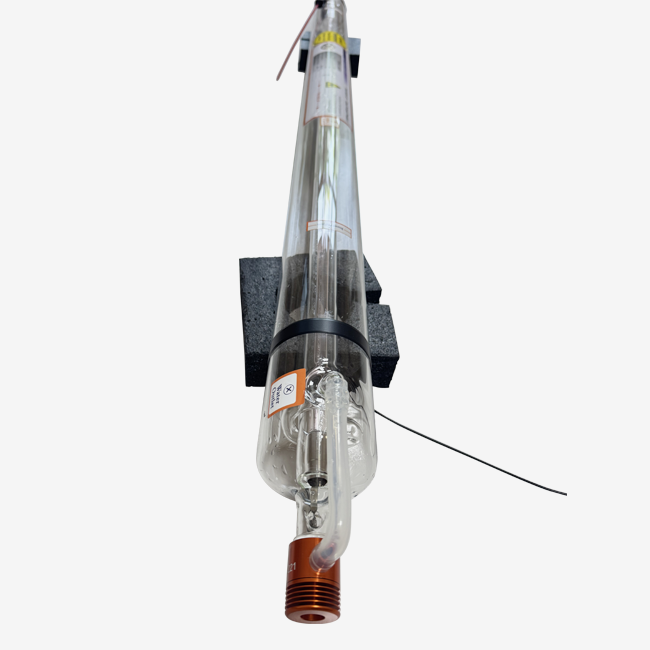
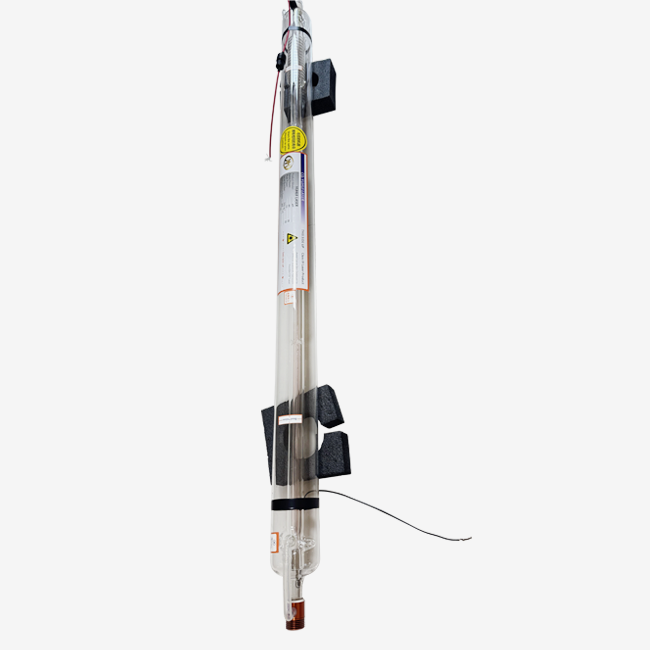
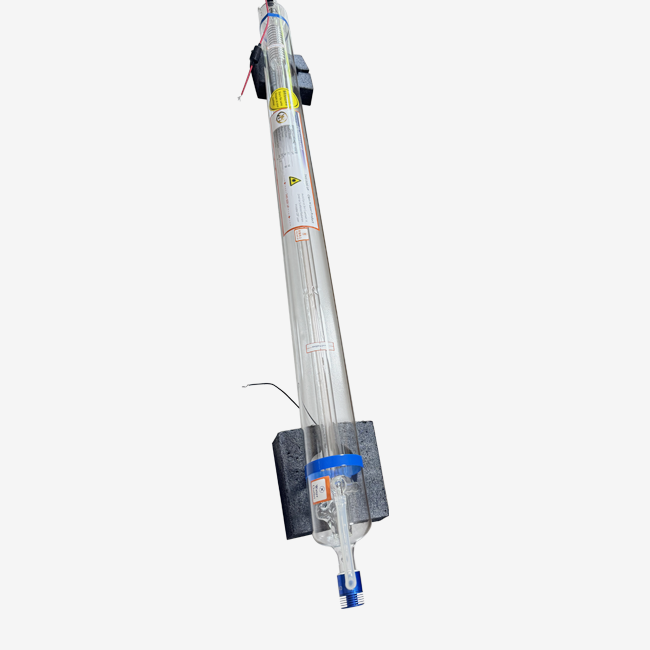
A sealed borosilicate glass cylinder filled with an exact mix of carbon dioxide, nitrogen, and helium gases makes up a glass CO₂ laser tube. At each end, electrodes excite the molecules of gas, which makes an infrared laser light with a wavelength of 10.6 microns. Because of this design, the cost of making glass tubes is low, which makes them popular in small businesses and with people who are just starting out with laser cutting. The clear housing lets workers see the discharge glow, which gives them instant information on the health of the tube.
A different method is used with metal CO₂ laser tubes. Their discharge chamber typically combines ceramic insulating components with metal housings, which makes the whole thing smaller and more durable. The metal design better blocks electromagnetic waves and protects against mechanical damage from falls during installation or repair. This design allows for higher power densities and more uniform beam patterns even when the temperature outside changes.
Performance Factors and Lifespan Considerations
Aside from the stated power, there are other factors that affect how well a tube works. Glass tubes typically have a service life of around 2,000 to 10,000 hours depending on quality, operating conditions, and cooling performance. This decline is sped up by things in the environment like heat, dust poisoning, and bad cooling. Metal RF CO2 laser tubes often achieve service lives of 10,000 to 20,000 hours due to superior thermal management and more stable internal structures.
There are big differences in how much cooling each system needs. For glass tubes to work properly, water must constantly flow through their outer jackets. The water temperature should be kept between 15°C and 25°C. Any change could cause heat stress cracks in the glass envelope. Metal tubes can work well in a wider range of temperatures and with air-cooling systems in low-power situations, which can lower the cost of extra equipment for some setups.
Power efficiency and stable output are very important in work settings where regular cut quality is what makes the business profitable. Gas molecules break apart over time, which causes power to slowly decrease in glass tubes. This means that cutting factors need to be recalibrated on a regular basis. In high-precision uses, metal tubes have more stable output qualities over the course of their service life, which means they need fewer adjustments and produce less scrap.
Maintenance Routines and Common Issues
Different types of tubes need very different amounts of maintenance. Water flow systems that use glass tubes need to be checked regularly for clogs, algae growth, or mineral deposits that stop heat from moving. Because glass is so fragile, it needs to be handled carefully when it's being cleaned and when it's being transported so that tiny cracks don't form that risk the structure of the tube.
Maintenance procedures are easier to do with metal tubes. Their strong construction means they can be handled normally without any extra care. To clean, you have to wipe down the outside and make sure the electrical connections at the power source port are correct. The cooling system is the most important part of maintenance because metal tubes can handle small changes in temperature without losing efficiency right away.
Common types of failure are also different. A lot of the time, electrode erosion, gas leaks through broken seals, or severe cracks from thermal shock happen in glass tubes. Most of the time, these crashes happen quickly and with few warning signs. Metal tubes lose their performance more slowly, typically showing up as a lower maximum power output or changes in beam mode quality that can be found by measuring power regularly.
Compatibility and Application Suitability
Tube-choosing choices should be based on the needs of the application. When etching, where fine detail is more important than cutting speed, glass tubes work great. Because they are less expensive, they are good for businesses that make prototypes, teach, or work with materials like plastic, wood, leather, and cloth in small to medium quantities.
Metal tubes are useful for cutting things in factories that need a steady flow of high-power electricity. Sheet metal fabrication shops, companies that make car parts, and sign companies that work with materials all benefit from metal tubes because they last longer and need less upkeep. The constant quality of the beam helps automatic production lines that want as little human help as possible.
Machine compatibility is more than just the size of the fixing holes. The characteristics of the power source must exactly fit the tube specs. Metal tubes have different electrical needs than glass tubes. Metal tubes need different voltages and currents to work. Adding different types of tubes to old machines usually requires changing the power source, which makes the switching process more difficult and costs more.
FLT Series CO2 Laser Tube: Specifications and Advantages
When it comes to CO₂ laser tubes, the FLT Series CO₂ laser tube is one of the best choices because it was carefully designed to work around problems that common designs have. The use of new materials and structure advances in these tubes has a direct effect on how well they work in production.
Detailed Specifications and Power Ranges
The FLT Series CO₂ laser tube includes a range of power combinations that are specifically designed to meet the needs of different industries. The power runs from 80W to 130W, so they can handle a wide range of jobs, from fine engraving to heavy-duty cutting. The physical measurements are the same as normal mounting configurations, which makes it easy to add to current laser systems without making many changes.
FLT Series CO2 Laser tubes are different from other brands because their metal structure can be adjusted. This part of the design accounts for heat growth while it's working, so the internal parts stay in the best position even during long cutting sessions. This leads to accurate beam pointing that has a direct effect on the quality of the edges on final parts.
Optical parts inside FLT Series CO₂ Laser tubes use special lens treatments that improve beam quality while reducing energy loss. The high-quality beam profile creates small light spots that focus energy density exactly where it's needed. This lets you work on detailed details and get clean cuts that mean you don't have to do as many extra finishing steps.
Superior Durability and Efficiency
The FLT Series CO₂ laser tubes are more durable than normal industry standards. Accelerated aging tests and field confirmation data back up the manufacturer's claim that the product will last 1.5 times as long as similar goods. This longer operating period lowers the total cost of ownership by lowering the number of times that parts need to be replaced and the costs that come with that.
Efficiency benefits come from different parts of the system working together. The great heat absorption design stops localized hot spots that usually ruin the makeup of gas mixtures in smaller tubes. Thermal control devices keep the discharge zone at a constant temperature, which keeps the chemical balance needed for long-term power output.
Consistency in performance over time solves a major problem in business settings. Many standard CO₂ tubes lose a lot of power in the first year of use, so workers have to raise the machine's settings to make up for it, which speeds up the wear and tear on other parts. FLT Series CO2 Laser tubes keep their power output stable over their entire working life. Tests show that after a year of normal use, they lose less than 5% of their power.
Simplified Maintenance and Cooling Solutions
Total running costs are greatly affected by how easy it is to maintain. In addition to regular cooling system maintenance, FLT Series CO₂ laser tubes don't need much else. The strong construction can handle the normal handling stresses that come up during regular checks without lowering performance.
The needs for cooling are still simple. Industrial-grade water chillers that keep the temperature stable between 15°C and 25°C are good for keeping things running for a long time. The better heat absorption design lowers the cooling load compared to similar power glass tubes. This could mean that current chiller capacity can handle higher power operations or more than one machine at the same time.
Closed-loop systems with deionized water are recommended for cooling because they keep minerals from building up on the internal pathways. Flow rate standards make sure that enough heat is transferred without putting too much pressure on connection points, which could cause them to break. When cooling systems are set up correctly, they can work at full power for long periods of time without losing heat.
After-Sales Support and Customer Confidence
Yuhui Laser backs up its FLT Series CO₂ laser tubes with a full support system that is meant to lower user risk. The product warranty of 450 days is much longer than the average in the industry. This shows that the maker trusts the quality of the parts and the manufacturing process. This longer coverage time gives procurement managers more budget certainty by preventing replacement costs that come up out of the blue during the coverage window.
Warranty security is enhanced by the availability of technical help. Experienced experts help with installation, troubleshooting, and making suggestions for how to improve performance that are unique to each application. This knowledge is especially useful for businesses that use laser systems in automated production lines, since the dependability of the equipment has a direct effect on the total throughput.
Customer comments from both distributors and end users always point out that dependability and steady performance are what set this product apart. Because tubes work the same way throughout the warranty time and after, manufacturing sites say they have less maintenance to do and can better plan their production.
Comparing FLT Series Laser Tubes with Other Market Options
To make smart buying choices, you need to be able to compare different options in an objective way. Comparing FLT Series CO₂ laser tubes to well-known competitors shows clear advantages that lead to business benefits.
Performance Evaluation Against Established Brands
There are many cheap laser tubes on the market, as well as well-known names like RECI. In industrial settings, especially in Asia and Europe, RECI tubes built a strong name for dependability. Because they are made of metal tubes, they work consistently even under heavy loads. This makes them standard products that other products are compared against.
In key measures, FLT Series CO₂ laser tubes are positioned as competitive alternatives to established brands such as RECI. Comparative testing shows that the beam quality and power steadiness are the same, and it also shows that there are cost benefits that make the project more profitable. The flexible alloy structure in FLT Series CO₂ laser tubes has thermal adjustment features that aren't always present in rival designs. This helps keep the alignment accurate over long periods of operation.
When compared to each other, generic CO₂ tubes show the opposite picture. Although these goods have low prices at first, they usually don't have strict quality control during production. This means that more of them break and different units don't work the same way. Generic tubes don't always come with the right approval paperwork, which can be a problem for businesses that sell to controlled markets or people who care about quality.
Total Cost of Ownership Analysis
The purchase price is only one part of how much the tools really cost. When figuring out the total cost of ownership, you have to think about things like operational costs, maintenance needs, and how often things need to be replaced over planning periods that are important to business operations.
The costs of FLT Series CO₂ laser tubes are good over long periods of time. The 1.5 times longer service life compared to normal products means that they don't need to be replaced as often, which lowers the costs of both the parts and the work needed to change the tubes. There is also better production consistency because there is less downtime and better plan adherence because there are fewer replacement rounds.
Differences in how much energy different types of tubes use affect running costs, especially in places where they are used a lot. The electro-optical conversion efficiency of FLT Series CO₂ laser tubes is designed to improve energy utilization, turning electrical energy into useful laser output with very little waste. This efficiency cuts down on the amount of power needed to process each part, which lowers energy costs and helps the company meet its green goals.
Operational security is affected by the availability of parts and issues in the supply chain. With 14-day production wait times, Yuhui Laser keeps a lot of tubes in stock so that replacements can be sent out quickly when they are needed. Logistics relationships that have been in place for a while make delivery reliable, even to foreign destinations. This lowers the risk of having to wait for new parts for a long time.
Certification and Compliance Assurance
For equipment to get into many areas, meeting regulatory standards is a must. When something has CE approval, it means it meets the safety, health, and environmental protection standards of the European Union. This means it can be sold legally in all EU member states. ISO approval verifies that a quality management system is being used correctly, which gives customers faith that the manufacturing process makes regular, high-quality goods.
The FLT Series CO₂ laser tubes are certified by both CE and ISO, which means they meet basic standards for foreign trade. Regular checks are done to make sure that these certifications are still valid as standards change. Regulatory paperwork and customs clearance are easier for importers and sellers when certified goods come with documentation packages.
There are extra certification standards for some market sectors. Certain laser products entering the United States market may require FDA/CDRH compliance depending on their classification and application. In other places, different national rules apply. Working with makers who have the right certifications gets rid of compliance issues that could slow down the deployment of tools or put you at risk of being sued.
How to Choose the Right CO2 Laser Tube for Your Business
Matching the specs of the laser tube to the needs of the operation guarantees the best performance of the equipment while keeping costs low. Several important factors should be carefully looked at during the choosing process.
Industry-Specific Requirements
Laser processing equipment has to meet different needs in different types of production. In sheet metal manufacturing, cutting speed and edge quality are the most important things. This is true for materials ranging from thin sheets of stainless steel to thicker non-metallic materials when using CO₂ laser systems. For these uses, higher-power tubes, like 130W models, keep the cutting speed constant even when the width of the material changes.
Manufacturers of signs and displays who mostly work with plastic, wood, and other non-metallic materials can get by with modest power levels. An 80W to 100W tube gives you enough energy density for clean cuts and detailed etching while keeping the costs of buying and running the equipment low. It's important for materials to be able to change when production mixes include different bases that need different processing conditions.
Textile and clothing businesses that need to cut fabric layers like non-contact processing because it keeps the material from changing shape. CO2 laser tubes that make small light spots with little heat-affected areas stop edges from getting too hot and stop mechanical compression that could stretch delicate materials. Stable power flow makes sure that results stay the same over long production runs that cover several shifts.
Critical Decision Criteria
Replacement budgets and production plans are directly affected by how long people think a product will last. Tubes with a 5,000-hour operational life need to be replaced less often than tubes with a 2,000-hour operational life. This cuts down on both the direct costs of parts and the secondary costs of downtime for changeovers. The ability to store more data without affecting speed makes it easier to keep extra items on hand without worrying about their shelf life running out.
Energy economy is important for more than just the environment; it's also good for business. High photoelectric conversion efficiency lowers the amount of electricity needed to process a part, which can make up for higher starting equipment costs over the useful lifetime of the equipment. These saves are especially important in high-volume settings where equipment is used nonstop across multiple shifts.
The skills of suppliers to help should be carefully looked at. Having technical support during the installation and fixing stages avoids delays that cost a lot of money and wrong settings that hurt performance. Comprehensive training programs help users get the most out of their tools while avoiding actions that wear them down faster or put people in danger.
Customization and Partnership Benefits
Standard products work well for many uses, but sometimes specific needs call for answers that are made just for them. Companies that let you change the structure, the way it works, or the software that runs on it offer freedom that generic sellers can't match. Custom setups make sure that the right tools are used for the job, which boosts output and quality.
Yuhui Laser's technical skills allow them to meet a wide range of customization needs for FLT Series CO₂ laser tubes. Power output changes, actual size changes, and changes to the cooling system make it possible to precisely match the needs of each application. You can use this freedom to your advantage when adding laser processing to automatic production lines or adding better parts to older equipment.
Working with factory-direct providers cuts out the middlemen and gives you straight access to technical knowledge. Direct relationships make it easier to handle problems quickly, communicate clearly about shipping times and customization needs, and settle guarantee issues. These benefits make operations more reliable and help with long-term planning for the business.
Conclusion
To tell the difference between glass and metal CO₂ laser tubes, you need to know how they are built, how they work, and what your unique production setting needs in terms of operational requirements. For moderate-duty uses, glass tubes are a cost-effective way to get started, while metal tubes are more durable in harsh industrial settings. The FLT Series CO₂ laser tube from Yuhui Laser bridges these categories, delivering metal-tube reliability with competitive economics through innovative engineering. Its adjustable alloy structure, superior heat dissipation, and sustained power output address critical performance factors that determine production efficiency and part quality. Extended service life, comprehensive warranty coverage, and factory-direct support create compelling value propositions for distributors and manufacturers alike. Careful evaluation of your specific processing needs, material types, output volumes, and maintenance skills will help you choose the best tubes that meet your performance goals and stay within your budget.
FAQ
What are the typical lifespan differences between glass and metal CO₂ laser tubes?
Most glass tubes can work for 2,000 to 3,000 hours before they lose a lot of power, but this range can be extended with proper cooling and upkeep. Because they are stronger and better at managing heat, metal tubes usually last between 5,000 and 8,000 hours under the same conditions. The FLT Series CO₂ laser tube has 1.5 times the service life of similar standard goods. Properly stored tubes may retain usability for extended periods, though storage conditions and sealing quality significantly affect lifespan.
How does the FLT Series improve upon conventional CO₂ laser tube designs?
In the FLT Series CO₂ laser tube, there is an adjustable alloy frame that handles temperature growth and keeps parts aligned during long periods of use. Better heat absorption design stops overheating in certain areas, which breaks down gas mixes in regular tubes. Specialized optical coatings improve the quality of the beam while reducing energy loss. This makes small light spots that are great for precise work. These parts of the design work together to give stable power flow that drops by less than 5% after a year of use.
What maintenance practices maximize CO₂ laser tube longevity?
Temperature stress that shortens tube life can be avoided by keeping the cooling water between 15°C and 25°C. Mineral layers on internal surfaces can be avoided by using deionized water in closed-loop cooling systems. Checking the flow rates of water on a regular basis makes sure that heat is transferred properly without too much pressure. Regularly checking the power output finds slow degradation, which lets replacements be planned ahead of time, before quality problems affect production. Electrical stress on tube parts can be avoided by making sure there is good grounding and clean links to the power source.
Partner with Yuhui Laser for Reliable FLT Series CO2 Laser Tube Solutions
With our cutting-edge FLT Series CO₂ laser tube technology, Yuhui Laser is ready to help you with your laser processing needs. Our CE- and ISO-certified tubes deliver consistent performance backed by 450-day warranty coverage that exceeds industry standards. Whether you operate as a distributor seeking reliable suppliers, a manufacturer requiring precision cutting equipment, or an OEM buyer needing customized solutions, our factory-direct supply model provides competitive pricing without compromising quality. The FLT Series offers wide material adaptability across acrylic, wood, leather, fabric, and other non-metallic substrates, supported by stable power output enabling continuous operation in demanding production environments. Our 14-day production lead time ensures rapid fulfillment even for urgent requirements, while substantial inventory depth accommodates both immediate needs and planned equipment expansions. Technical specialists provide installation guidance, operator training, and ongoing troubleshooting support throughout your equipment lifecycle. Procurement managers seeking a dependable FLT Series CO₂ laser tube supplier will find our customization capabilities valuable for addressing unique application requirements through structure, function, and software adaptations. Contact our team at jianghui@yuhui-laser-tech.com or visit yuhui-laser-tech.com to discuss your specific needs and discover how our laser tube solutions can optimize your manufacturing operations.
References
1. Chen, W., & Liu, X. (2022). Comparative Analysis of CO₂ Laser Tube Technologies in Industrial Applications. Journal of Manufacturing Systems, 64, 145-158.
2. Thompson, R. D. (2021). Thermal Management Strategies for High-Power Gas Lasers. Optical Engineering Press, Boston.
3. Martinez, S., & Weber, K. (2023). Lifecycle Cost Assessment of Industrial Laser Components. International Journal of Production Economics, 251, 108-119.
4. Zhang, H., Wang, Y., & Li, Q. (2022). Advanced Materials in CO₂ Laser Tube Construction. Laser Technology Review, 38(4), 267-281.
5. Schmidt, P. (2023). Quality Standards and Certification Requirements for Laser Equipment in Global Markets. Industrial Equipment Compliance Quarterly, 17(2), 45-62.
6. Nakamura, T., & Yoshida, M. (2021). Performance Degradation Mechanisms in Sealed CO₂ Laser Systems. Applied Optics and Photonics, 29(3), 412-427.
Contact us directly for customized solutions, quotations and long-term strategic cooperation.