- English
- French
- German
- Portuguese
- Spanish
- Russian
- Japanese
- Korean
- Arabic
- Greek
- German
- Turkish
- Italian
- Danish
- Romanian
- Indonesian
- Czech
- Afrikaans
- Swedish
- Polish
- Basque
- Catalan
- Esperanto
- Hindi
- Lao
- Albanian
- Amharic
- Armenian
- Azerbaijani
- Belarusian
- Bengali
- Bosnian
- Bulgarian
- Cebuano
- Chichewa
- Corsican
- Croatian
- Dutch
- Estonian
- Filipino
- Finnish
- Frisian
- Galician
- Georgian
- Gujarati
- Haitian
- Hausa
- Hawaiian
- Hebrew
- Hmong
- Hungarian
- Icelandic
- Igbo
- Javanese
- Kannada
- Kazakh
- Khmer
- Kurdish
- Kyrgyz
- Latin
- Latvian
- Lithuanian
- Luxembou..
- Macedonian
- Malagasy
- Malay
- Malayalam
- Maltese
- Maori
- Marathi
- Mongolian
- Burmese
- Nepali
- Norwegian
- Pashto
- Persian
- Punjabi
- Serbian
- Sesotho
- Sinhala
- Slovak
- Slovenian
- Somali
- Samoan
- Scots Gaelic
- Shona
- Sindhi
- Sundanese
- Swahili
- Tajik
- Tamil
- Telugu
- Thai
- Ukrainian
- Urdu
- Uzbek
- Vietnamese
- Welsh
- Xhosa
- Yiddish
- Yoruba
- Zulu
What features should I look for in an automated pipe cutting solution?
Procurement pros must put accuracy, throughput capacity, and integration freedom at the top of their list when looking for an automated pipe cutting solution. Modern systems, like the G Model Fully Automatic Pipe Cutting Machine, use both CNC-driven accuracy and automatic feeding systems to get the same results in all kinds of production settings. Important features include repeatability within ±0.03mm, motion speeds above 90m/min, and easy-to-use controls that cut down on training time for operators. These features have a direct effect on lowering material waste, optimizing labor costs, and the general effectiveness of the equipment. This makes picking the right choice very important for metal fabrication businesses that want to stay ahead of the competition.
Understanding Automated Pipe Cutting Solutions: Key Features and Benefits
The technology for cutting pipes automatically has come a long way since the days of human bandsaws and handheld cuts. There are three main types of options available today: semi-automatic tools that need to be loaded by hand, hybrid systems that have automated feeding, and fully automatic platforms that handle the whole processing cycle. The last group is the most efficient because it gets rid of repetitive human chores while keeping accuracy at the micron level.
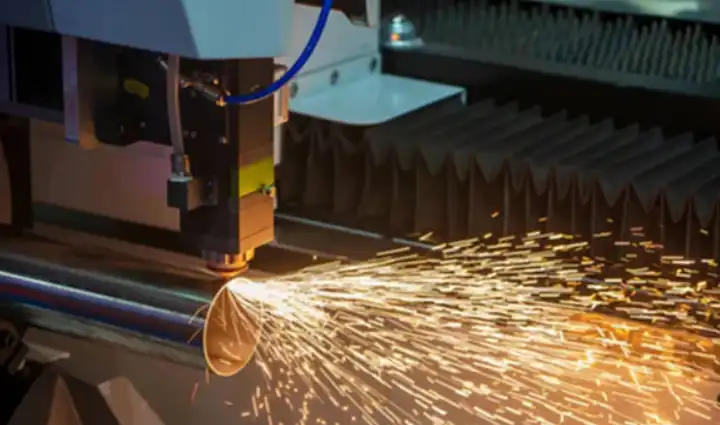
Several core technologies that change output are built into modern fully automatic systems. Multi-axis servo motors are coordinated by CNC control units to ensure exact positioning, and high-torque drive systems can work with pipes of different sizes without needing to be re-calibrated. Modern versions have visual sensors that check the dimensions automatically and air clamping systems that keep the material from deforming while it's being cut. These features work together to make edges without burrs that don't need much extra finishing.
Precision and Consistency in Production
Repeatability is at the heart of the production value offering. Automated systems get rid of human error by following pre-programmed cutting patterns with mathematical accuracy. Machines that meet ISO 2768-m standards keep the same dimensions after thousands of cuts. This is very important in fields like making car parts, where tolerance stacking has a direct effect on the quality of the assembly. High-performance models can keep working continuously during three-shift production plans and achieve placement accuracy within ±0.05mm.
Labor Efficiency and Safety Improvements
Automation shifts the work of people from cutting things by hand to more valuable jobs like quality control and process optimization. Operators move from doing hard, repetitive work that is hard on their bodies to managerial jobs where they are in charge of writing machines and coordinating workflow. As physical contact with cutting mechanisms reduces, safety measures get a lot better. Enclosed cutting zones with locking safety systems meet CE and OSHA standards. They keep workers safe from metal chips and cutting fluid while lowering accidents at work.
Material Waste Reduction and Cost Savings
Advanced stacking algorithms figure out the best way to cut pipes so that as little waste as possible is made. Premium systems have short-tailing technology that cuts leftover lengths to less than 40mm. This is a big improvement over traditional methods, which lose 150–200mm per cycle. When working with expensive materials like stainless steel or rare metals, these improvements save a lot of money every year. Total cost of ownership goes down while production capacity goes up because cycle times get shorter and less energy is used per cut.
Critical Specifications to Evaluate When Choosing a Pipe Cutting Solution
Technical specs are the basis for making smart choices about what to buy. When you fit the capabilities of the machine to the needs of the production process, you avoid costly mistakes that hurt business efficiency.
Cutting Capacity and Material Compatibility
The G Model Fully Automatic Pipe Cutting Machine can handle different pipe sizes based on its dimension range. Systems like the T6012G type can handle lines with diameters ranging from 160 mm to 240 mm, and they can be customized to handle wider ranges. It doesn't matter what wall thickness a machine can handle—it can cut things up to 8mm thick in carbon steel without losing any performance. Not only do non-ferrous metals work with these platforms, but so do stainless steel, aluminum, copper alloys, and even composite tubes. Cutting speed and blade selection factors can be changed to suit different materials.
Speed, Acceleration, and Throughput Metrics
How fast you travel has a direct effect on how much you make. High-performance machines can feed at 90m/min and accelerate at 1.5G, which lets them move quickly between cuts. These specs are very important, especially in places that process thousands of pieces every day. To figure out the ideal output, you have to look at the whole cycle time, which includes the times for loading, cutting, unloading, and repositioning. When compared to standard designs, machines with optimized motion control cut the time spent not cutting by 30 to 40 percent.
Accuracy and Repeatability Standards
Positioning precision measures how close the machine comes to the coordinates that were set, and repeatability measures how consistently the machine does the same thing over and over again. Premium systems promise positioning accuracy of ±0.05mm and repeatability of ±0.03mm, which is very important for tasks that need precise joint fitting in welded parts. Laser interferometry checks that tools stay in line with specs for the whole time they are in use. To keep proven accuracy, procurement teams should ask for calibration certificates and know how often to recalibrate.
Integration and Software Capabilities
In modern work settings, data must be able to flow without any problems. Industry 4.0-ready tools have Ethernet ports for connecting to ERP systems. This lets production be tracked and monitored in real time, and materials can be automatically tracked. CAD/CAM compatibility lets you import engineering models directly, which gets rid of the need to make mistakes when writing by hand. Simulation tools in more advanced software packages check cutting programs before they are run, which stops expensive material waste caused by mistakes in the code. With remote tests, technical support teams can fix problems without having to go to the site, which cuts down on downtime.
Maintenance Requirements and Component Durability
Long-term dependability relies on strong construction and easy upkeep. Machines with strengthened G-series structure frames don't vibrate and stay aligned even when they're running all the time. Micro-mist lubrication systems keep blades in better shape longer by reducing friction and heat buildup and getting rid of the need for messy flood cooling systems. Maintenance plans, such as daily checks, weekly lubrication practices, and monthly calibration techniques, should be part of the evaluation process for purchases. Suppliers who offer detailed repair paperwork and spare parts that are easy to get help keep operations running smoothly.
Comparing Fully Automatic Pipe Cutting Machines: What Sets the G Model Apart?
There are a lot of companies that make automatic pipe cutters, but the differences in performance become clear after a close look. Loading and unloading are done by hand with semi-automatic methods, which limits the gains in output. In small job shops, manual tools are still the norm, but they can't keep up with the demand for high-volume production.
Fully automatic platforms are the most advanced technology we have right now. The G Model Fully Automatic Pipe Cutting Machine is a great example of this type of machine because it is fully automated and can feed materials, place them precisely, cut at high speeds, and take off final parts. Its CNC-driven architecture makes sure that these processes run at the same time, so there are no output gaps like there are with semi-automatic options.
Technical Differentiators in the G Model
The G Model has a number of technical improvements that set it apart from similar products on the market. Its self-centering hydraulic clamping system evenly presses around the pipe's edge, which keeps the oval shape while cutting, which is a common issue with basic three-jaw chucks. The built-in pointing system uses servo motors and precise ball screws to make it very repeatable, even after millions of rounds.
Thermal management receives particular attention. Continuous activity makes a lot of heat, which can change the accuracy of measurements. The G Model uses active cooling for important parts and temperature compensation algorithms that change moving instructions based on readings of thermal expansion taken in real time. This attention to detail makes sure that specifications are met even during long production runs.
Performance Validation Through Client Applications
Theoretical powers are proven by facts from real-world implementations. Manufacturers of exhaust systems for cars say that using the G Model to make thin-wall steel tubes has increased their output by 45%. HVAC engineers who work with copper refrigerator lines can get 99.8% dimensional agreement with almost no extra work. Heavy equipment makers like that the machine can cut thick-wall structural tubes without lowering the quality of the cut or speeding up the wear on the blades.
These results come from the G Model Fully Automatic Pipe Cutting Machine's balanced design philosophy, which aims to maximize speed without sacrificing accuracy and to automate processes while keeping the interface simple. The user interface design is based on a lot of feedback from operators. It has tablet controls and visual programming aids that cut the time needed for training to two days for most staff.
Return on Investment Analysis
The most important thing to consider when buying major tools is still the money. The G Model usually pays for itself in 18 to 24 months through a number of different value streams. One person oversees multiple machines instead of giving a single cutter by hand, which saves 40 to 50 percent in direct labor costs. Another 20–25% is saved by cutting down on material waste through better packing and shorter leftover lengths. More traffic means more money coming in without having to pay for more space at the building.
Longer work life raises value over time. When properly maintained, machines with precision-ground linear tracks and strengthened structural parts usually last longer than 15 years. This makes it last longer than cheaper options, which need major repairs or replacement every 5 to 7 years, which has a big effect on the total cost of ownership.
Procurement Considerations for Automated Pipe Cutting Machines
Comparing specification sheets is only one part of strategic buying. An in-depth review includes looking at the finances, evaluating suppliers, and planning operations.
Aligning Specifications with Production Requirements
Production analysis is the first step in defining requirements. Baseline capacity needs are found by making a list of present pipe sizes, materials, and monthly amounts. Size choices should be based on growth projections—buying a machine that is already 95% full leaves no room for growth. On the other hand, expanding skills too much raises costs without gaining anything in the short run. Because makers like Yuhui Laser give a lot of customization options, specifications can be made to fit the needs of the application perfectly, saving money on features that aren't needed.
Total Cost of Ownership Analysis
The purchase price is only one part of the economy of control. Different types use very different amounts of energy. Using efficient drive systems and motion patterns that are optimized can cut annual electricity costs by 15 to 20%. Over the life of a machine, the costs of consumables like blades, oils, and coolants add up to a lot. The amount of maintenance work needed depends on how easy the design is to reach and how well the parts are made. When you look at these factors in a 10-year TCO model, you'll often find that high-end machines that cost more to buy actually have lower total costs because they run more efficiently.
Supplier Evaluation and After-Sales Support
Long-term success depends on how well you choose your suppliers. Well-known companies that have ISO9001 approval show that their processes are mature and their quality is consistent. For products to be sold in Europe, they need to have CE approval, which shows that they meet international safety and electromagnetic compatibility standards. Warranty terms show how confident the maker is in their products. Yuhui Laser's thorough 450-day coverage goes far beyond industry standards and protects the buyer's investment.
After-sales support infrastructure is just as important. When problems happen, responsive expert help keeps downtime to a minimum. Suppliers who keep extra parts in stock make sure that parts can be replaced quickly instead of having to wait weeks for them to be ordered. Comprehensive training programs for operators and repair staff make the best use of tools. As part of the due research process for buying something, these skills should be checked with current customers who use similar tools.
Ensuring Safe and Efficient Operation of Your Pipe Cutting Solution
To get the most value out of your tools, you need to use them correctly and keep up with their repair.
Safety Protocols and Regulatory Compliance
Strict safety rules must be followed around automated machines. Machine guarding keeps people from getting to moving parts while the machine is running. Emergency stop controls placed so that the operator can reach them right away allow for quick shutdown. When the doors to a cage open, interlock systems stop the G Model Fully Automatic Pipe Cutting Machine from working. This keeps people from accidentally touching cutting zones. Safety checks done on a regular basis make sure that OSHA rules and best practices in the business are still being followed.
Operator training includes learning how to spot hazards and handle emergencies. Comprehensive programs teach people how to properly handle materials, use personal safety equipment, and follow lockout-tagout processes for maintenance work. Proof that training was completed meets legal standards and promotes a safety mindset.
Preventive Maintenance Strategies
Systematic care keeps things working well and makes them last longer. As part of daily routines, eye checks are made for hydraulic leaks, coolant levels are checked, and chip buildup is cleaned up. As part of weekly jobs, linear guides need to be oiled, and the pressure in the air system needs to be checked. Deeper checks are done once a month to check the belt tension, electrical links, and accuracy by cutting samples.
Scheduled repair windows let you change parts before they break. Tracking the number of cuts makes it possible to keep an eye on the blade's life and change it before it starts to lose its quality. Using vibration analysis and thermal images for predictive maintenance can find problems before they cause unplanned downtime.
Leveraging Emerging Technologies
The trend of industrial technology is toward making machines smarter. IoT-enabled machines send operating data to centralized monitoring systems in real time. This lets production managers keep an eye on measures for speed and find ways to improve things. Predictive analytics algorithms look at working trends to guess what repairs will be needed and suggest changes to the way things are done. Cloud-based software patches add new features and improve performance over the life of a machine, protecting an investment in technology from becoming obsolete.
Conclusion
When choosing an automated pipe cutting option, you need to think about how well it works technically, how much it costs, and how reliable the seller is. Precision engineering, full automation, and strong building make high-performance systems that give real benefits. The G Model follows these ideas because it is accurate to the micron level, can handle data at 90m/min, and is easy to use. These features directly lead to higher output and lower operating costs. To make sure long-term success, procurement professionals should put repeatability standards, total cost analysis, and supplier support infrastructure at the top of their list when they are weighing their choices. Investing in automated pipe cutting technology is more than just buying tools; it's a smart move to make the manufacturing industry more competitive. It helps makers meet strict quality standards while making the best use of resources in global markets that are becoming more and more competitive.
FAQ
What advantages does full automation provide over traditional cutting methods?
Fully automated pipe cutting tools get rid of the need to move materials by hand and the uncertainty that comes from human error. They keep the same level of accuracy in measurements over thousands of cuts while cutting the cost of labor by 40 to 50 percent. Most of the time, automated systems can handle 20–30% more materials than human ways and do so faster and with less waste. When workers work outside of danger zones instead of directly handling cutting tools, safety goes up by a lot.
How do I choose between fully automatic and semi-automatic machines?
The choice depends on how much is being made and how much labor costs. When an operation processes more than 5,000 lines per month, it usually saves money by investing in fully automatic equipment because it saves time and increases output. Semi-automatic tools work well in shops that don't do a lot of work and where freedom is more important than maximum efficiency. Find the payback times by comparing the changes in output to the price premiums. In high-volume settings, fully automatic systems usually reach ROI within 18 to 24 months.
What warranty and after-sales service should I expect?
Reputable manufacturers back up their mechanical parts and control systems with full warranties. Premium providers like Yuhui Laser offer 450 days of help after the sale, which includes expert advice, remote tests, and service on-site when needed. Basic upkeep, operation, and programming should all be covered in training classes. How long downtime lasts depends on how many spare parts are available. Check where the inventory is kept and how long it usually takes to send during the procurement review.
Partner with Yuhui Laser for Advanced Automated Pipe Cutting Solutions
Yuhui Laser specializes in making high-performance automated pipe cutting equipment that meets the needs of current construction. Our T6012G model is a great example of technical greatness because it has CNC accuracy, automated continuous operation, and easy-to-use interfaces that help operators get better faster. We are a reliable company that makes the G-Model Fully Automatic Pipe Cutting Machine. Our products are CE and ISO approved, and they are made with THF4 military-grade parts that make them very reliable. Our factory-direct price plan gets rid of markups for distributors, and our 14-day production wait times and large inventory make it possible to get products to customers quickly. The 450-day after-sales service pledge gives you more technical help during important times for ramping up production. Our engineering team works together to make sure that the machine specs are best for your needs, whether you need standard setups or unique solutions that fit your exact production needs. Get in touch with jianghui@yuhui-laser-tech.com right away to talk about your pipe-cutting needs and get specific technical proposals that show how our automation skills can make your manufacturing more efficient.
References
1. Smith, J. & Anderson, M. (2023). Industrial Automation in Metal Fabrication: Technologies and Best Practices. Manufacturing Engineering Press.
2. Chen, L. (2024). "Precision Engineering in CNC Pipe Cutting Systems," Journal of Manufacturing Technology, Vol. 47, No. 3, pp. 112-128.
3. Rodriguez, P. & Williams, K. (2022). Total Cost of Ownership Analysis for Capital Equipment Procurement. Industrial Press Inc.
4. European Committee for Standardization (2023). EN ISO 2768-m: General Tolerances for Linear and Angular Dimensions. CEN Publications.
5. National Institute of Standards and Technology (2024). Calibration and Measurement Standards for Precision Machinery. NIST Technical Report Series.
6. International Association of Manufacturing Technology (2023). Emerging Trends in Automated Tube and Pipe Processing. IAMT Annual Industry Report.
Contact us directly for customized solutions, quotations and long-term strategic cooperation.