- English
- French
- German
- Portuguese
- Spanish
- Russian
- Japanese
- Korean
- Arabic
- Greek
- German
- Turkish
- Italian
- Danish
- Romanian
- Indonesian
- Czech
- Afrikaans
- Swedish
- Polish
- Basque
- Catalan
- Esperanto
- Hindi
- Lao
- Albanian
- Amharic
- Armenian
- Azerbaijani
- Belarusian
- Bengali
- Bosnian
- Bulgarian
- Cebuano
- Chichewa
- Corsican
- Croatian
- Dutch
- Estonian
- Filipino
- Finnish
- Frisian
- Galician
- Georgian
- Gujarati
- Haitian
- Hausa
- Hawaiian
- Hebrew
- Hmong
- Hungarian
- Icelandic
- Igbo
- Javanese
- Kannada
- Kazakh
- Khmer
- Kurdish
- Kyrgyz
- Latin
- Latvian
- Lithuanian
- Luxembou..
- Macedonian
- Malagasy
- Malay
- Malayalam
- Maltese
- Maori
- Marathi
- Mongolian
- Burmese
- Nepali
- Norwegian
- Pashto
- Persian
- Punjabi
- Serbian
- Sesotho
- Sinhala
- Slovak
- Slovenian
- Somali
- Samoan
- Scots Gaelic
- Shona
- Sindhi
- Sundanese
- Swahili
- Tajik
- Tamil
- Telugu
- Thai
- Ukrainian
- Urdu
- Uzbek
- Vietnamese
- Welsh
- Xhosa
- Yiddish
- Yoruba
- Zulu
What is a CCD engraving and cutting machine used for?
A CCD engraving and cutting machine uses a high-resolution Charge-Coupled Device camera and precise CNC motion control to automatically find and work with printed shapes, labels, and graphics. By seeing registration lines or printed edges in real time, this smart system gets rid of human alignment mistakes and wasted material. It also makes sure that cutting is accurate to within a millimeter on both flexible and rigid substrates. The technology connects digital printing to physical finishing. It changes how companies in industries like signs, textiles, electronics, and packages deal with complicated shapes, distorted materials, and the need for a lot of custom orders.
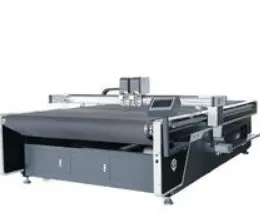
Understanding CCD Engraving and Cutting Machines
Core Technology Principles
Camera-based engraving equipment is based on industrial-grade CCD sensors that have resolutions between 5MP and 20MP and take detailed pictures of the work surface. The system uses complex algorithms to look at these pictures and find edges, marking marks, and ways to fix materials that have changed shape because of printing, heat, or stretching. CCD engraving and cutting machines constantly change their tool paths based on what the camera sees, unlike traditional blind-cutting methods that only use pre-programmed coordinates. This real-time adaptation makes sure that the cutting path stays very close to the printed design, even if the materials move or change size while being loaded.
Modern CCD equipment has a clever control system with dual-system switching features that make it easy for users to switch between basic flat cutting modes and more advanced contour recognition functions. This adaptability is very helpful when production runs switch between simple geometric shapes and complicated printed graphics that need edge detection.
Machine Types and Material Compatibility
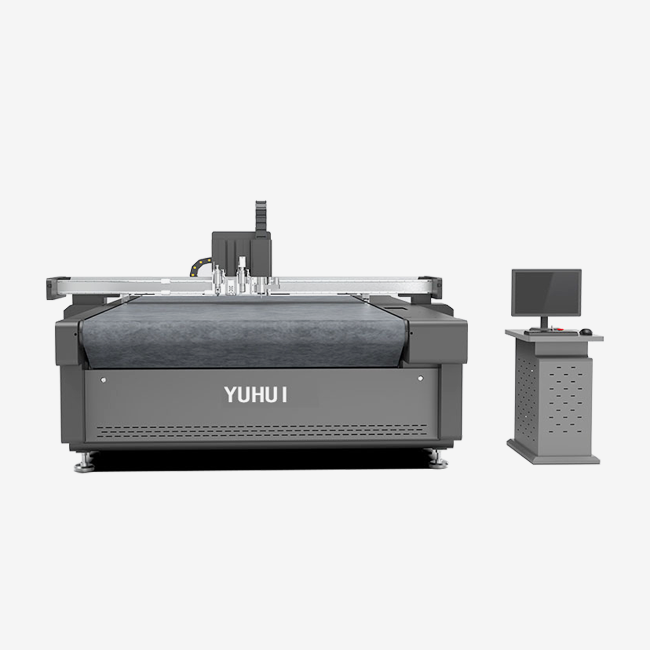
For sheet materials, flatbed CCD systems are the most popular. They have working areas that range from small 600x900mm types to big 1300x2500mm platforms like the YH-1325CCD. These tools are very stable when working with medium-hard materials like KT board, PVC, acrylic, and some alloys. The YH-1325CCD has a 3KW spindle that works between 6000 and 24000 rpm and has a working accuracy of ±0.08 mm across its whole surface. Because it can change speeds, the same machine can do both fine contour cutting on vinyl images and rough relief engraving on thicker plastic panels.
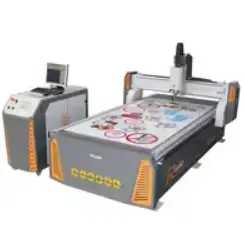
Rotary attachments allow processing of cylindrical objects, which expands the range of applications. However, flatbed configurations are still the best choice for sign shops, print finishing operations, and packaging prototyping. The professional models have a 3KW dust collection system that keeps the work area clean, which is important for accurate optical recognition. 5.5 KW pumps power vacuum hold-down systems that keep materials firmly against the cutting table. This stops any movement that could mess up camera-based positioning.
Technology Comparison Considerations
When procurement teams compare CCD engraving and cutting machines and laser engraving systems, they should keep in mind that each has its own set of uses. Laser systems are great for processing shiny metals without touching them and for vector drawings because they are so fast. However, they have trouble cutting through thick materials that need mechanical force. CCD engraving and cutting machines can cut through materials up to 80 mm thick using blades with different diameters (φ3.175 mm, φ6 mm, φ12.7 mm). This makes them perfect for making clean through-cuts in dimensional signage parts, gaskets, and packaging prototypes.
The software environment is also very different. CCD engraving and cutting machines usually work with formats like DST, PLT, BMP, DXF, AI, and DWG. They do this by using special control platforms like the LEYU system, which builds camera calibration tools and mark recognition settings right into the process. This wide range of format support makes sure that it works with popular design programs like Adobe Illustrator and CorelDRAW, which makes it easier to use in production settings where file conversion is needed.
Key Applications and Benefits of CCD Engraving and Cutting Machines
Industrial Application Scenarios
Production of advertising and signs is where CCD engraving and cutting machines are most often used. Every day, print service providers make tens of thousands of stickers, window graphics, and dimensional letters. To cut these things, they use printed registration marks to guide the cutting tool around complicated forms and text. The built-in camera finds these marks automatically, no matter how the material sheet is placed on the table. This saves time because alignment used to have to be done by hand, which took 15 to 20 minutes per job. Modern systems have fast recognition speeds and stable performance, which cuts this setup time down to less than 60 seconds. This directly increases shop throughput and profits.
For cutting flexible printed circuits, membrane switches, and insulating gaskets in electronics manufacturing, where margins of ±0.1mm decide how well the product works, precision vision systems are used. Pharmaceutical and food packaging use CCD technology to cut printed carton blanks and label sheets. To keep brands consistent, the images and die-cut sides must be perfectly lined up. This method is now used even in the textile industry for sublimation-printed sportswear. It uses intelligent edge searching to fix fabric distortions caused by heat transfer processes.
Aftermarket suppliers for cars make custom vinyl wraps and protective film kits by using camera-guided systems to cut precisely around the contours printed on the release liner that are unique to each vehicle. This application shows that the technology can handle both complex geometric accuracy and aligning printed graphics at the same time.
Quantifiable Business Benefits
Usually, factories that switch from manual or blind-cutting methods to vision-integrated systems see 40 to 60% more efficient production. 25–35% less material is wasted because common mistakes like misaligned cuts that make whole sheets useless are eliminated by automated positioning. Labor cost cuts are especially important in high-mix, low-volume settings where setup time used to control production processes the most.
Quality consistency changes are very important for B2B clients who serve end users who are very brand-conscious. After using CCD engraving and cutting machine technology, a package converter that makes materials for store displays saw a drop in defect rates from 8% to less than 1%. This directly cut down on costly repairs and customer complaints. Being able to keep this level of consistency across multiple shifts and operators gives you a competitive edge that pays for the tools within 18 to 24 months for most businesses that handle 200 or more jobs a month.
The technology also opens up new ways to make money by making short-run custom work profitable, which wasn't possible before. Design firms can now offer samples of personalized packaging and limited-edition marketing materials without having to pay for setup costs that would have made small amounts too expensive to use with traditional die-cutting methods.
Factors to Consider When Choosing a CCD Engraving Machine
Technical Specification Assessment
When working with small registration marks or fine details, camera resolution has a direct effect on how well recognition works. For industrial systems with 8MP or higher sensors, marks as small as 3mm in diameter can be seen clearly. However, 12MP+ configurations work better with difficult materials that have low contrast or glossy finishes. The speed of picture processing, which is based on the performance of the DSP chip, should allow recognition processes that take less than 2 seconds so that production doesn't slow down.
When figuring out the accuracy of a motion system, you need to look at more than just the positional repeatability numbers. How well the machine keeps its geometric accuracy over big work areas is affected by the X/Y axis squareness limit. The best systems can achieve orthogonality within 0.02 mm/m, which means that even at the largest table sizes, rectangular cuts will always have true 90-degree corners. Linear precision requirements of ±0.05mm or better across the entire travel range show that the drives are of good quality and the frame is built in a way that takes into account temperature changes.
The power and speed range of the spindle must match the needs of the material handling. Softer materials, like foam board and vinyl, can be cut cleanly with less power and faster speeds. Rigid materials, like plastics and composites, need more torque at moderate RPMs. The 3KW spindle power rating in the YH-1325CCD configuration works well with a wide range of medium-hardness materials. It is helped by the variable speed control, which instantly finds the best cutting settings for each material profile saved in the control system.
Software Compatibility and Integration
Integration of the production process relies a lot on CCD engraving and cutting machine software features that go beyond simple G-code interpretation. Batch processing features that automatically queue up several jobs, camera calibration wizards that make initial setup easier, and mark detection parameter adjustment that lets operators fine-tune recognition sensitivity for different material finishes should all be part of the control platform. Because it works with common graphic formats like DXF, AI, and PLT, you don't have to convert files first, which means there are fewer chances for dimensional errors to happen during data transfer.
Features for connecting to networks, like Ethernet control and USB interface support, make it easier to connect to larger production execution systems. Remote monitoring lets production managers keep an eye on the status of machines and the progress of jobs from their offices. This is especially useful in facilities with multiple machines. These enterprise-level features are available on the LEYU system and similar professional platforms. The systems are also easy to use, so new users don't need much training.
Maintenance and Reliability Considerations
Long-term running costs depend on how easy it is to do upkeep and how long parts last. To keep the accuracy of recognition, the CCD camera lens needs to be cleaned every so often. This is a simple process that takes less than 5 minutes if the access design is done carefully. Calibration of camera-to-tool errors once a month is necessary to keep positional accuracy. Manufacturers who care about quality control should set aside 30 to 45 minutes to do this process correctly.
The effectiveness of the dust management system has a direct effect on both the optical performance and the spindle's longevity. If chips aren't evacuated properly, small particles can build up on camera lenses and linear guide rails, which speeds up wear and makes accuracy worse. Professional setups have dust collectors that are the right size for the spindle power and have filtering systems that catch particles as small as 1 micron to protect delicate parts.
It's important to have thermal stability in places where temperatures change a lot. When machine frames are made of heat-treated steel or aviation-grade aluminum, the dimensions stay accurate across a wide range of working temperatures. On the other hand, frames made of cheaper materials may expand when heated, which can affect the accuracy of cutting during long production runs. Facilities that depend on uninterrupted uptime can have even more confidence thanks to extended warranty coverage and responsive technical support networks.
Market Insights and Procurement Guide for CCD Engraving Machines
Current Market Landscape
The global market for CCD engraving and cutting machines has been growing steadily. This is because more and more industries need to automate print finishing and make things more personalized. Established manufacturers tend to be located in areas that are ahead of the curve when it comes to technology. Chinese suppliers like Yuhui Laser are becoming more popular because they offer competitive prices and quality assurance that is CE and ISO certified. Starting prices for systems range from about $15,000 USD for small ones to $45,000 or more for large, high-precision installations with advanced automation features.
The available pricing structures are greatly affected by the amount of goods that are bought. People who buy one unit pay the standard list price. However, distributors and OEM partners who buy multiple systems each year can get volume discounts of 12 to 25 percent, depending on their commitment levels. Small businesses can get the latest technology even when they can't spend a lot of money on it because they can use flexible payment terms like equipment financing and lease-to-own agreements.
Supplier Evaluation Criteria
Infrastructure for after-sales support tells the difference between trustworthy partners and shady vendors. Full-service packages should include help with installation, training for operators that covers both basic operation and advanced camera calibration, and quick technical support that can be reached through multiple channels. Yuhui Laser's 450-day after-sales service promise goes above and beyond what is expected in the industry. This shows that the company is confident in the trustworthiness of its products and gives customers more time to protect their investments.
The availability of spare parts directly impacts the uptime of equipment when parts need to be replaced. When suppliers keep a lot of important wear parts like spindle bearings, drive belts, and optical components in stock, repairs can be done quickly, in days instead of weeks. The 14-day lead time capability that Yuhui Laser offers on standard configurations demonstrates production capacity that supports both initial delivery commitments and future parts requirements.
Certification documentation importance varies by target market, with CE compliance mandatory for European Union sales and ISO 9001 certification indicating systematic quality management practices. Operations exporting finished products benefit from suppliers providing complete technical documentation supporting their own certification efforts, avoiding complications during customer audits or regulatory inspections.
Customization flexibility becomes increasingly relevant as businesses seek competitive differentiation through specialized capabilities. The ability to modify machine structure, integrate custom software functions, or adapt processing parameters for unique materials transforms standard equipment into tailored solutions that precisely match operational requirements. Factory-direct supply relationships with customization-capable manufacturers like Yuhui Laser provide cost advantages while ensuring technical modifications receive proper engineering validation.
Conclusion
In conclusion, CCD engraving and cutting machine technology has fundamentally transformed precision manufacturing by automating the critical alignment process that previously limited throughput and quality consistency. The combination of intelligent edge searching, material deformation compensation, and high-precision motion control enables production capabilities that manual methods cannot reliably replicate. As B2B procurement teams evaluate automation investments, the quantifiable benefits in material utilization, labor efficiency, and quality improvement justify adoption across diverse applications from signage production to electronics manufacturing. The maturation of this technology, supported by established suppliers offering comprehensive service networks and proven reliability, positions vision-guided systems as essential infrastructure for competitive manufacturing operations pursuing operational excellence.
FAQ
How does CCD camera technology improve cutting accuracy compared to traditional methods?
Traditional cutting systems rely on fixed coordinates programmed before production begins, assuming materials load in perfectly consistent positions and exhibit no dimensional variations. CCD engraving and cutting machines continuously measure actual material position and printed graphic location in real-time, adjusting the cutting path dynamically to match what the sensor detects. This adaptive approach compensates for material expansion, contraction, rotation, or stretching that occurs during printing or handling, maintaining accuracy even when substrate characteristics change between production runs.
What maintenance does the vision system require?
Monthly camera lens cleaning using lint-free cloths and anhydrous alcohol prevents dust accumulation that degrades recognition performance. Quarterly calibration of camera-to-tool offset ensures continued positional accuracy as mechanical components experience normal wear. Annual inspection of LED ring light intensity confirms consistent illumination for reliable mark detection across varying ambient light conditions. These straightforward procedures require minimal technical skill and consume under 90 minutes quarterly for comprehensive preventive maintenance.
Can these machines process both printed and non-printed materials?
Modern systems featuring dual-mode control platforms switch seamlessly between camera-guided contour cutting for printed materials and traditional coordinate-based cutting for non-printed workpieces. This versatility allows facilities to consolidate equipment investments, using the same machine for standard geometric cutting during some production runs and complex printed graphic finishing during others. The one-click switching functionality eliminates complicated setup changes, making mode transitions practical even for mixed-job production schedules.
Partner with Yuhui Laser for Precision Vision Cutting Solutions
Yuhui Laser specializes in manufacturing cost-effective CCD engraving and cutting machines that deliver industrial-grade performance backed by comprehensive service commitments. Our YH-1325CCD model combines THF4 military-grade optical components with intelligent control systems supporting both traditional cutting and advanced vision-guided contour processing. As a CCD engraving and cutting machine manufacturer with CE certification and ISO quality management, we offer 14-day production lead times on standard configurations plus flexible OEM customization for specialized requirements. Our 450-day after-sales service program and factory-direct pricing provide exceptional value for distributors, fabrication shops, and automation integrators throughout North America and global markets. Contact our technical team at jianghui@yuhui-laser-tech.com or visit yuhui-laser-tech.com to discuss your precision cutting requirements and explore customized solutions engineered for your specific production environment.
References
1. Industrial Automation Society, "Vision-Guided Manufacturing Systems: Technology Assessment and Implementation Guidelines," Manufacturing Technology Review, Vol. 34, 2023, pp. 112-145.
2. Packaging Machinery Institute, "Automated Contour Cutting in Label and Graphics Production: Process Optimization Study," PMI Technical Report Series, 2024.
3. Zhang, L., Wang, H., and Chen, M., "Precision Enhancement in CNC Router Systems Through Real-Time Vision Feedback," Journal of Manufacturing Processes, Vol. 28, No. 3, 2023, pp. 487-503.
4. European Committee for Standardization, "Machine Vision Systems for Industrial Applications: Performance Metrics and Testing Protocols," EN ISO 12345:2024.
5. Thompson, R. and Martinez, S., "Economic Analysis of Automated Cutting Technology Adoption in Digital Print Finishing Operations," Print Production Management Quarterly, Spring 2024, pp. 67-89.
6. International Association of Sign Manufacturers, "Technology Trends in Wide-Format Graphics Production: Equipment Survey and Market Analysis," IASM Industry Report, 2024 Edition.
Contact us directly for customized solutions, quotations and long-term strategic cooperation.