- English
- French
- German
- Portuguese
- Spanish
- Russian
- Japanese
- Korean
- Arabic
- Greek
- German
- Turkish
- Italian
- Danish
- Romanian
- Indonesian
- Czech
- Afrikaans
- Swedish
- Polish
- Basque
- Catalan
- Esperanto
- Hindi
- Lao
- Albanian
- Amharic
- Armenian
- Azerbaijani
- Belarusian
- Bengali
- Bosnian
- Bulgarian
- Cebuano
- Chichewa
- Corsican
- Croatian
- Dutch
- Estonian
- Filipino
- Finnish
- Frisian
- Galician
- Georgian
- Gujarati
- Haitian
- Hausa
- Hawaiian
- Hebrew
- Hmong
- Hungarian
- Icelandic
- Igbo
- Javanese
- Kannada
- Kazakh
- Khmer
- Kurdish
- Kyrgyz
- Latin
- Latvian
- Lithuanian
- Luxembou..
- Macedonian
- Malagasy
- Malay
- Malayalam
- Maltese
- Maori
- Marathi
- Mongolian
- Burmese
- Nepali
- Norwegian
- Pashto
- Persian
- Punjabi
- Serbian
- Sesotho
- Sinhala
- Slovak
- Slovenian
- Somali
- Samoan
- Scots Gaelic
- Shona
- Sindhi
- Sundanese
- Swahili
- Tajik
- Tamil
- Telugu
- Thai
- Ukrainian
- Urdu
- Uzbek
- Vietnamese
- Welsh
- Xhosa
- Yiddish
- Yoruba
- Zulu
What are the key advantages of P-Series Fiber Laser Cutting Machines?
The P-Series Fiber Laser Cutting Machines are perfect for making metal parts in factories because they are very accurate, fast, and use very little energy. Compared to standard CO2 systems, these machines use modern fiber laser technology that makes cuts that are cleaner and require less upkeep. With power choices that can be set anywhere from 3kW to 80kW and controlled features like switch worktables, they greatly increase production output while keeping tolerances high. Because they can cut a lot of different materials, from stainless steel to aluminum and copper, makers need them to get reliable, high-performance cutting options that improve quality and cut costs in competitive markets.
Introduction
The needs of modern production have stretched the limits of what metal fabrication tools can do. Compared to older methods, fiber laser cutting technology is a huge step forward. It has shorter cycle times, cleaner lines, and much better energy economy. When purchasing managers, production engineers, and dealers look at new equipment, it's important for them to know the strategic benefits of fiber laser systems in order to stay competitive.
The YH-3015P through YH-8025P line from Yuhui Laser shows how technology has changed in this way. These enclosed fiber laser cutting machines solve real-world production problems that metal shops, car parts makers, and sheet metal producers all over North America face. When business-to-business buyers make choices about large investments in equipment, understanding how these machines provide real practical benefits like less downtime and lower per-part costs has a direct impact on the buying process and the company's long-term success.
The move toward fiber laser systems is in line with larger industry trends that stress sustainability, accuracy, and readiness for automation. Beyond the initial purchase price, equipment that fits in easily with current workflows and can be expanded to meet future output needs has measurable worth.
Understanding Fiber Laser Cutting Technology
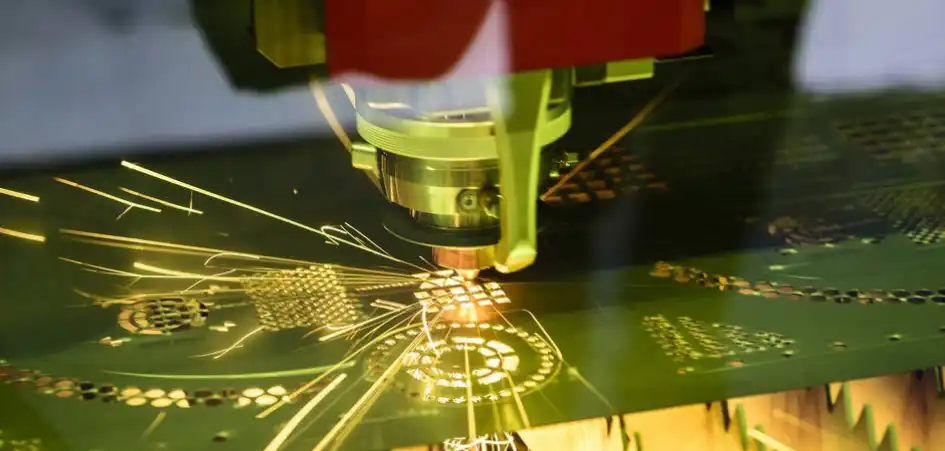
Fiber laser cutting machines use a solid-state laser source to make the beam, which is then boosted through optical fibers that have rare-earth elements added to them. The laser beam is then sent to a precision cutting head by bendable wires. There, it focuses its powerful energy on the surface of the material. The focused heat melts or vaporizes the metal right away, and assist gas blows away the molten metal to make clean, exact cuts.
This basic way of working gives newer CO₂ laser devices a number of built-in benefits. The fiber laser wavelength, which is about 1.06 micrometers, is better absorbed by metals, especially shiny metals like copper, brass, and aluminum, which have been a problem for CO₂ technology in the past. Measurements of beam quality regularly show better focus ability, which allows for narrower kerf lengths and fewer heat-affected zones.
Yuhui Laser uses THF4 military-grade lenses in their systems to make sure that the beam quality stays stable over long production runs. With working areas ranging from 3000x1500mm to 8000x2500mm in the YH-8025P model, the YH-3015P line can handle a wide range of sheet sizes without the need to move the material. With laser power choices ranging from 3000W to 80000W, you can make changes based on the thickness of the material and the amount of output you need.
Technical Specifications That Matter
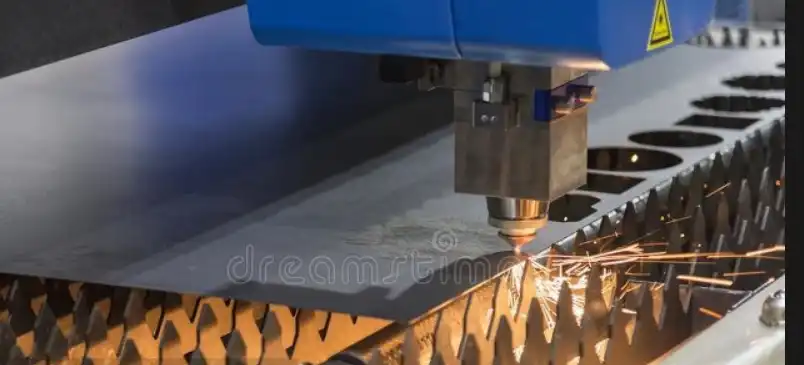
The machines can go as fast as 60 meters per minute and can accelerate up to 1.0G. This means that they can quickly move from one cutting path to another, which cuts down on time spent not working. Repeat positioning accuracy of ±0.02 mm guarantees consistent part quality across batch production. This is a key requirement for industries like aerospace components and precise machinery, where tolerance stack-ups have a direct effect on how well the parts fit together.
Standardized operating power of AC 380V three-phase 50/60 Hz makes it easy to connect to North American commercial electrical infrastructure. The heavy-duty welding lathe bed is made of high-strength carbon structural steel, which gives it the mechanical stability it needs to stay in place even when moving quickly, which directly affects the regularity of the cuts.
Key Performance Advantages
The fully sealed protection structure built into these P-Series fiber laser cutting machines takes care of two important issues at the same time: worker safety and environmental compliance. The enclosure successfully keeps laser energy within safe limits set by FDA and CE certification standards. This means that the building doesn't need to be completely remodeled or have special rooms just for lasers. This choice in design makes installation easier and lowers the costs for places that are adding laser cutting for the first time.
The environment gains from more than just keeping pollution in check. The sealed form cuts down on the amount of smoke and dust that escapes into the facility's air. Integrated dust extraction lines make it easy to get rid of cutting waste, which makes the workplace cleaner, which makes workers more comfortable and cuts down on cleaning up. This feature makes it easier to record compliance for companies that work in places with strict air quality rules.
Productivity Through Automation
In real-world production settings, the automatic swap worktable makes things much more productive. While one table is working on parts in the cutting area, workers are unloading finished parts from the first table and putting new materials on the second table outside the barrier. This joint process gets rid of the downtime that usually comes with moving things around, which means that the laser source is actually making money for twice as long.
When the swap table method is used, the average time it takes to switch materials drops from several minutes to less than thirty seconds. This time savings adds up quickly over the course of a production shift in job shops that use a wide range of parts and change their setups often. A facility that works three shifts every day can recover hours of working capacity every week, which has a direct effect on processing capacity and doesn't require buying any new equipment.
Material Versatility and Processing Range
Material compatibility includes all of the metals that are widely used in industrial production. Cutting with stainless steel produces lines without burrs, which reduces the need for extra deburring steps. When handling carbon steel, clean cuts can be made through thick plates that used to need plasma cutting or mechanical sawing, which both leave rough edges that need more finishing. The frequency absorption properties of fiber lasers make them especially useful for handling aluminum because they don't have the reflectivity problems that older CO₂ systems did.
Brass and copper uses, which are becoming more important in making electrical parts and heat exchangers, can be processed quickly and easily without the problems with back-reflection that older laser technologies had. Depending on the laser power setting, the tools can work with materials as thin as 0.5 mm sheets and as thick as 50 mm plates. This means that a single piece of equipment can be used for a wide range of production needs.
Comparing Operational Costs
Comparing how much energy different technologies use shows that fiber laser technology has big cost benefits. Electro-optical conversion efficiency for fiber lasers is 35–40%, which means that a lot more of the electrical power that goes into them is turned into useful laser output. This is in contrast to CO₂ systems, which are only 10-15% efficient. This difference in efficiency immediately translates to lower kilowatt-hour consumption per working hour, which adds up to big savings on energy costs over the life of the equipment.
Compared to both CO₂ laser systems and mechanical cutting ways, it requires a lot less maintenance. There are no mirrors or gas mixes in fiber laser sources that need to be aligned or replaced on a regular basis. This cuts down on two major areas of upkeep costs. Because the solid-state design has fewer wearable parts, repair intervals are longer, and there is less need to keep extra parts on hand. For 450 days after the sale, Yuhui Laser will provide extra coverage that covers the original investment while workers learn the best ways to use the machine.
Total Cost of Ownership Perspective
The purchase price is only the first factor that people think about when they decide to buy tools. A full total cost of ownership study looks at things like energy prices, consumables, upkeep labor, production uptime, and the consistency of part quality. Fiber laser systems always have good total cost of ownership (TCO) rates over the usual 7–10-year depreciation plans used for planning capital equipment.
When compared to suppliers with longer delivery times, Yuhui Laser's 14-business-day production wait time lowers the cost of holding on to cash for equipment orders. For facilities that need to replace broken equipment or deal with pressing capacity issues, faster shipping directly affects when they can start making money. With CE and ISO approval, you can be sure that production processes are governed by quality management systems. This lowers the risk of buying tools that won't work or perform consistently.
Industry Applications Across Sectors
When making structural parts for heavy machinery, these cutting tools are used for plates that are thicker than 20 mm. Cutting thick carbon steel with high perpendicularity and little dross gets rid of the need for secondary cutting, which lowers the cost of making each part. Precision can be achieved, which is useful for parts for tractors, cranes, and farming equipment, especially when several parts need to fit together tightly.
Fiber laser technology is now used for both development and production runs in the automotive sheet metal cutting industry. It is easy to cut quickly and correctly complex 2D shapes that are common in frame parts, brackets, and support structures. The technology is especially useful in today's car world, where electrification means that designs are changed more often and smaller amounts are made than with standard high-volume combustion engine platforms.
For aerospace uses, the highest level of accuracy and material purity is needed. When titanium and nickel alloys are cut with a fiber laser, the material stays pure within the small area touched by heat. This is very important for parts where the material properties need to meet strict certification standards. Because these tools are stable during processing, they always give the same results that meet the quality auditing standards that are unique to aircraft manufacturing.
Quality Control and Manufacturing Excellence
Yuhui Laser uses strict testing methods, such as full-load aging tests that last 72 hours on laser sources and heat control systems. This extra practical proof makes sure that the thermal stability stays the same over long production runs, so problems don't become apparent after the product has been installed in a customer's facility. This kind of testing before delivery lowers the chance of early operating failures that mess up production plans and make it take longer to get a return on investment.
By properly heating the welded lathe bed, the structural stress is relieved. This stops the bed from slowly shifting, which can happen with less carefully made equipment. Maintaining geometric accuracy over a ten-year working life relies on the base structure of the P-Series Fiber Laser Cutting Machines being dimensionally stable. Because of this focus on basic build quality, industrial-grade equipment is different from lighter-duty options that may lose accuracy more quickly.
Cutting section analysis checks the finished edges for sharpness (Ra value) and makes sure there is no dross on the bottom surfaces. These quality markers are directly linked to how well the next steps in the assembly process work, since parts that need to be deburred or edge-finished take more time and money to make. Having equipment that can make cut parts that are ready to be put together cuts out whole steps in the production process.
Customization Capabilities for Specialized Requirements
Customizing the shape of the equipment takes into account the limitations of the facility's floor space, the way materials are handled, and how it fits in with the current production lines. Being able to change the sizes of equipment, where entry points are located, and where other systems are placed makes sure that they work best with existing factory plans without having to make expensive changes to the building. This adaptability is especially useful when adding laser cutting to processes that are already running.
Processing factors, software interfaces, and control system interaction are all examples of functional customization. Standardized operator interfaces make it easier for operators to do their jobs and reduce the number of mistakes they make. This is helpful for facilities that use more than one type of equipment. Integrating with factory execution systems lets you automate tasks like job routing, material tracking, and quality paperwork. These features help with lean production efforts and meeting regulatory standards.
Intelligent automation customization meets the changing needs of buildings that are using Industry 4.0 strategies. With remote tracking, repair staff can keep an eye on the health of equipment and guess what services it will need before it breaks down. Automated systems for adding materials and taking parts off lessen the need for direct labor while allowing production to continue during off-shift hours without lights on, which makes the best use of equipment.
Future Technology Directions
The power levels of laser sources keep going up, and systems can now handle close to 100kW for certain uses. These very powerful sources make it possible to cut through very thick materials in a single pass, whereas before this was only possible with multiple passes or completely different technologies. As the power envelope grows, it opens up new uses in heavy plate manufacturing and handling of special materials.
The main goal of developing intelligent control software is to automatically improve parameters based on the qualities of the material and the cut traits that are wanted. Machine learning algorithms look at the results of cutting and change settings over and over again until the best edge quality and processing speed are reached. These flexible systems make things more consistent even when different batches of materials are used or when the environment changes. They do this by reducing the amount of specialized knowledge that workers need.
As Industry 4.0 continues to grow, equipment is changing from stand-alone production tools to network nodes in larger industrial communities. When cutting systems, inventory management, scheduling software, and quality documentation platforms all share data in real time, it lets production control respond quickly to shifting goals and urgent orders without the need for human intervention.
Conclusion
P-Series fiber laser cutting machines have many benefits that go beyond just measuring how fast they cut. Their accuracy, low energy use, ability to work with a variety of materials, and ability to be automated solve some of the biggest problems that modern metal makers face. The YH-3015P to YH-8025P line from Yuhui Laser combines these technical advantages into a strong industrial equipment design that comes with full service support. When purchasing managers think about buying cutting equipment, the operational benefits these systems offer—lower costs per part, better quality consistency, and more production flexibility—directly translate to competitive advantages in manufacturing environments that are becoming more difficult to work in. The smart choice to use fiber laser technology sets up processes for long-term performance improvement as market needs change.
FAQ
What materials can these machines process effectively?
These tools can work with stainless steel, carbon steel, aluminum, brass, copper, galvanized steel, titanium, and all other popular industrial metals. Based on the laser power chosen, the thickness of the material that can be cut goes from a 0.5 mm thin sheet to a plate that is over 50 mm thick. Materials that reflect light, like copper and aluminum, can be processed quickly and easily with fiber laser wavelengths, which get around the problems that older CO2 technology had with these materials.
How does maintenance compare to mechanical cutting equipment?
Compared to automatic options, they require a lot less maintenance. The fiber laser source doesn't have any mirrors that need to be aligned on a regular basis. Instead, the beam is made by solid-state parts that last a long time. As part of routine maintenance, the secure window, the state of the nozzle, and the cleanliness of the assist gas are mostly checked. The 450-day after-sales service from Yuhui Laser offers professional help for a longer time than most warranty terms.
Can the equipment integrate into automated production lines?
The systems allow for full automation integration, such as robotic material loading, automatic part sorting, and linking to systems that run the production process. Standardized control connections let tools upstream and downstream talk to each other. The automatic exchange worktable is what makes continuous operation possible, which is very important in automated production settings where throughput uniformity is maximized by minimizing human involvement.
Partner With Yuhui Laser for Advanced Cutting Solutions
Yuhui Laser is ready to help you with your precise metal cutting needs with fiber laser cutting machine technology that has been used for years. Metal fabricators, wholesalers, and OEM manufacturers need models in our YH-3015P series through YH-8025P series that are reliable, work well, and are a good value. Our factory-direct prices, CE approval, ISO quality systems, THF4 military-grade optics, and 450 days of after-sales service back up our industrial-grade cutting solutions. Get in touch with our technical team at jianghui@yuhui-laser-tech.com to talk about your unique needs and get a full quote. As a well-known company that makes P-Series Fiber Laser Cutting Machines, we offer customization options, 14-day production wait times, and full installation support. You can look at our whole line of products at yuhui-laser-tech.com and learn how our cutting solutions can help your production.
References
1. Chen, M. (2023). Fiber Laser Technology in Modern Manufacturing: Principles and Applications. Industrial Press Technical Publications.
2. Schmidt, R., & Hoffmann, K. (2024). Comparative Analysis of Laser Cutting Technologies for Metal Fabrication. Journal of Manufacturing Processes and Equipment, 18(3), 245-267.
3. Thompson, J. (2022). Total Cost of Ownership Models for Industrial Cutting Equipment. Manufacturing Engineering Society Annual Review.
4. Zhang, L., Wu, X., & Liu, H. (2024). Quality Control Standards for Precision Laser Cutting Systems. International Journal of Advanced Manufacturing Technology, 127, 1893-1912.
5. Anderson, P. (2023). Automation Integration Strategies for Laser Cutting Operations. Production Systems Engineering Quarterly, 41(2), 78-94.
6. Williams, D., & Rodriguez, M. (2024). Energy Efficiency and Environmental Impact of Industrial Laser Systems. Sustainable Manufacturing Technology Review, 9(1), 156-178.
Contact us directly for customized solutions, quotations and long-term strategic cooperation.