- English
- French
- German
- Portuguese
- Spanish
- Russian
- Japanese
- Korean
- Arabic
- Greek
- German
- Turkish
- Italian
- Danish
- Romanian
- Indonesian
- Czech
- Afrikaans
- Swedish
- Polish
- Basque
- Catalan
- Esperanto
- Hindi
- Lao
- Albanian
- Amharic
- Armenian
- Azerbaijani
- Belarusian
- Bengali
- Bosnian
- Bulgarian
- Cebuano
- Chichewa
- Corsican
- Croatian
- Dutch
- Estonian
- Filipino
- Finnish
- Frisian
- Galician
- Georgian
- Gujarati
- Haitian
- Hausa
- Hawaiian
- Hebrew
- Hmong
- Hungarian
- Icelandic
- Igbo
- Javanese
- Kannada
- Kazakh
- Khmer
- Kurdish
- Kyrgyz
- Latin
- Latvian
- Lithuanian
- Luxembou..
- Macedonian
- Malagasy
- Malay
- Malayalam
- Maltese
- Maori
- Marathi
- Mongolian
- Burmese
- Nepali
- Norwegian
- Pashto
- Persian
- Punjabi
- Serbian
- Sesotho
- Sinhala
- Slovak
- Slovenian
- Somali
- Samoan
- Scots Gaelic
- Shona
- Sindhi
- Sundanese
- Swahili
- Tajik
- Tamil
- Telugu
- Thai
- Ukrainian
- Urdu
- Uzbek
- Vietnamese
- Welsh
- Xhosa
- Yiddish
- Yoruba
- Zulu
Stone Cutting CNC Routers: What Materials Can They Cut?
Stone cutting CNC cutters are specialised pieces of industrial equipment that are made to carefully cut natural stones like marble, granite, limestone, sandstone, and slate. To handle the tough physical qualities of thick stone materials, a marble CNC router, in contrast to regular woodworking machines or laser systems, uses sturdy construction, water-cooled spindles, and strengthened motion systems. These automated solutions solve important problems in the industry, like lowering the need for manual labour, lowering the health risks from airborne dust through integrated wet-processing, and getting dimensional tolerances within ±0.05mm that are impossible to achieve consistently with manual methods across large production volumes.

Understanding Stone Cutting CNC Routers and Their Material Compatibility
Modern stoneworking requires tools that are designed to handle the wide ranges of hardness and brittleness that come with natural materials. Stone-cutting cutters get around these problems by using unique engineering methods that are very different from those used in regular machines.
Core Functionality and Spindle Technology
These are the parts of a stone cutter that do most of the work. Water-cooled spindles with power ranges from 5.5kW to 12kW provide steady torque at steady speeds, keeping temperatures from rising during long cutting jobs. This way of cooling keeps temperature-sensitive materials like marble from breaking, and it also makes diamond tools last 40–60% longer than air-cooled ones. The dynamic balance of the spindle has a direct effect on the quality of the surface. Machines that keep runout below 0.003mm stop micro-fractures that damage the structure and make it look bad.
Material Property Considerations
How hard a stone is, as measured on the Mohs scale, has a big effect on how it is processed. When compared to granite (6–7 Mohs), marble (3–4 Mohs) needs different cutting speeds and tool shapes, and this difference directly influences the selection and operation of a marble CNC router. Brittleness is also a factor. Because limestone tends to chip at the edges, slower feed rates and special diamond tools are needed. Knowing these things about the material lets manufacturers get the best cycle times without losing quality, which has a direct effect on their ability to make money in competitive markets.
Cutting Mechanics and Movement Precision
Professional-grade stone routers have high-precision rack-and-pinion transmission systems and square linear guide rails that are imported. This setup lets you move the robot quickly (up to 8000 mm/min) while keeping the accuracy of its position along the whole length of the bed. Because reinforced gantries are mechanically stable, they don't shake, which can cause chipping and surface flaws. This is very important when working with expensive slab materials, since waste cuts into the edges.

Types of Stone Cutting CNC Routers and Their Specialized Applications
The abilities of stone processing equipment vary a lot depending on how the axes are set up and how automation is integrated. Choosing the right machine design makes sure that production needs and capital investment are perfectly aligned.
3-Axis Configuration for Standard Fabrication
Standard 3-axis stone cutters can do flat tasks like sink cuts, tabletop profiling and surface etching. When making things for kitchens and bathrooms, where customers want uniform edge patterns and accurate dimensional control, these tools really shine. Working areas that are usually between 1300 and 2500 mm can handle full slab processing, which reduces the need to move materials and sew them together. The simple operation cuts down on training time and provides enough production capacity for small to medium-sized fabricators to handle 15 to 30 slabs per week.
4-Axis and 5-Axis Systems for Complex Geometries
Modern multi-axis designs allow for rotational cutting, which is needed for building parts, decorative columns, and sculptures. For cylinder-shaped work, a 4-axis cutter adds the ability to rotate, and a 5-axis machine gives you full access in all directions. In niche markets where three-dimensional reliefs, compound angles, and artistic detail are valued more highly, these machines live up to their high price tag. A marble CNC router fits perfectly into this category, as memorial builders especially like these features because they help them make photographic etchings and real portrait carvings that are hard to do by hand.
Automation Integration and Production Scaling
More and more modern stone routers have built-in CAM software links, vacuum clamping tables and automatic tool changers. These automation features cut down on the time needed to set up for each job and allow for lights-out operation when demand is low. When compared to manual shift processes, scheduling flexibility and throughput gains of over 35% are gained in production settings that handle a wide range of job mixes, from simple edge profiles to complex inlays.
Benefits of Using CNC Routers for Cutting Stone Materials
Moving from making stonework by hand to using CNC automation leads to measurable operational changes that have an effect on both the cost of output and the company's place in the market.
Computer-controlled accuracy gets rid of the errors that come from people that happen when finishing things by hand. When trained workers work on complicated profiles, they can keep tolerances of about 0.5 mm, but CNC cutters can keep accuracy of less than 0.05 mm over an infinite number of production runs. Because of this accuracy, there is less redoing, less material waste, and happier customers because they know what the standard results will be.
Gains in labour productivity are just as convincing. A single operator running CNC equipment can do the work of two or three manual finishers, making two to three days' worth of work. In addition to saving money on labour, manufacturers also lower the risk of silicosis that comes from breathing in stone dust for long periods of time, which is a big health issue in traditional fabrication settings. Professional cutters with built-in wet-processing systems collect particles at the cutting point. This makes the workplace safer and meets stricter environmental rules.
CAD/CAM integration gives designers more freedom, and it gives smaller fabricators new ways to make money that they didn't have before. When digital models are directly translated to machine toolpaths, it is possible to make complex 3D reliefs, intricate inlay patterns, and custom architectural details that don't break the bank. This feature lets manufacturers go after higher-margin business jobs and decorative stonework instead of just fighting on the price of standard countertops.
When you look at the total cost of ownership, the financial case gets stronger. With regular maintenance, modern stone routers from well-known brands keep their useful uptime at over 95%. If you take good care of it, the service life can last more than 10 years, which makes capital investments worthwhile when spread out over a lot of production, especially for makers who handle more than 100 slabs every month.
How to Maintain and Optimize Marble CNC Routers for Stone Cutting
For tools to keep working well and last a long time, it needs to be maintained in a way that fits the harsh conditions of stone handling.
Daily and Weekly Maintenance Protocols
Conditions that are hard on precise machines include constant exposure to water and rough stone dust. As part of daily routines, the guide rails should be cleaned and manually oiled, the water tank level should be checked, and the spindle taper should be cleaned to keep the collet clean. Every week, you have to do things like change the filter element, check the tightness of the gearbox belt and look for mineral buildup in the cooling system. These routine steps stop 80% of common failure modes while keeping the micron-level accuracy needed for good production.
Calibration and Software Updates
Normal wear and heat cycling cause dimensional accuracy to slowly decrease over time. For a marble CNC router, positioning drift can be found before it affects production quality by calibrating every three months with laser interferometry or ballbar tests. This proactive approach stops batches of scrap while extending the time between major mechanical repairs. When equipment makers release new software changes, it often comes with toolpath optimisation techniques and bigger libraries of materials that make cutting faster and better – and these updates are equally beneficial for a marble CNC router, helping it maintain precision even under heavy stone‑cutting loads.
Tooling Management and Optimization
The only ongoing cost that is higher than labour costs is diamond cutting. Systematic tracking of tool life and replacement schedule makes the best use of resources while avoiding major tool failures that damage workpieces. When you choose the right tools for the job, matching the diamond grit size, bond type, and geometry to the type of stone you're working with lowers cutting forces and makes the surface finish better. When fabricators optimise these factors, they say that the cost of their tools goes down by 20 to 30 percent, the quality of the edges gets better, and they don't have to do as much extra finishing.
Controlling the operating environment keeps sensitive electronic parts and motion systems safe. Keeping the workshop between 15°C and 25°C and the relative humidity below 60% keeps electrical circuits from condensing and limits the effects of thermal expansion on mechanical lines. In addition to the router's built-in wet processing, there are also dedicated dust collection systems that keep bearing seals and linear guides clean.
Procurement Guide: What to Consider When Buying a Stone Cutting CNC Router
When buying strategic equipment, you have to weigh your short-term budget needs against your long-term operational needs and market positioning goals.
Technical Specifications and Capability Matching
The size of your work area should be big enough to fit your standard slab sizes plus extra space for fixtures. For example, tools that are 1300x2500mm can easily handle standard 1200x2400mm slabs. Spindle power is chosen based on how hard the material is and how much is being made. 5.5kW systems work well for marble-focused businesses, while 7.5–9kW systems are better for granite fabricators. The maximum engraving depth and edge profile complexity are set by the Z-axis travel depth. The 150–300mm range covers most architectural stonework needs. Long-term accuracy preservation is closely linked to the quality of the motion system. When production loads are constant, imported linear guides and precision rack drives keep positioning accuracy much better than cheap round rail setups. This difference in durability becomes clear after 12 to 18 months of heavy use, when cheaper machines need to be aligned again while higher-end systems keep their original standards.
Warranty, Service, and Support Infrastructure
Downtime for equipment has a direct effect on making money, so support after the sale is just as important as the initial specifications. Comprehensive warranties that last for 450 days give customers confidence in the quality of the manufacturing while protecting their investments. Check how quickly the manufacturer responds to questions about technical support and the availability of spare parts. Delays of more than 48 hours have a big effect on production schedules and customer commitments. Help with training and installation speeds up production. Professional installation services make sure that the mechanical adjustment, electrical connections, and initial testing are done correctly, which isn't always the case when people do it themselves. Operator training that includes both simple operation and fixing helps staff get the most out of machines and spot problems before they become major problems.
Customization and Integration Capabilities
No two fabrication shops operate identically. Manufacturers who offer OEM and structural customisation services deliver equipment tailored to specific workflow requirements rather than forcing process adaptation to standard configurations. Custom tool changers, unique fixture designs, and software changes that support custom production methods make it possible to stand out from the competition in a way that isn't possible with off-the-shelf equipment.
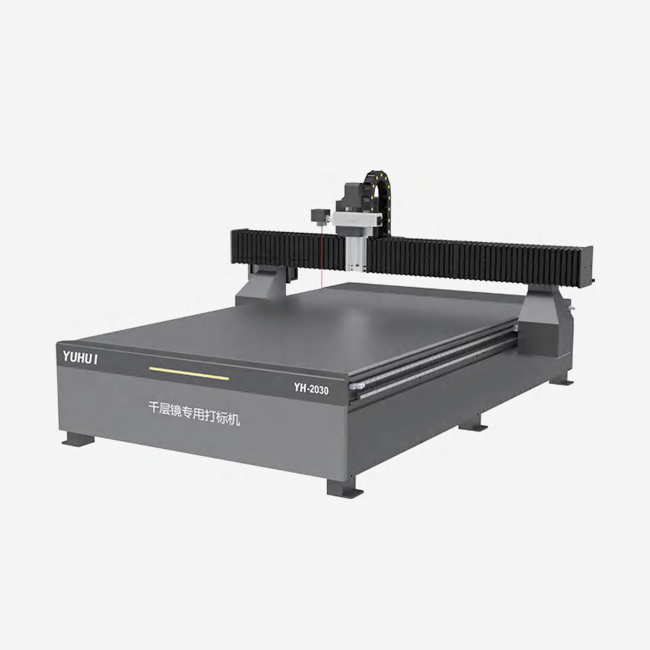
Through its integrated design approach, Shandong Yuhui's marbles CNC router YH-1325 is a good example of these things to think about when buying something. The machine has a 1325x2500x300mm working area and is made with imported square linear guide rails that give it a strong load-bearing ability and a long service life. It can also make parts with an accuracy of less than 0.05mm per 300mm. The high-precision rack gear gearbox and 5.5kW water-cooling spindle keep the power output steady over long production runs. This makes the equipment last 1.5 times longer than similar models. The better electromechanical design makes sure that the machine runs smoothly and efficiently, which is important for challenging stone fabrication environments. Buying directly from the manufacturer cuts out the middlemen and gives you direct access to engineering resources for any customisation needs. Production lead times of about 14 business days help keep projects on schedule, and CE and ISO certifications show that the product meets the quality and safety standards needed by global markets.
Conclusion
Integrating marble CNC router technology into stone cutting CNC cutter systems transforms how natural stone is fabricated by automating complex tasks with a level of precision that is impractical and cost‑prohibitive to achieve manually. A solid grasp of material compatibility, machine configuration, and maintenance requirements enables you to make informed purchasing decisions that align with your production objectives. These systems are indispensable for fabricators serving quality‑sensitive markets, thanks to their advanced technical capabilities, operational stability, and design flexibility to accommodate diverse project specifications. By selecting the right equipment and collaborating with a broad range of manufacturers, you can ensure sustained productivity and a competitive edge throughout the equipment’s service life.
FAQ
1. What stone materials can marble CNC routers process effectively?
Professional marble CNC routers handle marble, granite, limestone, sandstone, slate, and engineered stone composites. Material hardness ranging from 3-7 Mohs requires appropriate spindle power and tooling selection—softer marbles process efficiently with 5.5kW systems while dense granites benefit from 7.5kW+ capacity for optimal cutting speeds.
2. How much should I budget for industrial stone cutting equipment?
For small fabricators, entry-level 3-axis systems start at about $15,000 to $25,000. Professional machines in the middle range with more features cost between $35,000 and $65,000. For specialised building work, advanced 5-axis tools cost more than $100,000. The total cost of ownership, which includes tools, upkeep, and training, should be taken into account when planning your budget, in addition to the initial buy price.
3. Can these machines integrate with existing CAD/CAM workflows?
Popular CAM tools like ArtCAM, Type3, and specialised stone processing packages can make standard G-code that can be read by modern stone cutters. Because of this, it is easy to integrate with current design processes, and custom toolpath optimisation can be done for different material properties and production needs.
Partner with Yuhui Laser for Precision Stone Processing Solutions
Yuhui Laser delivers factory-direct marble CNC router systems engineered specifically for demanding stone fabrication environments. Our YH-1325 model combines imported linear guide rails, high-precision transmission systems, and optimized thermal management to maintain <0.05mm accuracy across extended production runs. As a CE and ISO certified manufacturer, we provide comprehensive 450-day warranty coverage, professional installation support, and responsive technical assistance that keeps your operation running smoothly. Our customization capabilities extend to structural modifications, function integration, and workflow-specific configurations that address your unique production requirements. Contact our engineering team at jianghui@yuhui-laser-tech.com to discuss how our marble CNC router solutions can enhance your fabrication capabilities and competitive positioning.
References
1. Stone World Magazine. "Advances in CNC Stone Processing Technology." Stone Industry Technical Publication, 2024.
2. International Stone Fabricators Alliance. "Best Practices for CNC Router Maintenance in Stone Fabrication." Industry Standards and Guidelines, 2023.
3. Manufacturing Engineering Society. "Precision Motion Control Systems for Hard Material Machining." Technical Engineering Journal, 2024.
4. National Stone Council. "Material Properties and Machining Parameters for Natural Stone." Stone Processing Reference Manual, 2023.
5. Industrial Automation Review. "CAD/CAM Integration in Modern Stone Fabrication Workflows." Manufacturing Technology Quarterly, 2024.
6. Occupational Safety and Health Research Institute. "Dust Control and Worker Safety in Stone Processing Facilities." Workplace Health Standards, 2023.
Contact us directly for customized solutions, quotations and long-term strategic cooperation.