- English
- French
- German
- Portuguese
- Spanish
- Russian
- Japanese
- Korean
- Arabic
- Greek
- German
- Turkish
- Italian
- Danish
- Romanian
- Indonesian
- Czech
- Afrikaans
- Swedish
- Polish
- Basque
- Catalan
- Esperanto
- Hindi
- Lao
- Albanian
- Amharic
- Armenian
- Azerbaijani
- Belarusian
- Bengali
- Bosnian
- Bulgarian
- Cebuano
- Chichewa
- Corsican
- Croatian
- Dutch
- Estonian
- Filipino
- Finnish
- Frisian
- Galician
- Georgian
- Gujarati
- Haitian
- Hausa
- Hawaiian
- Hebrew
- Hmong
- Hungarian
- Icelandic
- Igbo
- Javanese
- Kannada
- Kazakh
- Khmer
- Kurdish
- Kyrgyz
- Latin
- Latvian
- Lithuanian
- Luxembou..
- Macedonian
- Malagasy
- Malay
- Malayalam
- Maltese
- Maori
- Marathi
- Mongolian
- Burmese
- Nepali
- Norwegian
- Pashto
- Persian
- Punjabi
- Serbian
- Sesotho
- Sinhala
- Slovak
- Slovenian
- Somali
- Samoan
- Scots Gaelic
- Shona
- Sindhi
- Sundanese
- Swahili
- Tajik
- Tamil
- Telugu
- Thai
- Ukrainian
- Urdu
- Uzbek
- Vietnamese
- Welsh
- Xhosa
- Yiddish
- Yoruba
- Zulu
Top Focus Lens Laser Options for Precision Cutting
Laser focus lenses are the most important part of precise cutting because they turn raw laser energy into focused, controlled beams that can achieve accuracy down to the micron level. In industrial settings, these optical parts decide the quality of the cuts, the speed of the processing, and the general efficiency of the equipment. At Yuhui Laser, we know that picking the right focus lens has a direct effect on the quality of your work and the cost of running your business. This detailed guide talks about the best focus lens technologies on the market right now. It will help purchasing managers, automation developers, and metal production shops make smart choices that fit their budgets and cutting needs.
Understanding Laser Focus Lenses for Precision Cutting
Laser centering works by bringing together laser beams that are traveling in different directions into a single place where the energy density is highest. This focus point makes the extreme heat that is needed to carefully melt, vaporize, or sublimate things possible. Several lens designs are used in modern industrial uses. Each one was designed to solve a different set of operational problems.
Fixed Focal Length Lenses
Fixed-focal-length laser focus lenses ensure that the beams always meet at set distances, which is reliable in normal production settings. When making a lot of things and keeping the material thickness and processing settings the same, these lenses work great. Fixed focal designs are usually better for sheet metal makers who work with stainless steel parts because they get rid of variables that could affect cut quality across production runs. Because they look simple, they are more durable and require less upkeep, which makes them a good choice for businesses that value stability over flexibility.
Adjustable Focal Length Systems
When production needs change, like when moving between thin-gauge aluminum and thick carbon steel, changeable focal systems make operations more flexible. These mechanisms let workers change the focal point without having to shut down the machine. This lets them work with different thicknesses of material and meet different processing needs. Because a single machine setup can handle multiple job requirements, adjustable systems are very useful for hardware makers who serve clients with a wide range of needs. As a trade-off, the mechanical complexity is a little higher, but current systems have much higher dependability standards.
ZnSe Material Advantages
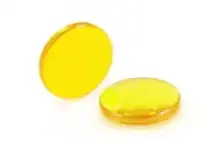
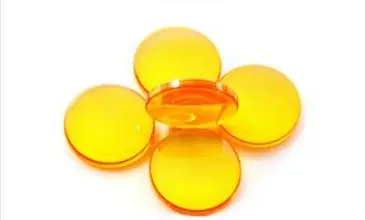
Zinc selenide glasses are used in most CO₂ laser uses because they let more than 99.5% of infrared light through at 10.6 μm wavelengths. The choice of material reduces energy loss during beam transfer, which directly raises the efficiency of cutting and lowers the cost of doing business. At Yuhui Laser, our ZnSe lenses have CVD-grade surfaces with absorption coefficients below 0.0005 cm⁻³. This means that they don't change much in temperature, even when they're exposed to high power for a long time. The temperature stability of the material stops focal drift during long cutting sessions, which is important for keeping measurements accurate in precise tasks like making car parts. ZnSe has better laser damage limits than other materials. It can handle powers from 100W to several kilowatts, which is good for both mid-range manufacturers and high-throughput industrial processes.
Top 5 Laser Focus Lens Options for Industrial Precision Cutting
To find the best lens setup, you have to match the optical qualities to the needs of the application. The following choices are the most effective ones in a wide range of business situations.
Aspheric focus lenses fix spherical aberration with carefully designed surface shapes, making spot sizes smaller and beam convergence tighter. Electronics companies that make circuit boards with complicated patterns rely on aspheric designs to get the high level of detail needed for today's small components. The better beam quality means that the edges are smoother and there are fewer heat-affected areas.
High-power-coated lenses have multiple dielectric coatings that make them more resistant to damage while keeping the transfer efficiency high. Facilities that use lasers with power levels higher than 3k We need these protection layers to keep the lenses from breaking completely due to heat stress. Yuhui Laser's THF4 military-grade lens coatings make equipment last 1.5 times longer than regular ones, which cuts down on replacements and the costs that come with them.
F-theta scan lenses make it possible to focus evenly across flat fields when using a galvanometer for scanning. These lenses keep the spot size the same across the whole working area, no matter what beam angle is being used. This is helpful for marking and etching. This evenness is very important for fast production lines where positional accuracy needs to stay the same even when the beam bends quickly.
Meniscus lens configurations reduce optical aberrations and improve performance in small laser head systems by using balanced curve designs. Automation systems that don't have a lot of room can use these lenses to get professional-grade cutting quality without needing long beam paths. Modern industrial trends are moving toward integrated production cells that use area efficiently. The small form factor supports these trends.
Custom engineered solutions are designed to solve specific operating problems that can't be solved with standard store items. Yuhui Laser has strong research and development (R&D) skills that allow them to make optics that work with nonstandard wavelengths, harsh environments, or their own special processing methods. Our customization services have helped clients put in place new ways of making things that need optical specs that go beyond what's normally available.
These lens choices can be used for most industrial precise cutting tasks, from making thin-film medical devices to making heavy-gauge structural steel. When buying teams know the specific benefits of each design, they can choose equipment that meets both current working needs and expected future needs.
How to Choose the Right Laser Focus Lens for Your Precision Cutting Needs
A thorough study of the application is the first step in selecting the right Laser Focus lenses. The type of laser used affects the lens materials that can be used. For example, CO₂ systems at 10.6 μm need different bases than fiber lasers that work near 1 μm wavelengths. The type of material also affects the choice of lens. Metals that reflect light, like copper and brass, need higher energy levels, which can be achieved with shorter focal lengths. Plastics that absorb light, on the other hand, cut well with longer focal lengths that spread energy more evenly.
Critical Specification Parameters
Spot size and depth of focus are both affected by focal length. When the focal length is shorter, the spots are smaller and brighter, but they can't handle mistakes in the focal position as well. When cutting through thicker materials, focus lengths need to be longer to keep the cutting consistent throughout the whole depth of the material. The lens's light-gathering ability and beam convergence angle are measured by its numerical aperture. This affects both the size of the spot that can be seen and the distance that the lens can be used. Laser damage threshold specs show the highest possible power density. Going over this limit damages the coating or breaks the base in a way that can't be fixed.
Supplier Evaluation Criteria
Certification standards set concrete rules for quality. With CE and ISO approvals, you can be sure that the manufacturing process meets international safety and vision standards. Our ISO9001-certified production at Yuhui Laser makes sure that the quality of every lens we make is the same. Our CE certification also makes sure that we meet European safety standards, which is very important for wholesalers who sell to customers in other countries.
When planning production and keeping track of supplies, lead times come into play. Yuhui Laser's 14-day manufacturing cycle supports lean stocking strategies, so customers can keep their operations ready while keeping their capital low on extra parts. Logistics relationships with well-known freight companies guarantee reliable delivery times, which is especially important for foreign wholesalers who have to handle a complicated supply chain.
Warranty terms show how confident the company is in the product's durability. Our 450-day after-sales service time is longer than the norm in our business and shows that we are dedicated to long-term performance. This extra coverage lowers the total cost of ownership by protecting against failure before its time and giving expert help for the whole lens's life.
Maintenance and Longevity Tips for Laser Focus Lenses
Following the right care steps will directly increase the service life of laser focus lenses and protect cutting quality. Processing waste is one of the main factors that degrades lens performance over time. Particulate matter absorbs laser energy, which causes localized heating that damages coatings and substrates.
Cleaning Best Practices
To keep the surface from getting damaged, cleaning lenses needs certain tools and methods. When applying eye cloths that don't have lint on them, only use high-purity isopropyl alcohol or acetone. Using the "drop and drag" method—putting solvent drops on the lens surface and gently moving a new tissue across it—removes dirt without scratching the ZnSe substrate, which is pretty soft. Do not use circle motions when cleaning, as they gather dirt and raise the risk of abrasion. Compressed air gets rid of free dirt and dust before using a liquid cleaner. This keeps particles from moving around while the solvent is being applied.
Performance Monitoring Indicators
Several signs show that the lens is breaking down and needs to be fixed. Visible pits or cloudy spots that won't come clean mean that the material is damaged beyond repair and needs to be replaced. The fact that more laser power is needed to get the same cutting performance as before suggests that the layer is wearing off, which lowers the transfer efficiency. Focal slip during long cutting sessions is a sign of thermal lensing from higher absorption, which is usually caused by contamination or film wear. These problems can be found before they hurt the quality of the production by following regular checking routines.
Environmental Storage Conditions
Lenses stay in good shape when they are stored correctly between production runs. Controlling humidity stops moisture buildup that can damage optical surfaces or help fungi grow on coats. Temperature stability stops the temperature cycle stress that weakens coating bonding over time. When kept in a controlled environment, our lenses at Yuhui Laser stay stable for up to five years without losing their performance. This gives distributors who are in charge of various equipment setups more buying options and peace of mind about their inventory.
Real-World Applications and Case Studies of Laser Focus Lenses in Precision Cutting
Effective lens selection leads to measurable business gains across all industries, as shown by real-life application examples.
Automotive Component Manufacturing
Our high-power coated lenses were added to a fiber laser cutting system by a European company that makes car parts from high-strength steel body parts. The better temperature stability got rid of focus drift problems that were causing safety-critical parts to change sizes. This improvement raised production output by 15% by allowing higher cutting speeds made possible by uniform focus quality. It also cut down on scrap by 23%. The longer lens life also cut down on maintenance breaks, which improved the total efficiency of the equipment.
Medical Device Microfabrication
A company that makes medical devices for surgery needed to cut nitinol parts without burrs and within ±10 μm of the standards. Using aspheric focus glasses cut the size of the spot by 30%, which made it possible to make better cuts that got rid of the need for extra finishing steps. The closer focus also cut down on heat-affected areas, keeping important material qualities for biocompatibility. The constant quality of these precision optics helped with regulatory compliance paperwork, which sped up the FDA clearance process.
Electronics and Making PCBs
For cutting flexible circuit boards, a contract maker that works with the electronics industry updated to F-theta scan lenses. The even focus across the scanning field made the edge quality more consistent across complicated cutting patterns. This made problems with electromagnetic interference in final goods less likely. Compared to older fixed-head systems, production speed went up by 40%, but the accuracy needed for current high-density connection boards was still maintained.
As you can see, these case studies show how strategic lens selection can help with certain operating problems, leading to better quality, higher productivity, and less waste. Because current focus lens technologies are so flexible, they can be used to make unique solutions for a wide range of situations.
Conclusion
Choosing the right laser focus lenses is one of the most important parts of accurate cutting in modern industry. When you know the differences between the different types of lenses—from set focal designs that work the same way every time to adjustable systems that let you do things in different ways—you can make better purchasing choices that meet the needs of your production. Improvements in material science, especially in ZnSe optics, keep making performance better while lowering total ownership costs by making things last longer. Strategic relationships between suppliers and makers that offer full certification, quick technical support, and the ability to customize products give suppliers a competitive edge in markets that are becoming more demanding. Buying high-quality focus glasses pays off in a number of ways, including better cutting quality, higher production efficiency, and lower upkeep costs in a wide range of industrial settings.
FAQ
What factors most significantly influence lens pricing?
The price of a lens depends on a number of technical and business factors. Base costs are based on the quality of the materials, especially how pure the foundation is and how complex the coating is. Military-grade glasses cost more because they last longer. The focal length and width affect how much material is used and how hard it is to make, which in turn affects unit costs. When compared to normal catalog items, custom specs cost more because they need tech development and special tools. Through economies of scale, buying in bulk lowers the price per unit by a large amount. This makes supplier agreements beneficial for distributors and makers who buy in bulk.
How do adjustable focal lenses compare to fixed designs in operational performance?
Adjustable systems let you work a wide range of material thicknesses and types, and they save you money on tools by combining machines with multiple functions into a single unit. Fixing focal lenses makes things more consistent and easy to fix, which means they are more reliable in normal production settings. The decision relies on the needs of the business. Facilities with different job requirements benefit from being able to change the lens, while high-volume manufacturers who make consistent parts value fixed lens reliability and ease of upkeep.
Can custom lens designs address specialized application requirements?
Engineers who make custom lenses can solve problems that normal goods can't. Yuhui Laser's research and development (R&D) team can help with specific frequency optimization, meeting strict environmental requirements, and creating new working methods. Custom development timelines usually go from concept conversation to prototype validation, with production adjusting based on how many are needed. This method saves money when the needs of the application support the engineering investment through better performance or features that aren't available in normal offerings.
Partner with Yuhui Laser for superior laser focus lens solutions
Yuhui Laser is ready to help you with your precise cutting projects by providing a wide range of optical solutions designed to work in tough industrial settings. As a well-known company that makes laser focus lenses, we use cutting-edge material science and strict quality control to make sure that the optics we sell meet international approval standards while still keeping our prices low. Our ZnSe focus lenses have THF4 military-grade coatings, adjustable alloy structures, and great heat absorption designs that keep the power constant even after long periods of use. This means that your production quality stays stable throughout the duration of the equipment.
Whether you need standard catalog items that can be delivered in 14 days from our large collection or custom-engineered solutions that are made to fit your special processing needs, our technical team is here to help you through the whole process. Our 450-day promise shows that we believe in the durability of our products and that they meet the quality standards for foreign markets. Send an email to jianghui@yuhui-laser-tech.com to talk to one of our procurement specialists about your unique application needs, to ask for technical paperwork, or to set up product samples. You can look at our full line of laser cutting and welding solutions at yuhui-laser-tech.com. These solutions will help you make better products.
References
1. Chen, W., & Liu, H. (2022). Advanced Optical Materials for High-Power Laser Systems. Industrial Photonics Press.
2. Hoffman, R. T. (2021). Precision Laser Cutting: Technology and Applications. Manufacturing Engineering Publications.
3. Kumar, S., & Zhang, Y. (2023). Focus Optics in Modern Laser Processing. Journal of Industrial Laser Technology, 45(3), 112-128.
4. Miller, D. P. (2020). Zinc Selenide Optics: Properties and Performance. Optical Materials Science Quarterly.
5. Petersen, J. K., & Schmidt, L. (2023). Procurement Strategies for Industrial Laser Equipment. B2B Manufacturing Review.
6. Tanaka, M., & Yoshida, T. (2021). Laser Beam Delivery Systems for Metal Processing. International Journal of Advanced Manufacturing, 38(7), 891-905.
Contact us directly for customized solutions, quotations and long-term strategic cooperation.