- English
- French
- German
- Portuguese
- Spanish
- Russian
- Japanese
- Korean
- Arabic
- Greek
- German
- Turkish
- Italian
- Danish
- Romanian
- Indonesian
- Czech
- Afrikaans
- Swedish
- Polish
- Basque
- Catalan
- Esperanto
- Hindi
- Lao
- Albanian
- Amharic
- Armenian
- Azerbaijani
- Belarusian
- Bengali
- Bosnian
- Bulgarian
- Cebuano
- Chichewa
- Corsican
- Croatian
- Dutch
- Estonian
- Filipino
- Finnish
- Frisian
- Galician
- Georgian
- Gujarati
- Haitian
- Hausa
- Hawaiian
- Hebrew
- Hmong
- Hungarian
- Icelandic
- Igbo
- Javanese
- Kannada
- Kazakh
- Khmer
- Kurdish
- Kyrgyz
- Latin
- Latvian
- Lithuanian
- Luxembou..
- Macedonian
- Malagasy
- Malay
- Malayalam
- Maltese
- Maori
- Marathi
- Mongolian
- Burmese
- Nepali
- Norwegian
- Pashto
- Persian
- Punjabi
- Serbian
- Sesotho
- Sinhala
- Slovak
- Slovenian
- Somali
- Samoan
- Scots Gaelic
- Shona
- Sindhi
- Sundanese
- Swahili
- Tajik
- Tamil
- Telugu
- Thai
- Ukrainian
- Urdu
- Uzbek
- Vietnamese
- Welsh
- Xhosa
- Yiddish
- Yoruba
- Zulu
The Impact of Focus Lenses on Laser Beam Quality and Efficiency
Laser focus lenses are the most important part of modern laser systems. They directly affect the quality of the beam and how well the system works in commercial settings. These precise optical parts focus laser energy on a controlled focal point, which lets makers meet the high standards needed for metal manufacturing, engraving, and cutting with great accuracy. Knowing how these lenses change the properties of the beam helps buying workers get the best results from production while keeping costs low. At Yuhui Laser, we've seen how choosing the right lens can change the way equipment works, giving stable results that meet the needs of production environments around the world that are very competitive.
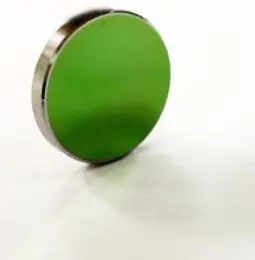
Understanding Laser Focus Lenses and Their Effect on Beam Quality
Laser focus lenses are manufactured optical solutions that change the qualities of laser beams by precisely bending them. Divergent laser energy is focused into a small area, which increases the power density at the material contact. This is the basic idea.
The Science Behind Beam Focusing
Due to diffraction, laser beams naturally diverge as they propagate after leaving the laser resonator or beam delivery system. By turning light rays toward a shared convergence point, laser focus lenses stop this from happening. Focusing power and spot size are directly related, and shorter focal lengths make smaller spots with higher intensity, which are great for cutting thin materials. On the other hand, longer focal lengths make larger spots that are better for deeper penetration into thicker substrates.
Common Lens Types in Industrial Applications
Different optical shapes are used for different kinds of processing. Plano-convex lenses, which have one flat surface and one bent surface, are a cheap way to do normal cutting tasks. For high-precision etching where beam distortion must be kept to a minimum, meniscus lenses are the best way to fix aberrations. At Yuhui Laser, our ZnSe Laser Focus Lenses use carefully chosen shapes that work with certain laser wavelengths, like the 10.6 μm output that is popular in CO₂ systems.
The main thing that affects optical function is the makeup of the material. Zinc selenide is very good at transmitting infrared light—more than 99.5% at CO₂ laser wavelengths—so very little energy is lost when the beam is sent. This directly affects how well the system works—less energy received means less heat buildup and a longer lens life. Our high-durability THF4 Laser Focus Lenses maintain stable performance during long-term, high-power operation. This solves a major problem for companies that have to work nonstop.
Beam Quality Metrics That Matter
The M² factor measures the quality of a beam by comparing its real path to a perfect Gaussian shape. Lower numbers mean that the lens can focus better and the spot areas are smaller. When purchasing managers look at laser systems, they should focus on the M² specs because they predict both the accuracy of the cuts and the speed of the process. Good focus optics-equipped equipment usually gets M² values below 1.3, which lets you work on materials like stainless steel and thin plastic sheets with great detail.
Key Factors Affecting Laser Beam Quality and Efficiency
There are many factors that affect how well the whole system works, but the lens's features are the most important ones for keeping things running smoothly.
Material Properties and Coating Technologies
The quality of the substrate is what makes the function solid. Chemical Vapor Deposition (CVD) makes ZnSe crystals with very few impurities, which means that their absorption coefficients are less than 0.0005 cm⁻³. This extremely low absorption stops thermal lensing, a problem where absorbed energy causes focus shift while the optics are working. This is a common way for lower-quality optics to fail.
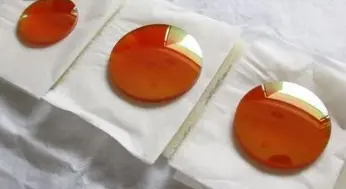
Advanced deposition methods are used to apply anti-reflective films that almost completely eliminate surface reflection losses. Our laser-focus lenses have multi-layer coatings that are best for certain color ranges. This makes sure that the most energy is transmitted to the subject and not lost through reflection or scattering. The distinction between coated and uncoated optical lenses can significantly affect transmission efficiency.
Environmental and Operational Considerations
Lens stability is affected by changes in temperature, especially in high-power settings where beam energy heats optical parts. At 18 W/mK, ZnSe has great thermal conductivity, which means it quickly gets rid of absorbed heat to keep it from warping. Our lens mounting structure is designed to improve heat dissipation and mechanical stability during extended operation.
In production settings, contamination is still the main reason why laser focus lenses break early. Particulate matter, metal spatter, and processing fumes can build up on the sides of lenses, causing absorption sites that cause major damage. The Yuhui Laser glasses have a smooth, wear-resistant surface finish that keeps dirt from building up and makes cleaning easier when it's time. Setting up proper care routines can greatly extend the life of Laser Focus Lenses—our customers say that when they follow the cleaning instructions, their lenses last 1.5 times longer than similar goods.
You can't say enough about how precise alignment is. Coma aberration happens when there are even small angles that aren't straight between the lens's optical axis and the beam path. This makes spots look worse and makes it harder to see the edges of cut parts. Professional installation and regular adjustment checks make sure that systems stay in line with stock specs for as long as they are used.
How to Choose the Right Laser Focus Lens for Your Application
To choose the right optics, you have to carefully look at them from a number of scientific points of view, weighing performance needs against price limits.
Establishing Core System Parameters
The laser's power output sets the lowest level of damage that can happen to the glass. For CO₂ lasers that work above 150W, they need CVD-grade ZnSe that can handle high power levels for a long time without breaking down. Our high laser damage resistance standard makes sure that Laser Focus Lenses can handle the long hours of high-power work that is common in making car parts and handling heavy sheet metal.
The ability to work with different wavelengths is an absolute must. Some materials are clear at one wavelength but absorb a lot at another. For example, fused silica works great for fiber lasers close to 1 μm but not for CO₂ systems at 10.6 μm. ZnSe is naturally yellow due to its optical bandgap characteristics while providing high transmission in the infrared range used by CO₂ lasers. This color means that the material is properly made and not contaminated or flawed.
Evaluating Performance Specifications
The amount of information that can be seen is calculated by the focal spot size. The formula is spot diameter = (4 × M² × λ × f) / (π × D), where λ is the frequency, f is the focal length, and D is the diameter of the input beam. Manufacturers who need to be able to engrave features smaller than 0.1 mm need to make sure that the laser focus lens specs are perfectly matched in order to get the spot sizes they need.
When testing for durability, you should look at the strength of the coating, the quality of the base, and how well the heat is managed. Our great design for dissipating heat keeps it from building up, which is what causes focus drift during long operations. This stability is very important for production runs that don't need regular operator input to keep standards high. Even after a year of continuous use, equipment with our Laser Focus Lenses keeps its power output constant. This means that it doesn't lose performance over time like lower-quality options do.
Balancing Investment Against Returns
Even though superior glasses cost more at first, the total cost of ownership shows that they are cheaper in the long run. Our laser-focus lenses can be stored for up to 5 years without breaking down, so you don't have to buy new ones as often. Less downtime due to lens failures helps keep production plans on track, which is especially helpful for contract makers who have to meet tight delivery deadlines. When you buy directly from a plant like Yuhui Laser, you can get better prices and meet the certification standards that foreign markets require. This closes the cost gap.
Enhancing Laser Beam Efficiency Through Laser Focus Lens Optimization
To improve system speed in a systematic way, you need to find specific problems with current systems and make focused improvements.
Diagnosing Common Bottlenecks
Beam deviation or focal instability beyond expected tolerances may indicate optical contamination, thermal effects, or lens degradation. By checking the spot size at the focal plane against the manufacturer's specs, we can see that the device is breaking down and needs to be fixed. Before and after the Laser Focus Lenses, laser power meters are used to measure power loss and transfer efficiency. This shows if the coating is damaged or if the base is contaminated.
Diagnostic tests done at client sites have shown that processing speed problems are caused by poor spot quality rather than insufficient laser power. Replacing mismatched or degraded Laser Focus Lenses with properly specified optics increased cutting speeds by up to 30% in some applications. This shows how lens tuning can reveal hidden system capabilities.
Strategic Upgrade Approaches
Using autocollimators and beam profilers for precise alignment processes makes sure that the beam path shape is just right. This technical service feature, which we offer as part of our installation support, sets a baseline level of performance that workers can check during regular maintenance. Clear images from well-aligned, high-quality laser focus lenses make both cutting and engraving more accurate, which lowers the amount of waste and the cost of redoing work.
Custom lens selection that fits the needs of the production process improves effectiveness in a wide range of situations. Sheet metal makers who mostly work with 3–5 mm stainless steel need different focal length requirements than etching operations that need to do very fine work on promotional items. We can customize functions even further by suggesting and providing optical setups that are best for each application and give you the best return on your equipment investment.
Measurable Performance Improvements
A Southeast Asian company that makes car parts said that edge dross formation dropped by 40% after switching to our THF4 military-grade laser focus lenses, which got rid of the need for extra finishing steps. Their production output went up by the same amount, and they met the ISO quality standards that OEM buyers wanted. Our ZnSe optics can be used in a lot of different cutting and engraving tools, which made their extra parts inventory easier and gave them more operating freedom.
European precision makers who work on medical device parts were able to get better control over tolerances by optimizing laser focus lenses, which cut the difference between measurements in half. This gain came from the stable output performance and great focusing abilities that made fine, focused light spots possible even during long production runs.
Procurement and Supplier Considerations for Laser Focus Lenses
Setting up solid supply relationships is the best way to ensure long-term business success while also handling inventory and support needs well.
Evaluating Supplier Capabilities
Verification of certification gives a basic level of quality guarantee. Manufacturers who are CE and ISO approved show that they follow international rules about optical safety and performance. These certificates show that the quality control systems are in place, instead of the batch-to-batch variations that can happen with suppliers who aren't qualified. Our CE label shows that our products meet the standards of the European Union, which makes it easier to sell them in places around the world.
Strategic sellers are different from basic vendors because they can customize their products for OEMs. Differentiated product offers are made possible by the ability to change Laser Focus Lenses' specs, create custom coatings, or build unique mounting combinations. Yuhui Laser offers structure customization and clever automation customization services that let equipment makers create their own solutions while using our optical engineering knowledge and production infrastructure.
How quickly working problems are fixed depends on how much technical help there is. Suppliers who offer full after-sales service, such as help with installation, fixing, and upkeep training, keep production from stopping. Our 450-day product guarantee shows that we are confident in the Laser Focus Lenses' sturdiness and gives you more time to report any problems with the way it was made—much longer than the standard coverage in the industry.
Managing Logistics and Lead Times
Production capacity and store amounts have a direct effect on how reliably orders are filled. Our large inventory and 14-day wait time for normal setups allow us to meet pressing replacement needs and planned upgrades without having to keep systems down for long periods of time. This responsiveness is especially helpful for wholesalers who work with a wide range of clients in different businesses and types of equipment.
Buying in bulk can save you money and make sure you always have what you need. Volume agreements allow for special price structures that help equipment makers and dealers stand out from the competition. The factory-direct price approach gets rid of markups for middlemen, making it cheaper to get high-quality Laser Focus Lenses.
Expertise in international shipping helps with the complicated paperwork and customs rules that come with doing business across borders. Our established transportation partnerships make sure that our products get delivered reliably to markets in Southeast Asia, the Middle East, and Europe. We also make sure that precision laser focus lenses that need to be protected from shock and contamination during travel are handled in the right way.
Building Long-Term Partnerships
Delivering quality work on a regular basis builds trust, which makes smart cooperation possible. When suppliers show consistent quality across multiple sales and product lines, they are added to the planning of production and the development of new equipment. Our technical training and ongoing technical support help our customers get the most out of their tools while also building up their own skills for regular maintenance and optimization.
Quick problem-solving and technical advice are made easier by responsive contact routes. Direct access to engineering and support teams allows procurement professionals to receive accurate technical guidance for product selection, system integration, and performance optimization. This level of ease is very important when testing specialized programs or fixing problems that cause unexpected changes in performance.
Conclusion
Laser focus lens quality is a key factor in how well a laser system works in all business settings. The optical properties, material properties, and production accuracy of these parts have a direct effect on the quality of the beam, how well they work, and how reliable they are in operation. Professionals in procurement have to carefully look at technical specs while also taking into account the supplier's skills, certification requirements, and the total cost of ownership. By carefully choosing and optimizing lenses, you can get big speed boosts that often go beyond what you'd get from upgrading the laser source alone. Building partnerships with strong providers guarantees access to high-quality optics, the technical know-how, and quick support that is needed to stay ahead of the competition in tough production settings.
FAQ
What causes thermal lensing in laser focus lenses?
Thermal lensing happens when pollution or coating wear makes the lens base absorb more energy. This received energy heats up a small area, which causes thermal expansion. This changes the shape of the lens and moves the focus point. As the phenomenon gets worse, more heat is produced by greater absorption, which finally causes the lens to fail completely. Using high-purity chemicals and the drop-and-drag tissue method to clean properly stops contamination from building up, and good coats reduce the initial absorption. When cracking or cloudy spots show up that cleaning can't get rid of, replacement is needed.
How do CVD and PVD manufacturing methods differ?
Chemical Vapor Deposition (CVD) makes ZnSe crystals that are more pure and absorb less bulk than Physical Vapor Deposition (PVD) methods. CVD ZnSe materials are commonly preferred in higher-power industrial CO₂ laser applications because of their lower absorption and improved thermal stability. The production process changes the level of impurities and how uniform the crystal structure is. This has a direct effect on the optical performance and damage threshold specs.
When should I replace laser focus lenses?
Some signs that it's time for a replacement are obvious surface damage like pits or cracks, cloudy areas that won't go away, and higher laser power needs to reach the same cutting levels as before. Performance degradation shows up as lower edge quality, slower processing speeds, or results that aren't uniform across the work area. This is a sign of optical degradation that needs to be fixed right away to keep production from stopping completely.
Partner with Yuhui Laser for Superior Optical Performance
Precision-engineered optical options from Yuhui Laser use military-grade THF4 lens technology and come with full production support. Our ZnSe laser focus lenses are CE-certified and have great infrared transmission, thermal stability, and damage resistance. This means they work well in a wide range of challenging industrial uses. The adjustable metal structure and effective heat dissipation design help maintain stable optical performance during extended operation. We are a trusted company that makes laser focus lenses, and we offer reasonable factory-direct prices, 14-day wait times, and a 450-day warranty with technical training and installation support. Our tech team is ready to help you get the most out of your laser processing, whether you need standard setups or custom optical solutions. You can email us at jianghui@yuhui-laser-tech.com or visit yuhui-laser-tech.com to talk about how our focus lens options can help you make your production more efficient and better.
References
1. Steen, W.M. and Mazumder, J. (2010). Laser Material Processing, 4th Edition. London: Springer-Verlag.
2. Ready, J.F. and Farson, D.F. (2001). LIA Handbook of Laser Materials Processing. Orlando: Laser Institute of America.
3. Bass, M., et al. (2009). Handbook of Optics, Volume IV: Optical Properties of Materials, Nonlinear Optics, Quantum Optics, 3rd Edition. New York: McGraw-Hill Professional.
4. Hecht, J. (2018). Understanding Lasers: An Entry-Level Guide, 4th Edition. Hoboken: Wiley-IEEE Press.
5. Powell, J. (1998). CO2 Laser Cutting, 2nd Edition. London: Springer-Verlag.
6. Ion, J.C. (2005). Laser Processing of Engineering Materials: Principles, Procedures, and Industrial Application. Oxford: Butterworth-Heinemann.
Contact us directly for customized solutions, quotations and long-term strategic cooperation.